
AP gets exclusive look at ‘StarGate,’ Ukraine’s first aerial drone to evacuate wounded soldiers
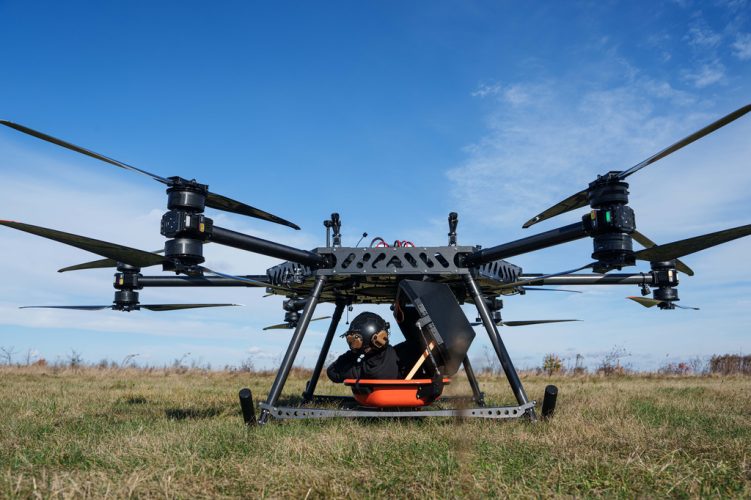
A representative of the SkyFall drone company climbs into a medical module of the SkyGate drone before a demonstration flight at an undisclosed location in Ukraine, Wednesday, Oct. 14, 2026. (AP Photo/Evgeniy Maloletka)
Six propellers whir to life, lifting a drone above a field somewhere in Ukraine. A weighted stretcher secured to its frame simulates a wounded soldier in body armor.
Far from the front line, the demonstration offers a glimpse of a far more dangerous mission: flying into a battlefield where enemy drones and artillery can leave wounded troops stranded for weeks or months, then carrying them to safety without an evacuation crew.
The Associated Press was granted exclusive access to a field demonstration of the drone. This week, StarGate was handed over to a combat brigade for evaluation under front-line conditions.
The aerial medical evacuation drone was developed over the past year by Ukrainian defense technology company SkyFall. If it proves reliable in combat, it could transform battlefield evacuations, reaching soldiers in places that ground vehicles cannot access and potentially saving those so severely wounded that hours of waiting could cost them their lives.
“The idea came directly from the front line, from the trenches,” said SkyFall’s spokesperson, who asked not to be named because of the security risks facing Ukrainian military technology personnel. He spoke to AP wearing a balaclava. The AP was not permitted to disclose the testing location.
In some sectors, the so-called kill zone — the area under constant threat from drones and artillery — stretches 10 to 15 kilometers (6 to 9 miles) or farther. StarGate has a one-way range of 15 kilometers, potentially allowing it to reach critically wounded soldiers trapped deep inside the kill zone.
A request from a military commander
The idea grew out of a military request, the spokesperson said. Last year, Flint, commander of the 475th Separate Assault Regiment, known as Code 9.2, approached SkyFall’s founder about developing a safer way to evacuate wounded soldiers from hard-to-reach positions.
For troops in Code 9.2, reaching a front-line position to retrieve the wounded can mean traveling on foot through areas where vehicles are vulnerable to drones. Unmanned ground vehicles have taken on a growing role in evacuating casualties and delivering supplies, but they struggle through mud, craters and shattered roads. Rivers, mines and drones can stop them altogether.
Ground robots typically take two to three hours to reach a position, depending on distance, road conditions and the threat from above, said KVN, a commander with Code 9.2.
“Covering 10 kilometers in minutes would be a drastic change on the front line,” he said.
Evacuations continue regularly in his unit’s area, he said, but it is not always possible to retrieve a wounded soldier on the same day. For someone with severe injuries, the wait can be critical.
Both Flint and KVN were identified only by their call signs in line with Ukrainian military protocol.
SkyFall emerged after Russia’s full-scale invasion in 2022, and has grown into a Ukrainian drone manufacturer. Its Vampire heavy-lift drone, known to Russian forces as “Baba Yaga,” is used by Ukrainian troops for battlefield missions. The company also makes Shrike first-person-view drones and has developed the P1-SUN aerial interceptor.
Named after the science-fiction franchise in which portals connect distant worlds, StarGate can carry a payload of up to 150 kilograms (330 pounds), according to the company – enough for a wounded soldier wearing body armor and carrying combat equipment. Its medical evacuation cabin is built around a stretcher.
The drone cruises at 65 kph (40 mph) and can reach speeds of up to 105 kph (65 mph). SkyFall says it can be prepared for flight in about 10 minutes.
Dueling drone tests
At the test field, StarGate lifts off as first-person-view drones buzz toward it, simulating the aerial threats that dominate Ukraine’s front line. Electronic jamming is activated. As one attacking drone closes in, a net shoots out, ensnaring it and sending it off course.
The encounter resembles a futuristic duel fought by machines. But carrying a wounded soldier raises the stakes.
One of SkyFall’s biggest challenges was ensuring the drone could navigate when electronic warfare disrupts communications or interferes with GPS signals. StarGate uses two communication channels — Starlink and the company’s proprietary L-Link system — alongside an artificial intelligence-based system to help it maintain control when satellite navigation is unavailable.
The drone is operated manually, but has several AI functions that allow it to operate in GPS-denied environments or when signals are spoofed or frequencies are jammed, the spokesperson said.
If communication is lost entirely, SkyFall says, the drone can plot a route back to a safe area. It is designed to operate in rain and snow, with thermal-imaging cameras for nighttime missions.
SkyFall also says it has demonstrated the drone’s ability to continue flying after losing one of its arms. The company has not provided data showing how reliably it can withstand damage under combat conditions. The drone began front-line tests this week.
From prototype to combat ready drone
StarGate has undergone multiple design changes, including detachable arms for easier transport, a medical-grade stretcher and improved software and defenses.
The company estimates each system will cost at least $50,000, depending on configuration, and aims to produce up to 1,000 a month by the end of 2026.
For KVN, however, it is too early to judge. His unit needs at least a month of experience with the drone before it can provide meaningful statistics on its success rate.
“It’s a completely new method of evacuation,” he said. “It’s difficult to talk in depth about the pros and cons right now. We need to work with it more.”
SkyFall confirmed the unit is evaluating StarGate but declined to disclose the results.