Cyanotype: Students happy to be getting the blues
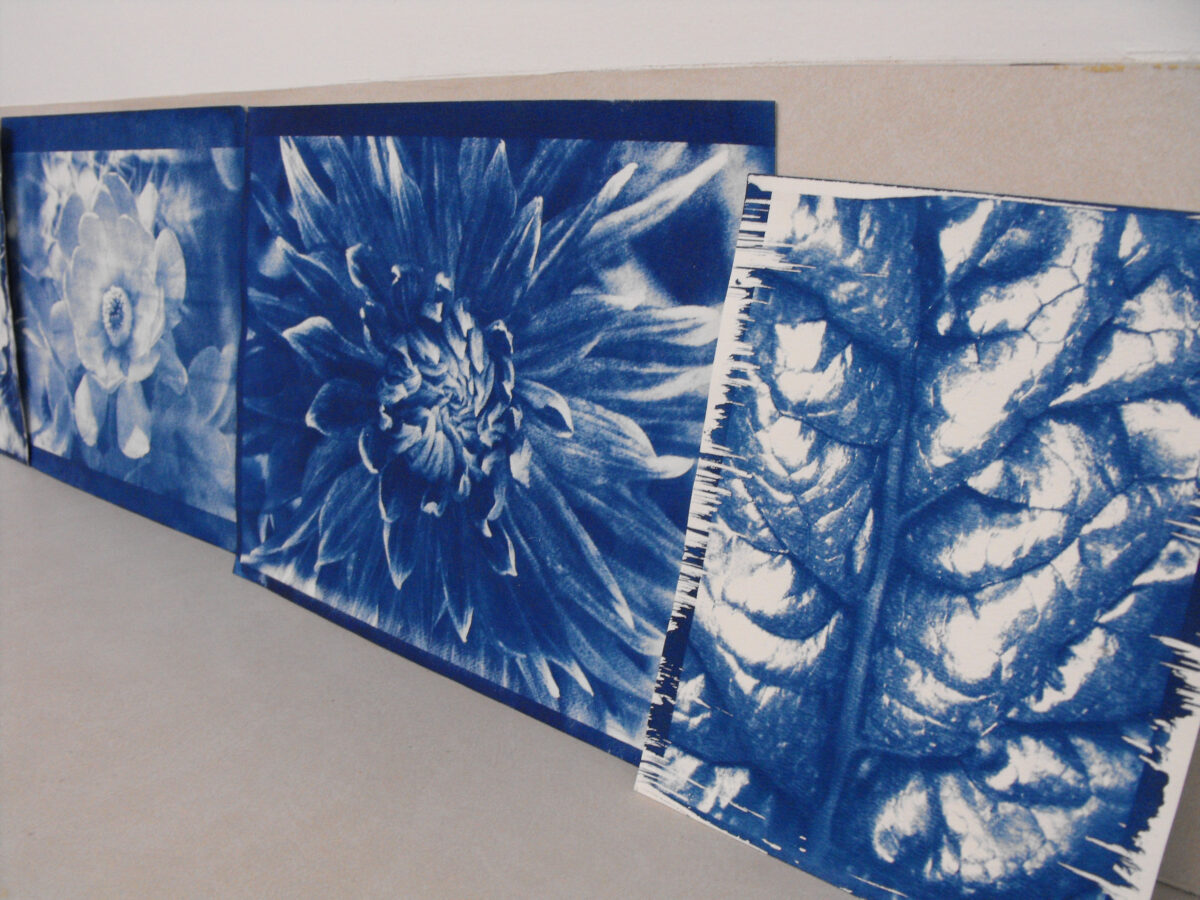
Some of John Hampton's cyanotype pieces.
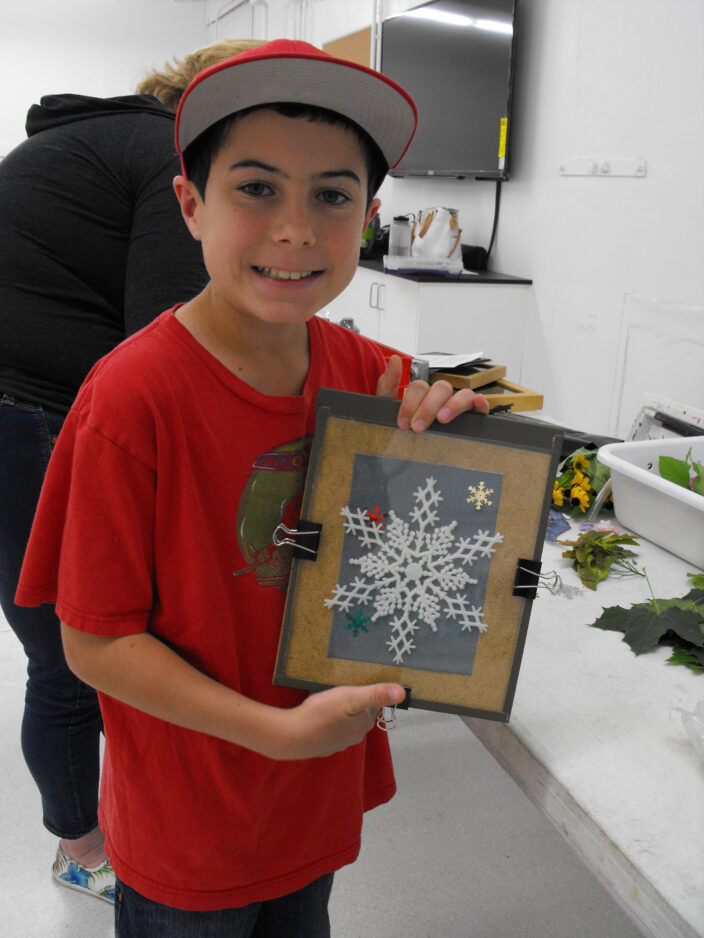
Tucker Inglefield gets ready to expose his cyanotype to sunlight.
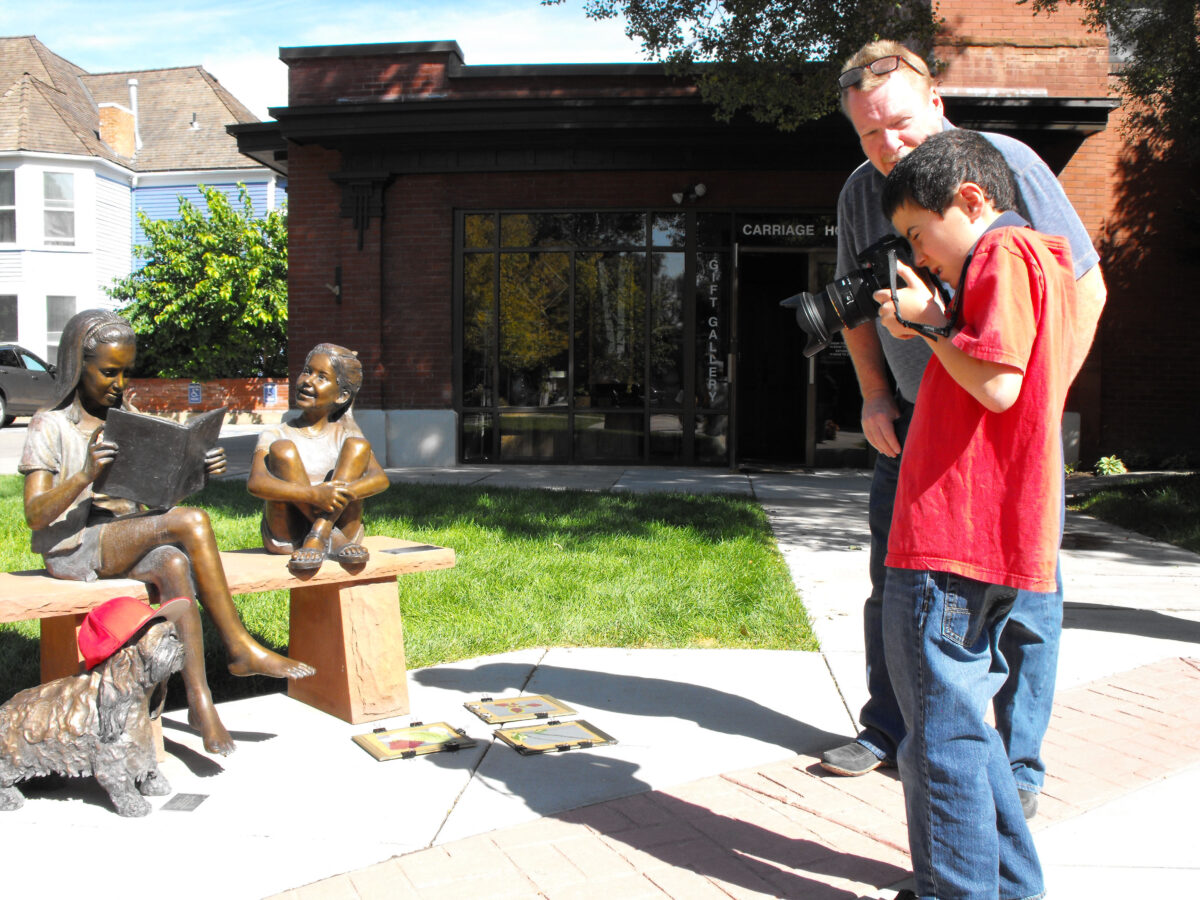
John Hampton instructs Tyler Inglefield on using a digital camera to photograph cyanotypes.
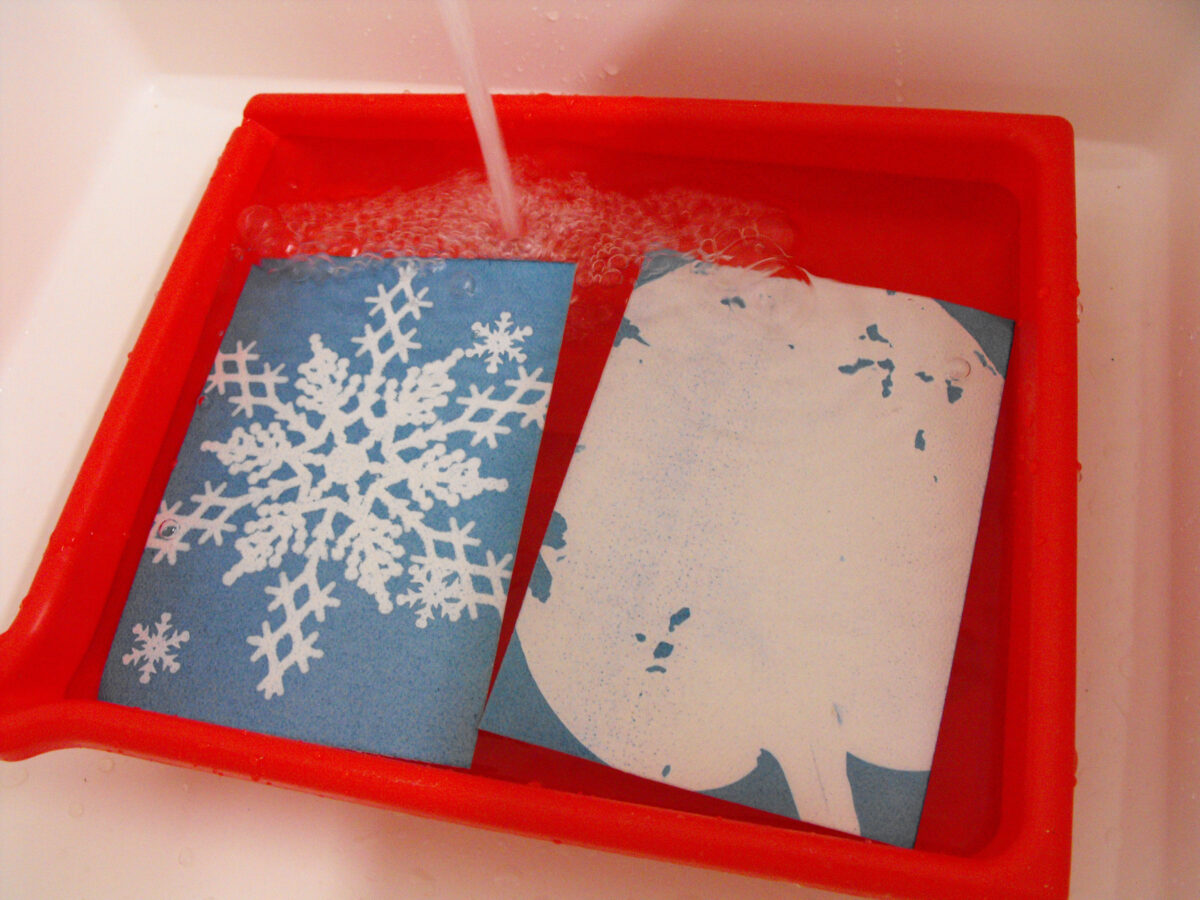
Cyanotypes risning in the sink
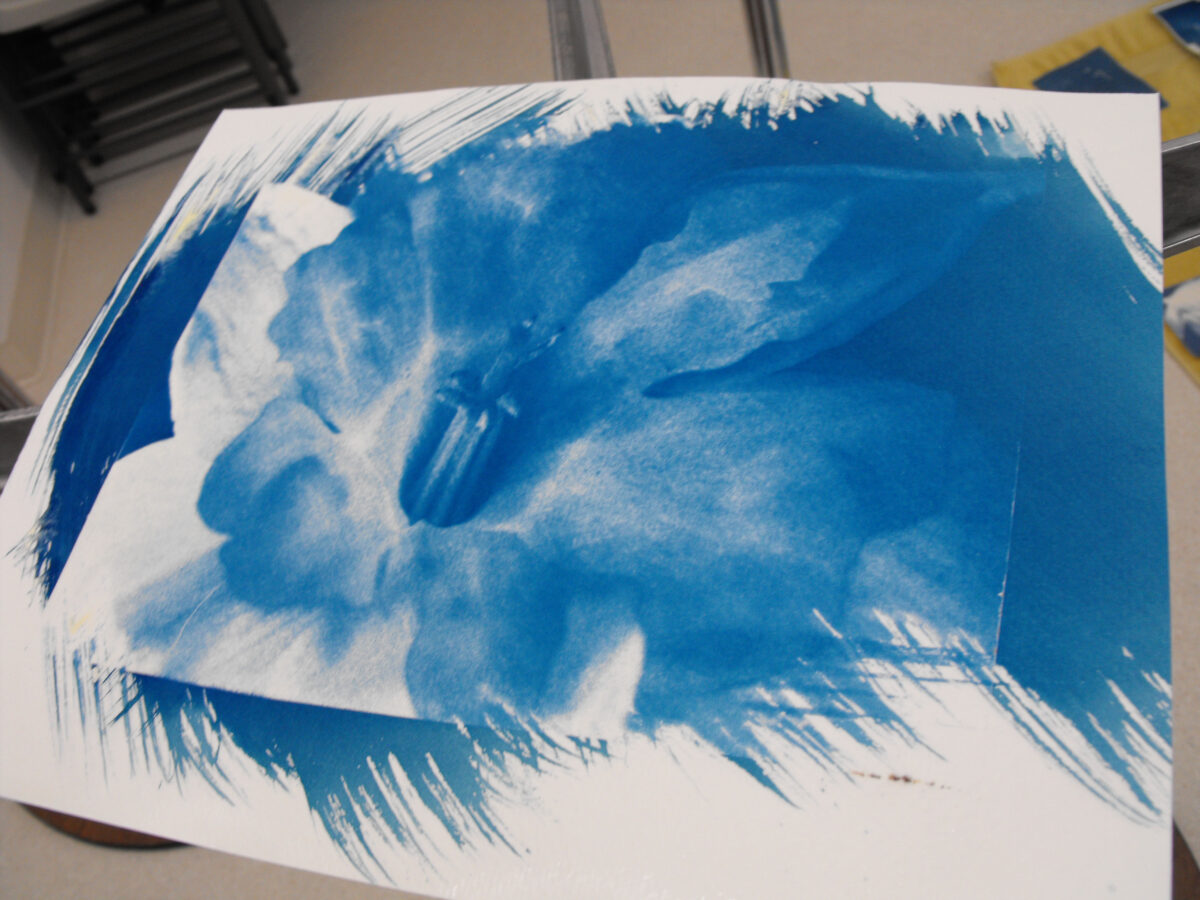
Cyanotype by John Hampton
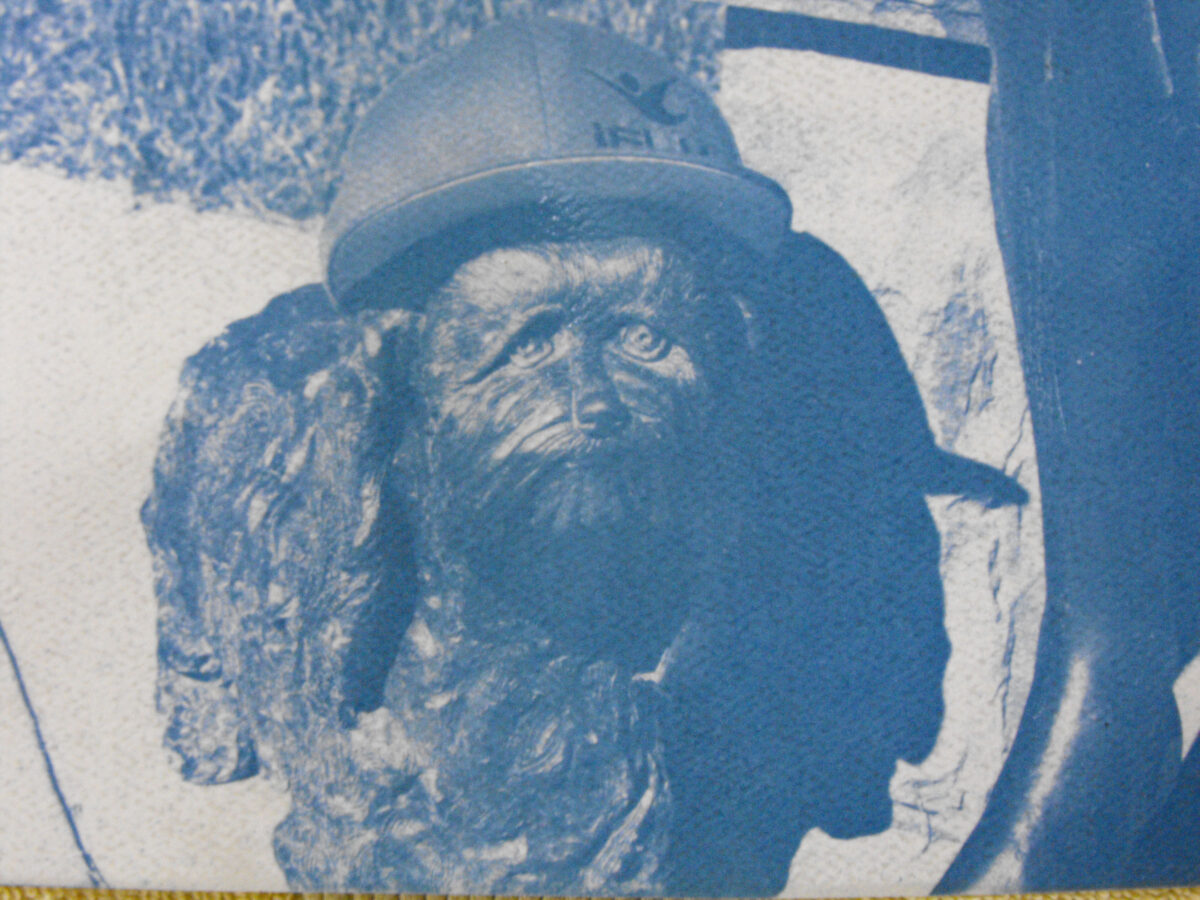
Cyanotype by Tucker Inglefield
OGDEN — Students in John Hampton’s cyanotype workshop at the Eccles Community Art Center learned some interesting ways to turn a negative into a positive by producing cyanotypes and photograms.
A cyanotype is a photographic blueprint created with the use of paper coated in iron compounds, objects –flowers, feathers, leaves — or photo negatives printed on transparency film, a proofing frame, and UV light. Photographers interested in producing cyanotypes can either buy pre-treated paper or make their own by treating watercolor paper with liquid cyanotype solution. Hampton, a teacher at Ogden Preparatory Academy, said both liquid cyanotype solution and pre-treated cyanotype paper can be found online at sites like B&H Photo or Photographer’s Formulary.
Hampton also said that proofing frames can be expensive, but inexpensive versions can be created by duct taping one side of an 8 x 10 piece of Masonite to an 8 x 10 piece of glass and using binder clips to keep the makeshift proofing frame closed while in use.
Students started out during the recent workshop by choosing objects to arrange on top of pre-treated sheets of cyanotype paper. After they’d arranged the objects on top of the paper and placed them securely into their makeshift proofing frames, they took the frames outside and placed them in the sun.
“You have to experiment with the exposure times because as the day goes on there’s more ultraviolet light,” Hampton said. “In the morning it may be a five-minute exposure. At one o’clock in the afternoon, it may only be a two-minute exposure.”
When they brought the cyanotypes inside they rinsed the cyanotype solution from their projects in a plastic tub in the sink until the water was clear, and then laid them out to dry.
Hampton said over-exposing a cyanotype will make the resulting image a very dark blue, whereas underexposing a cyanotype will make it very light.
“It’s not an exact science, and that’s one of the reasons I like it,” said Hampton, adding that after 35-plus years as a photographer, he has enjoyed rediscovering the cyanotype process. “Coming back to this process was a lot of fun. If you create your own cyanotype paper, you can get brush strokes into the image by coating the page.”
After producing cyanotypes with the leaves, flowers and feathers, Hampton let his students loose with his digital camera to take some photos in the Eccles Community Art Center’s courtyard. After they’d taken their photos, Hampton created negatives of the photos in Photoshop and printed them out on transparency paper with his inkjet printer. His students then used the same method they’d used to produce the object cyanotypes — called photograms — to produce cyanotypes with their negatives.
“I think it’s really tremendous the options that are available once you start doing it. I’m excited to use this at school. I need to start harvesting rubbish. Start Dumpster diving for interesting bits,” joked Maria Inglefield, a teacher at Snowcrest Junior High who attended the workshop.
Inglefield’s son, Tucker, 11, was so excited about the cyanotype workshop he said he couldn’t wait to make a Millennium Falcon cyanotype at home to hang in his room.
Hampton said the cyanotype process can even be used on fabric so long as it’s 100 percent cotton.
“You can do this on anything cotton — jeans, quilts, t-shirts,” Hampton said. “If it’s 100% cotton, it will take the cyanotype and you can print on it.”
Hampton said he thinks producing cyanotypes can teach people a lot about photography and art.
“In this process you’re learning how to make a negative, and then how to make a positive from that,” Hampton said. “You discover things that you don’t necessarily discover when you just use a digital camera. There is a personal touch to creating an image like this; you’re making a piece of art. When people do it, they really become connected to it.”
Hampton said there’s no replacement for the smell and feel of processing photographic images by hand.
“I never ate glue as a kid, but I love the smell of this stuff,” Hampton joked. “It’s just fun to do; fun to discover these things. There are these old processes you discover and it’s new to you; it’s exciting. Something you haven’t done.”