Riding trails in Ouray, Colorado – An NUATV club adventure
-
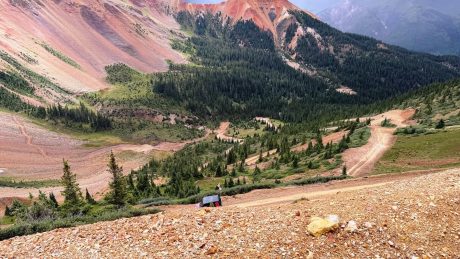
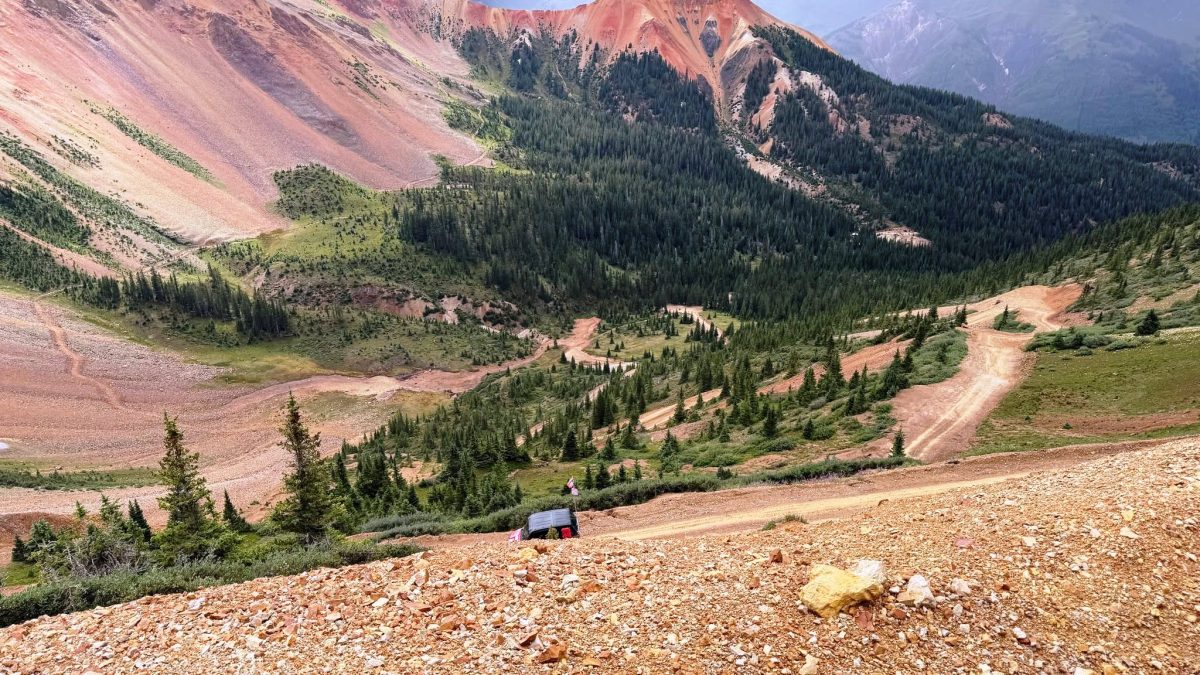
- The majesty of the Colorado Mountains on the Ouray Trails.
-
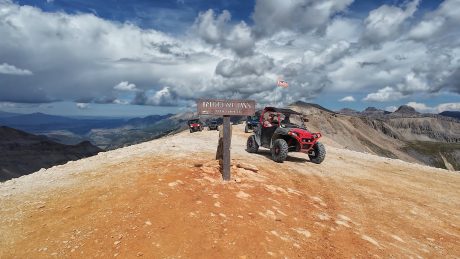
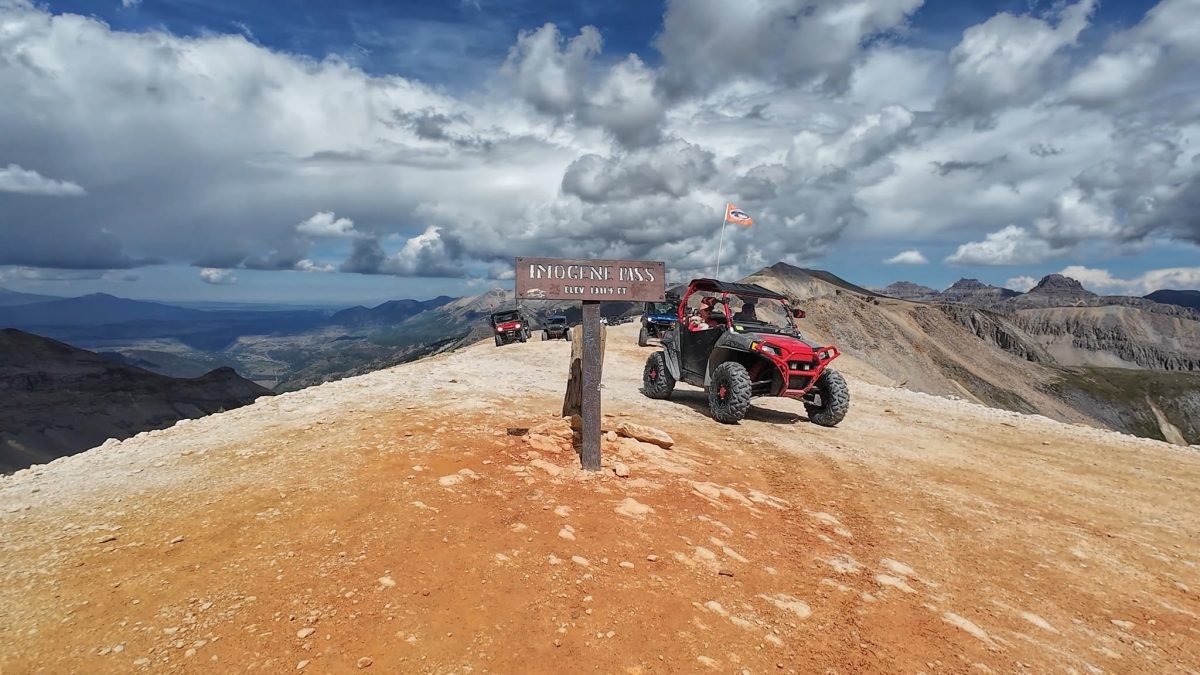
- Topping Imogene Pass on the Ouray Trails.
-
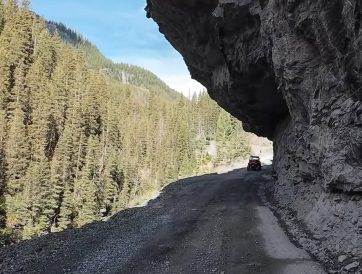
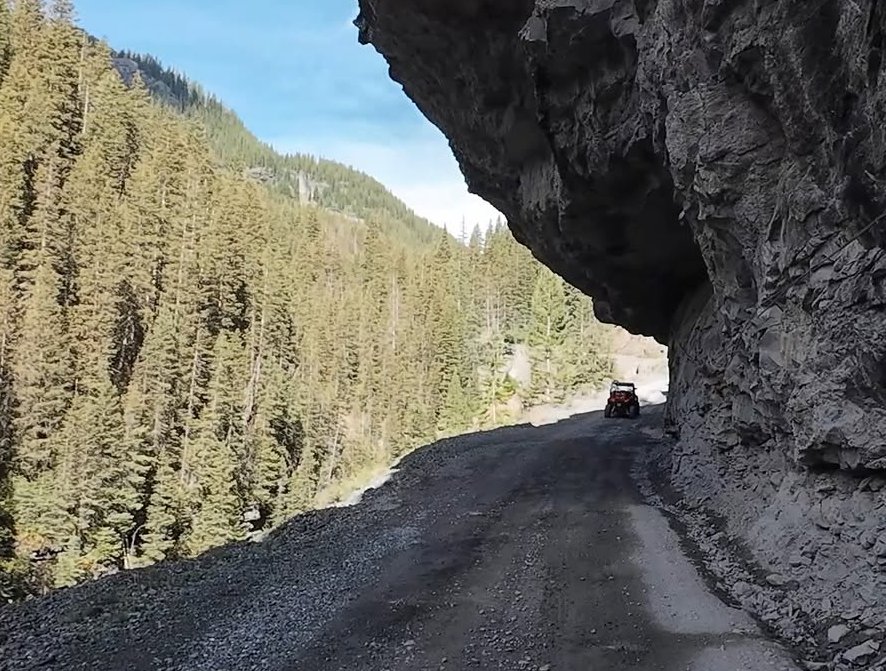
- Riding under the precipice on the Ouray Trails.
-
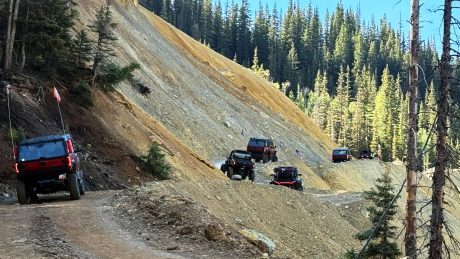
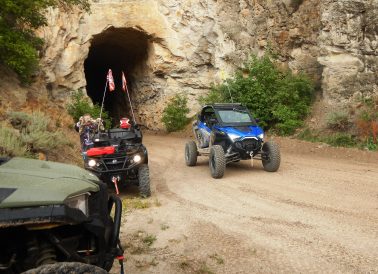
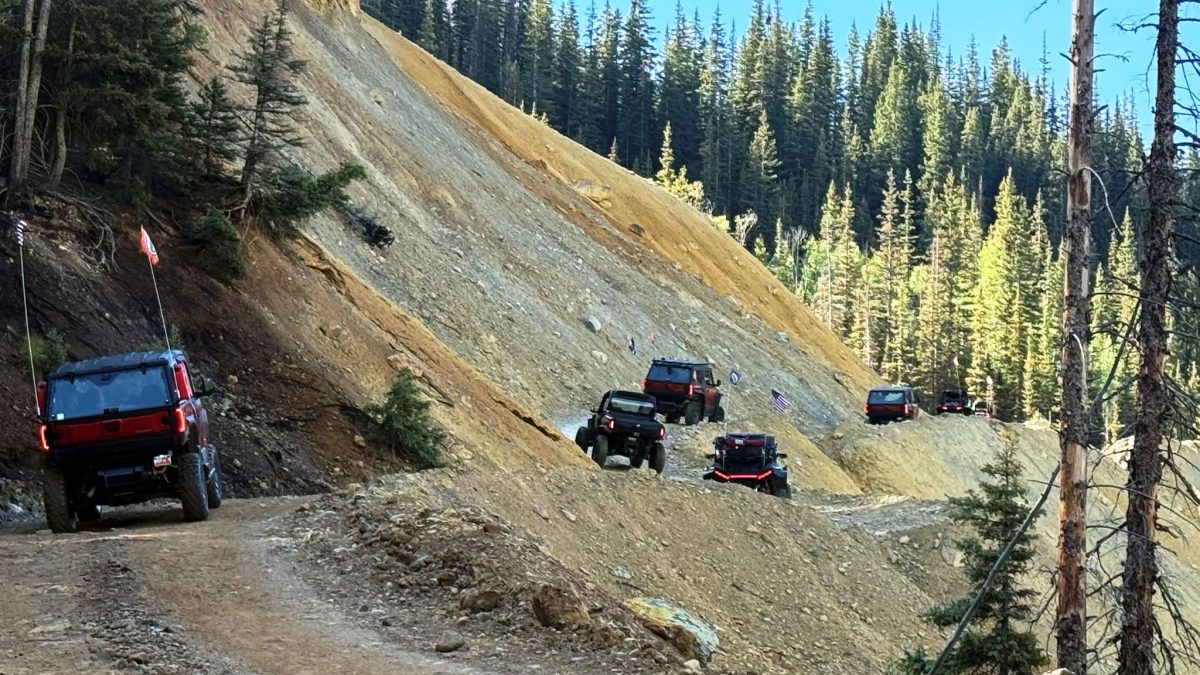
- Riding trails in Ouray, Colorado.
I recently wrote an article about the success of the NUATV Riding Club, whose membership has grown significantly. One reason the club is so successful is that many people volunteer to lead rides. The club has a vast pool of trail knowledge among its members and a program that makes it easy to lead a ride.
This all has something to do with a club ride to Ouray, Colorado. Normally, the club doesn’t venture far outside Utah. Rich Grenier, a club member, mentioned that he had a relative living in Colorado, and Dave Schoss, our current club president, said, “Take us there.”
Rich agreed to take 10 riders. Those slots were filled immediately, with 30 people put on a waiting list. More ride leaders were found, and three groups of 12 each were formed. Two groups staged at Old Ironton and one staged at Ouray for the first day.
Ty Tyler was camped at Ironton. He described the first night as follows, “Man! It rained like Noah’s flood rain for several hours. Unfortunately, all the runoff funneled right through my camp! I had a river running through it, bringing mud and slop with it! I figured I’d have to become a camp host, as I figured I’d be stuck in the mud for a long time until it dried out enough for me to pull out, provided it did not rain more!”
He went on to say that, “There were 8 mud slides blocking the road from us to Silverton and 2 blocking the road to Ouray. The folks staying in Ouray could not get up here to get their machines, which they left so they would not have to tow them each day.” Since Ty was stranded there, they decided to make the best of it and headed up to Corkscrew Pass.
Ty described the area as follows, “This whole area is filled with mines and mining history. We got up to 12,800 feet elevation during the ride. Most of the day was over 11,000 feet. It took hearty men and women to live and work in this environment.”
When they arrived back at camp, Ty tried to get his rig out of the mud, but it would not budge. Road crews were working on clearing debris from the slides, and he saw hope in one of their big rigs having enough power to pull him out. He was grateful that they were willing to help.
The problem was where to attach a tow strap. The internet is full of scenarios where the strap was attached to the axle, yanking the axle completely off. They found a point where the leaf spring bracket was welded to the frame and pulled his rig out by the trailer.
Paul and Pam Keople were in another group. All of the groups were scheduled to take the same trails on different days. When they rode to California Pass, they reached an altitude of 12,960 feet. The switchbacks were so steep that his GPS registered the grade at 18 percent. The turns were so sharp, and the drop-offs were so treacherous that a spotter was required to guide the rider through a three-point turn at each corner.
Each group took a mine tour of the Old Hundred Gold Mine. Riders donned hard hats and protective gear, boarded mining cars, and rode deep into the mine to experience life as a gold miner. Guides demonstrated power drills and hand drills that were used on the face of the gold vein. They also learned about setups to use dynamite in the mine.
In addition to the storm that buried Ty’s rig, rain was the order of the day. Things got so bad that the rides planned for the third day had to be canceled. Mud and rock slides closed access to the trails.
The riders’ comments sum up the event’s success. Ann Nelson wrote, “It was a fantastic couple of days riding in the San Juan Mountains with friends from the club. The floods and evacuations added to some interesting experiences.” Paul Keopple wrote, “It’s trips like this that create the best stories and memories, but it’s never much fun when you are ‘in the moment’.” Patty Brown called the trip “Awesome.”
I wasn’t on this ride, but I identified with its adventurous aspects. When you go, take plenty of water, keep the rubber side down, and think about the stories you can tell when you are not “in the moment.”
Lynn R. Blamires can be reached at quadmanone@gmail.com.