ATV Adventures: The Off-Highway Vehicle Program is alive and well in Utah
Courtesy Lynn R. Blamires
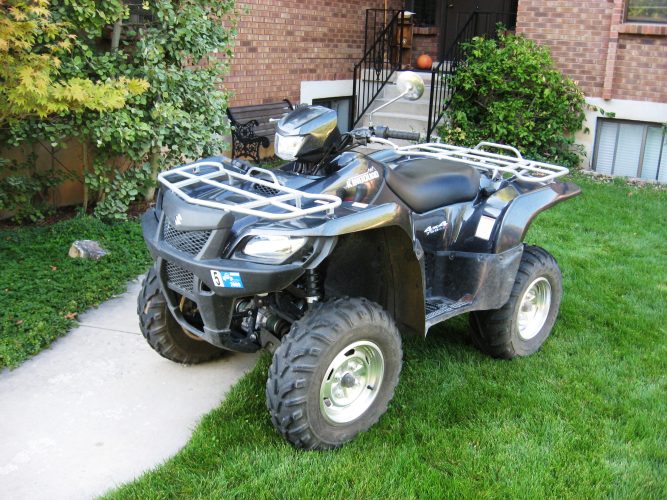
This is definitely not a Type II ATV.The Off-Highway Vehicle Report for 2024 is now available at https://recreation.utah.gov. This report represents the most recent figures and usage data from the Utah Division of Outdoor Recreation. It shows that there are 227,195 active OHV registrations for resident-owned vehicles in Utah. These registrations include Type I and II ATVs (including UTVs/side-by-sides), off-highway motorcycles, and snowmobiles.
ATVs are now divided into two groups.
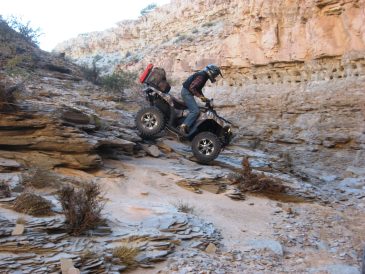
Type I ATVs are designed with a seat for the rider to straddle and are equipped with handlebars. While some Type I ATVs are designed to accommodate a passenger behind the rider, most are intended for single-operator use. In Utah, a Type I ATV is generally 52 inches or less in width and weighs 1,500 pounds or less. They are popular for trail riding, hunting, and agricultural work.
Type II ATVs are referred to as UTVs or side-by-sides. They feature non-straddle seating, like bucket or bench seats, a steering wheel, and a rollover protection system (ROPS) or roll cage. They are built to carry a driver and one or more passengers, with designated seating positions featuring handholds and footrests for passengers. They are wider and heavier than the Type I machines, ranging from 50 to 80 inches in width and weighing up to 3,500 pounds.
These larger machines have led to trail-width restrictions governing where they can be driven to maintain the pristine nature of Utah’s backcountry. Utah trails have four width designations for this purpose: 50 inches or less, 60 inches, 66 inches, and open to all machines. These machines qualify to be driven on city streets when properly equipped and licensed, making them no different from any other car on the road.
A law went into effect on January 1, 2019, directing that money collected from Off-Highway Vehicle registration be directed to the Utah State Parks and Recreation Department. Previously, these monies remained in the county where they were collected and were allocated to a general fund. Now the money goes to counties with extensive ATV trail systems, where it is needed to maintain them. It is important to note that in 2024, the number of registered machines had grown by over 25,000. I will be interested to see what that number is in the 2025 report.
This law has been in effect long enough to measure its worth to these counties. From 2020 to 2024, State Parks awarded $18,404,555 to 338 projects. The grants awarded require matching funds in the form of labor and equipment. Those funds generated a total value of $30.02 million. The Utah Trail Crew spent 10,000 hours enhancing 512 miles of trail. Those projects fell into several categories: 156 were trail work, 56 were Search & Rescue projects, 45 were projects to enhance OHV tourism, and 26 were education projects.
The report further shows how this money was allocated. Where densely populated counties like Davis and Utah received about $546,000 each, sparsely populated counties received more, like Beaver ($2,169,297), Garfield ($1,127,897), and Uinta ($1,224,435). Even Daggett County, with fewer than 1,000 residents, received over $140,000.
On January 1, 2020, Utah severed all reciprocal agreements, requiring non-residents from the other 49 states to obtain permits. At $30 each, those permits generated an additional $907,530 that went directly into the OHV fund. July 1, 2026 that fee increases to $35.
I am a member of the NUATV Club, which qualified for grant money from the State Parks fund for a joint project with Camp Floyd to build a new ATV staging area east of Five Mile Pass. Officially, it is the Camp Floyd NUATV Staging Area. The kiosk is up, but the sign hasn’t been posted yet.
It is a large area on the east side of Allen Ranch Road, across from the Camp Floyd Cemetery. There are no toilets at the staging area, but there are across the road at the cemetery. This staging area is open and provides a quiet alternative to the one at Five Mile Pass.
The Allen Ranch Road goes south to a four-way junction. Turn east to access the Allen Ranch and Barlow Canyon to the Scranton ghost town. Turn east to Little Moab, through the train tunnel, and Eureka. Continue south over Homansville Pass into Eureka. There is a lot to explore from this new staging area.
Yes, the ATV community is alive and well in Utah, and it is receiving growing support from several sectors. When you ride, take plenty of water, keep the rubber side down, and enjoy Utah’s beautiful backcountry.
Lynn R. Blamires can be reached at quadmanone@gmail.com