Staying safe on the water: Experts encourage all watercraft users to take safety seriously

-

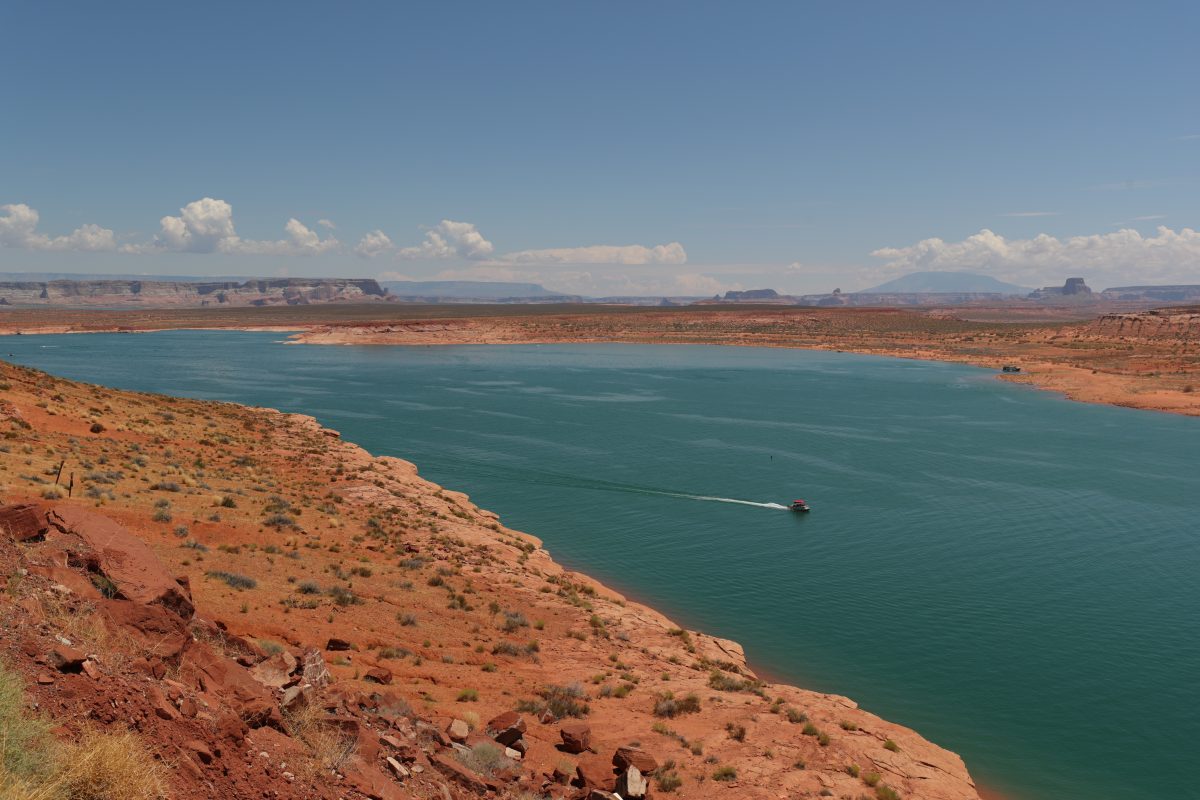
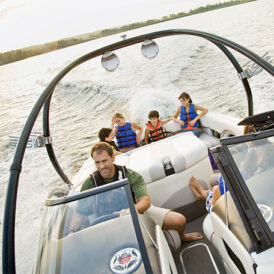
- A motor boat slices through the water at Lake Powell.
-
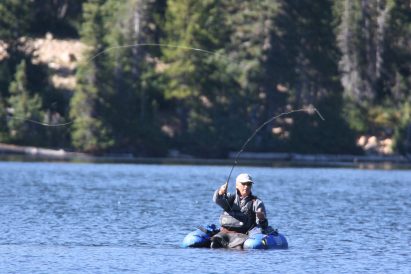
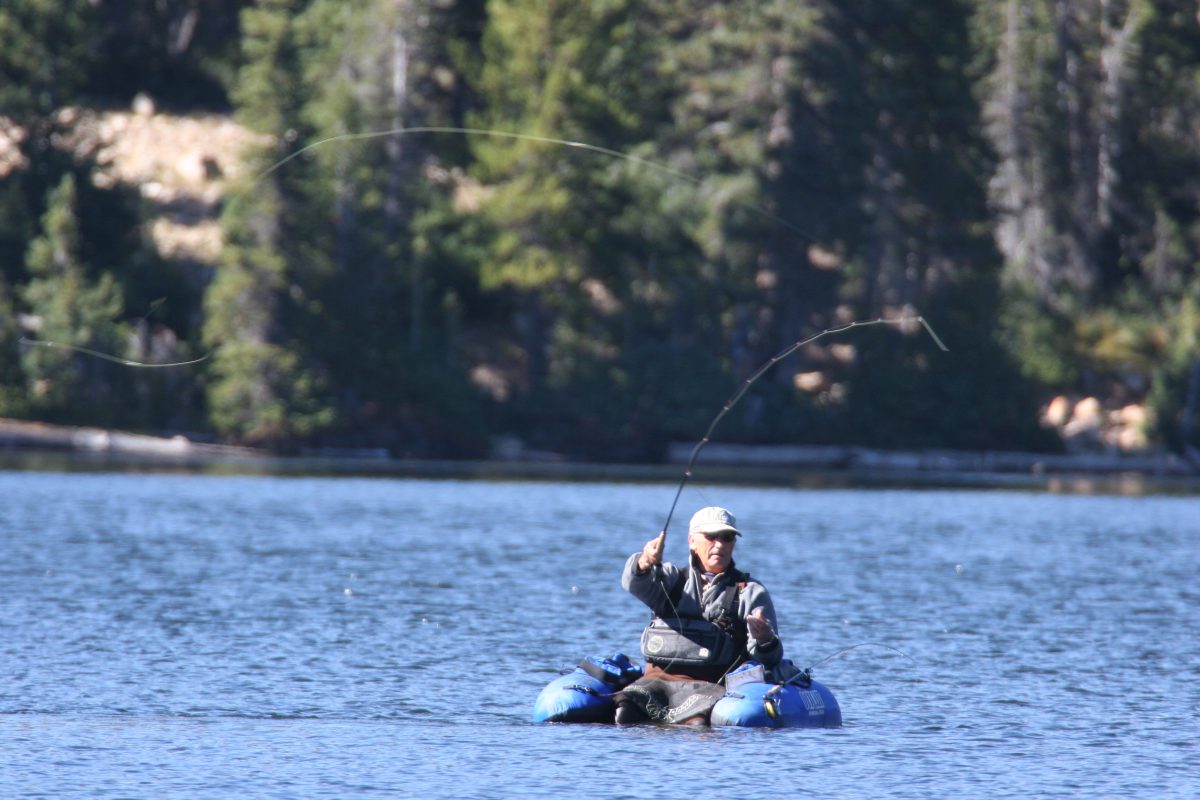
- A fisherman fishes from a float at Strawberry Reservoir.
-
- Launch Your Boat into a New Season
-

- Jared Lloyd paddles on his paddleboard through a channel at Causey Reservoir on Saturday, June 28, 2025.
This is the second of a two-part series on boating and aquatic recreation in Utah. The first article (published on May 16) focused on the challenges of preventing the spread of invasive species, while this one will focus on safety on the water.
Ty Hunter, boating program manager for the Utah Division of Outdoor Recreation, knows it can be really easy for watercraft users to think they don’t really need to take safety precautions, to think they will be fine.
But that’s not always the case.
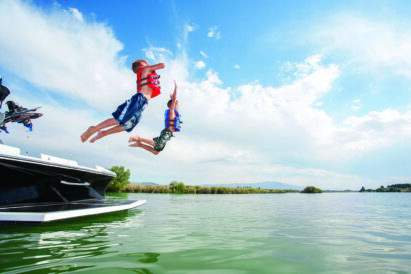
“Time and time and time again, we see incidences where people haveleft the boat voluntarily, maybe jumped out for swim, and been separated from the boat,” Hunter said in a phone interview earlier in May. “We see those individuals start to flounder and panic starts to set in. Then we have people jumping off the boat to swim to them — only now we’ve gone from one person in the water to multiple people in the water. Usually when we start multiplying the number of people in water, we’re going to lose one of them to drowning.”
The risks of those types of tragedies diminish greatly if boaters and other watercraft users take safety seriously and have proper equipment.
“I want happy memories,” Hunter said. “For the most part, if you look at how many happy memories we have, we have a tremendous amount and they way outnumber the amount of unhappy memories. But those unhappy memories affect people throughout their entire life. I just want people to go home at the end of the day, so I push people to have life jackets and throwables on their boats.”
Every year reports come from Utah’s lakes, reservoirs and rivers of individuals who didn’t take proper safety measures and had accidents, some with terrible consequences. That’s why experts want everyone to put safety first.
Here are a few of the tips they shared to help boaters and others who are on the water have the best chance to come home safely:
1. Get educated.
Lynne O’Hearn, BoatUS Foundation Program Manager, said Utah has a mandatory watercraft education program to help “people understand the basics of safe and responsible boating before they head out on the water.”
“As boating continues to grow in Utah, these programs help boaters better understand the rules, shared responsibilities, and simple safety steps that make the experience safer and more enjoyable for everyone,” she said.
BoatUS Foundation, which has focused on boating safety since 1998, has made these courses more accessible online and for free.
“To date, we have had 1,926 course takers in Utah alone,” O’Hearn said. “Boating safety education has consistently been shown to help people feel more confident on the water, make smarter decisions, and better understand how to handle common situations safely. A lot of boating incidents come down to things like inexperience or lack of preparation, and education helps address those issues before someone even leaves the dock.”
She emphasized the importance of doing things the right way.
“The biggest thing is not to get too comfortable and skip the basics, even if you’ve been boating for years,” O’Hearn said. “A lot of boating accidents start with small things, like not wearing a life jacket. Other items that often get overlooked include not checking the weather, and not testing safety equipment. Water and weather conditions can change quickly, and taking a few extra minutes before every trip can make a big difference once you’re out on the water.”
The course can found at boatus.org/utah.
2. Make sure your equipment is ready.
Hunter reminds boaters to ensure their boat and trailer are ready for both transport and being on the water.
“If the battery was dead and it was dead for a long time, you may want to go put a load test on the battery to make sure that that battery is going to last,” he said. “You know if you charge it up that it’s going to last for this trip and the trips to come throughout for the summer.”
He urged boaters to double check safety equipment like life jackets and throwables, but also emphasized the checking the fire extinguisher on board.
“Make sure your fire extinguishers up to date,” Hunter said. “It needs to be less than 12 years in age and the needle needs to be in the green. If it has a decal on it that says that it’s expired from its inspection, then you have to go get it re-inspected again. If it is time to get a new one, make sure it is marine approved.”
3. Respect that danger on the water is real for all craft.
Hunter said that safety precautions definitely aren’t just about individuals in big motor boats.
“Last year, the majority of the fatalities that we had were people who were in non-motorized craft: stand-up paddleboards (SUPs), canoes, kayaks,” Hunter said. “That’s where most of our fatalities came from. They were all drowning related.”
He reiterated that the first key is to use an appropriate personal floatation device, just in case it is needed.
“Don’t be vain,” Hunter said. “Don’t worry about your tan lines. Wear a life jacket.”
He described how technology now allows paddlecraft adventurers to have the backup they need without being as bulky as in the past.
“If you’re a fairly good swimmer, you can buy a little inflatable belt pack,” Hunter said. “You can jump in the water, you can swim, you can fall off your SUP — but if you get in a situation where you need a little extra flotation, you reach down, pull the rip cord, the flotation inflates up in front of you and you’re taken care of. It’s actually US Coast Guard approved. And they are amazing.”
He also encourages all who use watercraft to have a whistle or horn to alert others in case of trouble.
4. Be patient.
Many injuries occur on the water when boaters are impatient or don’t take the time to be sure things are safe.
“That is something I am seeing more and more,” Hunter said. “We need to be a more patient society, patient with each other and and how we interact with one another out on the waterways.”
He talked about how boaters can risk injury and even death when they move too quickly in the loading and unloading processes, as well as when unaware of others in the water around them.
“Before you start the motor up, before you move, before you do things, make sure that you’re checking everybody on board,” Hunter said. “Another of the big things I want to touch on is speed and proximity. When I talk about people being patient, speed and proximity is a patience thing too.”
He said that boaters have the responsibility to know what impact their craft is having on others and should employ an overabundance of caution.
“I’m actually going to hit a slogan that is from the Water Sports Industry Association, which is called ‘wake responsibly,'” Hunter said. “They are suggesting, if you’re creating a wake, be a minimum of 200 feet away. Turn your music down and limit repetitive passes. That’ll make it to where that the impact is not that great on the others that it may be impacting.”