ATV Adventures: Floy Wash: riding an ATV in dinosaur country
-
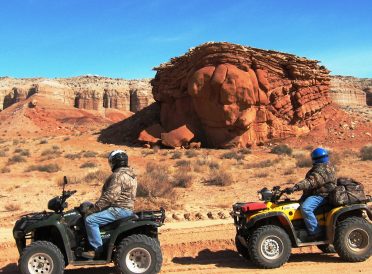
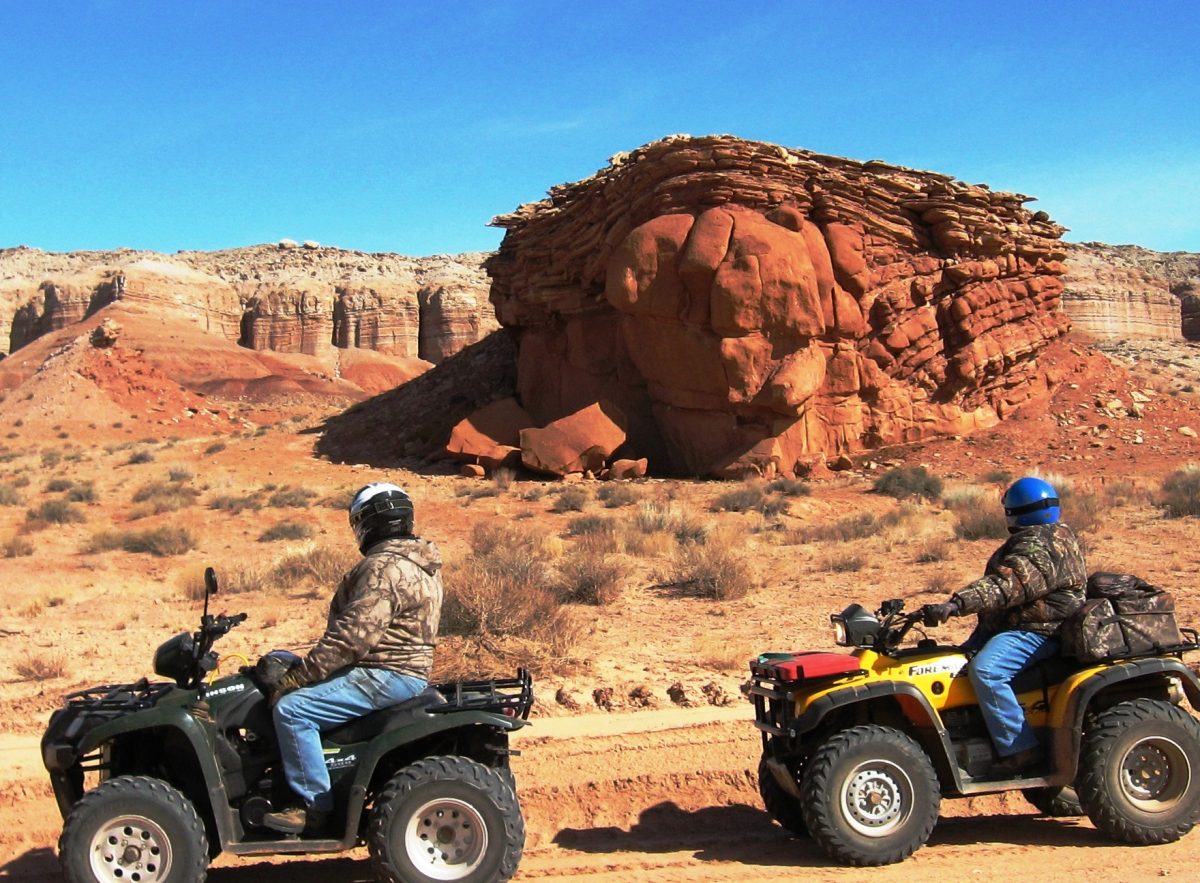
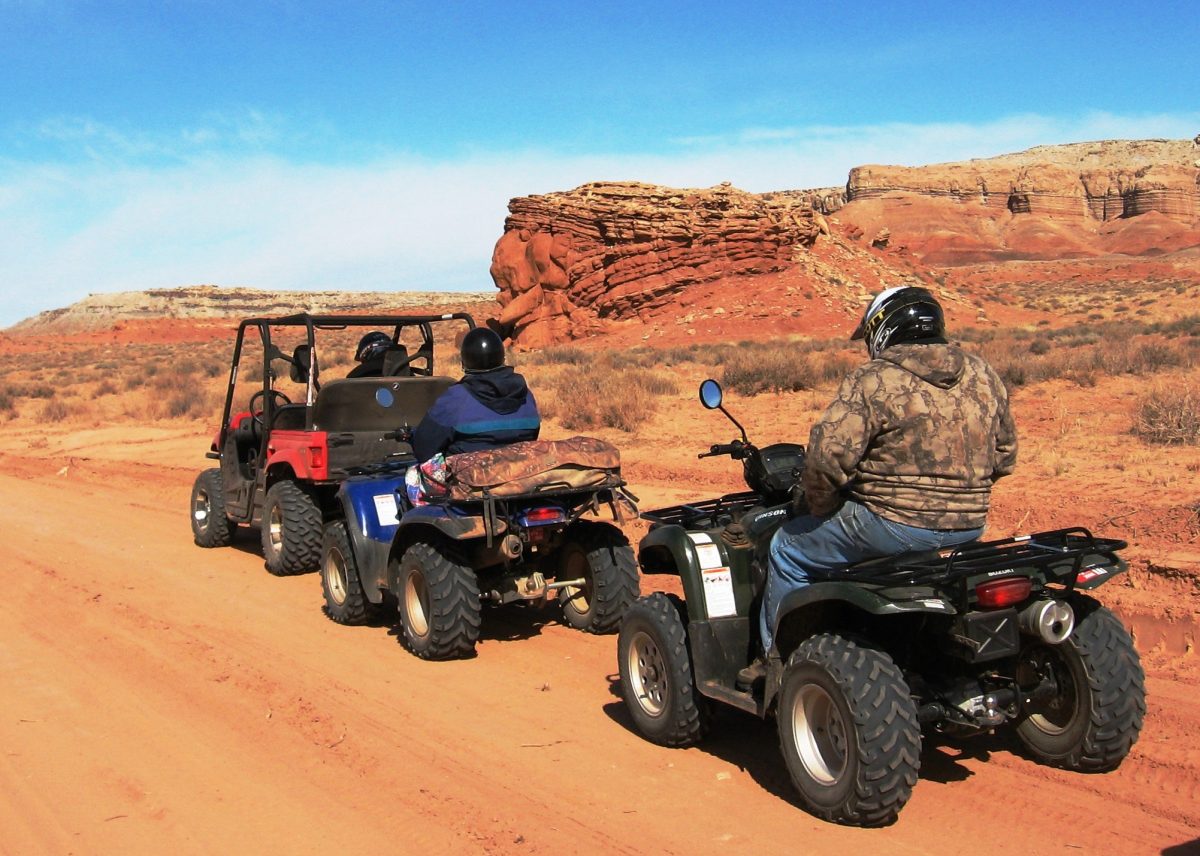
- Another look at the old man with the big nose.
-
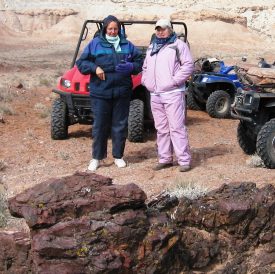
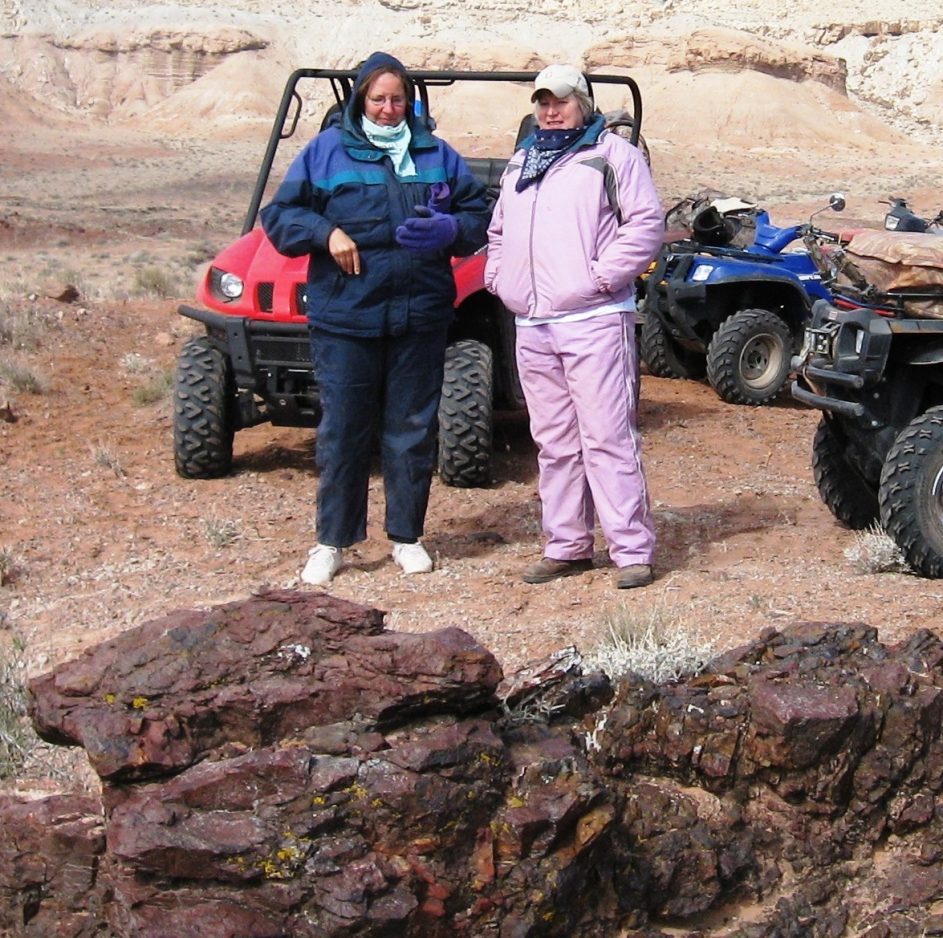
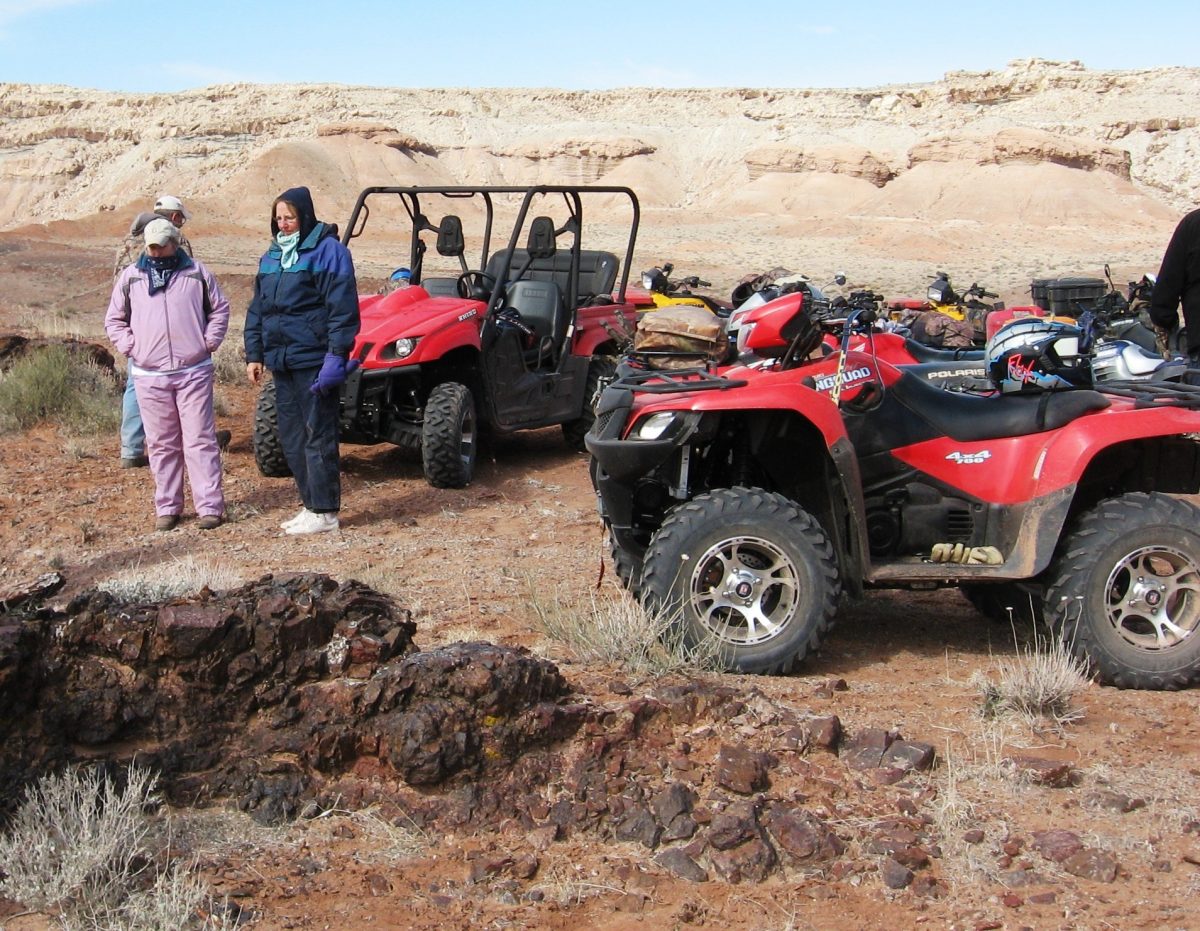
- Another picture of the ladies on the dung heap like petunias in the onion patch.
-
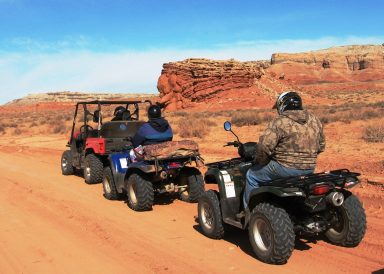
- Stopping to look at the old man with the big nose rock.
-
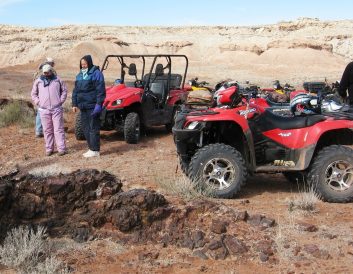
- Gayle Blamires and Diane Layton of Layton atop the petrified dinosaur dung heap.
Green River is famous for juicy watermelons, the adventures of John Wesley Powell, and the muddy green of the river that gives the town its name. Not far from the watermelon stands, however, there is evidence that dinosaurs really did roam the earth. It is easy to find adventure in the backcountry around Green River.
The area is flush with ATV trails. To the west is the San Rafael Swell with trails that wind through massive stone sentinels. The Buckmaster Road lies between the Swell and Green River; it is riddled with old mining trails. Thompson Springs is to the east with its own set of trails. South of town are soda geysers, Crystal Geyser being the most well-known. Floy Wash is also south of town.
Floy Wash is on the Green River side of Thompson Springs. It is one of the first places I visited on an ATV some 30 years ago. Like many people who buy new machines, I didn’t know where to ride. I joined a Salt Lake ATV club, and the Utah backcountry started to open up to me.
Floy Wash is accessed off Interstate 70 at exit 175 east of Green River. It is a lonely exit with no services, but it is the door to some amazing backcountry. The road south is shown on the Utah Road & Recreation Atlas as State Road 147 or Ten Mile Road.
After four miles, keep right on the Ruby Ranch Road. About two miles later, a large flat area on the left is suitable for staging. Ruby Ranch Road continues south to the White Wash Sand Dunes.
The club’s leaders were rock hounds, so I wasn’t surprised that they were drawn to this spot. It is a great place to find rocks. I am not talking about road base here; these are real collectible rocks. I first learned about gastroliths – dinosaur stomach stones here.
A gastrolith (literally “stomach stone”) is a rock swallowed and retained in an animal’s digestive tract to grind food into smaller pieces for digestion. Many animals swallow rocks for this purpose, including today’s reptiles and birds, as well as extinct herbivorous dinosaurs. When the stones became smooth, they were discarded. They are easy to identify because of their smooth, almost greasy feel.
A hill about 150 feet high lies south of the staging area. Unless the area has been fenced off, it is a good place to find blood agate – a white translucent rock with dark red blotches. After finding a few pieces, we continued south and discovered some old buildings near a second hill. I learned that they were used in an old manganese mining operation near Wolverton Ranch.
We made our way around that hill and back to the Ruby Ranch Road, looping back toward our staging area. Taking the first left, we joined a section of the Orange Trail. It took us past a fascinating rock formation, a landmark on this trail. It looks like an old man with a huge nose, his face squished down by a heavy weight on his head. It made me smile. The best view of the old man is from the west.
The road continues some distance along the base of a cliff that looks like a many-layered cake. As you pass the end of the cliff, the road forks; the road to the north goes to Crystal Geyser on the banks of the Green River. We took the fork to the west, watching for a faint trail that takes off the main road toward the north.
We missed it on the first pass and had to retrace our track to find it. On this trail, we came to a small hill covered with large dark rocks. Dinosaurs, much like pets, would go to the same spot to take care of their business. This hill is covered with petrified dinosaur dung.
Petrified dinosaur dung is also known as coprolite. Looking closely at the colorful rock made me wonder what they ate. The rocks can be cut, polished, and made into jewelry. Now that would be a conversation piece.
Further north, we came to a mountain with shallow finger canyons. This is a good place to look for gastroliths and pieces of dinosaur bone. The Salt Lake Rock Hounding Club has verified that a huge dinosaur skeleton is buried in the mountain.
When you ride in dinosaur country, take plenty of water, keep rubber side down, and take a gastrolith home to your mother-in-law.
Lynn R. Blamires can be reached at quadmanone@gmail.com.