As students return to campus, Weber State University embarks on accelerated degree program

-

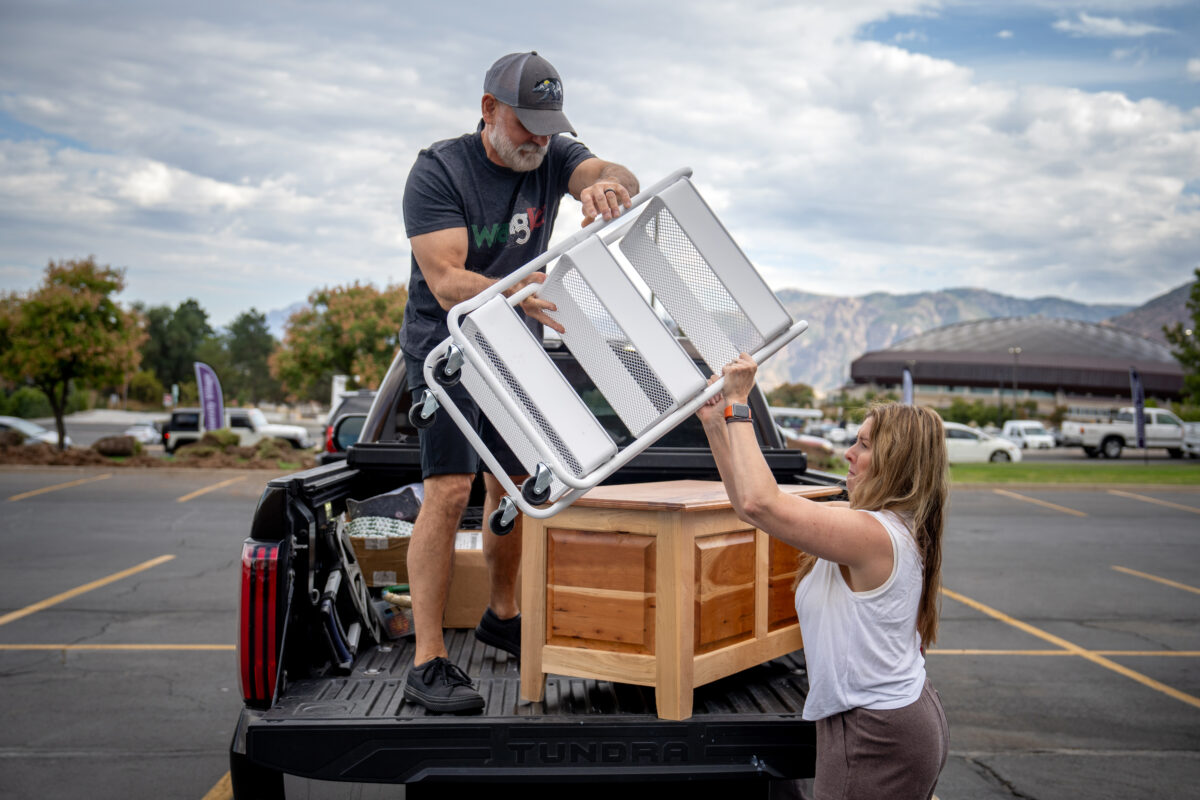
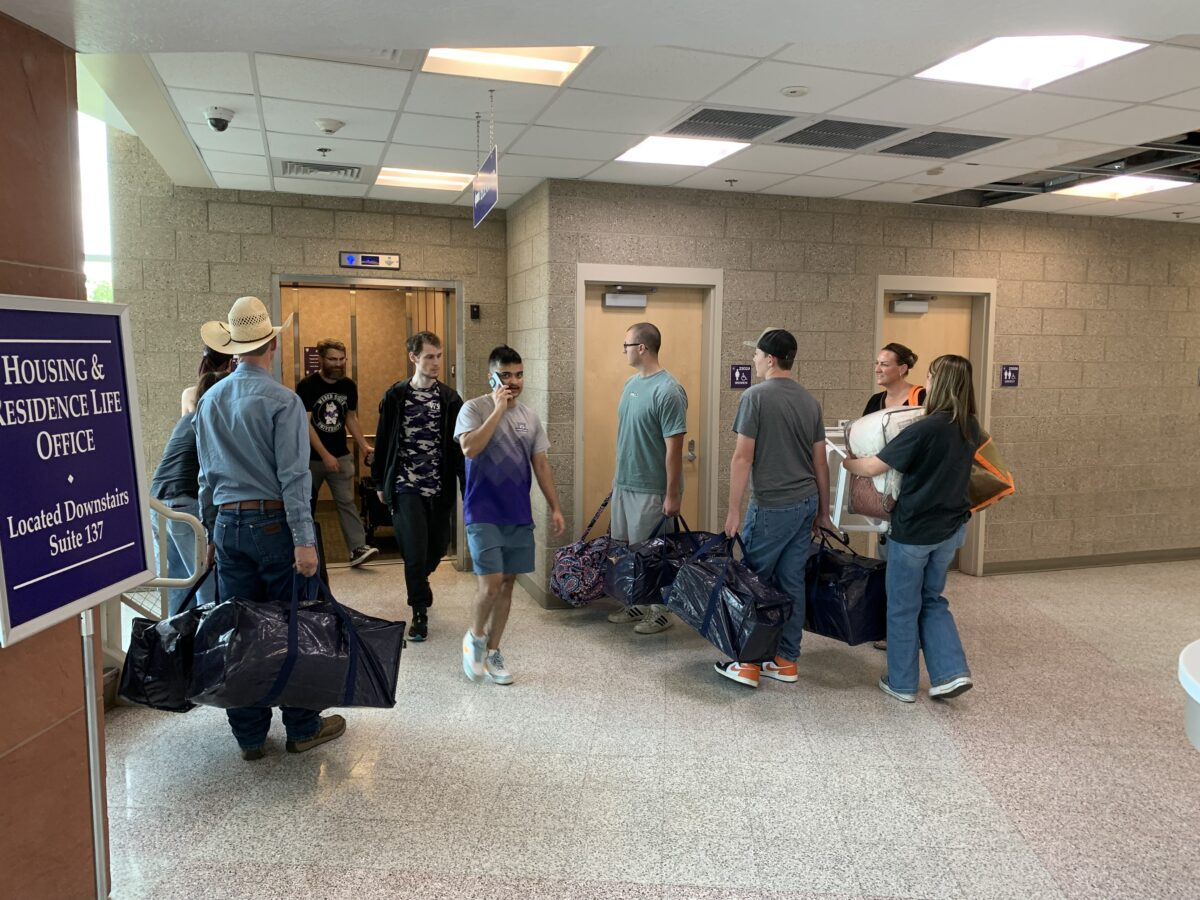
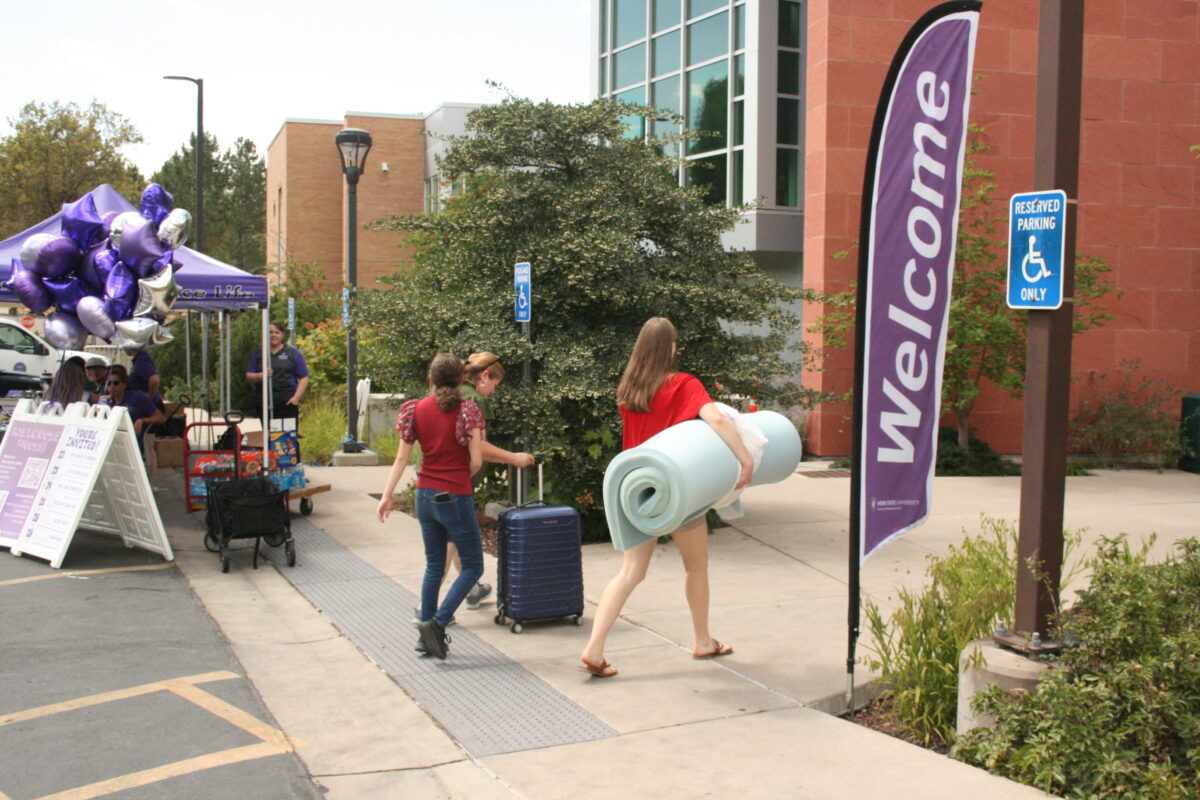
- Students move in to University Village at Weber State University ahead of the start of the fall semester on Friday, Aug. 22, 2025.
-
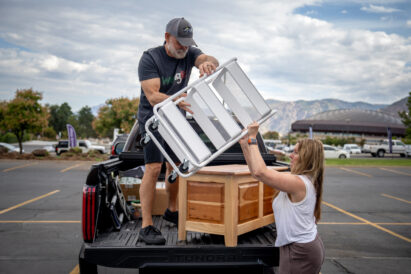
- Students move in to University Village at Weber State University ahead of the start of the fall semester on Friday, Aug. 22, 2025.
-
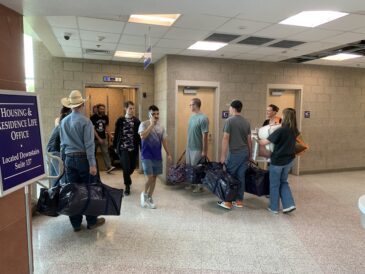
- Students return to Weber State University, aided by friends and family, during move-in day on Friday, Aug. 22, 2025.
-
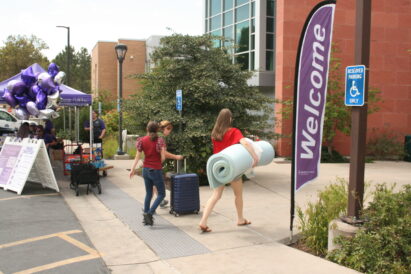
- Students return to Weber State University, aided by friends and family, during move-in day on Friday, Aug. 22, 2025.
-
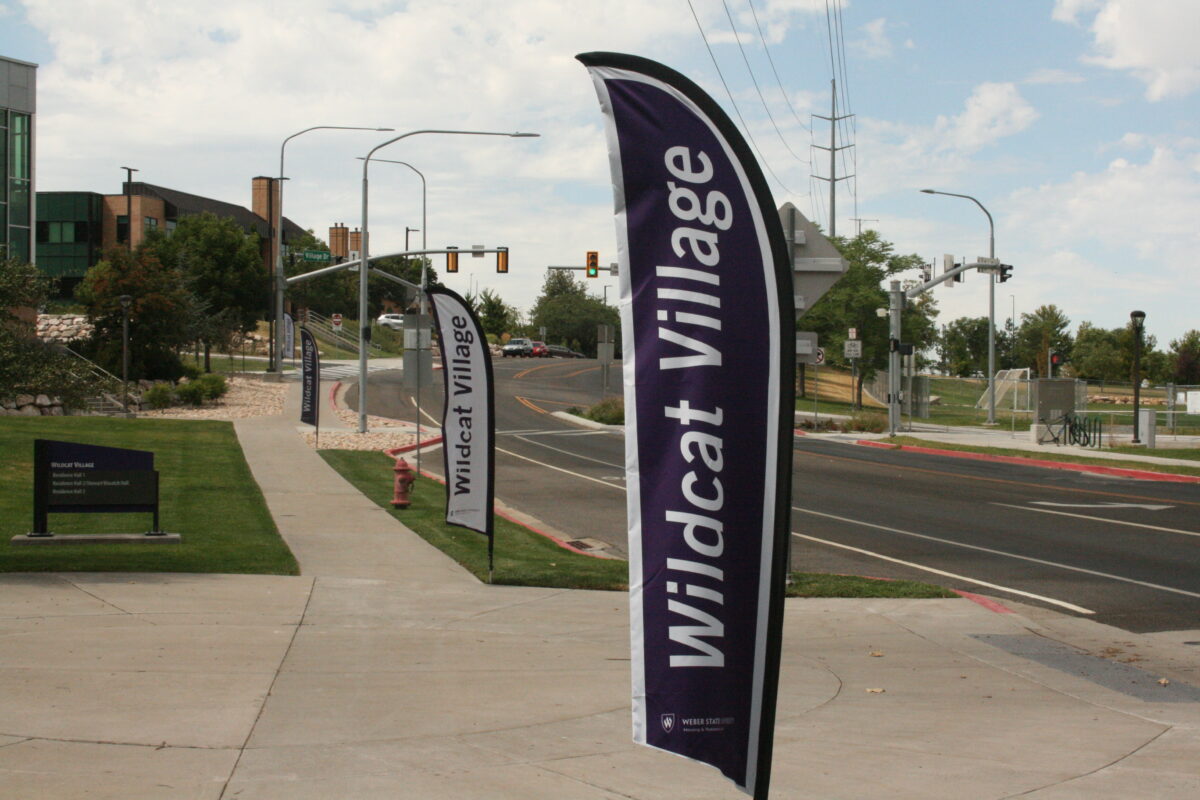
- Signage welcomes Weber State Students back for the fall semester on Friday, Aug. 22, 2025.
OGDEN — As Weber State University students began moving into Wildcat Village and other student housing Friday, most probably didn’t realize they were moving into a university on the eve of embarking on an experiment that could make the college experience for some of them and, ultimately, many of their successors shorter, cheaper and equally as fruitful. Earlier this month, the university announced that it would be introducing an accelerated bachelor’s degree program, allowing students to achieve in three years what would previously require four.
WSU Director of Public Relations Bryan Magaña told the Standard-Examiner in an email that the concept has been in the works for some time.
“We’ve been exploring this for several years, partly because accelerated degrees match Weber State’s mission and vision so beautifully,” he said. “We’re known for making college accessible and affordable, and this is another way to do that.”
He added these degrees meet the needs of the community.
“We’re looking at workforce and salary data and pairing that with learning outcome requirements in each program to determine what fields of study make the most sense to accelerate,” he said. “It’s about what works best for our students, our faculty and the employers who are looking for experienced graduates right now.”
Magaña said they are starting off with one program offering the accelerated degree.
“First up is a bachelor’s degree in Applied Politics, Philosophy & Economics, which requires 90-91 credits,” he said. “That’s launching next week. It’s an interdisciplinary degree for students pursuing careers in politics, public policy, and law — some of the areas where we identified needs in Utah; so there’s a special focus on state and local government.”
He said that could be expanding to another area soon.
“Once we get approval from accreditors, we also plan to launch a bachelor’s degree in sound production and recording that requires 93-94 credits,” he said. “In looking at Utah’s workforce needs, we saw this program as one way to get Weber graduates into those careers at a quicker pace — jobs like audio engineering, live sound, and media production.”
According to Magaña, WSU is the first public university in the state to offer bachelor’s degrees requiring less than 120 credit hours. He said institutions throughout the country are increasingly offering bachelor’s degrees at 90 credits.
“A private college in Utah launched an accelerated program last year offering some bachelor’s degrees hovering around 90 credits, and another public university currently offers something branded as a three-year bachelor’s degree, but it’s still 120 credits — you just need to take classes every summer,” he said. “Nationwide, though, this model is gaining traction. We’re excited to set the standard in Utah and show folks how it can serve our students and benefit our state.”
He said the three-year concept will be a huge win for students.
“Faster, cheaper, more targeted and focused on careers — that’s what so many people want from higher education these days, and accelerated degrees make it happen,” he said. “Our model is career-focused, so it’s designed to include things like internships, but it also means fewer elective courses for students in their major, which streamlines the path toward their career goals.”
At the same time, he said this won’t necessarily mean a drop in the quality of other classes.
“Earning an accelerated bachelor’s degree will not be at the expense of general education courses or any other degree requirements that prepare students for life and career,” he said. We’ve carefully crafted the curriculum to ensure nobody’s missing out on essential learning, career prep, or the overall college experience.”
Magaña said an increasing number of graduate programs are accepting bachelor’s degrees at 90 credits, fueling the momentum of the concept.
“The momentum definitely marks a change in higher education, and it’s something I think we’ll see more of because it just makes sense,” he said. “Higher education is evolving to meet the needs of today’s students, and we love that it’s already happening at Weber State.”
Return to school
While the three-year degree concept gets its start at WSU this year, students began returning to campus on Friday for the fall semester.
“There’s already a lot of energy coming into this new semester,” Magaña said. “We’ve seen lots of interactions on social media with students who are excited to be on campus, either for the first time or for their final stretch.”
He said there will be plenty to keep returning and new students alike busy in the coming week.
“Our faculty, staff and students leaders have lots of fun events planned for back-to-school, so campus will be abuzz those first few days,” he said. “The biggest event happens Friday (August 29) at the Ogden campus with Block Party from 8 a.m. to 2 p.m., which brings everyone together at the university. It’s a chance for folks to see everything Weber State has to offer, from clubs to academic programs to support services, and there’s plenty of free swag to be had. People always walk away with lots of purple by the end of the day.”
The last few years have been punctuated by major changes impacting Weber State that are well out of the university’s control. Over the last couple of legislative sessions, legislation has targeted programs encouraging diversity, equity and inclusion along with major budget overhauls impacting higher education in Utah.
However, Magaña said this year will look much like the last for students.
“In terms of legislative impact, students shouldn’t notice much difference between this year and last year,” he said. “Our faculty and staff have worked hard to make sure students have a smooth transition from year to year, and that their college experience and academic success aren’t negatively impacted by what’s going on budget-wise. We’re confident that they’re coming back to the Weber they know and love.”
WSU’s fall semester officially begins Monday.