Critical stage of construction of water transmission line simplified due to drought
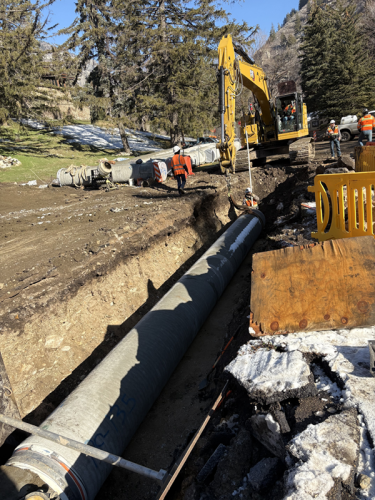
Photo supplied, Sunrise Engineering
Crews work on a new 36-inch water transmission line in Ogden Canyon in this undated photo.OGDEN — A record-low snowpack and inconsistent rains in Northern Utah are helping no one, for the most part.
However, officials are saying that the very conditions that have led to a statewide fireworks ban for the Fourth of July and numerous fires could also make one of the most complex pieces of a necessary infrastructure project much easier this fall.
On Friday, Ogden City sent out a press release updating the public on the construction of the new 36-inch water transmission line from Pineview Reservoir to Ogden via Ogden Canyon. The release, prepared by Sunrise Engineering, details this critical step.
“As work continues on the Ogden Canyon 36-Inch Water Transmission Pipeline Replacement Project, Ogden City is preparing to begin construction on the Pineview Reservoir crossing, one of the most complex and visible segments of the multi-year infrastructure improvement effort,” the release said. “This section of pipeline connects the wellfield north of Pineview Reservoir to the transmission system at Port Ramp Marina and is a critical component of the water delivery infrastructure serving more than 120,000 customers in the Ogden area.”
The release notes that construction has been underway on the $100 million project in parts of Ogden Canyon throughout 2025.
“The existing pipeline has been in service for approximately 55 years beneath Pineview Reservoir and nearly 100 years through Ogden Canyon. The aging pipeline is experiencing significant water losses that are estimated to exceed one million gallons per day and is reaching the end of its service life. Replacement is expected to provide significant water savings by reducing losses from aging infrastructure while helping maintain the long-term reliability of Ogden City’s water delivery system. The project will also help protect against failures that could interrupt service to homes, businesses, schools, hospitals, and public services throughout the community.”
The release said that the current drought has made for a set of unique construction circumstances the project could take advantage of this fall, though not in a way that would lessen access to the system’s water resources.
“Utah’s 2025-2026 water year has produced the lowest statewide snowpack on modern record, and Pineview Reservoir is already projected to reach low levels independent of this project,” the release said. “These conditions create a unique opportunity to complete critical infrastructure work at a time when the reservoir is naturally lower than normal, reducing the impact that would occur during a typical water year. Any water released to support construction will remain within the broader water management system, where it will continue to serve beneficial uses and be managed through existing storage and delivery facilities, including Willard Bay. This project is about protecting long-term water reliability while responsibly managing a valuable water resource.”
Jeffrey Putzke, public information manager of Sunrise Engineering, told the Standard-Examiner on Monday the drawdown would take place around the middle of September when the reservoir would normally be drawn to its lowest level of the year.
“With drawing it down the extra few feet that we need to get it down to dry out the section of that north arm where the pipe rests, it enables them to get in and get out as quickly as possible,” he said.
In a more normal water year, he said construction on the water transmission line where it runs under the lake bed would require more work.
“The other alternatives would’ve added about a month to a month and a half on the front-end and the back end,” he said. “They were going to do a berm or a coffer dam to try to save some of the water in the main part of the reservoir and hold it and pump it from the north arm. It also would’ve included time to get that material back out. … We would’ve probably been pushing into February or even March.”
Without all of the extra work of constructing and deconstructing a coffer dam, Putzke said crews could be finished with this section of the project by early November — or potentially the end of October — and completely off the lake bed by January when water starts to accumulate in the reservoir once again.
For more information on the project itself and the drawdown, visit https://ogdencitypipeline.com/.
Local News

Literacy milestone: Ogden School Foundation set to celebrate 30th annual Fall Author Event this week

Ogden gas price average moves closer to $5 per gallon after 20.9-cent rise since last week