ICE warehouse deal was news to Utah’s GOP governor, congressional delegation
Law professor says the feds tend to win in conflicts with cities, but not always
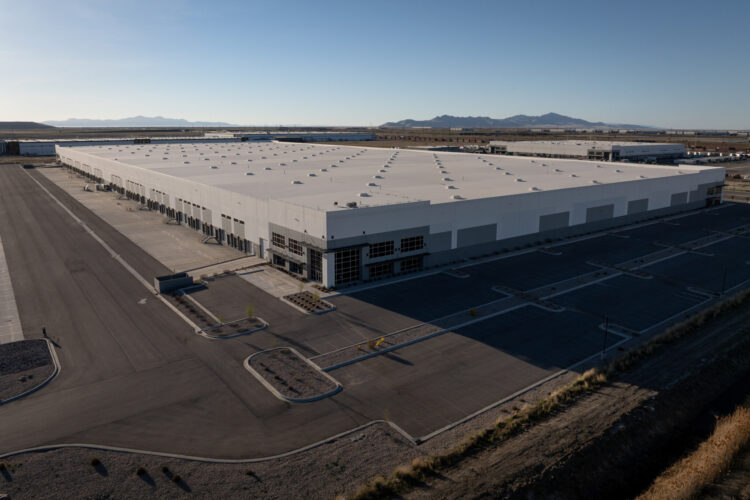
Photo by Spenser Heaps for Utah News Dispatch
A planned ICE detention facility in Salt Lake City on Wednesday, March 18, 2026.Leaders in heavily Democratic Salt Lake City were not the only ones blindsided by a deal paving the way for a massive immigration detention center. Utah’s Republican governor and all-GOP congressional delegation also did not know about the sale of the warehouse to the federal government until after it happened, Gov. Spencer Cox said Thursday.
“When the sale went through, we were not given any notice,” Cox told reporters during a press conference broadcast by PBS Utah. “No members of our congressional delegation were given any notice. No locals were given any notice. That’s, I think, a little frustrating for everyone. We want to work closely together to get things right.”
ICE bought the facility from a private company last week for $145.4 million and has snapped up similar warehouses across the country as the Trump administration cracks down on immigration and seeks to carry out mass deportations. The Department of Homeland Security, which oversees ICE, did not immediately respond to a request for comment.
Cox said Utah has long needed a facility of its own. He described the closest existing detention center in Nevada as routinely full and said transportation there is difficult to manage.
“It’s led to some, just, bad policy and bad decisions, where we don’t have enough resources to get people who cause some serious trouble in Utah where they need to be,” Cox said.
The governor avoided endorsing or criticizing the plan, saying he’s trying to gather more details.
“It’s something that we need to get right,” Cox said. “We’ve reached out to the administration to let them know that we want to work with them on whatever that looks like.”
He went on to say: “I think we need a facility. If this is the right facility, I’m not sure.”
The governor said he’d known generally that the federal government was looking into opening a detention center in Utah. He said both Democratic and Republican administrations have considered the move.
Salt Lake City Mayor Erin Mendenhall has vowed to fight to keep the warehouse from being used to house migrants and said the property and surrounding industrial area can’t accommodate it. In an open letter to the acting director of ICE, she requested a meeting and more information.
Noting immigration is the purview of the federal government, Cox said he believes ICE could open the center, whether the city likes it or not. Cities and counties opposing similar designs are getting creative in finding legal strategies to block them or force the agency to disclose details of its plans.
Local officials in Georgia cut off the water supply to a facility there this week and said they would not restore it until ICE sheds light on how it would avoid overloading water and sewer systems already at capacity.
Jenna Prochaska, an associate professor of law at the University of Utah specializing in areas of property and local government, noted cities typically get to decide what gets built and for what purpose. That gets more complicated when the federal government owns the property in question, she said, but that doesn’t mean there’s nothing municipalities can do to push back.
The Supremacy Clause of the U.S.Constitution, which says federal law trumps local ordinance, has limits, Prochaska said. Under a 10th Amendment principle, the U.S. government can’t force a city to carry out federal laws or programs. That means even if the federal government could claim immunity to local zoning laws, it might not be able to force the city to expand infrastructure such as bringing in new sewer lines, Prochaska said.
Traditionally, the federal government would coordinate with state and local governments on this sort of a facility.
“That seems not to have really happened here, which is really unusual, and given the scale of the proposed detention center, a really big concern is the strain it would take on local infrastructure and services,” Prochaska said.
She sees legal arguments focused on those concerns, along with issues of health and safety, as more likely to win in court than if a city were to pass an ordinance prohibiting an ICE detention facility. It’s a quickly developing area of law, Prochaska said, as conflicts bubble up across the country.