Utah’s heading into an ‘especially dangerous’ wildfire season
Governor plans to issue a drought declaration ‘fairly soon’
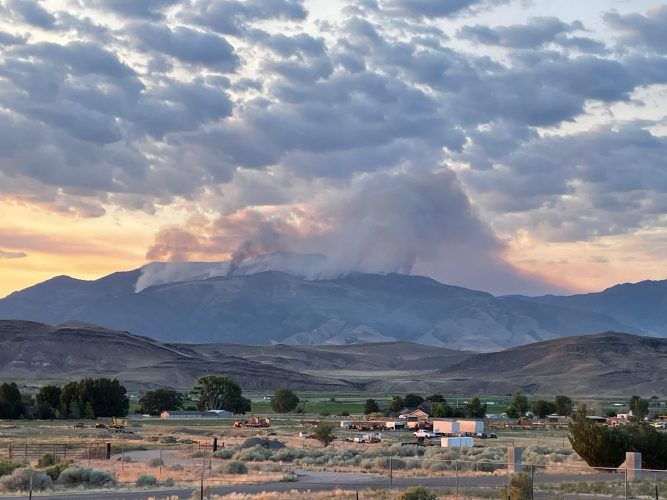
Photo courtesy of Utah Fire Info
The Monroe Canyon Fire near the communities of Richfield, Monroe and Koosharem burns on July 14, 2025.Conditions are ripe for an intense summer of wildfires, state leaders say, with blistering temperatures in the forecast and dry brush across the state. The last thing Utah needs is for people to let their guard down and send sparks and embers into the mix.
“We’re begging Utahns everywhere this year to please use your common sense,” Gov. Spencer Cox told reporters Thursday. “One small mistake, like dragging a trailer chain, a poorly extinguished campfire, or a spark from target shooting can lead to just devastating consequences.”
Utah has recorded 115 wildfires so far in 2026, and more than 84% were caused by humans, Cox said. None were still burning Thursday after recent rains and cooler weather. But that trend is likely to change, Cox said.
The risk is so high that officials are urging Utahns to think very carefully long before the state sees widespread burning restrictions.
“I would even say, for this year, ask yourself the question, is it even worth me having a campfire?” State Forester Jamie Barnes said in a recent interview.
April 1 brought depressing news after a winter of record warmth. The measure of the water contained in Utah’s snowpack, known as snow-water equivalent, registered at about 1/5 the normal amount.
“We’re seeing historic lows in rivers and lakes, I mean, something we’ve never seen before here in Utah,” Barnes said.
As a result, Cox said Thursday, “we know that the wildfire season will be especially dangerous this year.”
He touted Utah’s recent moves to build up its wildfire response budget. In the last five years, lawmakers set aside more than $150 million, with the pot growing gradually on a yearly basis. They also freed up millions of dollars for prevention and mitigation efforts.
“We’ve been putting money aside for bad fire, and so we’re ahead of the game,” Cox said.
The governor said he plans to issue a drought declaration “fairly soon,” and a state committee on drought will discuss the plan next week. The grim outlook extends to the Great Salt Lake, which Cox noted is vital to Utah’s economy and long-term health but “is not recovering at the pace that we need it to” despite a modest rise since the fall.
Cox said President Donald Trump’s $1 billion proposal to help the lake “recognizes what we’ve been saying now for many years — that this is not just a Utah problem, but a national priority.”
Cox said the money would help boost river flows, restore ecosystems and address issues like invasive plant species and dust from the exposed lakebed containing toxic, heavy metals. But it’s not certain Congress will approve the request for the new budget year starting in October.
Southern Utah’s Lake Powell is already getting some federal assistance to keep its levels high enough to generate power. The U.S. Bureau of Reclamation announced its plan earlier this month to send more water to the lake from Flaming Gorge, a reservoir more than 450 miles upstream on the Colorado River.
Utah and the six other states along the river have blown past deadlines to reach a deal on how to manage its dwindling supply, but Cox said this year’s drought may help them get to an agreement.
“I think it helps sharpen, a little bit, the debate and potentially the solutions, to say, ‘OK, what do we do in a year like this? And can that be the basis of an agreement?’ And that’s where I do have a little bit of hope.”