Dakota Wurth trying to represent in run for Senate District 5 seat
-
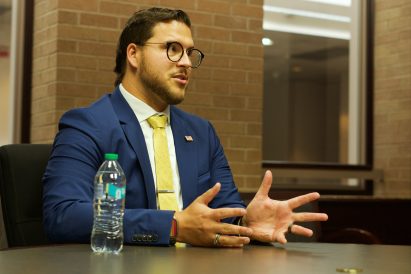
- Dakota Wurth, competing in the Democratic primary for the Senate District 5 seat in Utah, participates in a candidate interview at the Standard-Examiner office on Thursday, May 7, 2026. (Grace Watters, Standard-Examiner)
-
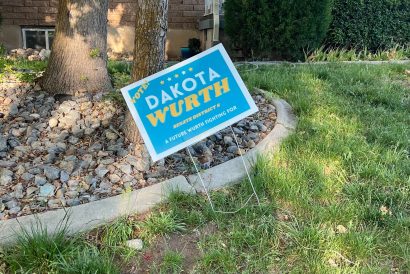
- A campaign sign for Dakota Wurth, competing in the Democratic primary for the Senate District 5 seat in Utah, on Tuesday, May 19, 2026. (Grace Watters, Standard-Examiner)
Grace Watters, Standard-Examiner
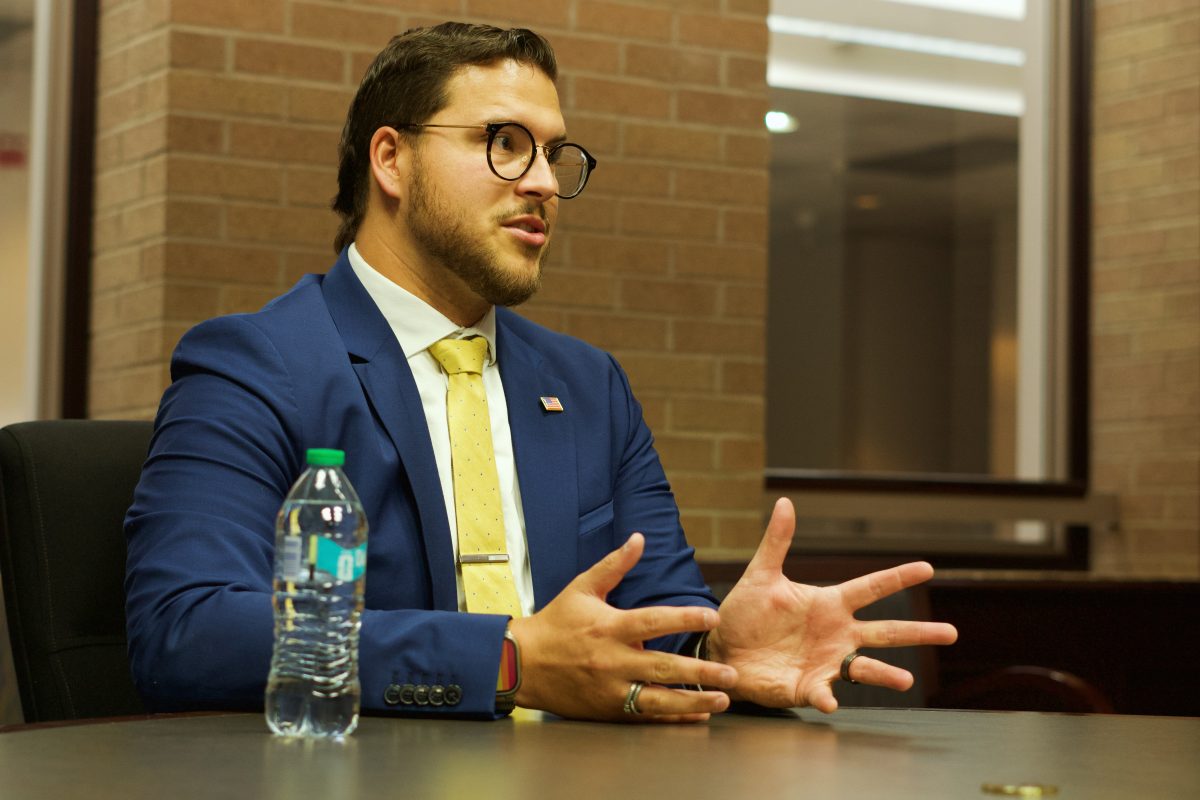
Dakota Wurth, competing in the Democratic primary for the Senate District 5 seat in Utah, participates in a candidate interview at the Standard-Examiner office on Thursday, May 7, 2026. (Grace Watters, Standard-Examiner)
Representative governance was a key reason Dakota Wurth chose to run for Clearfield City Council, where he’s served for the last two and a half years.
Wurth said he looked at the makeup of the city council at the time and noted that the average age was in the 60s.
Wurth, now 30 years old, became the youngest person to win in an election in Clearfield history.
Now, Wurth has thrown his hat in the ring to become the next representative of Senate District 5. Again, representative government is a reason.
“For me, I think when you look at the demographics of this district, the average age is in their lower 30s,” he said. “I turned 30 a couple weeks ago. It comes back to that notion of representation. And in a citizen-based Legislature, I think people should look like the communities that they want to represent, that they should be working hard to hear what the community would like to see on the policy front and how they would like to be represented.
Grace Watters, Standard-Examiner
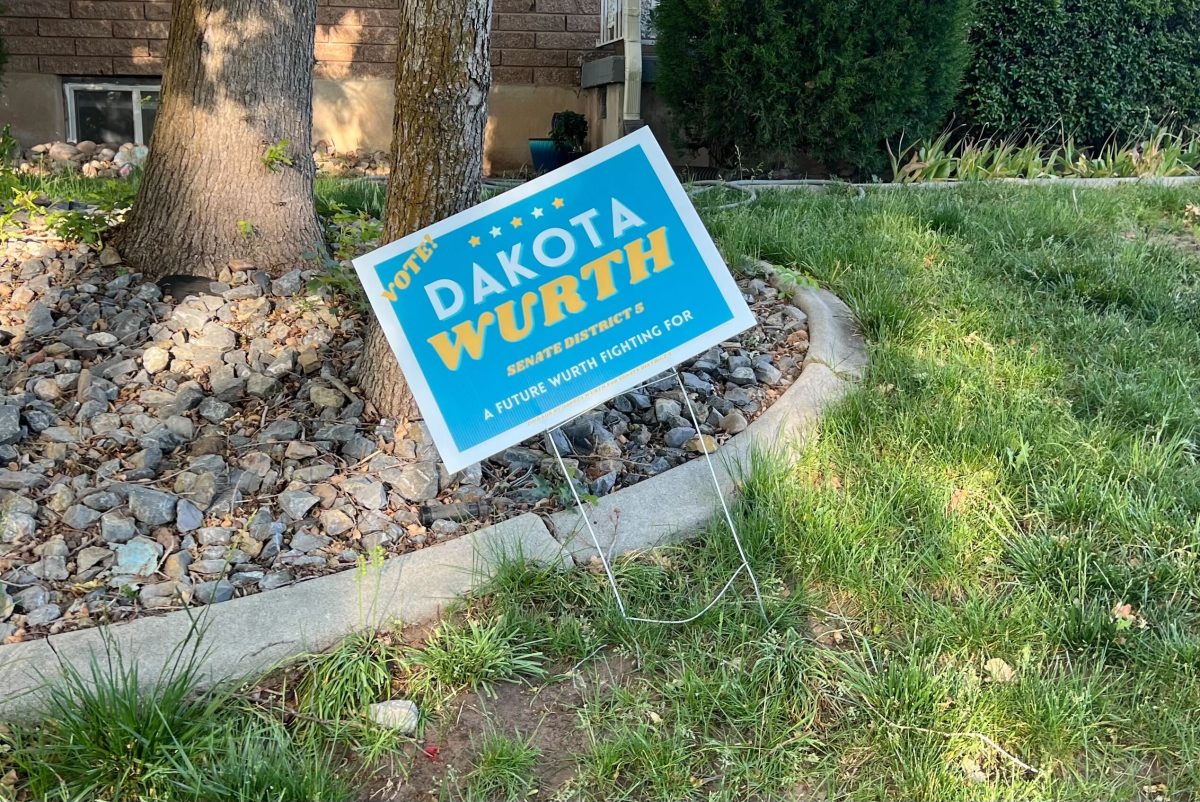
A campaign sign for Dakota Wurth, competing in the Democratic primary for the Senate District 5 seat in Utah, on Tuesday, May 19, 2026. (Grace Watters, Standard-Examiner)
“And to this point, I’ve been able to knock personally over 3,000 doors in the district, and this campaign’s touched like 10,000 of those doors because we’re just working.”
Wurth said because he’s been representing his community for the last two and a half years, he knows what governing looks like. He said he knows what it means to engage the community and have hard conversations and be responsive.
“And I’m running as a Democrat in a historically red area, which means you have to be able to work across the aisle and still get things done,” he said. “And I think the unique experience that I bring into this race as a potential Democratic senator in a super minority is that as a really young, unapologetically progressive person, I’ve still been able to get things done on the City Council with my ideological opposites by having honest conversations, engaging with the community and just being pragmatic in the approach.”
He said he’s built relationships with not just those on the City Council but with locally elected leaders across the state, with different organizations like the Utah League of Cities and Towns and the Utah Association of Counties.
“But I just have this pragmatism approach that I bring to policy-making decisions that I think people, when they run for office, they have to learn as they go, because nobody, for the most part, has spent a long time serving in elected office,” he said.
Housing
In answering what he’d be able to do if elected with the housing situation, Wurth said that’s the area where he has “the most professional experience.”
He said for the last two to three years, he ran all of Davis County government’s affordable housing programs. He said he got additional funding to expand those programs and also construct and preserve affordable units.
“We need to shift the paradigm at the state level and incentivize different types of development, because we’ve fallen into this binary of building single-family homes or large-scale multifamily units for rent,” he said. “And if we properly incentivize a variety of housing types, sizes, density, height, what have you, then you can move the needle on that front.”
Wurth also discussed accessibility.
“Because in running some of those programs for Davis County, I also worked with Utah Housing Corporation in tandem to make that compatible with the state’s program that gives $20,000 to first-time homebuyers to buy, you know, new construction homes under a certain price threshold,” he said. “But that program was very challenging to get in the hands of anybody who was sitting on the fence trying to buy a home, and that direct investment and down payment assistance goes a long way in a market where the average home in the state is close to 600 grand.”
Wurth believes his story is meaningful. He said he was fortunate to buy a home when he was 25, but it took 73 offers before somebody would tell him yes.
“So just that lived experience also helped propel me to want to do some more at the local level,” he said.
Effect of state policy
Addressing another reason why he chose to enter the race, Wurth spoke of the effect of state policy on local jurisdictions.
“So serving on the City Council really opened my eyes as far as how bad state policy gets passed down to local jurisdictions and forces cities or school districts or special service districts to have to raise property taxes to either meet unfunded mandates or reductions in the income tax rate,” he said. “And I learned that there are less than, I think, 10 people in the Legislature right now who have ever served at the local level.”
Wurth said his experience has given him an understanding of how those decisions raise the cost of living.
Other issues
If housing is 1A, Wurth called the Great Salt Lake 1B in terms of his priorities. He said housing is “one of the most existential issues for Utahns,” but that “we’re on the precipice of an ecological disaster” because of the levels of the Great Salt Lake.
“The dust that will come into the air will exacerbate the poor air quality that we already have, and that’s what I’ve heard from a lot of people, too,” Wurth said. “The lake is one of their key concerns, and I think you’re seeing that right now in this conversation around data centers in Box Elder (County). People want more urgent action on these top-of-mind issues, and those are the two.”
A third priority he said was economic development that “creates workforce diversification for this district” but also “realizes major real wage growth” in Utah.
He called District 5 “probably the most reliant in the state on federal jobs” because of Hill Air Force Base, the IRS and the Treasury. He said that creates a lot of opportunities for people with those jobs but noted challenges.
“In the absence of those jobs, like, the employment opportunities in this district in particular haven’t kept up with that type of opportunity, especially in an environment where you have a minimum wage that is as low as it is,” he said. “And Clearfield, for an example, has one of the lowest median incomes in the area, and I think in Davis County. So there needs to be broader investment in attracting different workforce sectors.”
Additional policy ideas
When it comes to facilitating workforce development in the local population, Wurth said it starts with fully funding education, making higher education attainable. He thinks that funding priorities could be shifted to make publicly funded universities tuition free.
“And also the same is true for trades, right? Give people the options, whether they want to go into academia or trade school and participate in taking their education into their own hands rather than what they can afford or when is the right time,” he said.
He called the sales tax on food a regressive tax and said its removal is something he’d like to work on. He said that on the housing front, he’d like to take a look at the residential property tax exemption for multifamily and rental units.
Concluding statement
In his concluding statement, Wurth circled back to representation.
“It’s time that this district has somebody that looks like the community that knows innately what it’s like to live here to face the challenges that are most top of mind for Utahns, and that’s, you know, housing affordability and attainability,” he said. “And I’ve struggled to be a homeowner myself, know what that looks like, and I’ve dedicated my career since then to creating those opportunities for people who otherwise wouldn’t have it.
“And there are options in this race, but there is only one option in this race that is working class that meets the demographics of the district and is not independently wealthy and has been willing to get out and meet people for the last five months and have these hard conversations so that when it comes time for me to show up on either this primary ballot or a general election ballot, that we’ve been doing the work to understand the needs of the community.
“And then, frankly, talking to Democrats who are going to be voting in this primary, there’s one candidate who has won a race by being unapologetically progressive and has experienced serving in elected office and governing and showing up and delivering tangible results for people.”
For more on Wurth and his campaign, visit https://www.wurth4senate.com/.
Contact Standard-Examiner editor Ryan Comer at rcomer@standard.net.
Local News
Antelope Island State Park celebrates expanded visitor center
Utah House speaker ‘extremely disappointed’ in how JCC handled Hagen investigation