Box Elder County residents won’t get to vote on data center referendum, county attorney says
Referendum sponsors have already vowed to take their application to court

Photo by Spenser Heaps for Utah News Dispatch
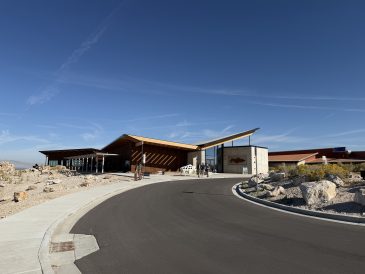
An area of Hansel Valley, in Box Elder County, that is part of the proposed Stratos Project, a massive data center planned for 40,000 acres of land, is pictured on Wednesday, May 27, 2026. (Photo by Spenser Heaps for Utah News Dispatch)Box Elder County residents won’t be able to vote to reconsider an agreement opening the doors to a massive data center in the area.
Box Elder County Attorney Stephen R. Hadfield rejected three referendum applications filed in early May challenging county commissioners’ votes approving two resolutions, including adopting an interlocal agreement with developers of the Stratos Project, a data center campus proposed for 40,000 acres of unincorporated land in northern Utah.
Hadfield determined that none of the resolutions the commissioners approved could be legally referable to voters since they were considered as administrative actions, and not newly created laws.
“Because I am obligated to interpret and uphold the law, I am legally bound to reject the applications for referenda of these resolutions. I fully anticipate and appreciate that this will allow referendum sponsors who disagree with my opinion to appeal to the state courts for further guidance and resolution,” Hadfield said in a statement.
The data center project, promoted by celebrity investor Kevin O’Leary and developed with the Military Installation Development Authority (MIDA), has rocked the boat across Utah because of its magnitude, quick approval process and its potential environmental repercussions.
Under Utah law, the county said in a news release, only challenges to legislation are able to go to the ballot for a vote. “Legislative acts create new laws of general applicability based on weighing broad policy considerations, whereas administrative acts simply implement laws that already exist.”
The resolution consenting to a MIDA project area implements provisions of the MIDA Act, and it is irrevocable, the county explained. And, the decision on an interlocal cooperation agreement with the authority is also administrative “because it implements MIDA’s existing project area plan and acts as a specific contract between the County and MIDA, rather than creating a new, generally applicable law.”
Expect a legal challenge
However, the process isn’t over. Applicants have the right to appeal the decision, and representatives from the newly established Box Elder Accountability Referendum group said they would pursue a legal challenge.
“We are not going away. This was our first plan, but it was not our last. We care deeply about this community and will fight to protect it from those who seek to do it harm,” Brenna Williams, co-sponsor of the referendum said in a statement on Thursday.
In their application, the group of citizens sponsoring the referendum initiative said commissioners had “exercised a discretionary choice by consenting to include private land in the MIDA project area and by approving the interlocal agreement. This was not a mandatory or ‘perfunctory’ administrative act.”
The action also “fundamentally shifts governance” by transferring local control over zoning and land use to MIDA, the application reads.
“(The) county clerk will likely reject the application (citing MIDA statutes as administrative), but our attorneys believe there is a reasonable chance a judge will see this as referable. We may be able to appeal to the Utah Supreme Court directly or via extraordinary writ. Recent court trends seem favorable to citizen rights in these matters,” sponsors wrote.
Referendum petitioners referred to a 2018 Utah Supreme Court decision establishing that “major land and development decisions are legislative acts subject to a public vote when they have long-term impact and involve weighing competing public interests,” they said in a news release on Thursday.
“These Resolutions meet that same standard: they permanently reshape how a massive stretch of County land is governed, redirect significant tax revenue, and were openly debated by the Commission with acknowledged sweeping consequences for residents,” the group wrote.
The county also said in the decision announcement that repealing the resolutions the commissioners approved “would result in the loss of guaranteed revenue, including $5.4 million annually and an estimated $108 million annually at full capacity.” Additionally, if the development were to move forward without the resolutions, it would cost the county about $5.4 million a year for services like fire, ambulance and police.
The tab for holding a special election for the referendum would be approximately $55,000, said county auditor Shirlene Larsen.