
‘Death Followed Us Home’: Agent Orange Memorial officially dedicated in Sunset City
-
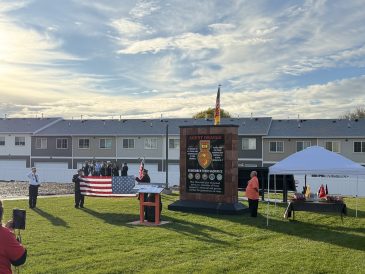
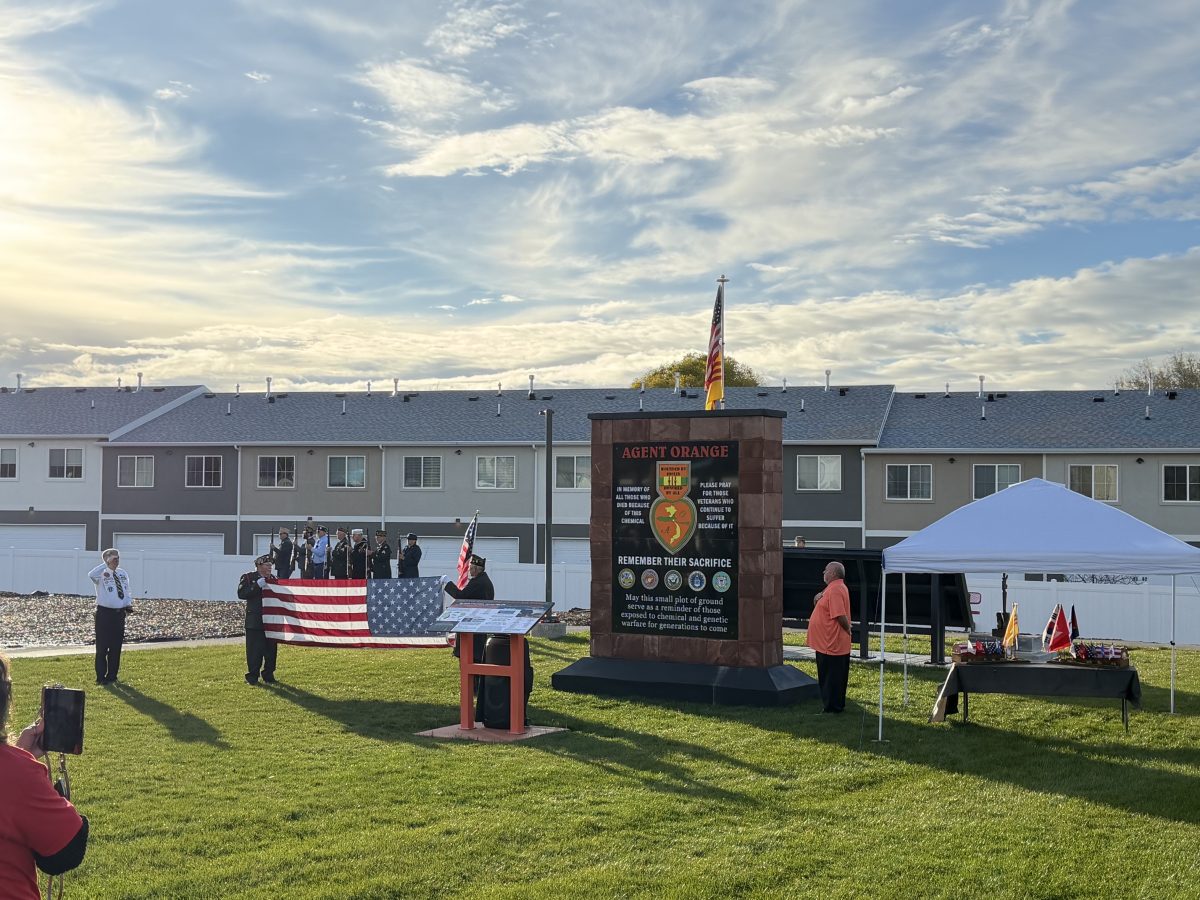
- A flag ceremony was included during the dedication of the Agent Orange Memorial at Sunset City Veterans Memorial Park on Friday, Nov. 20, 2026.
-
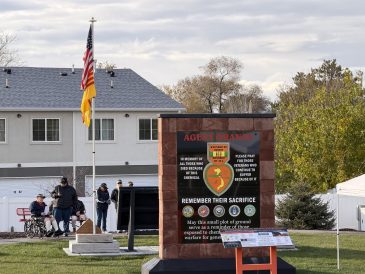
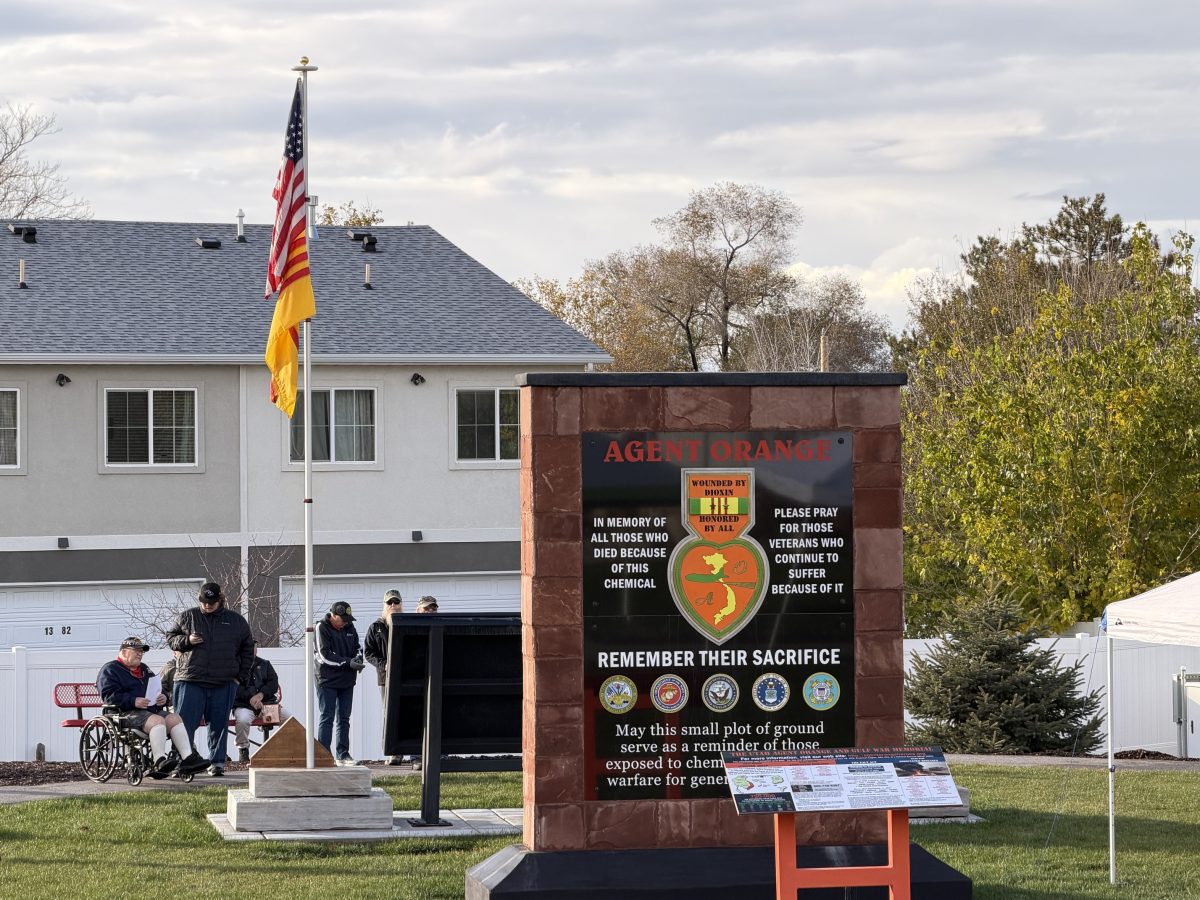
- The Agent Orange Memorial at Sunset City Veterans Memorial Park during its dedication on Friday, Nov. 20, 2026.
-
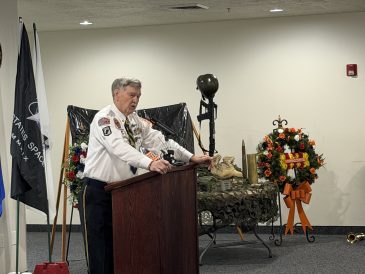
- Utah Agent Orange Veterans Foundation founder and USAF veteran Larry Kerr speaks at the dedication of the Agent Orange Memorial in Sunset City on Friday, Nov. 20, 2026.
-
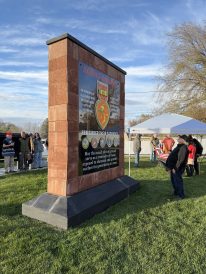
- Crowds look over the Agent Orange Memorial at Sunset City Veterans Memorial Park during its dedication on Friday, Nov. 20, 2026.
-
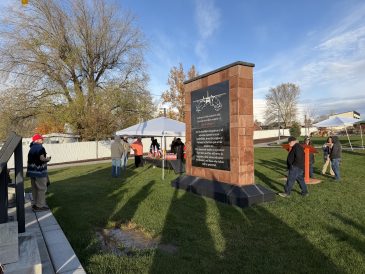
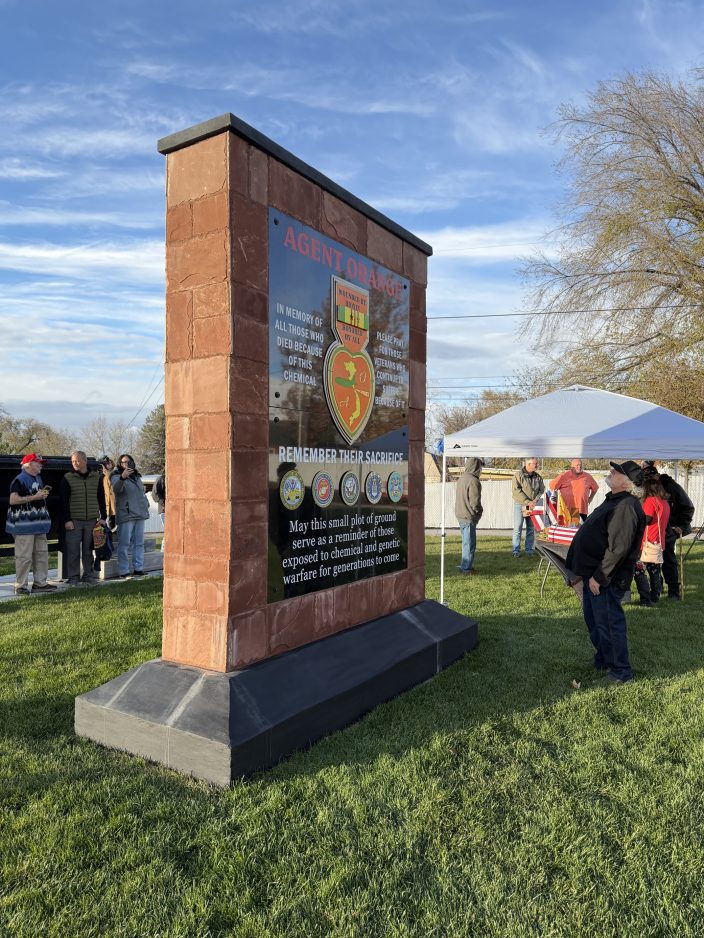
- The Agent Orange Memorial at Sunset City Veterans Memorial Park, shown here during its dedication on Friday, Nov. 20, 2026, also acknowledges service members impacted by burn pits in the years since the Vietnam War.
-
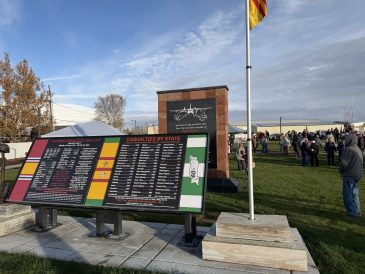
- The Agent Orange Memorial at Sunset City Veterans Memorial Park during its dedication on Friday, Nov. 20, 2026.
Rob Nielsen, Standard-Examiner
A flag ceremony was included during the dedication of the Agent Orange Memorial at Sunset City Veterans Memorial Park on Friday, Nov. 20, 2026.
SUNSET — The biggest and most comprehensive monument honoring those service members adversely impacted by one of the most infamous tools of warfare is now a reality.
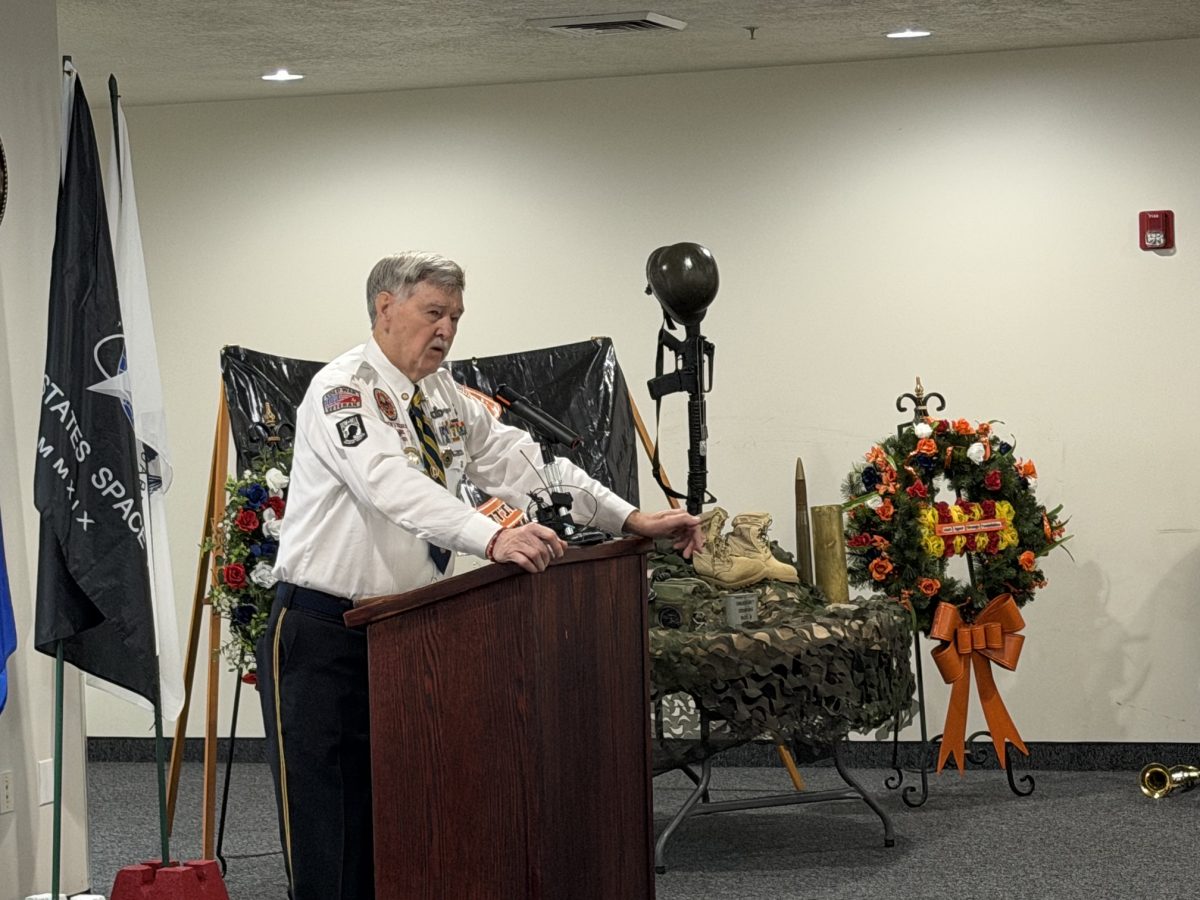
On Friday, a dedication ceremony was held for the Agent Orange Memorial at Sunset City Veterans Memorial Park — a memorial that Larry Kerr, founder of the Utah Agent Orange Veterans Foundation and Air Force veteran that he has hardly seen replicated anywhere else.
“This is the biggest Agent Orange memorial ever built,” he told a packed Sunset City Building. “The memorials I’ve seen online are the size of a headstone, and that’s it. And the one they have in Washington, D.C. is a little flat stone on the ground, and you can trip over that or walk over it. To me, that’s not very dignified. There’s many veterans who suffered and continue to suffer and die from these chemicals.”
He noted that it took his organization more than two years to bring the memorial to fruition.
“This memorial has only been in construction for two years, and at times, we’ve taken a couple steps backwards, but we’ve pursued and it’s there now,” he said. “It’s an honor to honor all of the Vietnam veterans and burn pits and their families and the children of these veterans who’ve suffered and died and to those who are still suffering, please recognize these veterans, keep them in your prayers and memories.”
Rob Nielsen, Standard-Examiner
The Agent Orange Memorial at Sunset City Veterans Memorial Park during its dedication on Friday, Nov. 20, 2026.
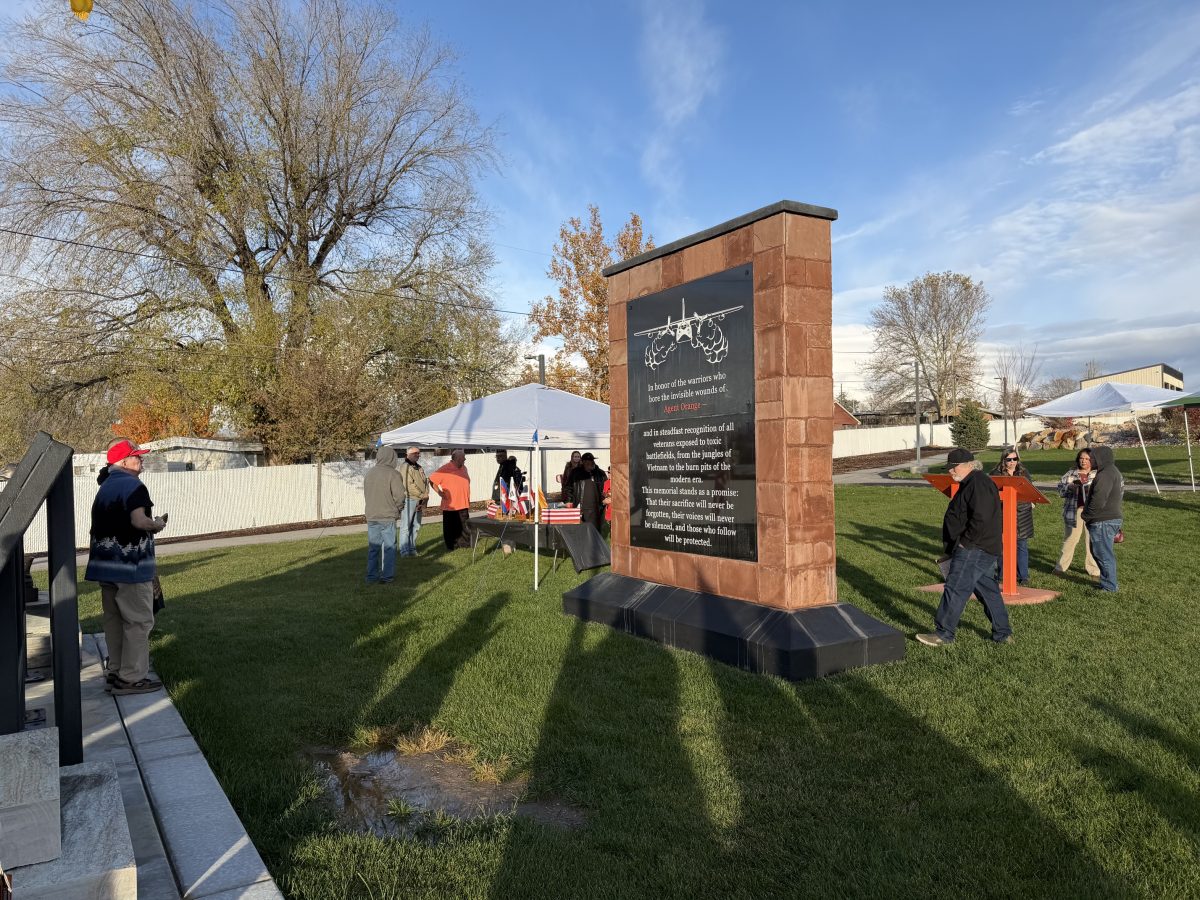
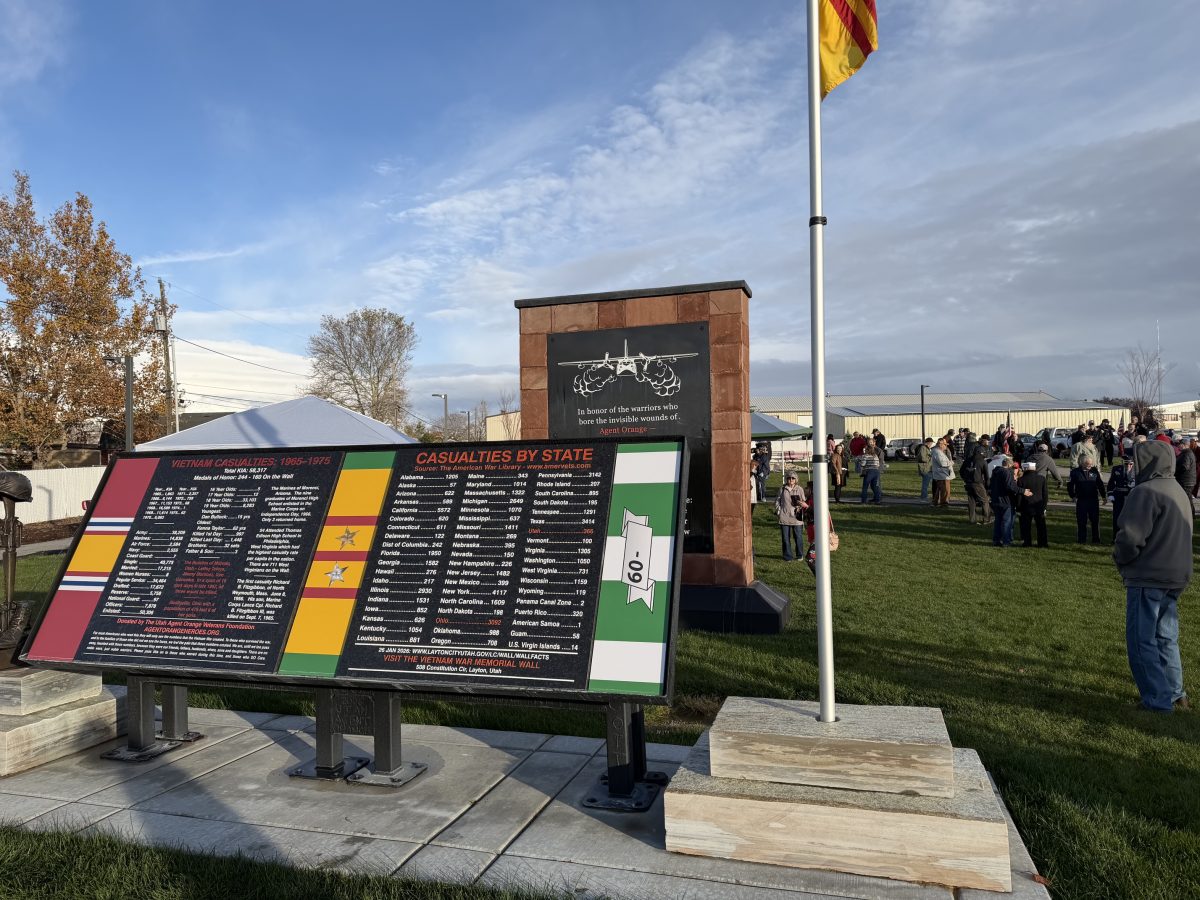
The memorial also acknowledges those service members who have been impacted by chemical burn pits since the Vietnam War.
Kerr said that Agent Orange impacted a vast number of Vietnam War veterans — a figure that has been hard to truly measure.
“Probably 20, 25 years ago, they estimated 300,000 veterans passed away from the effects of these chemicals,” he said. “I estimate there’s 750,000 of us and growing.”
Col Marlene Summers, retired U.S. Army and a former nurse educator at Weber State University, said that Vietnam War veterans are owed more apologies than can be delivered for what they were exposed to.
“Several apologies need to be extended to you,” she said. “I’m confident there was a lack of full disclosure about the dangers associated with the use of 19 million gallons of various herbicides that were used, mostly Agent Orange. This toxic compound did not break down quickly in the environment. It entered the food chain and caused severe wellness and problems, including various cancers, neurological disorders, and generated birth defects for the offspring of these veterans. Words are not sufficient to fully describe the horrors these veterans have faced and endured for decades. Most have not heard anyone say I’m sorry you were exposed to that danger.”
Rob Nielsen, Standard-Examiner
Utah Agent Orange Veterans Foundation founder and USAF veteran Larry Kerr speaks at the dedication of the Agent Orange Memorial in Sunset City on Friday, Nov. 20, 2026.
Agent Orange
Wars throughout history have hardly ever required the presence of enemy combatants or their weapons to be deadly to those serving.
As noted by the American Battlefield Trust, nearly two-thirds of deaths during the American Civil War have been attributed to disease doing the work the bayonet, the Minié ball and cannon shot couldn’t.
In December of 1944 during WWII in the Pacific, Typhoon Cobra sunk three destroyers and took the lives of 790 sailors without a Japanese attacker in sight.
But for all that nature has thrown at soldiers in wars past, it would be mankind’s attempt to overcome nature that would send death home with soldiers well after the war had ended — 19 million gallons of herbicide, much of which would come sealed in 55-gallon drums with an orange band, according to retired Green Beret Lt. Col. Bill Orris.
Rob Nielsen, Standard-Examiner
Crowds look over the Agent Orange Memorial at Sunset City Veterans Memorial Park during its dedication on Friday, Nov. 20, 2026.
“The intended purpose was military — remove dense leaves, clear the jungle that concealed the enemy, improve visibility along our roads and along the waterways, clear visibility in areas around our encampments and destroy crops to deny the enemy their use,” he said during Friday’s ceremony. “Commanders wanted to reduce concealment, but they had no idea of what Agent Orange actually caused.”
He noted that the herbicide that became known as Agent Orange traced its roots back to the 1940s.
“When the scientists developed chemicals, they could control weeds by disturbing their growth,” he said. “They had agricultural uses, but the military thought, ‘This was interesting, and maybe we ought to look at how they could control vegetation during the war.’ So Agent Orange, we find out, combined two deadly herbicides. That was their major component, and both were measured into equal sizes. Their name came from an orange band that was around the 55-gallon drums that they were transported in and stored. This simple marking became the name of a burden, and it’s been carried by many veterans and families for generations now.”
Orris said that Agent Orange became a major component in what was termed Operation Ranch Hand.
“There were herbicides used that whole time, but Agent Orange was used from 1965 until 1970, so for about five years,” he said. “The other herbicides were basically called white, blue, purple, pink, and green because that was the color of the bands around their barrels, and much of it was sprayed from the aircraft, and some from helicopters and obviously some from the ground. So many, many, many people had exposure, from airmen putting it onto the airplanes to soldiers that were spraying it on the ground to others who were just basically there.”
Rob Nielsen, Standard-Examiner
The Agent Orange Memorial at Sunset City Veterans Memorial Park, shown here during its dedication on Friday, Nov. 20, 2026, also acknowledges service members impacted by burn pits in the years since the Vietnam War.
He said that one component made it especially toxic to humans.
“Agent Orange has a particularly deadly form of something called dioxin,” he said. “Dioxin is the byproduct that was supposed to change the landscape and carried the danger that could actually reach into the human body. They weren’t certain about that in the 1940s when they started looking at those things. Military personnel we know encountered herbicides by handling and spraying them. They maintained the equipment. They served in treated areas. Exposure — and this is unique — could occur from just the skin, touching it, breathing it, or accidentally ingesting it while you’re eating or drinking.”
Orris said that it’s extremely difficult to quantify how many veterans were exposed and to what level.
“It’s impossible to really make a determination, like Larry said,” Orris said. “We know 2.7 million served in Vietnam, and that population of that size was the population at risk. It’s not necessarily the population that actually got exposed. That’s kind of the critical part right there, because that precise number can never, ever, I think and believe, be determined.But we must be honest when we ask how many succumbed to the illness caused by Agent Orange. There is really no credible, reliable, or comprehensive national count of deaths that can be attributed specifically to exposures.”
Hannah Smalling, fundraising lead and member of the Board of Directors for the Utah Agent Orange Veterans Foundation, said this exposure came with costs to veterans and their families that extended long beyond their service.
Rob Nielsen, Standard-Examiner
The Agent Orange Memorial at Sunset City Veterans Memorial Park during its dedication on Friday, Nov. 20, 2026.
“For many of these men, the war didn’t simply follow them home,” she said. “In some cases, it continued to take things from them long after they believed their service was behind them. Some came home carrying memories of what they had seen, and others came home carrying something they couldn’t see at all — Agent Orange — an exposure that would become a lifelong battle for some of these men and their families, and not fully reveal itself until decades later. Imagine watching your health deteriorate, your independence change, your family become your caregivers and then having to fight to establish that what was happening to you was connected to your service. Imagine having to prove that you were harmed by the very service you had already given your country.”
A Destination
Sunset City Mayor Scott Wiggill expressed one of his hopes for the Agent Orange Memorial.
“We’d like this to become a destination,” he said. “There are a number of things that are close by that people from all over the country should be able to come and enjoy, get information and continue to salute our Vietnam veterans. We appreciate your efforts very much.”
However, as Smalling noted, Sunset City wasn’t always the destination for the memorial in Utah.
“This memorial did not come easy,” she said. “Before we broke ground, before there was stone or foundation or anything you see standing here today, there was already a fight to find a place for it. We initially looked to a different city. We hoped to establish this memorial in a community where these veterans could be recognized and honored, but that welcome never came. We were turned away. And I think there’s something painfully familiar about that when you consider the history of the men we are standing here to honor. These men went to war, and a country that seemed more interested in moving past the war than acknowledging the people who fought in it. They knew what it was to come home and not be welcomed.”
However, while Sunset City may not have been the first destination sought, she said that it became the right one.
“Eventually we came to Sunset, and Sunset welcomed us with open arms,” she said. “We found a community willing to make room for these veterans, willing to recognize their service, and willing to give this memorial a home. And here we finally broke ground.”
Even with a place picked, there were many hurdles to cross to make it to Friday’s ceremony.
“There were setbacks, unexpected expenses, frustrations, things that had to be corrected and moments when it would have been easier to walk away,” Smalling said. “The stone fought us, the process tested us, and even after having the place to call home, we still had to fight through the obstacles that came with bringing this memorial to life. And in some ways, that became a painful reflection of the very history we were trying to honor.”
Kerr, a victim of exposure to Agent Orange who has suffered multiple bouts with cancer and heart conditions as a result of it, noted after the ceremony that he wasn’t sure he’d get to see Friday’s dedication.
“I didn’t think I was going to make it,” he said. “I had cancer again two or three months ago, and it’s my third different type of cancer from the Agent Orange. So, to see this through and to see the people who are going to carry on after me, I think it’s going to finally become part of my dream of honoring our veterans.”
He said one of his biggest goals is to see young people brought to view the memorial.
“I’d like school kids and things to come and be able to study a little bit about our history and the history of the chemicals used and that we learn from this and our generations to come never use any kind of chemical weapons or even nuclear weapons or any of these things,” he said.
Local News
‘Death Followed Us Home’: Agent Orange Memorial officially dedicated in Sunset City

Box Elder County sheriff arrested in connection with fatal Ogden crash
