Kim James touts experience caring for people’s needs in bid for House District 8 seat
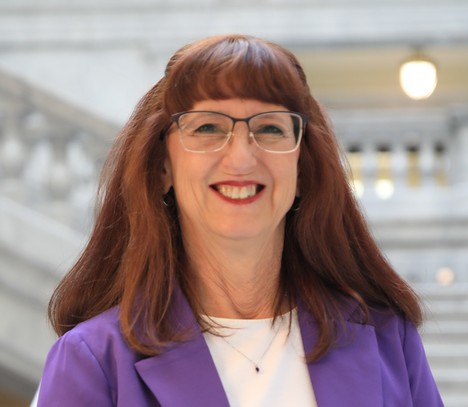
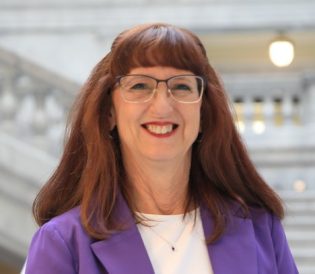
Photo supplied, Kim James
Kim JamesKim James is a Democratic candidate for the House District 8 seat. Below are her responses to a six-question survey sent to her by the Standard-Examiner. The Standard-Examiner made an attempt to contact each candidate involved in a competitive race in Weber and Davis counties.
1. Why is the position you are running for important?
The state of Utah needs competent and caring representatives who are knowledgeable about the people, geography, resources, and challenges of every district. We need leaders who understand and consider the diversity of the population and the various impacts of legislative decisions. And we need a representative in House District 8 who is willing to focus attention on affordability, environmental health, and trustworthy governance.
2. What unique qualities, attributes, skills, and experiences do you possess that make you the best candidate in this race?
I am a recently retired United Methodist minister. Having served a variety of congregations over 40 years, I have tremendous experience in perceiving and caring for the needs of people in the various situations of their lives. I am a capable communicator, leader, and organizer. I balanced budgets and collaborated with ecumenical, government, and nonprofit groups. During my 13 years in Utah, I have advocated alongside other faith and nonprofit leaders in regard to issues of housing, healthcare, and grocery taxes. In my one year of retirement, I’ve had time to join in protests against the Stratos (data center) Project in Box Elder County and to get involved in efforts to save the Great Salt Lake. I am inspired by my faith in Jesus, who not only offered direct help to the needy but also challenged those in power. I believe that the positive society Jesus proclaimed puts people before profits and seeks the common good. Being retired gives me more time than my competitors to communicate with the constituents and to fulfill the duties of a representative.
3. Please explain your priorities if elected, as well as why you believe you are uniquely capable of achieving those priorities.
If elected, my priorities are affordability, creating a healthy environment for us here in the Great Salt Lake Valley, and forming a state government that respects the will of the people. One facet of affordability that I’m particularly concerned about is the real possibility that Utah might drop the Medicaid Expansion we citizens voted for in 2018. Such a disastrous decision would increase the numbers of low-income residents unable to afford medical care. I lived in Colorado when Medicaid Expansion first became possible, and I advocated for it there. When I moved to Utah in 2013, I began advocating for Medicaid Expansion here. This is an issue with which I am especially acquainted, and I want to be in the Legislative room when this issue comes up in 2027. I also have a strong and unique concern about environmental hazards. My small Montana hometown became an EPA Superfund Clean Up Site after hundreds of people, including my own father, died from breathing toxic asbestos fibers released by a mining operation. I therefore take very seriously the threat of toxic dust blowing off the shores of the Great Salt Lake. I have a heightened sense of urgency that we both get more water into the Lake and avoid economic development projects that promise jobs but end up sickening the community around them. I am uniquely capable of working on good governance, as well. Because I am not a member of the one-party supermajority, I will not fear being primaried from the right. Instead of wasting taxpayer dollars fighting in the courts and retaliating against the judges as the supermajority has done, I will be able to uphold what the citizens voted for and what the independent judiciary has declared is constitutional.
4. Please describe how you view the importance of compromise in politics and provide an example from your own experiences that highlights your perspective.
The root meaning of the word “compromise” is a “together promise.” Representatives aren’t just individuals who have made personal promises. They are leaders who have promised to work together with legislative colleagues, the governor, and the citizens of Utah. In several previous years, I worked with advocacy groups to try to eliminate the sales tax on groceries. At first, the legislators simply said, “No, it isn’t possible.” A later year they thought it might be possible to eliminate the state portion of grocery taxes, if we maintained the local taxes upon which many communities depend. To me, that seemed like a reasonable compromise. Unfortunately, the Legislature didn’t complete the process, but it was a step in the right direction. Later yet, the Legislature offered to eliminate state sales taxes on groceries if Utahns would agree to remove protections for school funding. That was a step too far for me and the majority of Utahns. The right compromise is yet to be found.
5. How will you balance the views of the vocal public, your political party, and your own understanding and knowledge as an elected representative?
Throughout my 40 years in pastoral ministry, I balanced the expectations of denominational leaders, the well-being of the congregation, individual members’ needs, community concerns and opportunities, and my own values and judgment. With an open heart and mind, I can apply those same skills to serving the people of Utah.
6. What is the best way for readers to contact you and/or get more information about your platform?
Find more information about me at www.kimjamesforutah.org.