Can Ogden’s Washington Boulevard regain its glory?
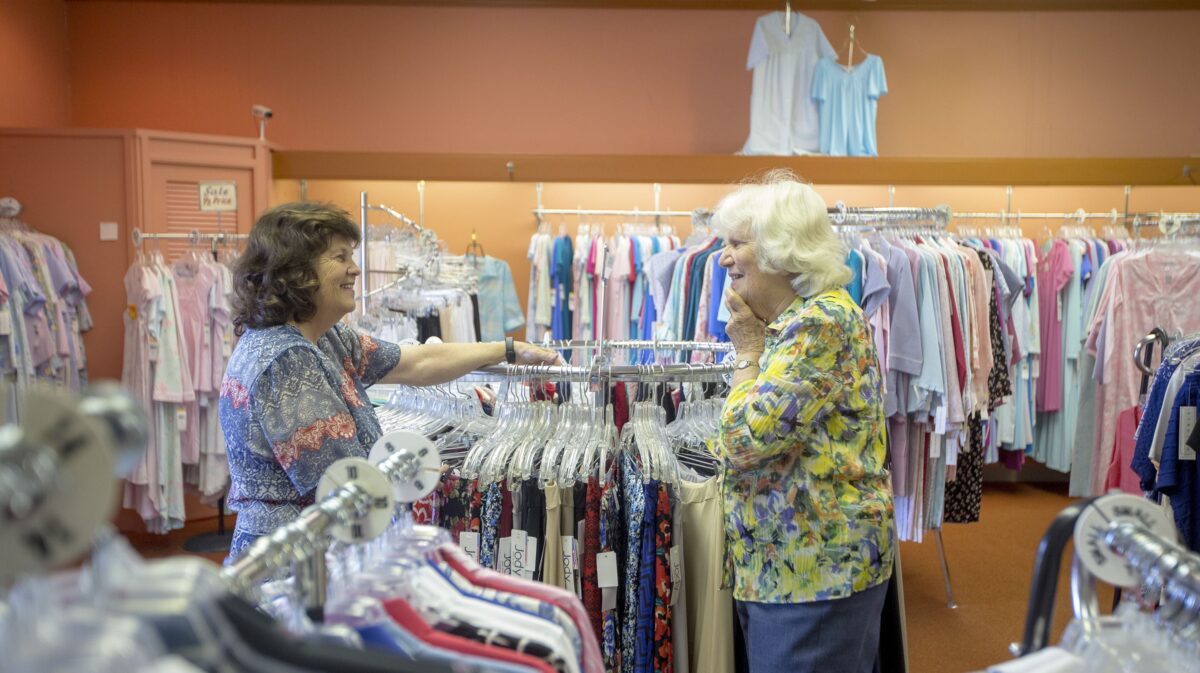
Sisters and owners of Clifton's Ladies Apparel Janith Wright, left, and Lavon Jennings, right, both of Ogden, talk in-between helping customers at Clifton's Ladies Apparel, on Washington Boulevard in Ogden on Friday, July 31, 2015.

The sun sets on Washington Blvd. in downtown Ogden on Tuesday, Oct. 5, 2015.

The sun sets on Washington Blvd. in downtown Ogden on Tuesday, Oct. 5, 2015.
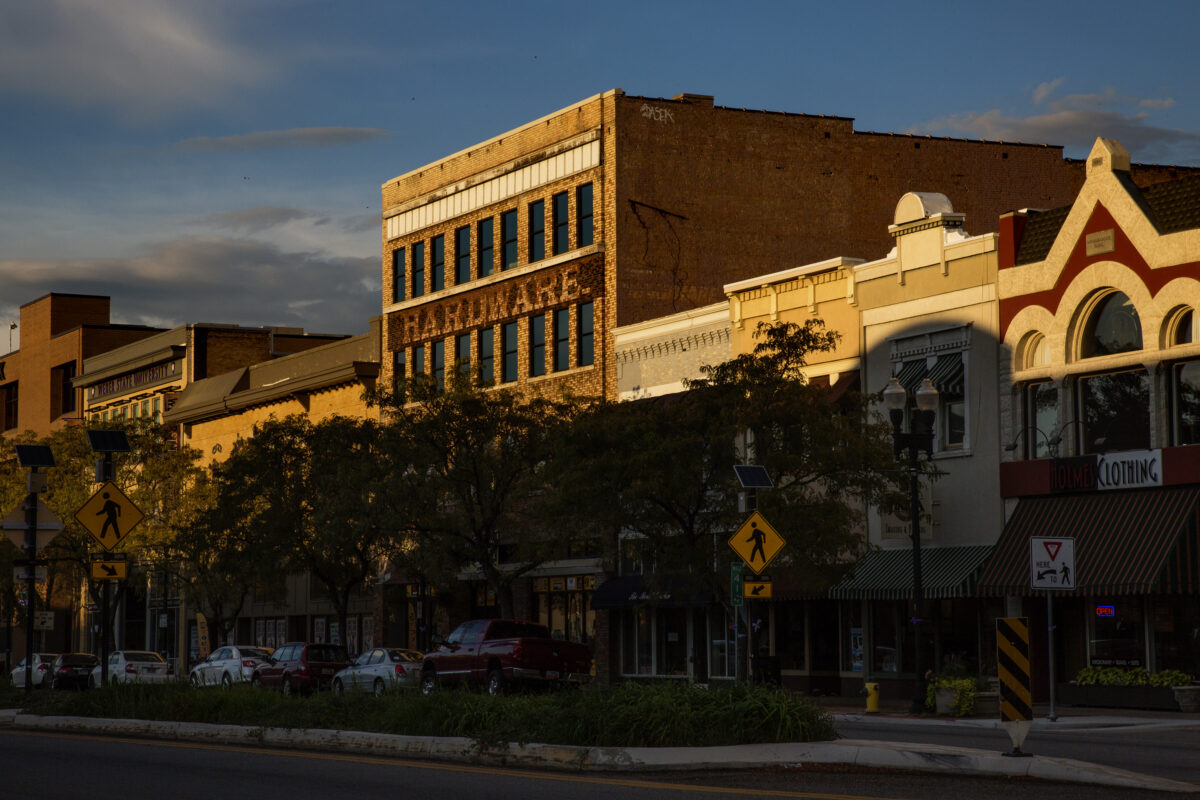
The sun sets on Washington Blvd. in downtown Ogden on Tuesday, Oct. 5, 2015.

Mariah Goers, right, helps Steven Mason find comicc at Heebeegeebeez on Wednesday, July 29, 2015.
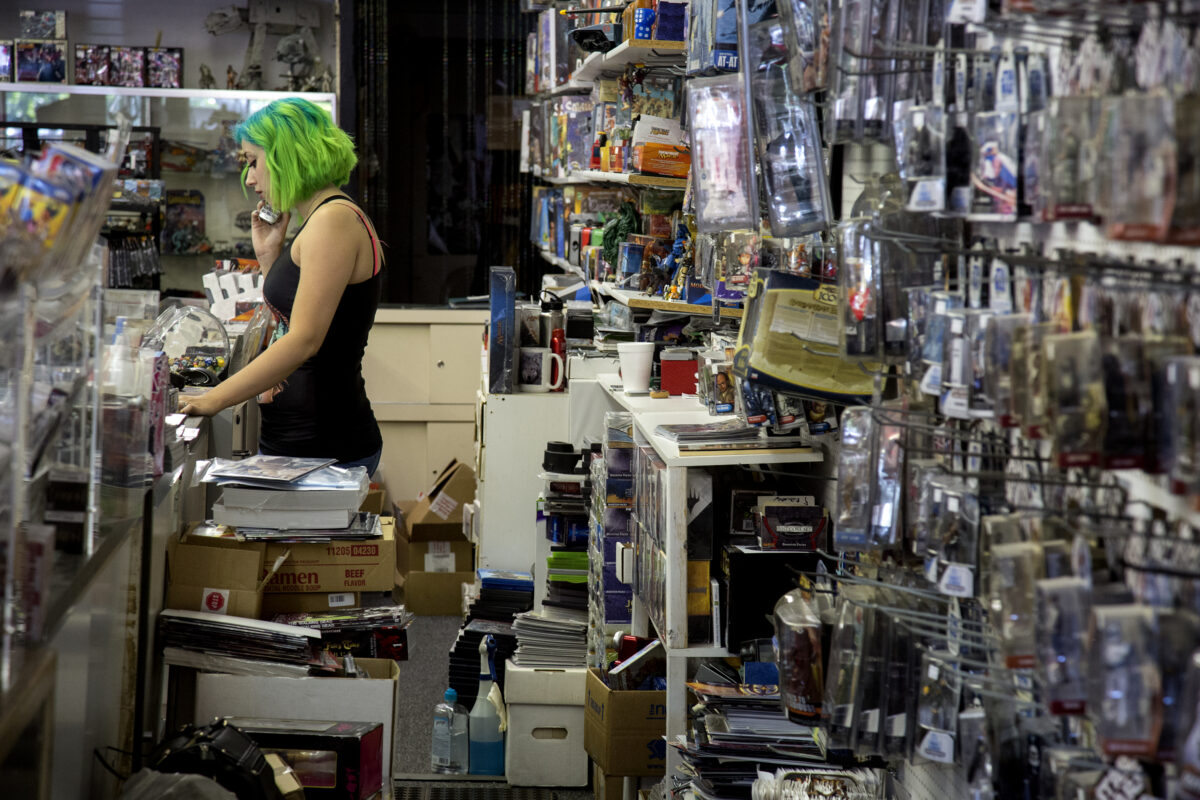
Mariah Goers calls around looking for a copy of a specific comic at Heebeegeebeez on Wednesday, July 29, 2015.

Mariah Goers helps Justin Jacobson during a game of Magic: The Gathering at Heebeegeebeez on Wednesday, July 29, 2015. Jacobson stopped by the store with his uncle to learn how to play the card game.

Figurines line the shelves at Heebeegeebeez on Wednesday, July 29, 2015. While the store is billed as a games and comics retailer, they also sell movies, art and feature a large area for customers to play games.

Rachael and Jon Pust chat behind the counter while their daughter, Alura plays with a piece of candy at Heebeegeebeez on Wednesday, July 29, 2015. The Pusts have been operating the game and comic book store along Washington Blvd. in downtown Ogden since 1998.
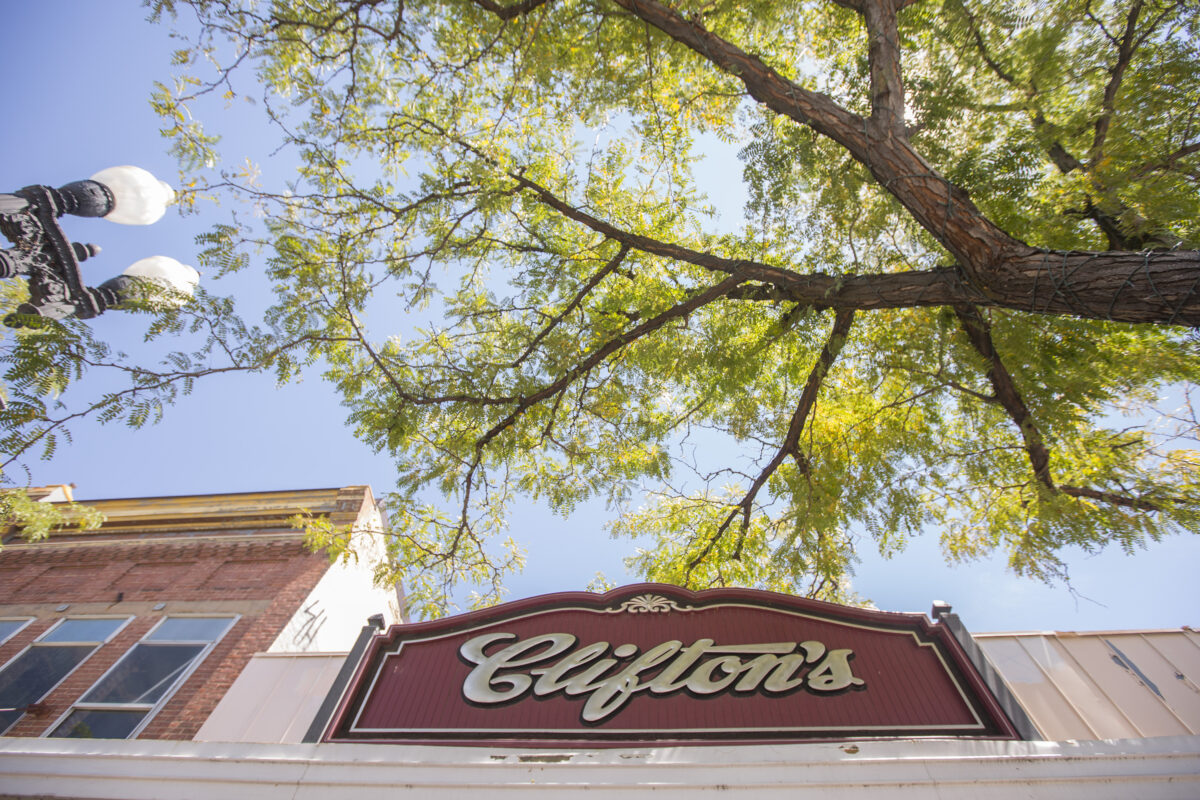
Clifton's Ladies Apparel, on Washington Boulevard in Ogden on Friday, July 31, 2015.
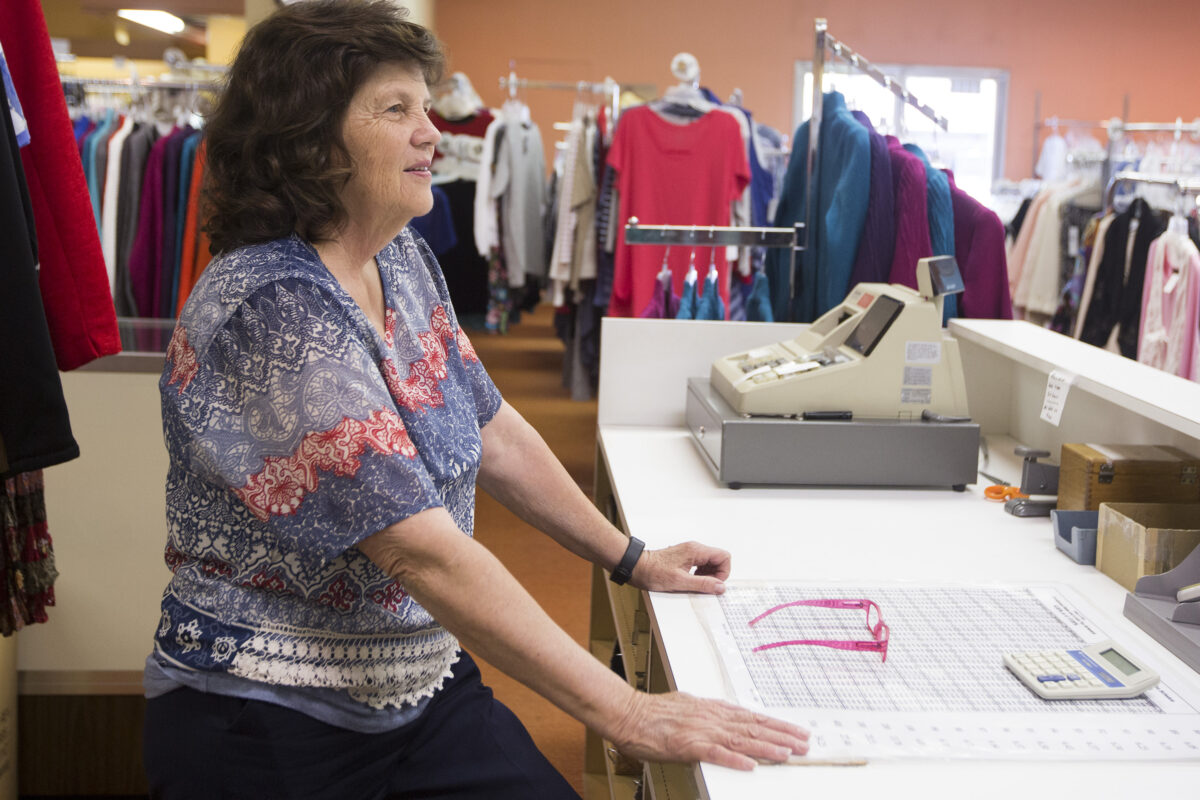
Owner Janith Wright, of Ogden, looks for customers to help at Clifton's Ladies Apparel, on Washington Boulevard in Ogden on Friday, July 31, 2015.
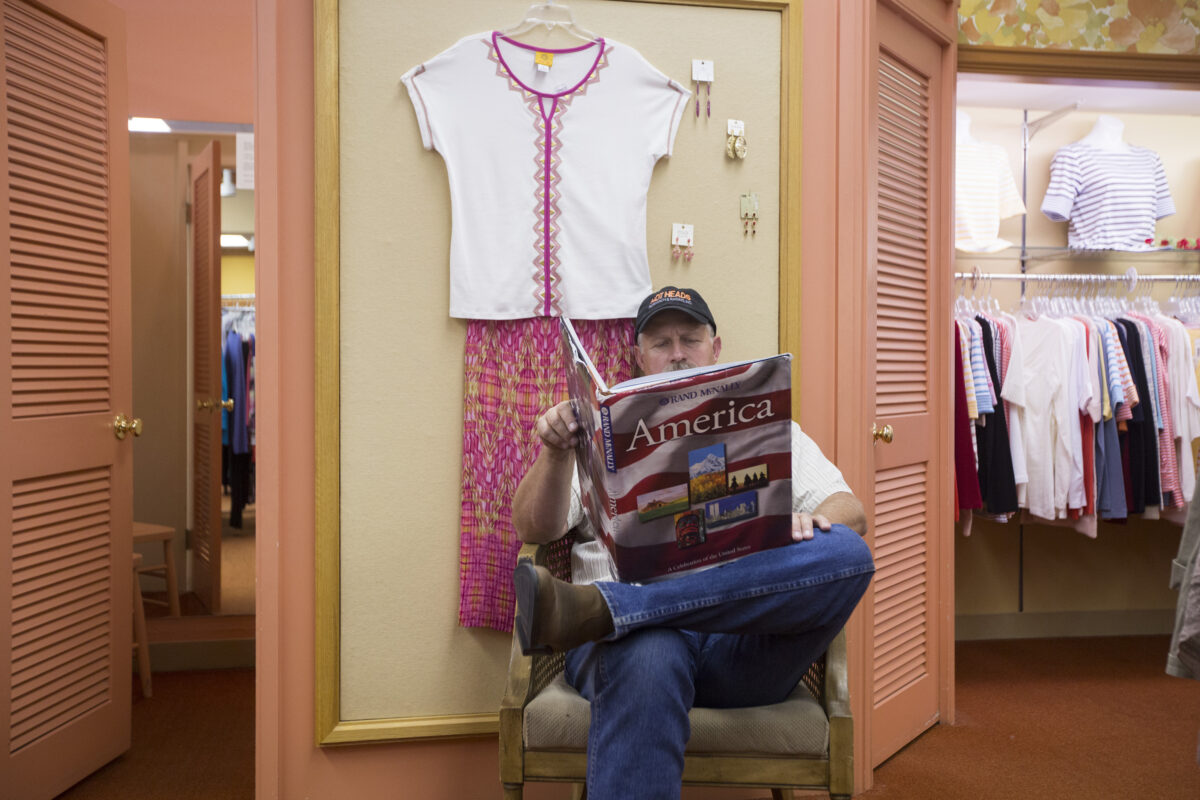
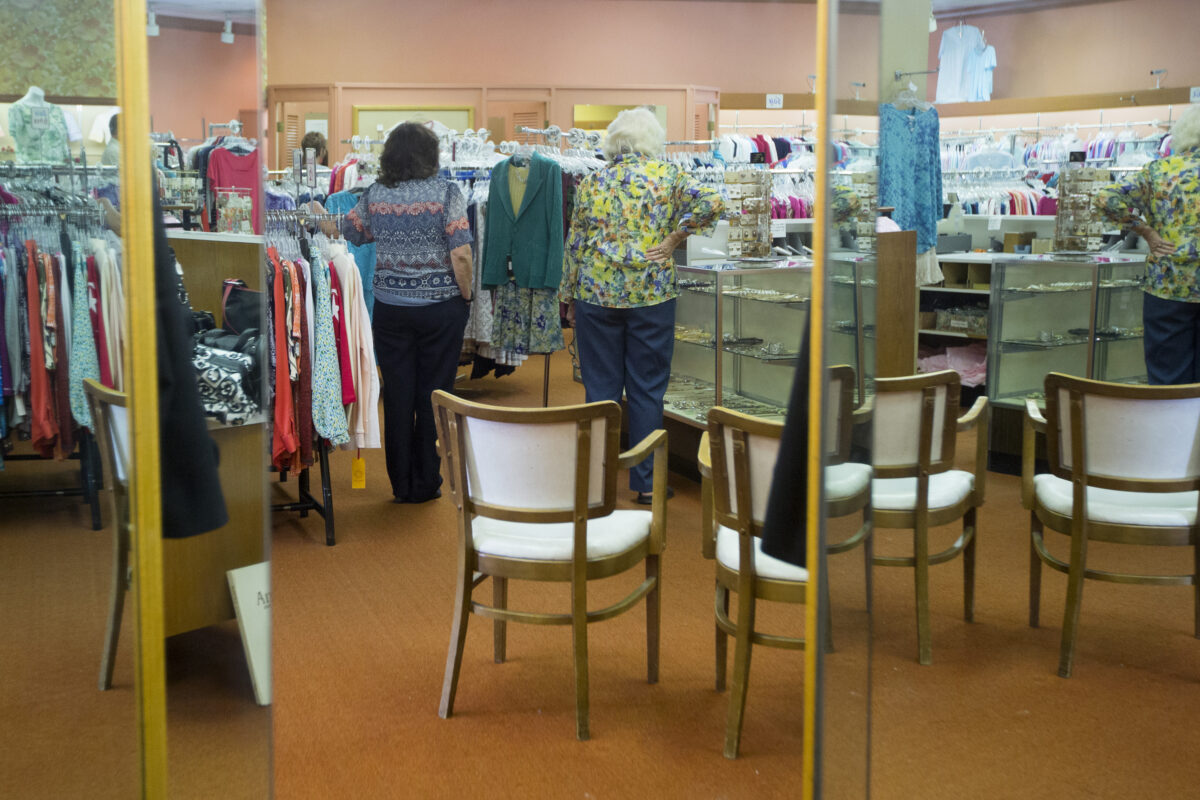
Dale Allen, of West Haven, flips through a book as his wife, Julie, picks out something to wear to their son's wedding at Clifton's Ladies Apparel, on Washington Boulevard in Ogden on Friday, July 31, 2015.
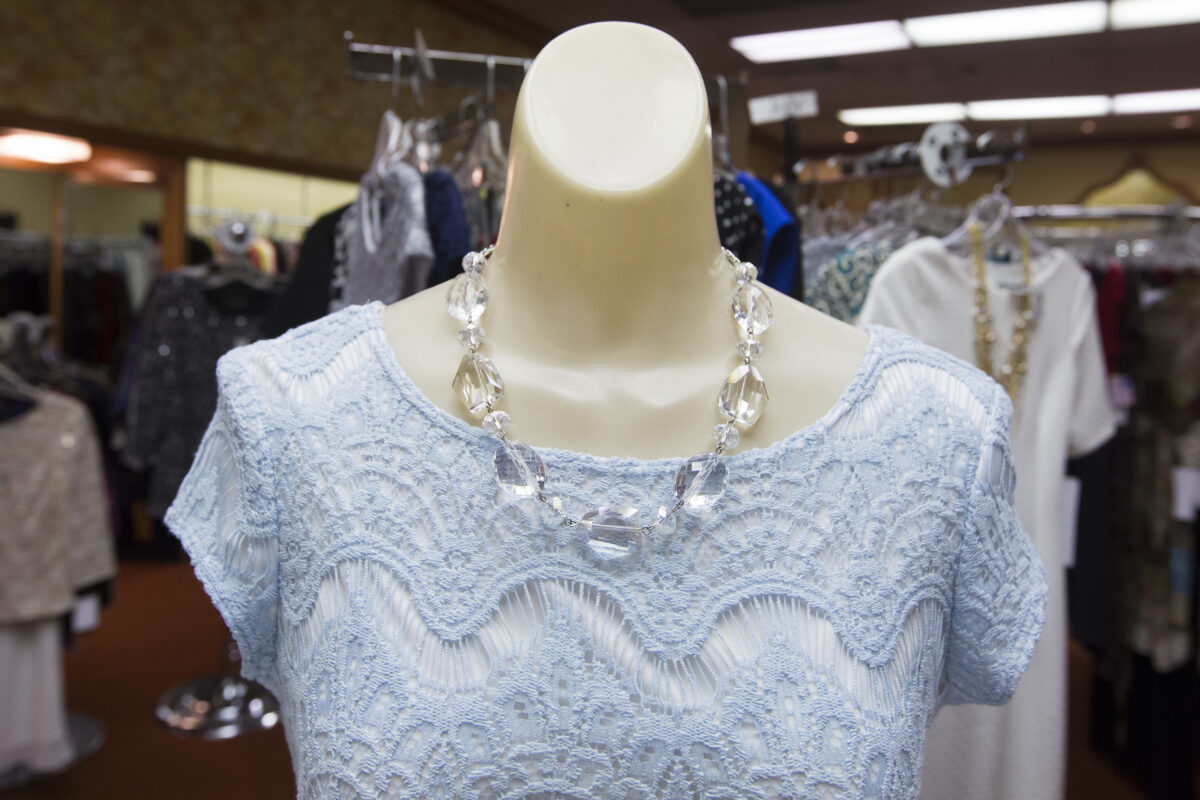
Outfits are put together on mannequins at Clifton's Ladies Apparel, on Washington Boulevard in Ogden on Friday, July 31, 2015.
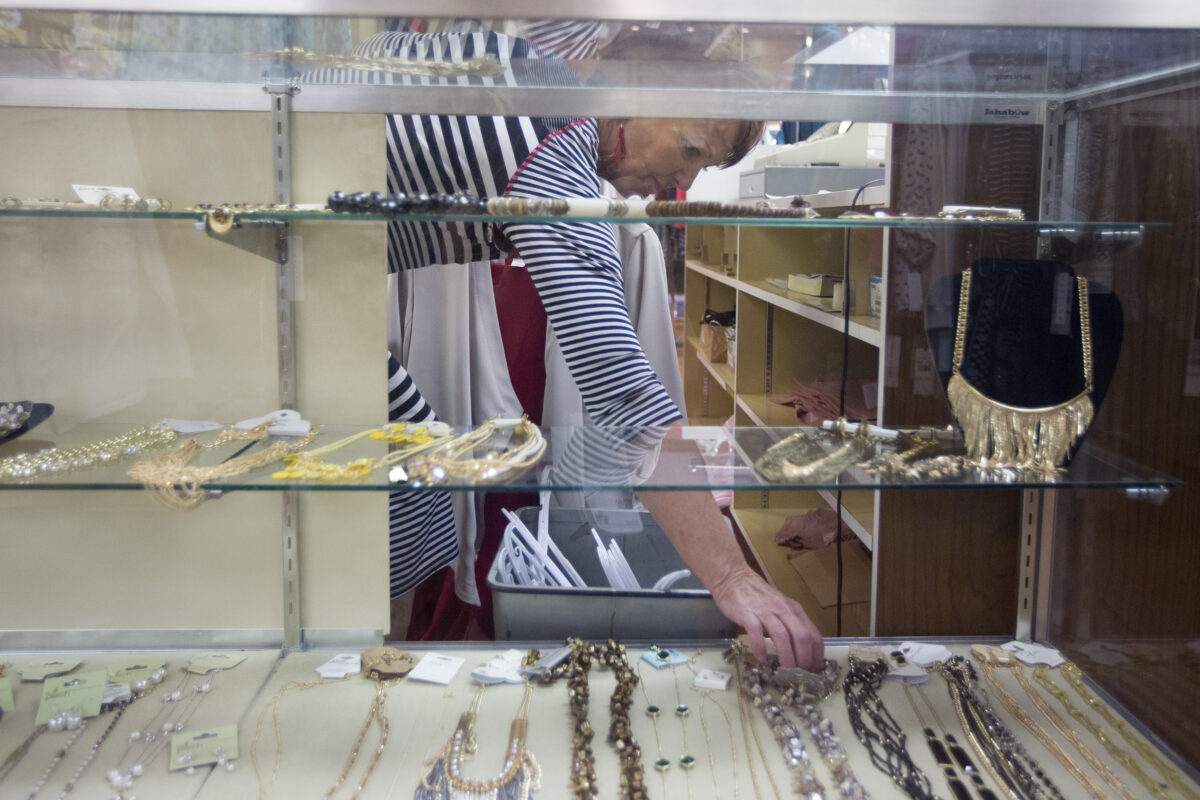
Clerk Ann Rabe, of Layton, picks out jewelry for a customer at Clifton's Ladies Apparel, on Washington Boulevard in Ogden on Friday, July 31, 2015.
Sisters and owners of Clifton's Ladies Apparel Janith Wright, left, and Lavon Jennings, right, both of Ogden, talk in-between helping customers at Clifton's Ladies Apparel, on Washington Boulevard in Ogden on Friday, July 31, 2015.
OGDEN — Dan Musgrave recalls what a happening place downtown Ogden was back in the 1960s.
“I remember my mother circling the block down there in her huge ’65 Buick, trying to find a parking space,” said Musgrave, executive director of Downtown Ogden Inc. “It was a busy place back then.”
Especially Washington Boulevard.
Farr’s Jewelry has been on the 2400 block of Washington Boulevard since 1956, and at 2466 Washington for 20 years. And Dirk Farr has been around long enough to remember that, as recent as the 1960s and ’70s, Washington Boulevard was the retail place to be.
“I remember as a kid, you’d have police officers on the corner directing traffic, because it was so busy,” Farr said.
But much has changed since the early 1960s, which raises a question:
Can Washington Boulevard regain its glory?
Scott Williams, manager at Farr’s, also remembers what it was like on the boulevard when it dominated Ogden.
“At back-to-school time, the sidewalks would just be packed,” he said. “There were probably 14 clothing stores in a four-block radius.”
Indeed, back in the day, downtown Ogden — not Salt Lake City — was widely considered the fashion epicenter of Utah.
“The clothing companies would try out their new lines in Ogden,” Williams recalls. “They knew if it did well here, it’d work in the rest of the nation.”
Greg Montgomery, planning manager for the city, also grew up in Ogden. His father had a retail typewriter shop on 24th Street, and Montgomery remembers heading for Washington Boulevard every year for new school clothes.
“Think about all the different stores they had,” he said. “L.R. Samuels, Auerbach’s, The Blue Door — all of those clothing stores. You could walk up one side of the street and down the other and see nothing but clothing. It was like the idea of the auto malls today — you could find everything in one block.”
Today, almost all of those stores “have gone the way of a lot of retail,” Montgomery says. Market patterns changed. Specialty shops like the ones along Washington Boulevard languished, and big-box stores began to thrive.
“I think it’s the idea of changing markets,” he said. “Those types of businesses don’t exist anymore — the independent mom-and-pop stores for clothing and shoes just don’t happen anymore.”
In 1980, the Ogden City Mall opened downtown, on land that is now home to The Junction. Plenty of locals blamed the mall for the demise of Ogden’s once-crowded Washington Boulevard, but Montgomery says it was part of a national trend.
“I don’t know that I’d give the Ogden City Mall as the sole factor that killed the boulevard, but I think that’s part of it,” Montgomery said. “The design of the mall made Washington Boulevard look desolate, because everyone was inside. That design was not really conducive to being part of downtown.”
By the mid-1990s, the downtown mall was quickly becoming an 800,000-square-foot ghost town. When Nordstrom left in early 1999, the building’s fate was sealed. Three years later, the Ogden City mall was shuttered. Eventually, it was demolished, and The Junction opened on the old mall site in 2007.
“Back then, people wanted to be inside for shopping,” Montgomery said, reflecting on the mall. “People now want to be back outside. It’s kind of the evolution of the time.”
West Weber artist Jerry Hancock loves the charm of the older buildings on the east side of Washington Boulevard. It’s what led Hancock and three other local artists to purchase and renovate their building at 2340 Washington Blvd.
“When we bought the building, this whole block was empty,” Hancock said. “We wanted to contribute to the growth of Ogden.”
Hancock is “absolutely” optimistic about the growth of Washington Boulevard along that east side. But he encourages developers to keep the street’s rich history in mind.
“I just hope they can keep the charm there,” he said. “In many ways, it rivals the charm of 25th Street.”
Thomas Moore Sr. has long been involved in the preservation of old buildings like the ones along the east side of Washington Boulevard. He was among those who first worked on the city’s Eccles Historic District and was president of Ogden’s Union Station in its early development.
Moore owns the building at 2342 Washington, built in the second half of the 19th century. He’s had it remodeled, inside and out.
“We bought the property back when no one really wanted to be on Washington Boulevard,” Moore recalls. “There were no sidewalks at the time. There were pieces of cardboard instead of the sidewalk.”
But Moore saw what Washington Boulevard could become — or already is.
“I can see what it can continue to be,” Moore said. “It’s an exciting place to be.”
Moore strongly disagrees with those who seem to think Ogden has forgotten Washington Boulevard.
“Nonsense,” he said. “I mean, everybody says that — ‘The city forgot us! The city forgot us!’ — and on and on and on. But I think the city has been tremendous.
“I mean, it’s retail, and it’s just, sometimes it’s slow and sometimes it’s fast. That’s all there is to it.”
The only downside Moore sees to the downtown area is that those he calls “old Ogdenites” have difficulty seeing central Ogden as “the place to be.” He finds it interesting that, in the Eccles Historic District, almost everyone living there comes from “elsewhere.”
“Local people just do not have the appreciation,” he said.
Moore thinks a lot of these Ogdenites are lost in the past.
“I know people who (say) if we can’t have it the way it was in the ’40s, ’50s and ’60s, then they’ll sit back and say the place has gone to pot,” he said. “And that’s just not so.”
Contact Mark Saal at 801-625-4272, or msaal@standard.net. Follow him on Twitter at @Saalman. Like him on Facebook at facebook.com/SEMarkSaal.
Business
Burgers in bellies: Purple Dub Club and Weber State football players meet weekly at Burly Burger
Sunday Drive: 2026 Mazda CX-30 — Small crossover, big personality