Ogden City Council members not in agreement on Stockyard Exchange building plans
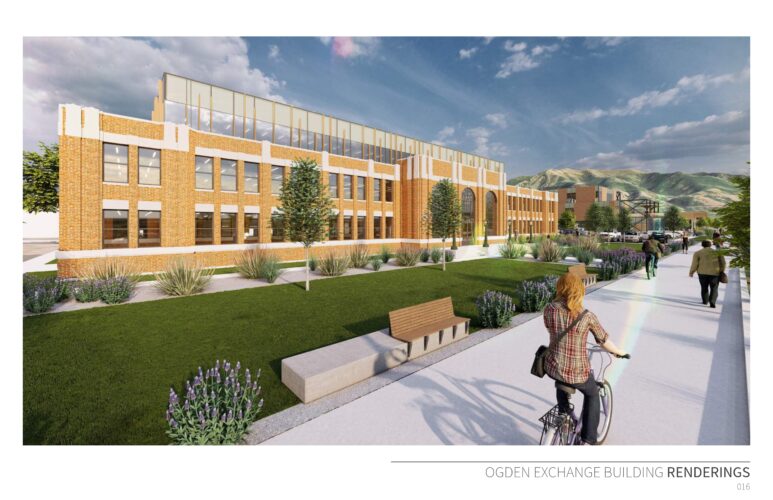
Image supplied, Ogden City
This rendering shows a possible renovation concept for the historic Stockyard Exchange building in west Ogden.OGDEN — During Tuesday’s City Council meeting, when a vote was to be taken on a pair of proposed agreements regarding the historic Ogden Union Stockyard Exchange Building’s future, council members opted to table the motions until Nov. 1, following opposition in a vote on a budget amendment needed to make renovations happen.
City Councilman Richard Hyer has openly expressed concerns with the proposed project and changes to Business Exchange-Historic Zone design standards since plans were first presented to the council by Ogden City Director of Community and Economic Development Brandon Cooper on Sept. 13.
“I just can’t get to that point where we want to contribute this much money to do something I think is going to overall do harm,” Hyer said following his “no” vote.
Sharing in an opposing vote to the budget amendment, which would transfer $845,000 in the city’s Capital Improvement Plan funds to the Ogden Redevelopment Agency for the project, was council Chair Ben Nadolski — though he didn’t share in Hyer’s reasoning for opposition.
Nadolski, appearing torn, said he is nervous about the Stockyard Exchange building not getting restored following their decision, yet he noted he’s growing tiresome of changing budgets and changing standards to meet whatever opportunities come Ogden’s way.
“We set a budget only to change it because we know we are not going to meet it, and then we set a standard and then change it when there is an opportunistic reason to,” Nadolski said.
When the BEH Zone was established, Hyer said, good standards were put into place by mindful people under no pressure to please anyone in an attempt to protect the structure of the building and its surroundings.
With BEH Zone standards having been changed already once before, he said he wishes there could be way to do the project and enhance the building without overshadowing neighboring buildings and changing standards yet again.
Among proposed changes to BEH Zone design standards is an increase in maximum building height — a total height of 45 feet in the front and 60 feet in the rear — which Hyer has strongly opposed, saying it would overshadow neighboring buildings.
Various plans for renovating both the interior and exterior of the building were drawn up; however, Cooper said they would not hold up.
Cooper has previously stated he thinks the architects designing the proposed project have been considerate in keeping within certain design standards, such as maintaining historical elements.
The proposed land transfer and development agreement, as well as the participation and incentive agreement with Denver-based developer Q Factor, will go before the city council once again on Nov. 1.