Celebrating independence: Weber State historians look at past, present and future of the USA at America250

-

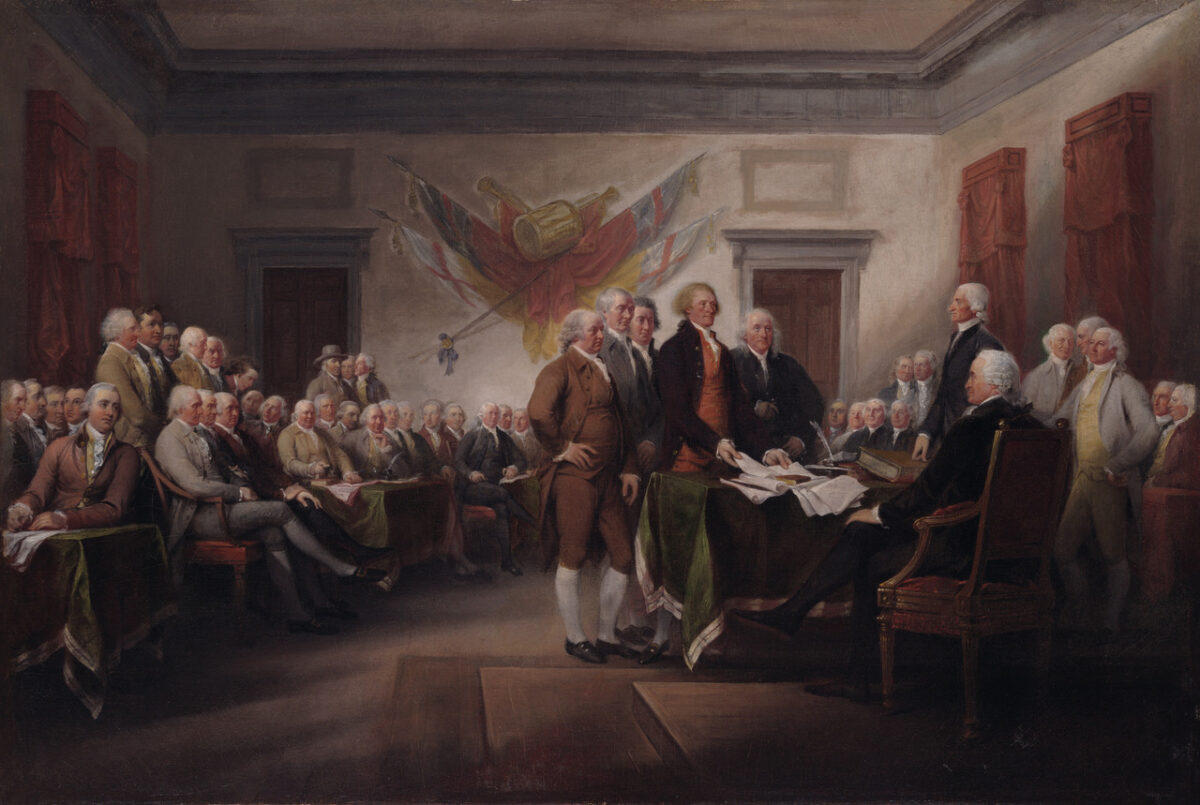
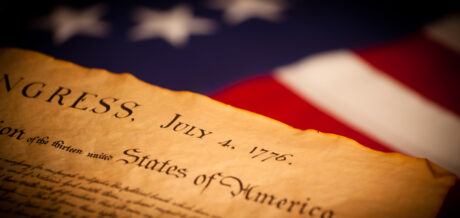
- Painting depicting the signing of the Declaration of Independence.
-

- Leah Murray
-
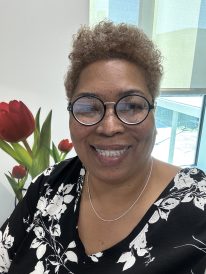
- Vikki Deakin
This weekend marks the 250th anniversary of the signing of the Declaration of Independence, a milestone moment in the history of the United States.
But what does that mean?
To answer that question, the Standard-Examiner talked with two local experts in American history at Weber State.
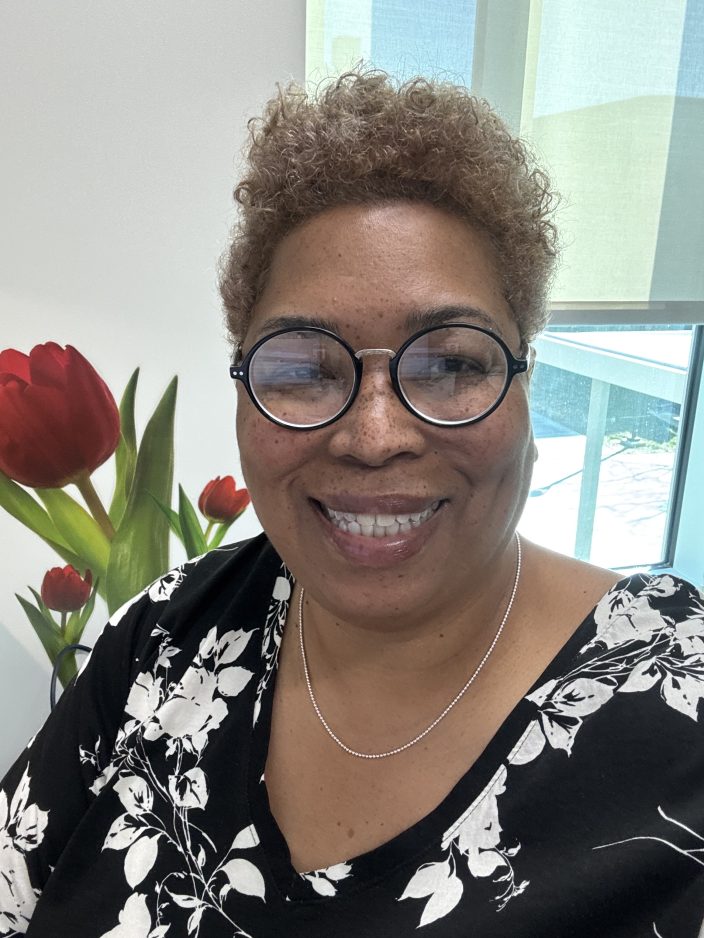
Dr. Vikki Deakin is an instructor for the History Alliance at WSU, is a member of the Front Range Early Americanist Consortium and of Phi Alpha Theta. She teaches about the American Revolution and Intellectual History of the American Founding.
Leah A. Murray, Ph.D., is a Brady Presidential Distinguished Professor, was honored with the Barbara Burch Award for Faculty Leadership in Civic Engagement and is the director of The Olene S. Walker Institute of Politics & Public Service.
They talked about where America has come from, where it is now and where they see it going in the future.
Here are some of their thoughts at this hallmark moment for the USA:
1. What does the 250th anniversary of the signing of the Declaration of Independence mean to you?
This can be a complicated question, according to both Murray and Deakin, simply because there can be many different ways of looking at the past.
“It means different things to me, depending on which me you ask,” Deakin said. “As an historian of the American founding, it’s wonderful and amazing and monumental that we’ve come this far. At the same time, as a historian, 250 years for many countries is nothing but for us it’s really something.
“If you ask me just as a citizen, it’s emotional. For the first time, I actually decorated my house in all the red, white, and blue, and all the stars, and all the things, because it really is special. Then if you ask me as a black woman in America right now, I have a lot of mixed emotions about it because, as wonderful as it is, there’s still so much work to do.”
Something that stands out to both professors is differentiating between the country and the government.
“There is a nation that is what America is, and then there’s this state that is what the United States is – and they’re different,” Murray said. “The state fails all the time, fails its people and groups of its people, sometimes in catastrophically horrible ways. But then there is the nation, which is life, liberty, pursuit of happiness, which is all men are created equal, which is we are endowed by our creator by these inalienable rights, and we don’t need the government to give them to us. That still is there.”
Deakin added: “I think it’s important for Americans to remember that your country is not your government. Your country is the people in the country. They’re your neighbors and your friends. They’re the people in the grocery store, the people who mow your lawn. That’s who your country is.
“The government is something else. The government is not your country, and I want people to know that you can love your country and still be unhappy with your government.”
2. As you think back over the last 250 years, what stands out to you most about this American experiment in government by the people?
Murray said that she often focuses on how the preamble to the Constitution doesn’t talk about being a perfect country but that it says “a more perfect union.”
“When I teach about the constitution, I’m talk about how we are still trying the more perfect union,” Murray said. “We are always a work in progress and we are always trying to get better. It’s not an end ever. For me, what stands out is that in 250 years of going, the ideals are all these things that humans can’t possibly achieve, the country just spent over two centuries trying.”
Deakin points out that the individuals that declared freedom in 1776 were in uncharted territory.
“It’s important to remember that the founders and framers had no idea that this would last,” Deakin said. “They did something new and different, and so I think what stands out to me is that we’ve proven that it can work, this government can work, this new country can work. We’ve proven that it can last even through a civil war. We managed to put it back together and move forward.”
But they both also believe that it’s important to acknowledge that the nation will always have issues because it is run by imperfect people. They think either extreme view – that America is always good or always bad – doesn’t adequately appreciate the nuances of a country of diverse views.
3. How do you feel we are doing at upholding and/or evolving the ideals that were established at the birth of the nation?
Both Deakin and Murray have studied history extensively and recognize that the individuals who signed the declaration had flawed perceptions.
“It’s a complicated premise, this idea of upholding ideals,” Deakin said. “We have to remember that when Jefferson wrote ‘all men are created equal,’ he didn’t mean that. He didn’t even mean all white men when he said that. He certainly didn’t mean women, the indigenous, the enslaved people of color. If we’re talking about their ideals, that’s a little messy because their ideals are fundamentally very different than what we think now.”
Murray thinks that if those men and women could see where the country is at now, they would see that some big issues like slavery and women’s suffrage have been addressed.
“All the issues come from the fact that we’re human,” Murray said. “I think that the people who grappled with all these very human questions would appreciate that we’re still grappling with those questions. They were raising millennia old human questions and trying to make us as free as possible to answer and solve those problems.”
4. What do you think are some of the biggest strengths and biggest concerns facing our nation right now as we reach this milestone?
While history shows that progress on certain issues is happening in the USA, it’s still a nation that has positives and negatives to deal with.
Murray said she thinks what makes her most optimistic about America is that neighbors still show up for each other and that we still make the most of our freedoms. Her biggest concern is that we don’t teach civic engagement and thus fail to understand our responsibilities to a government by the people.
“I would argue that for a long time we haven’t focused on social studies and how we are as citizens,” Murray said. “What our civic obligations are are secondary, if not third, in the line of what we talk about in a school setting. As a result, I don’t think we’re doing well telling ourselves these very important stories. We have got to talk about the why of liberty, and we’ve got to talk about and grapple with how my liberty and what I would want to do with it might be very different from yours.”
Deakin connects both what she views as the biggest strength and biggest challenge facing the nation to a specific topic.
“I think our biggest strength is that fundamentally Americans have always believed in the rule of law,” Deakin said. “That is what has held this country together through the absolute worst. We fundamentally believe that the law is the law and you don’t have to always agree with it, but you follow it. I think that’s our biggest strength. My biggest concern is that the rule of law doesn’t seem to mean anything right now to the person whose constitutional responsibility it is to enforce the law.”
5. What do you think are things Americans should be thinking about looking toward the future of their country?
While the America 250 celebration this weekend is inherently about the past, it’s also a good time to think about where the country is headed.
Deakin believes that we are seeing generational changes in government but feels like the nation is set up to continue on without substantial changes.
“I think we’re just going to keep keeping on,” Deakin said. “But the fundamental structure of what the founders of frameworks created is sound. They really built a sound foundation. We’ve had so many different kinds of presidents and different congresses, but the structure still remains.”
Murray said that, to her, the key is focusing on what is truly important to the people of the United States.
“We get caught up in the minutia of whatever’s happening in politics or other things,” Murray said. “Those is not even what this is about. It was always about life, liberty, and the pursuit of happiness.”
Government

UTA opens comment period on partial 2027 budget that includes Ogden upgrades

Federal worker from Ogden accused of receiving fraudulent disability payments while taking European hiking trip