Electronic medical records show promise but far from perfect, speaker says at conference
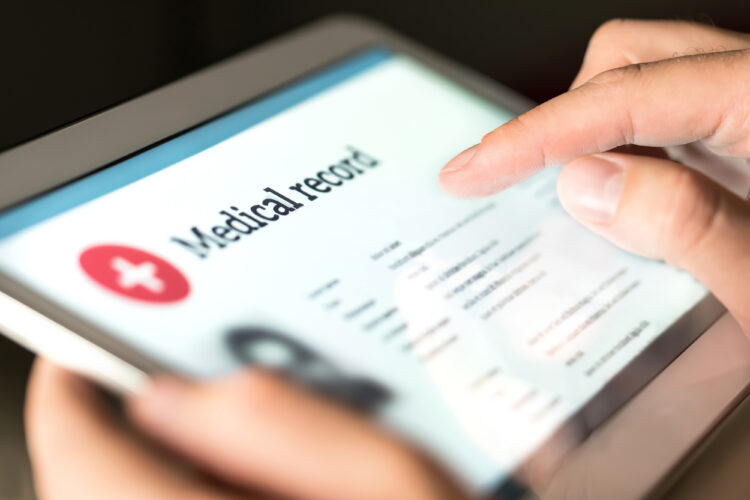
Adobe Stock
Hospitals increasingly are turning to electronic health records, but not all of the bugs have been worked out, a speaker at the Ogden Surgical-Medical Society Conference warned this week.OGDEN — Dr. David Classen recently visited a pharmacy to pick up a newly prescribed medication.
When he arrived, he asked the pharmacy if there were any known interactions with other medications he was taking.
They told him no. According to the automated system on the computer, Classen should be completely safe taking that medicine with his other drugs.
Wrong.
“I said to them, ‘Just humor me. Would you please check again?'” he said.
After checking again through a different source, a drug interaction warning popped up.
Classen, professor of medicine at University of Utah Health and consultant in infectious diseases at the University of Utah School of Medicine, spoke about errors in electronic health records, or EHRs, and how they’re hurting patients during the 79th annual Ogden Surgical-Medical Society Conference this week at Weber State University. The theme of this year’s conference is “Patient Safety in Primary and Specialty Medical Care.”
An EHR is an electronic version of a patient’s medical history. This history includes health conditions, tests, physician notes, medication the person is taking and more vital information. The system is designed to flag warnings about potential allergic reactions, too high of a dosage and drug interactions,,
But Classen said it’s not as wonderful as people might think.
“It’s very frustrating because EHRs failed to improve patient safety as advertised,” he said.
Classen spoke of several cases in which an EHR was relied on but failed. One patient died after being prescribed a medication to which she had a known allergy.
Another patient who was admitted to the hospital with pneumonia had been taking the blood thinner medication Warfarin. During her stay, Classen said, she was given the medication three times a day and ended up dying from a brain bleed because of the excessive amount of the drug in her system.
Classen said EHRs meet the most basic safety standards less than 70% of the time.
“We used to have three safety checks before EHRs,” he said. “The physician, the pharmacist and the nurse. Now everyone pretty much relies on the EHR to let them know if there’s a problem and many of them are not being picked up.”
Classen referred to reporting by the Chicago Tribune, which took two drugs known to have fatal interactions if taken together to several different pharmacies.
“They wanted to see how many pharmacies would dispense the medications without warning,” he said. “Half of the pharmacies dispensed the medication. Another 25% told the patients there may be a drug interaction but still dispensed the medication.”
There have been some improvements over the years with EHRs, Classen said, though their safety performance varies depending on the hospital. He said not only do the systems need to be improved further, they need to be easier and safer for clinicians to use.
Today, many hospitals have turned to artificial intelligence to help improve patient safety and detect problems before they occur. Classen is a co-developer of the Global Trigger Tool, which is used to measure patient harm. The tool can even be used by families of loved ones in the hospital to track their care in real time.
“There’s so much hype around AI, but there’s so much meat around it too,” he said. “Several hospitals have used it and there has been a marked decrease in patient harm. I think AI will transform how we measure, detect and manage patient safety and intervene before a problem occurs.”