Black Island Farm plans to be bigger, better to honor owner
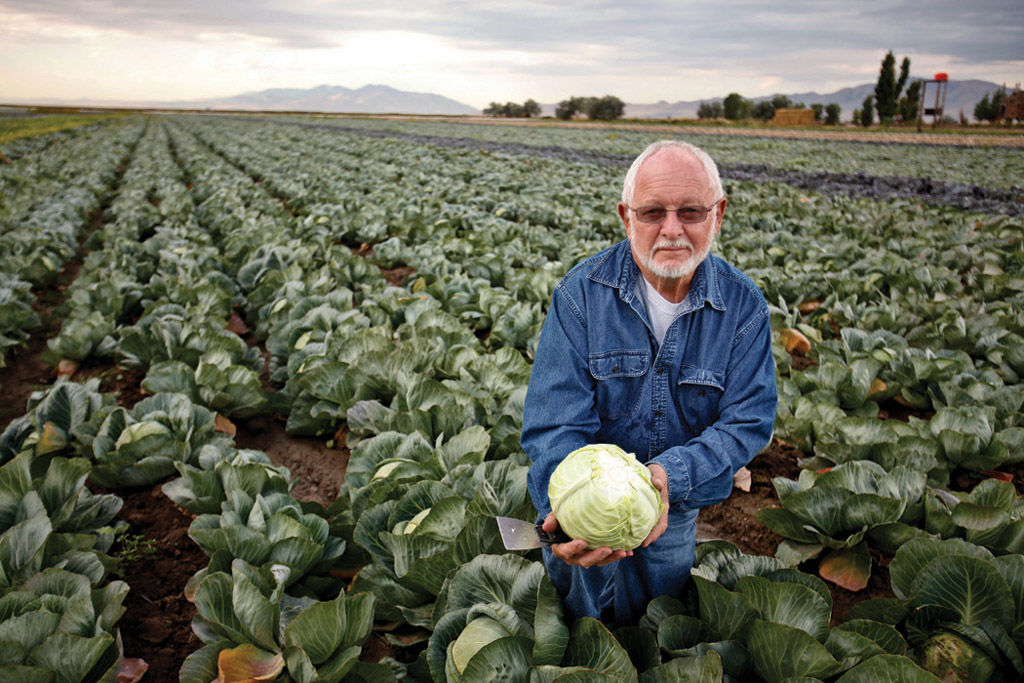
Standard-Examiner file photoCharlie Black, owner of Black Island Farms in Syracuse, poses in 2011 for a portrait in a field of cabbage.
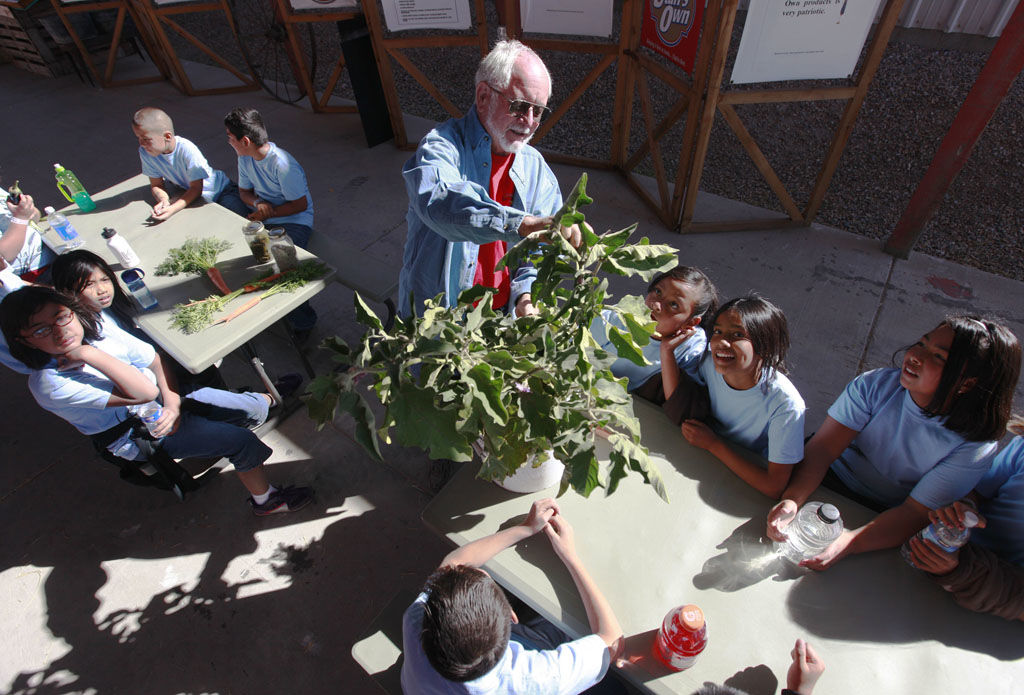
Standard-Examiner file photoCharlie Black, owner of Black Island Farms.
LAYTON — Charlie Black’s death is not going to close the doors of Black Island Farm, his daughter said.
“We plan to fight through this, and Black Island Farm will be open this fall, bigger and better in honor of my dad,” said Dorothy Law.
The Black Island Farm Harvest Festival, complete with corn mazes, animal alleys, bonfires, pig races, pumpkin patches and hayrides, has become a tradition for many families along the Wasatch Front.
Black, 75, of Layton, died Saturday when the car he was driving veered and crashed at 750 North and U.S. 89 in Layton. The family has not received the autopsy report from the state medical examiner, Law said.
A viewing for Black will be from 5 p.m. to 8 p.m. today at Lindquist Mortuary, 1867 N. Fairfield Road, Layton. Funeral services are at
2 p.m. Wednesday at the mortuary.
Black, who is a member of Westminister Presbyterian Church, is survived by his wife, Marta Black, two children, six grandchildren, two great-grandchildren and two brothers.
Law, along with other family members, is reeling from the death of Black, who was still coming to work at the farm every day “with a smile,” she said.
Local farmers from all over the valley have shown up at the farm to take care of whatever needs to be done, such as watering the crops.
“People have just been stepping up and helping. It’s been truly amazing,” Law said.
Law said her father and grandfather started the farm together. When she was a teenager, Law ended up with other teenage farm hands, mostly boys, picking asparagus and other crops.
But it was her mother’s “suggestion” to Black that put Law to work in the office and out of the fields.
“I left the farm for a while, but when Dad started the corn maze and it went big the second year, I started working on the farm again,” Law said.
Law said her parents took each of the six grandchildren on individual trips, so they could spend “one-on-one” time with them. He also was known to play practical jokes, like putting rocks in shoes left by the front door.
Her son, Tyler, who is 20 now, took an interest in farming. Law tried to talk him out of it, because farming is “so unpredictable, but he has found that love, and he has a true passion,” like his grandfather.
Farming wasn’t Black’s only passion. He also loved giving back to the community and helping others, even when times were tough.
“My husband and I would ask him ‘What are you doing?’ and he’d say, ‘It always comes back,’ and I’ve been around long enough now to see it always comes back,” Law said.
It was with heavy hearts that Lisanne Chapman and Melinda Allred heard about Black’s death.
“Charlie was incredibly friendly and very gracious and very kind,” Allred said.
“I got a text in church from my dad about Charlie’s death,” Chapman said.
The two, who are sisters, grew up in West Point, and their grandfather, Chester Montgomery, started a pumpkin walk at Montgomery Kiddie Kollege yearsago. The pumpkin walk outgrew the West Point location and Syracuse adopted it.
Allred said if it wasn’t for Black Island Farms, the pumpkin walk in Syracuse would not have continued. It was Black who said he’d grow a section of pumpkins just for the walk.
“He said, ‘I’ll take care of you, don’t worry,'” Allred said.
She said one section of this year’s pumpkin walk will be dedicated to Black.
Syracuse Mayor Jamie Nagle said Black has donated more than 1,000 pumpkins every year for the pumpkin walk, which is free to the public.
Nagle said the donation is impressive, but not as much as the man, who did what he could to try to keep open space in Davis County.
“He was so worried about the future of agriculture,” Nagle said. “He was so unassuming. Charlie’s approach was to educate about the importance of farming in Davis County.”
Tage Flint, general manager of the Weber Basin Conservancy District, said Black served on the board for 20 years, until five years ago when he left.
“He knew the value of water from the ground up, but he also understood that the community was not all farms and helped balance the needs,” Flint said.
But more importantly, Black also knew the value of people, Flint said.
“He believed all kids deserved a second chance, and he hired many, many young people to work on his farm who learned valuable lessons,” Flint said.
“Charlie was literally an agriculture leader in the community,” said Sen. Jerry Stevenson, R-Layton, who is also the owner of J&J Nursery.
Stevenson said Black sold part of his farm to The Nature Conservancy in Utah so it would stay in agriculture.
“Charlie loved the land, and he loved to farm,” Stevenson said.
Stevenson said Black could have gotten a lot more money from the land if he had subdivided and sold it for housing.
“Charlie coined a phrase, which we use all the time,” said Dave Livermore, Utah state director of The Nature Conservancy. “He said, ‘When you’re in agriculture, pavement is always the last crop.'”
Black worked tirelessly to conserve land not only in Davis County, but in other areas of the state, Livermore said.
“He worked hard to convey the message of how important it is to protect Utah’s farmland,” Livermore said.
At the time of Black’s death, he was working to preserve agricultural land from being part of the West Davis Corridor, said Leonard Blackham, commissioner of agriculture with Utah’s Department of Agriculture and Food.
Black “was concerned with the West Davis Corridor taking out a lot of prime agriculture land and he came to the front to educate people in the process, so they could refocus on a route that would do less damage,” Blackham said.
Blackham said Black’s venturing into agritourism brought not only enjoyment to thousands of people who wandered through the corn mazes every fall, but it also was an opportunity for Black to educate thousands of schoolchildren about where their food comes from.
“He taught them that vegetables did not come from the grocery store,” Blackham said.
Burt Johnson, who farms land in West Point, Syracuse, Clinton, Farr West and West Point, said Black’s work on the board of the National Onion Association helped local farmers.
“He would direct us when problems came up with legislation and he worked to let us know what we could do to improve the onion,” Johnson said. “Charlie was fair to everybody and tried to do his best to keep agriculture strong and fair.”