Dinosaurs and gems put on a show in Ogden
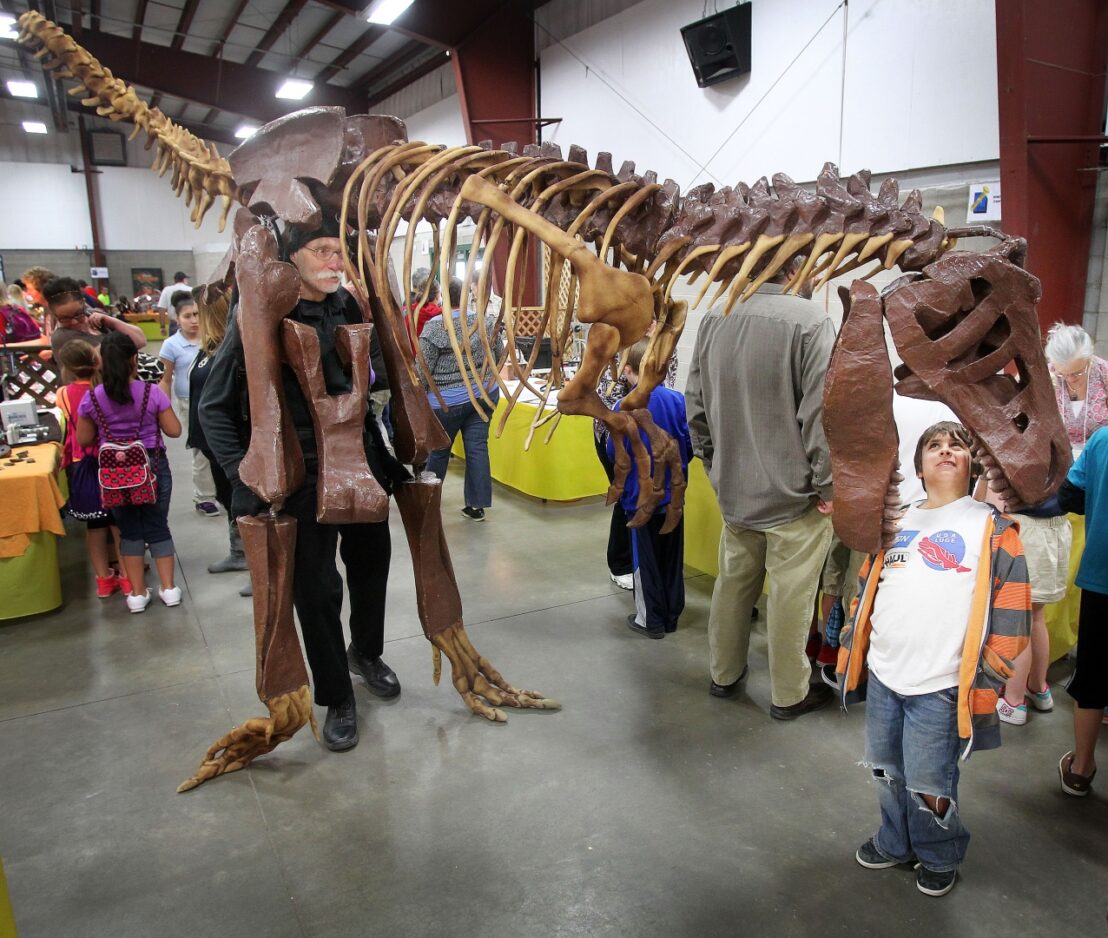
Tim Seeber as "Mr. Bones" uses a foam skeleton of a dinosaur to tease Easton Greenberg during the 63rd Annual Gemstone Junction Show at the Weber County Fairgrounds in Ogden Friday, April 11, 2014.(Brian Nicholson/Special to the Standard-Examiner)
OGDEN — Imagine this: you walk through the doors of Golden Spike Arena’s Exhibit Hall to find a nine-foot-tall Osteosaurus (“Bone Lizard”) biting the heads of schoolchildren.
Don’t worry. No children were harmed in the making of this event.
The fleshless Osteosaurus is a remarkable Styrofoam puppet created by self-proclaimed paleo-puppeteer, Timothy Seeber, also known as Mr. Bones. Seeber, an amateur paleontologist and Colorado native, said he loves coming to events like Gemstone Junction and bringing smiles to peoples’ faces.
“I like making people smile,” said Seeber. “I see thousands of people a day at events like this. It’s fun to play with them.”
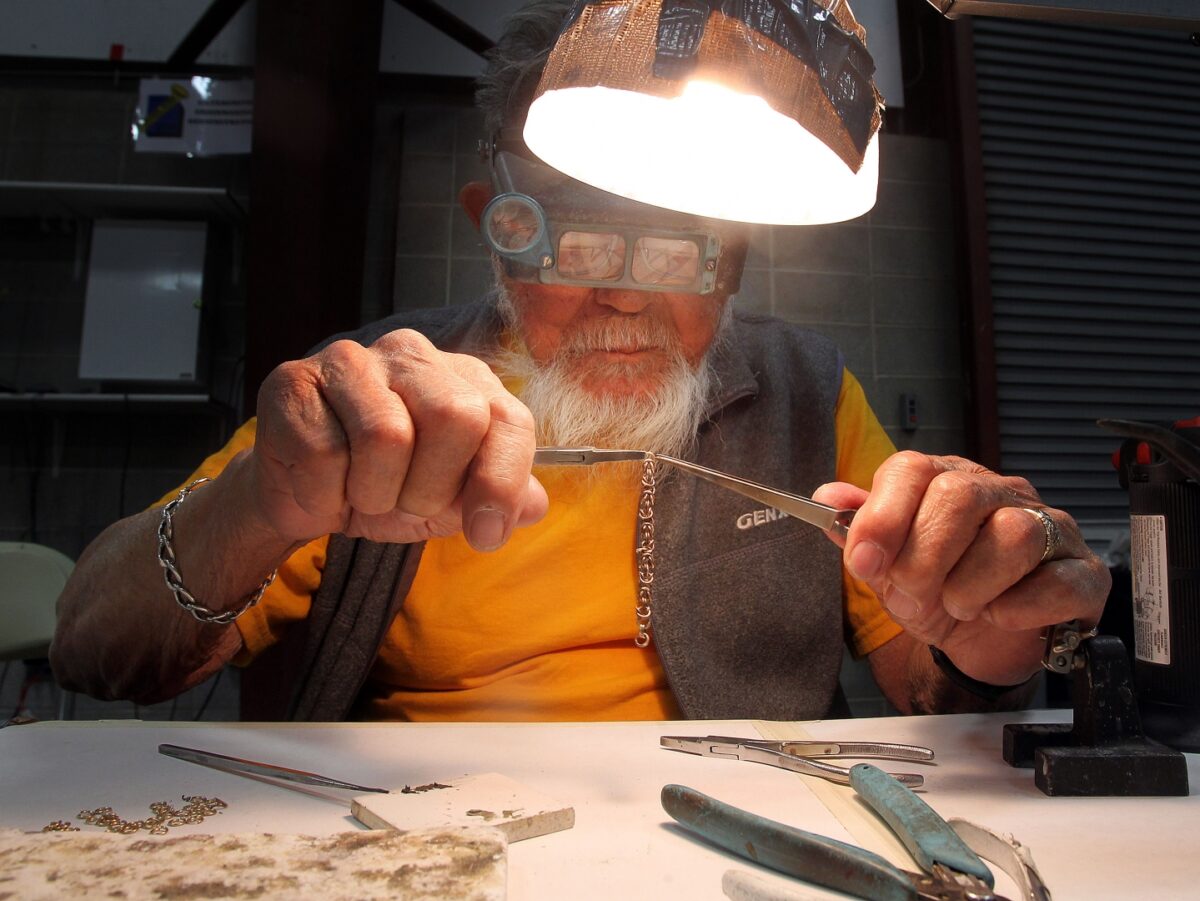
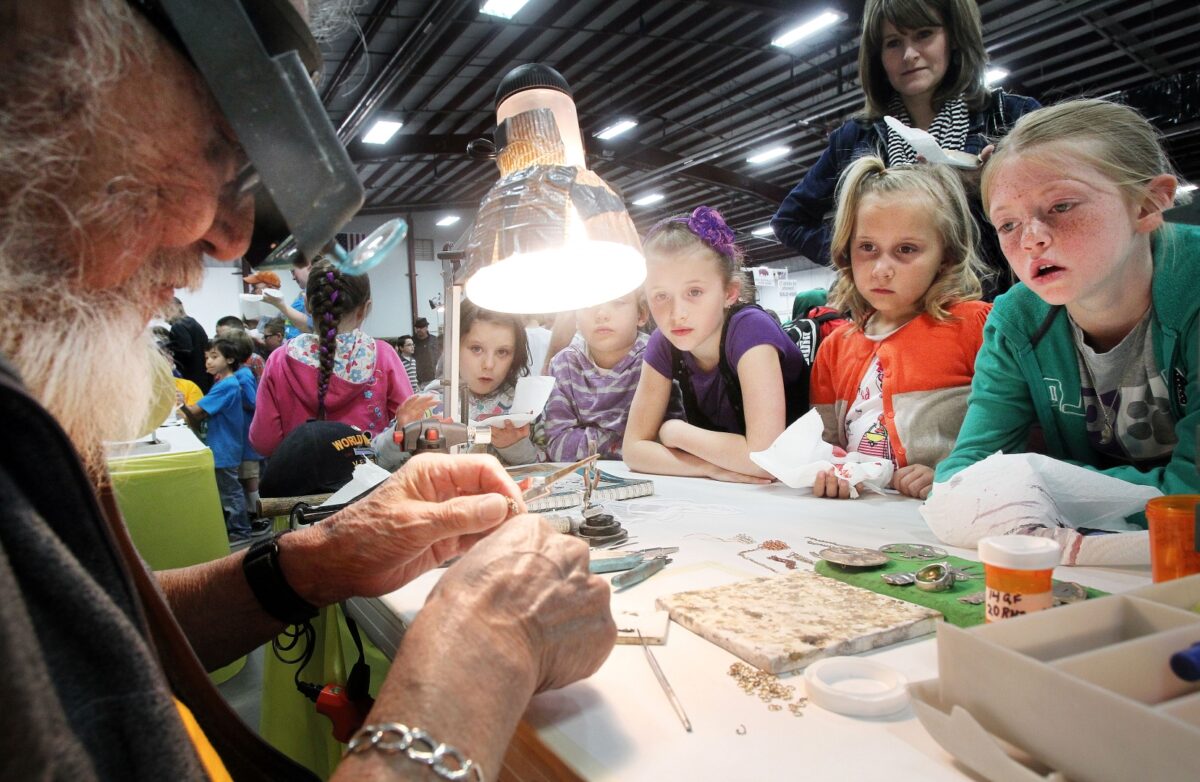
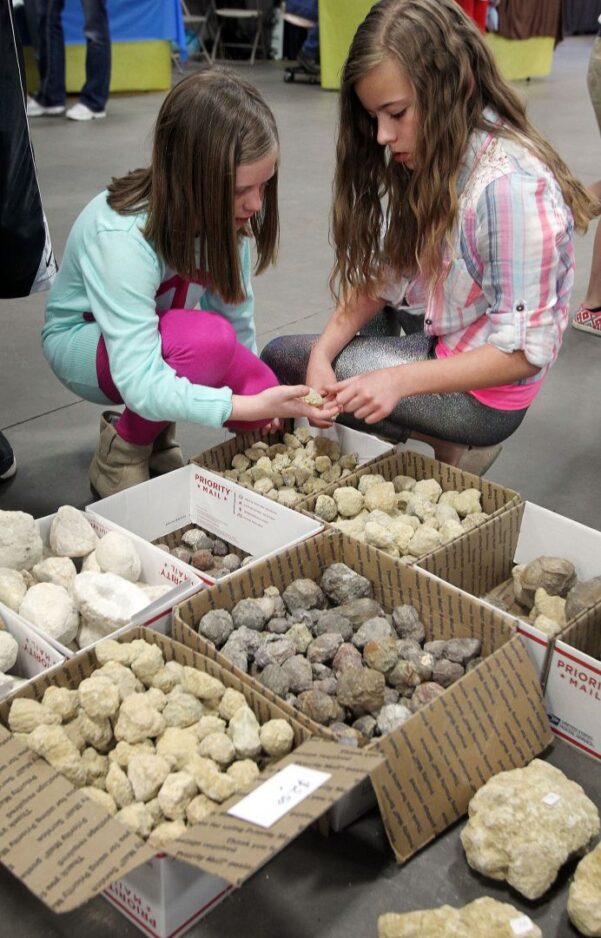
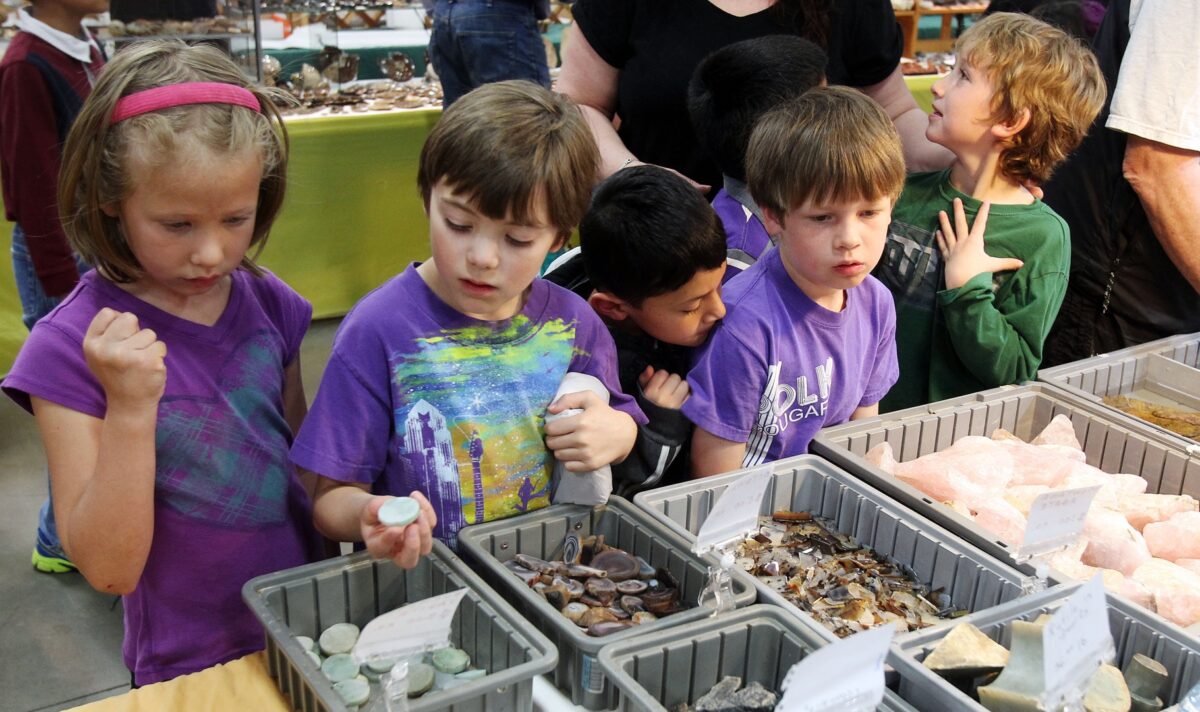
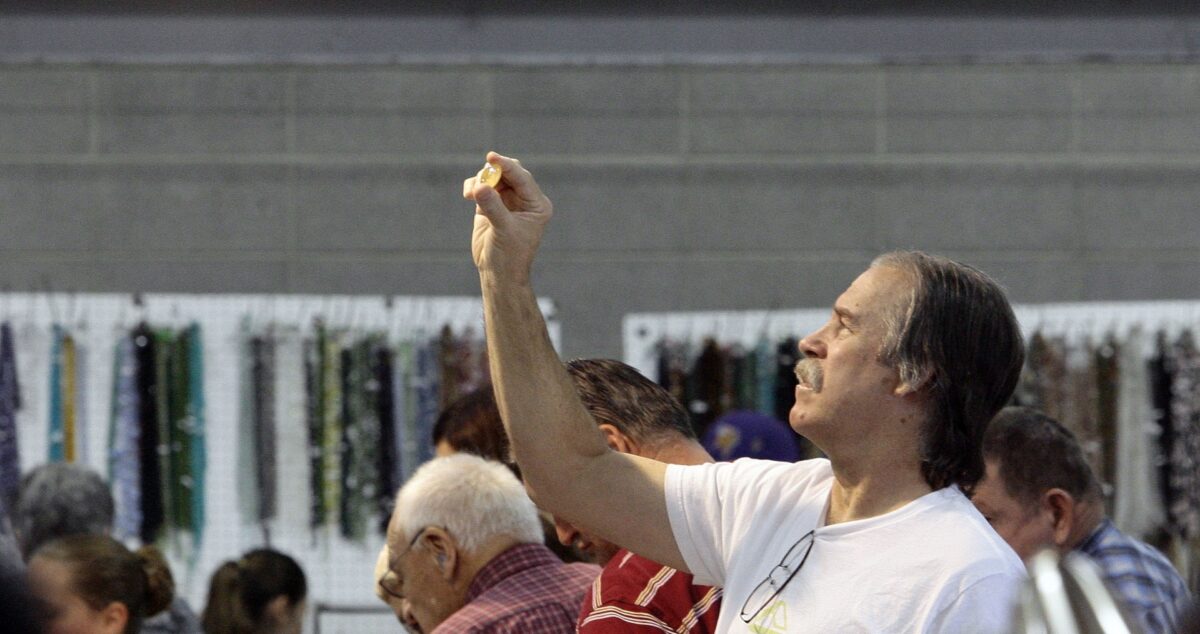
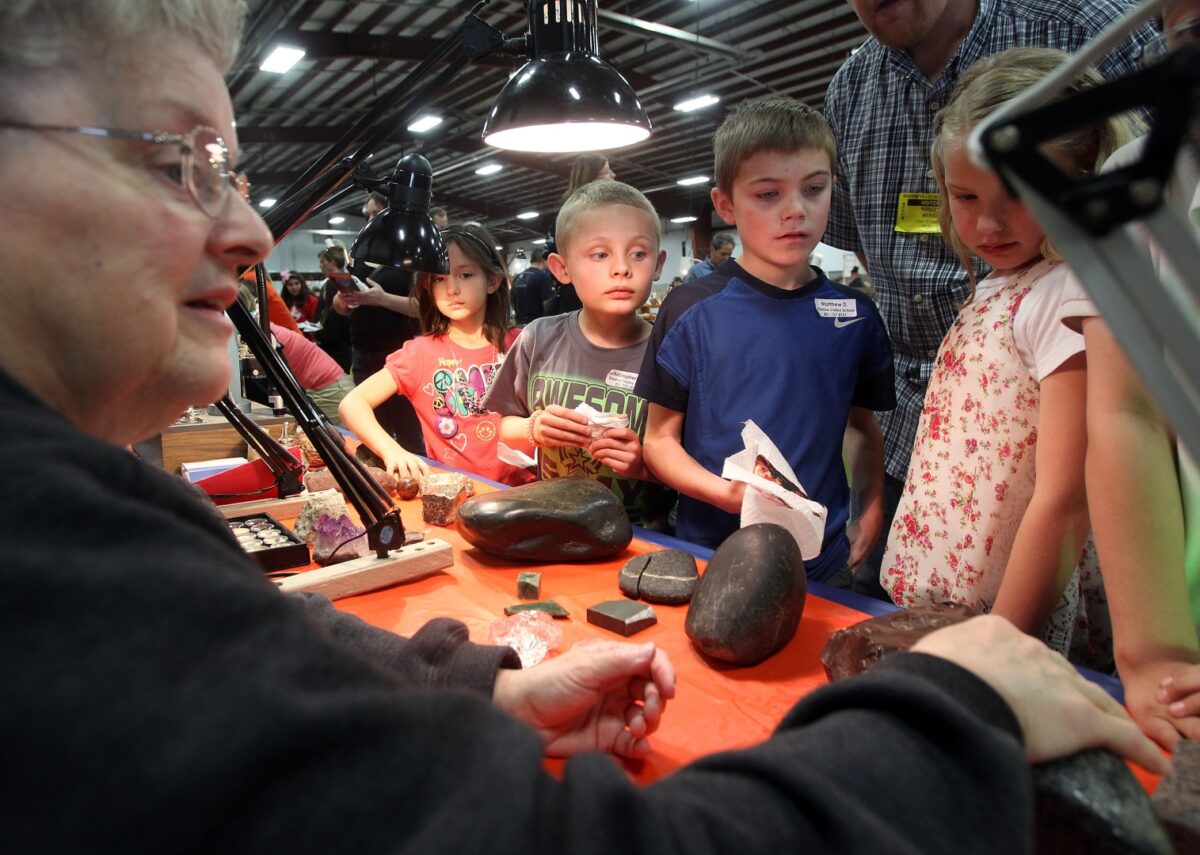
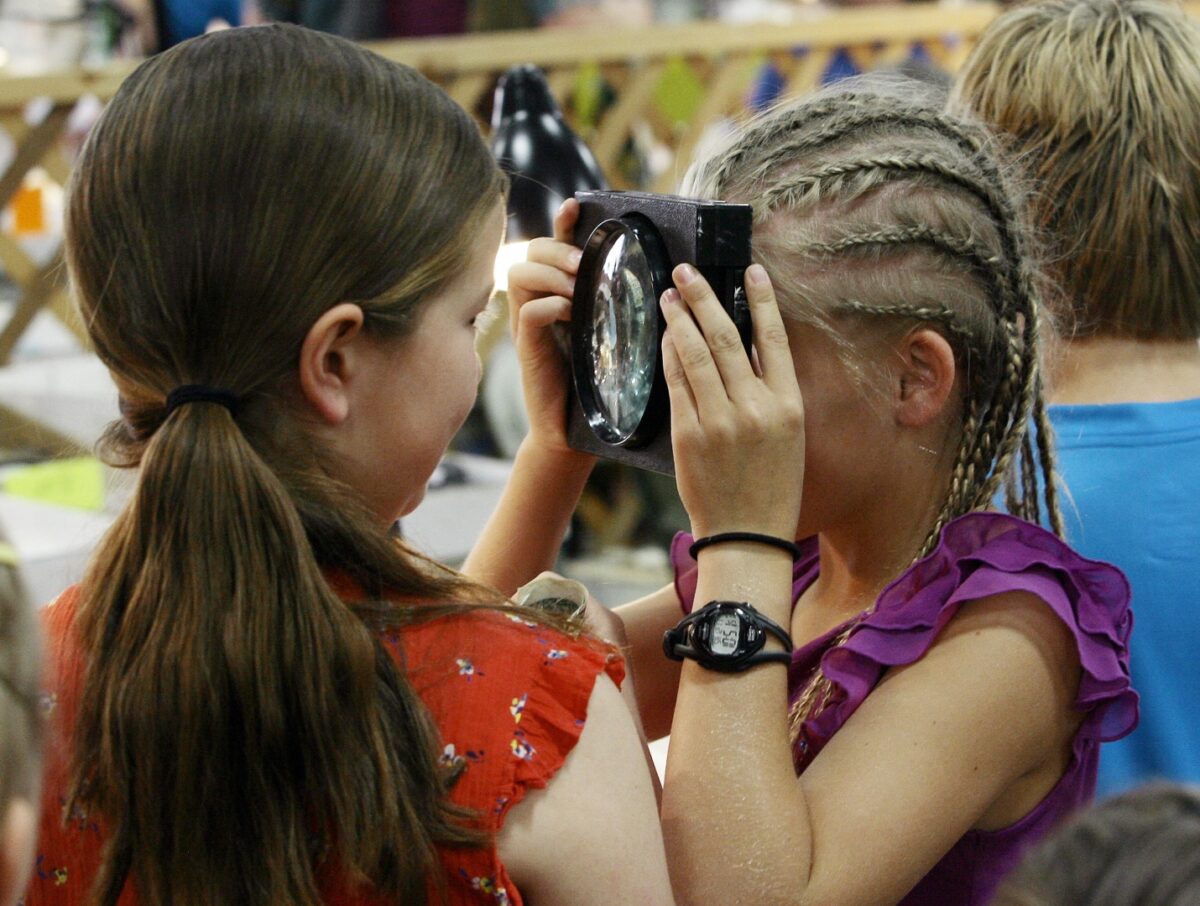
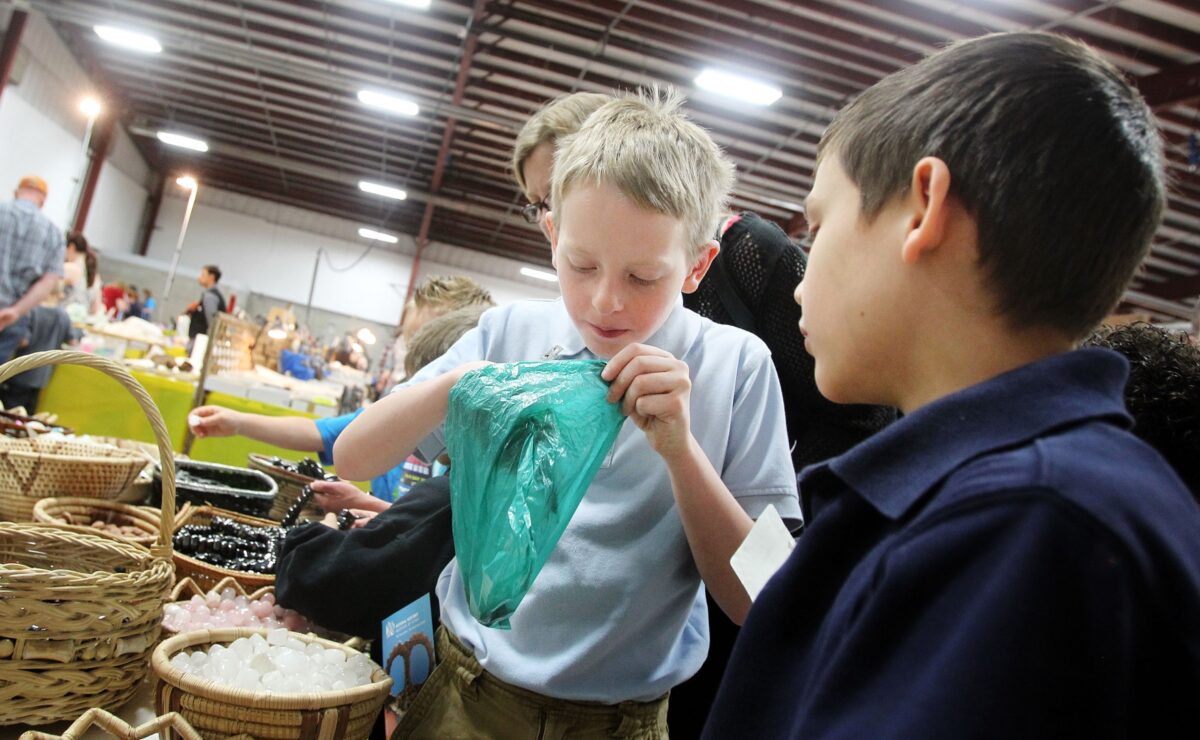
Seeber wasn’t the only one eliciting smiles at the event Friday. Children gathered around activity centers which members of the Golden Spike Gem and Mineral Society had set up for them, enthusiastically painting rocks, cracking geodes (defined as “rocks containing cavities lined with crystals or other mineral matter”), and searching for gems.
“I think I found an emerald!” was the kind of joyful exclamation heard around the Gem Search activity as children feverishly picked through piles of rocks with tweezers looking for blue, red, and green stones.
“We enjoy doing this for schools,” said Richard Gabel, show chair for the event and member of the Golden Spike Gem and Mineral Society, adding that schools and youth groups are given free admission.
“In second and fourth grade they study earth science, so we have a lot of students from Weber County and Ogden City come to this event,” explained Gabel. “They get to do rock painting and gem digging. It’s an educational thing for them and they have a good time.”
Gabel understands first-hand how interesting rocks and fossils can be to children and adults alike. He first entered an exhibit into the 63-year-old gem and mineral show in 1959 when he was 12.
“When you cut open a geode, you are the first human being in all of history on this entire Earth to see what’s inside,” Gabel beamed and pointed to the display showing the agate nodules he found on his second rock trip to Lime Creek, Idaho, in 1961.
Gabel then moved to a display of sedimentary rock. “These rocks you see in here are used for a lot of what we use in the world; from building materials to baking soda. Rocks and minerals are important.”
“Any time you can get a kid interested in rocks you’ve got a start in geology,” said Marilynn Harris, a volunteer at both the Ogden George S. Eccles Dinosaur Park and the Natural History Museum of Utah.
“We gotta infect somebody with dinopox,” Harris laughed. “Somebody infected us and we got to pass it along to the kids.”
The enthusiasm in Harris’ voice is palpable as she shares a list of 22 species of prehistoric creatures discovered in Utah in the last 10 to 15 years.
“That one right there, Mytonolagus, was a rabbit,” said Harris while pointing to the creature’s name next to the description “a rabbit relative ‘Uncle Wiggley’.”
“There’s so much going on in Utah, why not let people know where and why? Scientists need a boost. We feature Utah dinosaurs with our display and work here because that’s the active field, or most active as far as we’re concerned,” said Harris, adding that three new dinosaurs have been discovered in Utah in the past couple years.
Harris displayed a partial jaw bone of one of the new dinosaurs, the Lythronax Argestes a.k.a. “Gore King from the Southwest.”
“He was a tyrannosaur. He was a gory mess,” laughs Harris in explanation of the dinosaur’s nickname. “He predates the T-Rex by several million years.”
Harris said she hopes shows like Gemstone Junction teach people to take history’s lessons into account and inspire them to preserve history’s artifacts.
“We are just doing some educational things so people know how valuable these rocks and bones are so they don’t get transported anywhere outside the area of discovery,” Harris said. “Utah is a dinosaur gold mine. The nuggets are there to be found, but you have to take care of them and know what to do with them.”
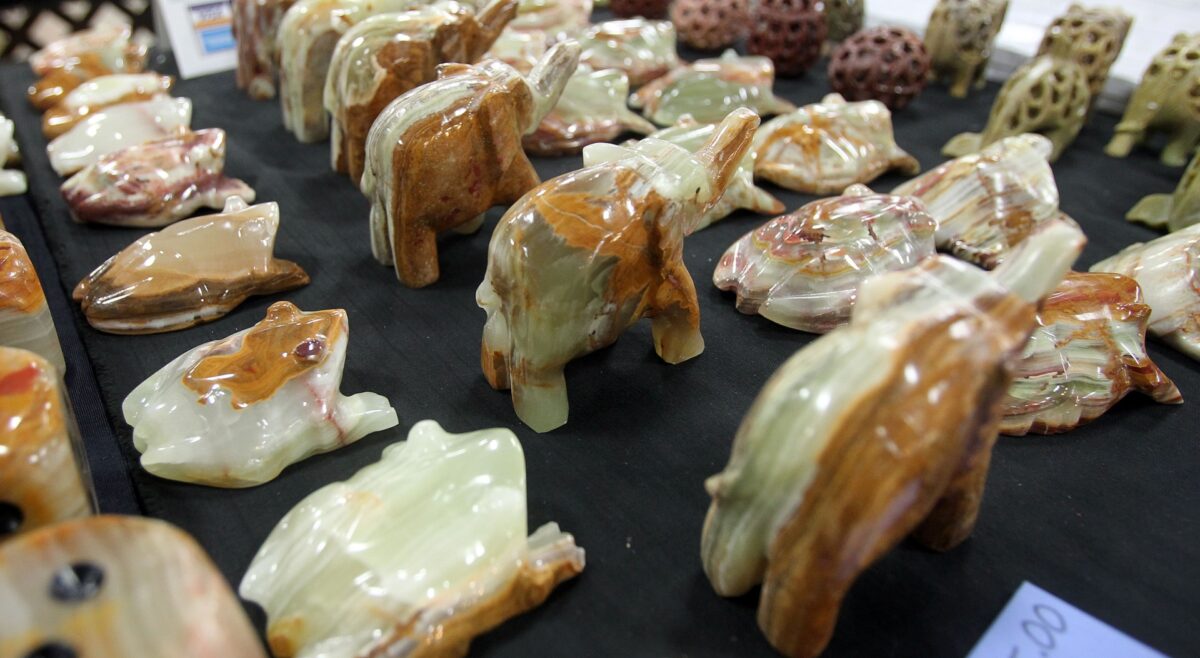
With everything from fish fossils to shark teeth and Mojave Turquoise to 18,000-year-old bison horns up for sale, science and history buffs, and the parents of science and history buffs, were sure to leave the show with lighter wallets.
“They want to buy everything,” said James Knight, from Los Angeles, as he escorted his children among the tables filled with treasure. “Just the experience of looking at all the different kinds of rocks and watching the expression on the kids’ faces as they want to know about everything and learn how everything was made; it’s great.”
Gemstone Junction is held annually during the second week in April. This year’s show will continue today. For more information on the Golden Spike Gem and Mineral Society, as well as future shows, visit the club’s website (http://www.goldenspikegem.org/) or follow them on Facebook at: Golden Spike Gem and Mineral Society.