National Center on Shaken Baby Syndrome stands behind the research science
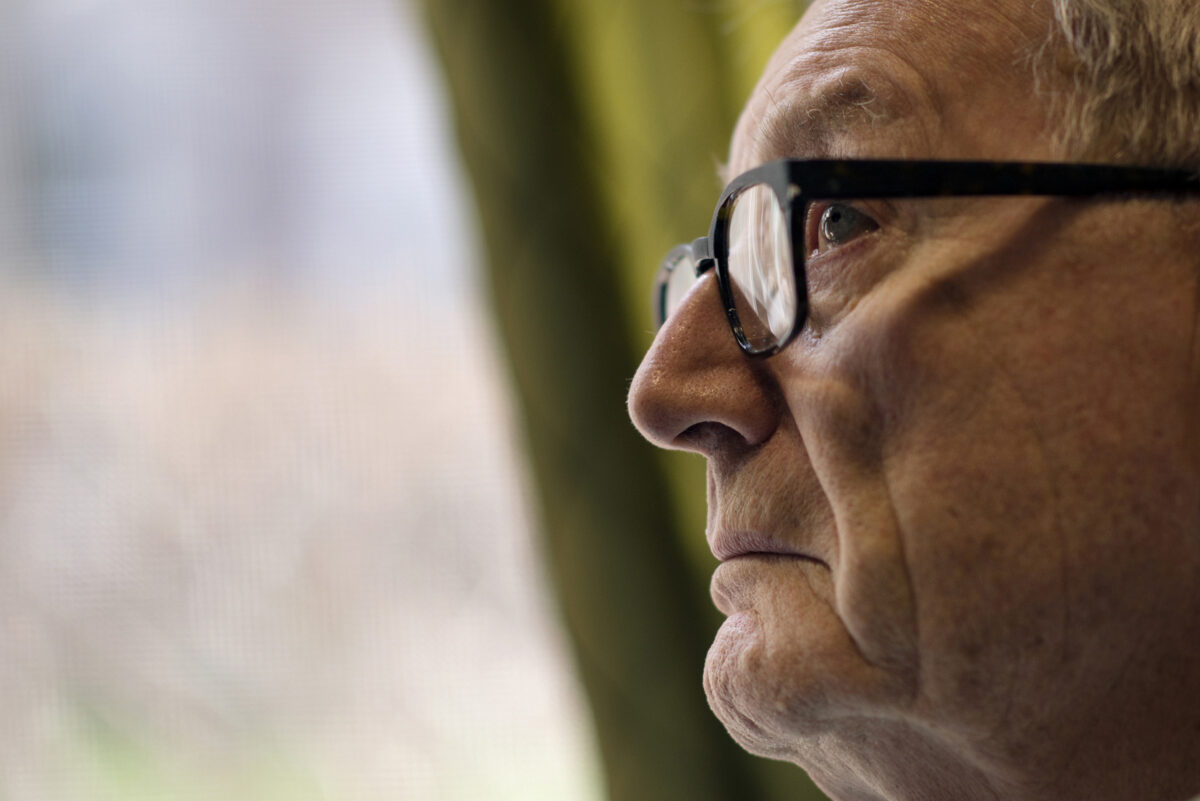
Norman Guthkelch helped launch a discussion about the dangers of violent shaking in the early 1970s. Now, he worries the diagnosis of Shaken Baby Syndrome has been applied too often and has put innocent people in prison. The Washington Post and Northwestern University's Medill Justice Project found that of the nearly 2,000 cases since 2001, more than 200 cases unraveled. Illustrates SHAKENBABY-2 (category a), by Debbie Cenziper, Lauryn Schroeder, Sophia Bollag and Anna Zambelli (c) 2015, The Washington Post. Moved Sunday, March 22, 2015. (MUST CREDIT: Washington Post photo by Bonnie Jo Mount)

The science of Shaken Baby Syndrome
FARMINGTON – The National Center on Shaken Baby Syndrome is speaking out against a Washington Post article that reported the condition as a widely-debated diagnosis being used to wrongfully convict individuals.
In a formal statement, executive director Ryan Steinbeigle said while any wrongful conviction is a terrible injustice, an overturned conviction does not disprove the existence of Shaken Baby Syndrome and Abusive Head Trauma.
“Many who read the Washington Post piece were misled to believe that there is disagreement among the mainstream medical community about the mechanism of injury or even the existence of SBS/AHT,” Steinbeigle said.
The article stated a number of doctors who once diagnosed SBS/AHT are now doubting the science behind it, and instead believe diseases, genetic conditions and even accidents can portray the same symptoms as violent shaking.
But the National Center on SBS strongly disagrees.
Steinbeigle said The American Academy of Pediatrics, American Academy of Ophthalmology, American Association for Pediatric Ophthalmology and Strabismus, American Academy of Family Physicians, American College of Surgeons, American Association of Neurological Surgeons, Pediatric Orthopaedic Society of North America, American College of Emergency Physicians, Canadian Paediatric Society, Royal College of Paediatrics and Child Health, Royal College of Radiologists, and American Academy of Neurology all recognize SBS/AHT as a form of infant abuse and have published position statements which describe their disciplines’ roles in its diagnosis and prevention.
“Both the Centers for Disease Control and Prevention of the U.S. Department of Health and Human Resources and the World Health Organization have similarly published position statements in support of the diagnosis of SBS/AHT,” he said.
Steinbeigle said in cases of injured children, teams of doctors from the local children’s hospital put together a differential diagnosis of possible explanations for the injuries, as they do with any illness or condition. These teams consist of pediatric radiologists, neurosurgeons, pediatricians, child abuse experts, and in the worst cases, pathologists. Abuse is not the first diagnosis, but is made only after ruling out all possible alternatives. In many cases one or more types of abuse, including SBS/AHT, is the only explanation for the constellation of findings.
“The Washington Post article portrays a ‘dispute’ in the medical community as to the existence of SBS/AHT. There is a very small minority of proponents for the position that shaking cannot harm an infant, but this position is not supported by the science,” he said. “This same small group often proposes alternative theories to explain injuries to children even after these conditions were ruled out as part of the differential diagnosis.”
If an alternative explanation for the injuries was not considered and ruled out before the diagnosis of abuse was made, then it is appropriate for properly qualified experts to question whether proper evaluation was conducted.
According to the National Center on SBS, there are an estimated 1,200 to 1,400 cases of SBS/AHT each year in the U.S. Approximately 30 percent of cases are missed during the initial visit in a doctor’s office or hospital emergency room.
“The National Center on Shaken Baby Syndrome does not condone the wrongful conviction of anyone. What we do support is sound medical science,” Steinbeigle said. “Shaken baby syndrome/abusive head trauma is grounded in more than 40 years of research and science. Unfortunately, babies can’t tell us what is wrong. They can’t describe what happened to them. This is why so much has, and continues to be, invested in research involving SBS/AHT.”