
Gov. Cox optimistic about GSL’s future, touches on abortion, growth

-

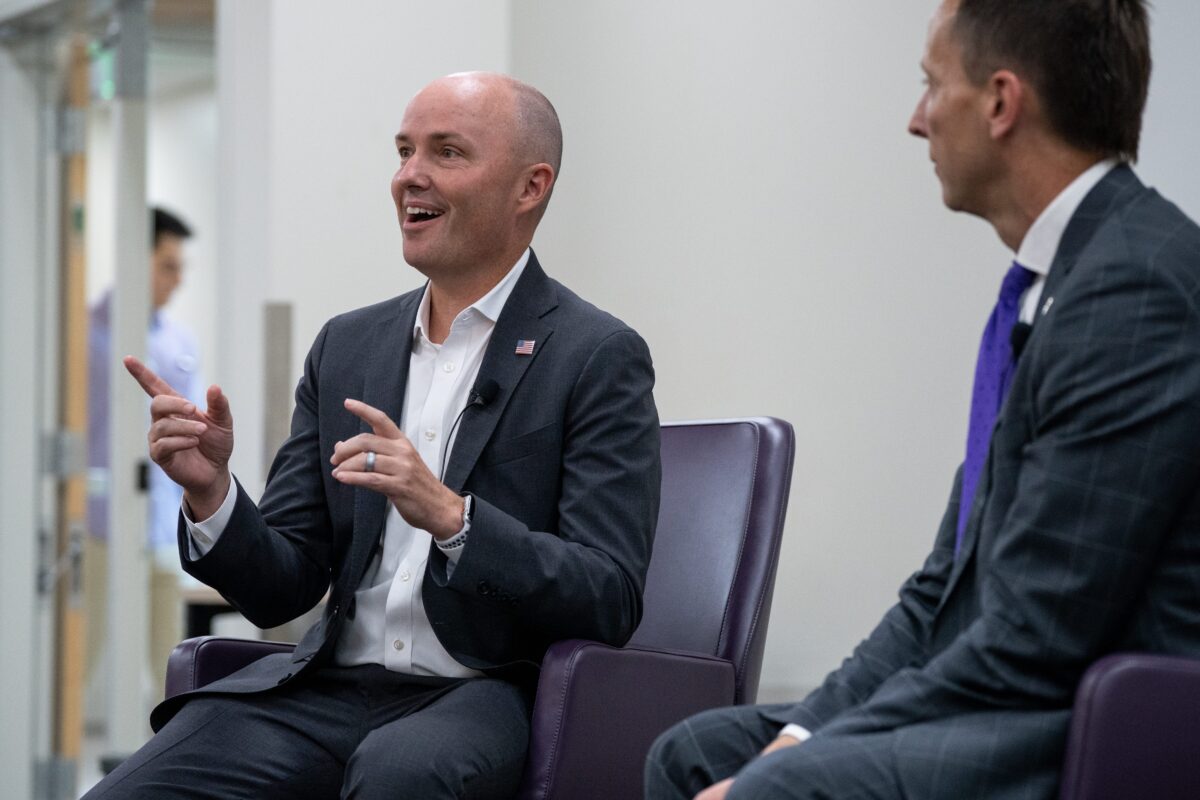
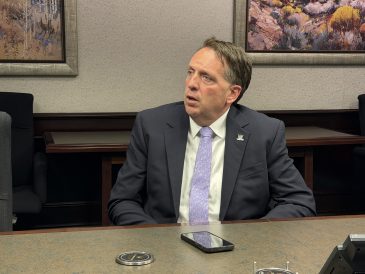
- Utah Gov. Spencer Cox, right, visited Weber State University on Wednesday, Aug. 31, 2022, and addressed a crowd in a packed lecture hall with Brad Mortensen, left, the university president. Cox, walking on campus to the lecture hall in the photo, touched on growth, abortion, housing and more.
-
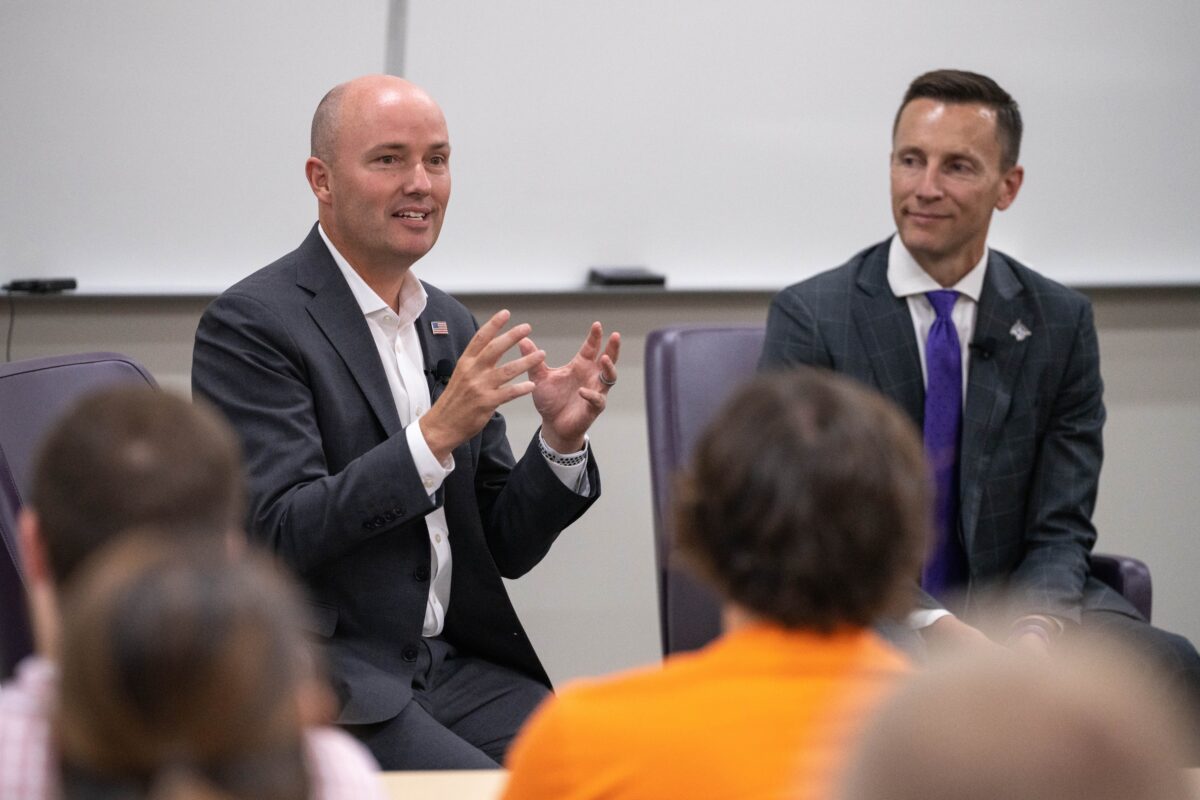
- Utah Gov. Spencer Cox, left, visited Weber State University on Wednesday, Aug. 31, 2022, and addressed a crowd in a packed lecture hall with Brad Mortensen, right, the university president. Cox touched on growth, abortion, housing and more.
-
- Utah Gov. Spencer Cox, left, visited Weber State University on Wednesday, Aug. 31, 2022, and addressed a crowd in a packed lecture hall with Brad Mortensen, right, the university president. Cox touched on growth, abortion, housing and more.
OGDEN — With attention on the shrinking Great Salt Lake at a seeming high, Gov. Spencer Cox is upbeat about efforts to save the body of water.
“I’m more optimistic now than I was a year ago because there was a tremendous shift in attitude, vision,” he said Wednesday during a visit to Ogden. “I though it would take several years to have a majority of the Legislature and the public really grasp what is happening and it happened in about six months. So that leaves me very optimistic.”
Notably, Utah lawmakers passed a major measure during the 2022 legislative session aimed at safeguarding the lake and boosting its water level, now at an all-time low thanks to increased use by humans of the river water that would otherwise feed the lake, plus the ongoing drought. The $40 million Great Salt Lake Watershed Enhancement Program earmarks funding to create a trust to bolster water flowing to the lake, to improve planning and more, all in the name of getting the lake water level up.
Even so, part of the fix — more water to get the level up — is not in human hands, he said, meaning the potential impact of legislation is limited. Cox also touched on abortion, the key role of high-density development in countering the state’s housing shortage and more during his Ogden stop.
“The only way to get high levels at the lake is going to be Mother Nature,” he said, predicting a “multiyear process” in helping bolster Great Salt Lake levels if drought conditions persist. “But preventing the lake from disappearing, we can do that.”
Cox addressed a group on the Weber State University campus in Ogden. The stop was one of several in Weber and Davis counties on Wednesday, part of the governor’s Utah 360 tour, a public engagement effort that’ll be unfolding in the weeks to come.
He sat with Weber State University President Brad Mortensen in front of a packed crowd in a lecture hall, fielding questions and addressing an array of topics.
Utah’s population growth was the main topic and he said such expansion is neither good nor bad, necessarily. Rather, the key is how the public responds, he said, putting a particular emphasis on the need to bolster infrastructure to accommodate growing numbers of people. “Density and growth without infrastructure lowers the quality of life,” he said.
In that vein, he said allowing for high-density housing — things like apartments and town homes, which come with a lower per-unit cost — is key, when done right, while acknowledging that such development can be an unpopular thing for some. “Some people recoil at the word ‘density’ — ‘Oh no, we don’t want lots of people in a small state,'” he said.
Development, particularly high-density development, can be a touchy subject in Weber County, as in many places. Indeed, Cox said the instinctual reaction for some when, say, zoning changes are proposed allowing for apartments or other denser housing, is no.
“People show up and say not in my backyard, right? And it happens everywhere,” he said.
However, the state lacks some 40,000 housing units to meet estimated demand, he said, calling for more housing for the high- and moderate-income sectors and affordable housing as well. “We need all of that, and some of that is going to have to be density,” he said.
Abortion has emerged as a big issue since the U.S. Supreme Court ruling that essentially struck down the 1973 Roe v. Wade decision, which determined access to abortion was a constitutional right. Now, it’s up to lawmakers in individual states to adjust and define abortion policy, which has led to new restrictions in many states and the push by many in Utah for a ban.
With that backdrop, one of the questions put to Cox was about what he would do to defend access to birth control. Cox and Lt. Gov. Deidre Henderson — who are pro-life and back the June Supreme Court decision — have been zeroing in on the issue in anticipation of the 2023 legislative session, Cox said, and assuring access to birth control figures big for them in tackling the topic.
Preventing unwanted pregnancies ought to be the objective, Cox said, and birth control is a big piece of that. “How do we make birth control more available, more affordable to women and men who want access to birth control? I think that’s important,” he said.
Also key in the discussion are creating better supports for mothers and their newborn children and making sure fathers in cases of unwanted pregnancies are held accountable.
Cox also plugged the new Wildcat Express bus shuttle system on the Weber State campus, which started operating on Monday. It’s the first operable segment of the broader Utah Transit Authority high-speed bus rapid transit system that will link the FrontRunner station in downtown Ogden, Weber State and McKay-Dee Hospital when complete late next year.
In traveling to the lecture hall where he spoke, Cox rode with Mortensen in one of the Wildcat Express electric buses.
Local News
New Weber State president discusses embrace of technology, new degree structures on campus

Making progress: Broad Fire sees greater containment after favorable conditions set in