Kaysville City Council bucks recommendations, denies rezone
-
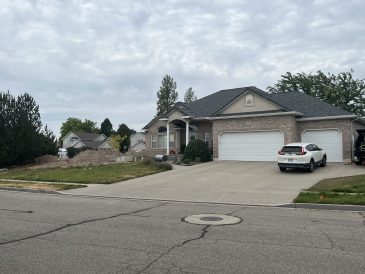
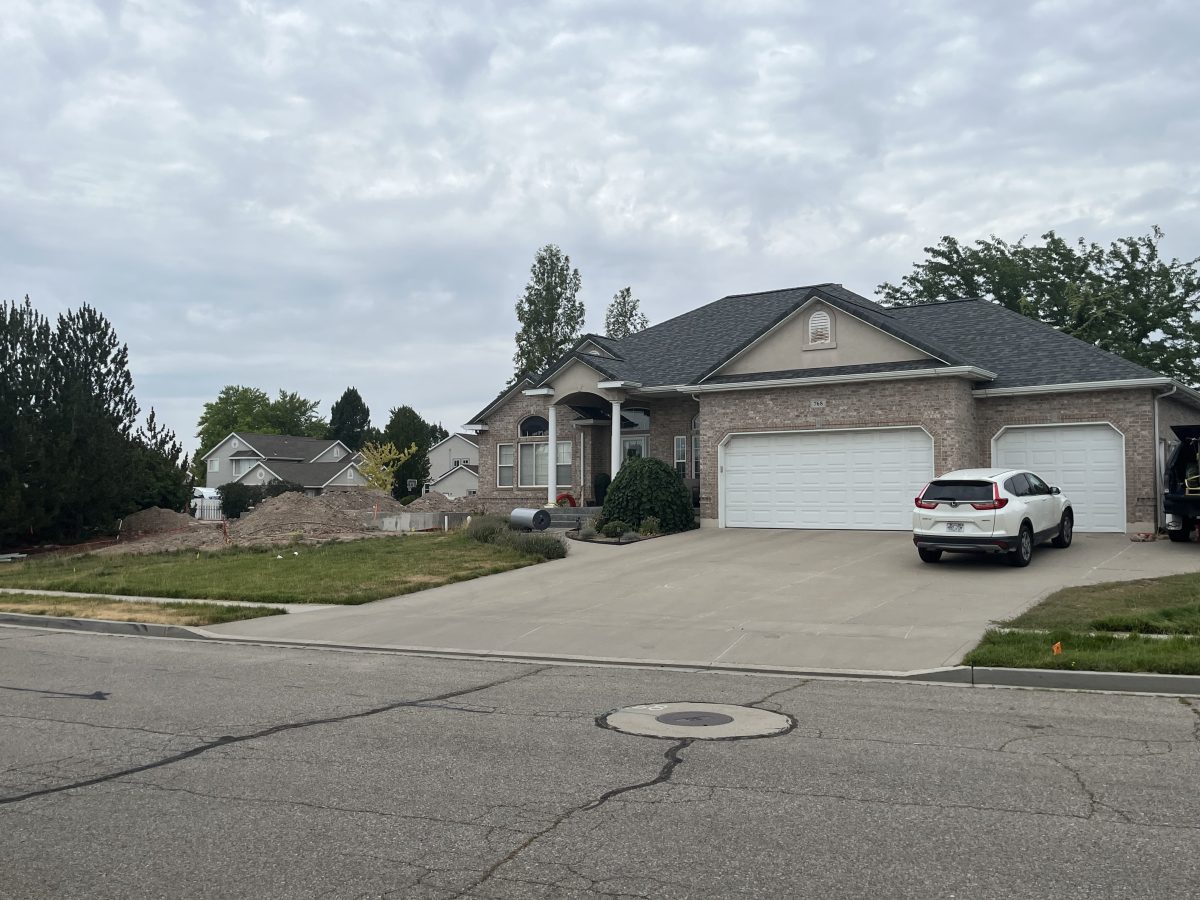
- The residence located at 768 W. Christopher Circle in Kaysville, Utah, on Saturday, July 18, 2026. The residence was the subject of a City Council discussion where a request to rezone the property was denied.
-
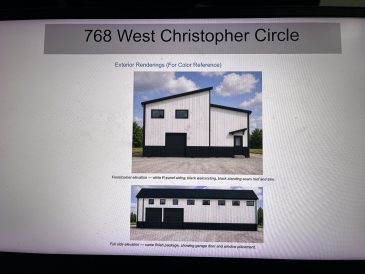
- Exterior renderings of the proposed pickleball structure to be located at 768 W. Christopher Circle, as displayed on a slide during the Kaysville City Council meeting on Thursday, July 16, 2026.
Ryan Comer, Standard-Examiner
The residence located at 768 W. Christopher Circle in Kaysville, Utah, on Saturday, July 18, 2026. The residence was the subject of a City Council discussion where a request to rezone the property was denied.
KAYSVILLE — The Kaysville City Council voted Thursday to deny a rezone request, rejecting a staff recommendation of approval that was based on an approval recommendation from the Planning Commission.
The request would have rezoned a 0.64-acre parcel of property located at 768 W. Christopher Circle from R-A Residential Agricultural to R-1-20 Single Family Residential for Nicholas Racker.
The City Council denied the rezone request by a 4-1 vote. The Planning Commission had approved it by a 5-1 vote.
The purpose of the rezone was to allow Racker to connect a structure for a pickleball court already approved for his yard to his home via a breezeway. According to the executive summary that was part of the agenda packet for Thursday’s City Council meeting, the Planning Commission considered the application on May 25, at which time “two residents raised concerns about compatibility with the existing neighborhood.”
Those concerns were echoed Thursday during the public comment period, and the neighborhood reaction was a factor in the decision to ultimately reject the rezone request.
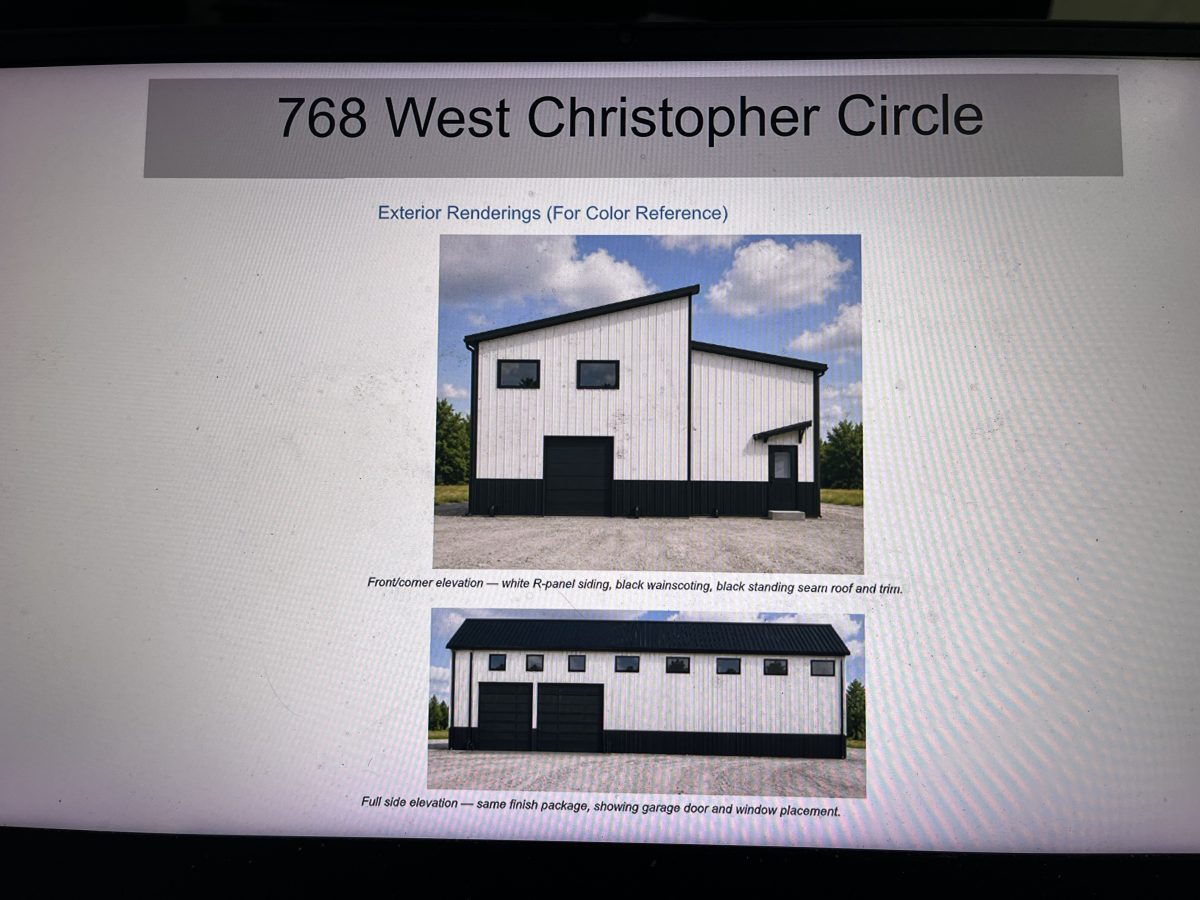
Ryan Comer, Standard-Examiner
Exterior renderings of the proposed pickleball structure to be located at 768 W. Christopher Circle, as displayed on a slide during the Kaysville City Council meeting on Thursday, July 16, 2026.
“My biggest thing is when we’re talking about a legislative decision, a rezone, then it becomes legislative, and legislative actions require a lot of due diligence in order to appease the neighborhood because the neighborhood bought into that neighborhood with the idea and the understanding that the zoning would be what it is,” Council member John Adams said. “Whenever you rezone, you’re changing the nature of that neighborhood, and you have a responsibility to those who have purchased and built their homes in that neighborhood to them.
“And I think in this situation, it’s not about the building. It’s not about what the building will have on it because our team has already approved that. But when it comes down to the legislative decision to rezone it, I believe that’s when it becomes something where you listen to the concerns of the neighborhood. And in this case, I feel like there are some situations that haven’t been resolved. And I wish there had been an open house or something that would show that there was an effort to get the neighbors, the different neighbors, to be more on board and help them work with the applicant because right now I don’t feel like they’ve been appeased. And rezoning it would be a disservice to those neighbors.”
Council member Nate Jackson said he couldn’t “in good conscience” support the rezone request.
“I agree with Council member Adams,” he said. “I have sympathy for the money that’s been invested into this, and you’re complying with the state or the city regulations and ordinances, and so you really haven’t done anything that’s out of the norm. And I hope that neighbors, yourself … won’t let this get in the way of relationship and feelings, because ultimately, it’s not worth having hard feelings for each other just over a building.”
He also expressed concerns over carve-outs.
Council member Abbigayle Hunt reiterated Adams’ point about legislative actions and Jackson’s comment about carve-outs.
“To me, when we take a legislative action, we’re saying, ‘I’m OK with this, and at this point in this process, I’m just not there,” she said.
She said exercising neighborliness is important.
“And I hope this doesn’t come off as a dig at anyone, but having seen a lot of situations like this now over the past four years – people come, they’re upset,” she said. “But I have seen successful situations where neighbors are able to come together and make compromises. I understand that this situation maybe had some limited ability to compromise since a lot of the things had already been done and it might not have been financially feasible, but even when compromises aren’t possible, I think the respect of at least going to neighbors and explaining your thoughts.
“As we talked about tonight, you know, the grapevine effect we had going on I think could have been alleviated a little bit with maybe additional conversation.”
Mayor Tami Tran said legislative actions set precedents across the city.
“And that’s one thing that we always are mindful of because this isn’t the only situation that’s come before us,” she said. “There’s a situation in my neighborhood that was very, very similar to this. And so if we set a precedent and we rezone certain properties for certain specific reasons, it does look very much like carve-outs. And then we don’t have consistency. And that’s what we strive to do to be fair to everybody.”
Council member Mike Blackham was the only council member to vote against the motion to deny the rezone request. He didn’t explain his vote, but he did defend the decision to approve the structure based on city code earlier in the meeting.
Earlier in the meeting, Adams asked Blackham, as a former inspector, to clarify a claim from a resident that the structure should have been denied in the first place because it’s in a side yard that abuts a street.
“And if I could just read briefly the ordinance 17-31-2, it says, ‘all accessory buildings shall comply with provisions of this title. No accessory building shall be located in any front yard, required side yard, or yard abutting a street,'” resident Lary Hardy said. “Again, yard abutting a street. This yard, side yard, abuts Kays Drive. There is one exception, and that is a small 200-square-foot storage shed-type building is allowed. But even that says it’s not allowed if there are homes on that same street with their front yard abutting that street. So the approval of this building in the first place, I believe, should have been denied because of that ordinance, because it does abut that street.”
Addressing that, Blackham said an accessory building cannot be located in a required side yard and that when it comes to side yards abutting a street on corner lots, there needs to be at least a 20-foot setback.
“That’s what the building department did,” he said. “They made sure that it was … 20 feet off the property line, and that’s what they’ve done.”
The council also addressed a concern regarding Covenants, Codes and Restrictions, also known as CC&Rs.
“I know people on the council (are) saying we don’t want to try to uphold CC&Rs, but I think it would be nice if the city would at least respect them,” Brett Garlick said during public comment. “People buy in there because they want the look of the neighborhood, and this is going to significantly change the look of the neighborhood.”
Racker said he understood the concerns of the neighbors and that they want brick and stucco but that CC&Rs haven’t been enforced.
“There’s no committee that enforces them,” he said. “They’ve just been arbitrarily trying to enforce them on me, apparently, but they haven’t been doing it to other people that are within those CC&Rs. … Even Mr. Garlick – he has a wood shed in his backyard that’s visible from Kays Drive, the same orientation as my house, and it’s not brick or stucco.
“And so I understand their concerns, but I, you know, went with the city. I consulted with them for a year prior to even doing a building permit. I read all the laws. I want to make sure everything was kosher and, you know, up to spec and followed all those rules, and then I’ve been proceeding as is with the design. And so I’m really just here trying to connect it with a breezeway to make it more usable. But I understand their concerns. I just can’t do anything about it without being out $400,000 currently.”
Kaysville City Attorney Nic Mills said the city’s purview is limited legally to city ordinances, state law and federal statutes.
“And CC&Rs, sometimes we get those at development, but they can be amended; they can be dissolved,” he said. “So it would put a lot of time and effort on our planning staff to find those, make sure they’re up to date and be responsible to ensure that everything that’s happening is also in compliance with CC&Rs because those change and can change very fluidly based on the structure of the HOA or the governing organization.”
Contact Standard-Examiner editor Ryan Comer at rcomer@standard.net.
Local News

Abigail Treasure highlights experience as mother, educator and engineer in House District 16 bid

Bob Stevenson highlights mayoral, county-level governing history in House District 16 campaign