Jill Koford highlights business background, legislative efforts in campaign for Senate District 5 seat
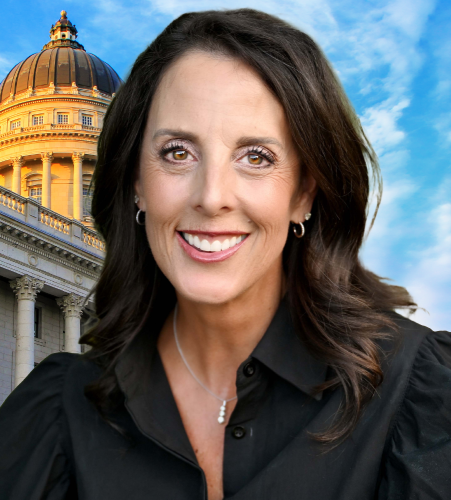
Photo supplied, Jill Koford
Jill KofordJill Koford is a Republican candidate for the Senate District 5 seat. Below are her responses to a six-question survey sent to her by the Standard-Examiner. The Standard-Examiner made an attempt to contact each candidate involved in a competitive race in Weber and Davis counties.
1. Why is the position you are running for important?
The Utah Senate makes decisions that affect our everyday lives, from taxes and housing affordability to education and economic growth. Representing Weber, Davis, and Morgan counties, Senate District 5 includes Hill Air Force Base, growing communities, and families who want to afford a home, keep more of what they earn, and build a future here in Utah. I’m running to ensure our district has a strong voice at the Capitol–one that is proven, principled, and effective.
2. What unique qualities, attributes, skills, and experiences do you possess that make you the best candidate in this race?
As a business owner, pilot, educator, and mother who has raised responsible, contributing children while running a business and a household, I bring practical judgment, accountability, and the ability to make sound decisions under pressure. Those experiences taught me to manage risk, stay calm when stakes are high, teach and listen, and hold myself and others to clear standards–skills I put to work in the Legislature.
In one term I turned those strengths into results: legislation to deliver water to Great Salt Lake, data-center transparency and reporting, medication access in schools, ROTC in-state tuition, and property-tax accountability–all with bipartisan support. I know how to analyze a bill, build the votes, and get it to the governor’s desk.
Voters don’t need more talk, we need someone who can get the work done on the issues that matter.
3. Please explain your priorities if elected, as well as why you believe you are uniquely capable of achieving those priorities.
Three priorities grounded in work already started.
First, long-term water for the Great Salt Lake. I passed the $2.75 million leasing program that lets farmers temporarily send water while keeping their rights, a dedicated-water bill to move conserved water faster, and the data-center transparency bill. I know where those tools work and where they need a second step.
Second, taxes and affordability. Families are being priced out of the communities they grew up in. I’ve worked on property-tax accountability, voted to cut income, Social Security, and gas taxes, and expand the child tax credit. I’ll keep pushing so people keep more of what they earn and can see how the rest is spent.
Third, a government that answers to the public. This interim I’ve mapped every taxing authority in the state and how much of each board is accountable to voters. Unelected boards should not quietly divert local tax money. I’ve also worked on tax-increment financing, so municipalities aren’t deferring property taxes and leaving residents with a higher bill.
I’m capable of this because I’ve already passed pieces of it–with Republicans and Democrats–and know exactly what the next steps require.
4. Please describe how you view the importance of compromise in politics and provide an example from your own experiences that highlights your perspective.
Compromise is how you get a durable law instead of a press release. It is not splitting the difference on everything. I will not trade away core principles like property rights or basic accountability. I will adjust the drafting, the timeline, and sometimes the scope if that is what gets a real solution across the finish line.
The data-center bill (HB76) is a clear example. Industry was not thrilled, and some people wanted a harder line. I kept the core–large new data centers must disclose expected and actual water use–and worked through the concerns until it passed and was signed.
The Great Salt Lake leasing bill required the same approach. Farmers–and I–would not support a program that took their water rights, so we built one that leases water while leaving the underlying right in place.
Both are compromises I can defend because the essential purpose survived.
5. How will you balance the views of the vocal public, your political party, and your own understanding and knowledge as an elected representative?
I listen first, then I look at the facts, then I decide. The loudest meeting is not always the whole district. My party is not always right. And I am not elected to ignore either one and just go with my gut.
Data centers are the clearest case. People are right to worry about water and power. Cities and companies are right that these projects can bring jobs and investment. Pretending one side is the whole story does not help. My bill did not ban data centers and it did not wave them through. It required disclosure so the public, the water provider, and local government can see the numbers before the decision is made.
I will do the same on water, taxes, growth, and housing. Hear the public. Hear my colleagues. Then vote for what holds up when you look at the facts and at the people who are not in the room.
6. What is the best way for readers to contact you and/or get more information about your platform?
Call or text (385) 244-0170; email jill@votekoford.com. VoteKoford.com highlights priorities and results from my term in the Utah House.
Local News
Jill Koford highlights business background, legislative efforts in campaign for Senate District 5 seat

CJ Hernandez focuses on public service, cost of living in campaign for Senate District 5 seat