
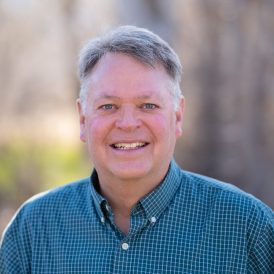
Dave Calder highlights tech background, importance of affordability in campaign for House District 11 seat

Photo supplied, Dave Calder
Dave CalderDave Calder is a Democratic candidate for the House District 11 seat. Below are his responses to a six-question survey sent to him by the Standard-Examiner. The Standard-Examiner made an attempt to contact each candidate involved in a competitive race in Weber and Davis counties.
1. Why is the position you are running for important?
The Utah House of Representatives holds legislative power along with the State Senate and the people of Utah through the ballot initiative. It creates laws, controls the state budget, and divides the state into voting districts. It establishes and maintains the state’s education system. The legislature, however, has been controlled by a single party for three decades and is dominated by developers and corporate money. It uses gerrymandering to distort the balance of power in the state. A governor’s veto no longer holds it in check, and it has politicized our courts as it tries to overturn citizen’s initiatives. I will work to restore power to the people of Utah.
2. What unique qualities, attributes, skills, and experiences do you possess that make you the best candidate in this race?
I have evaluated and developed technology for the United States Air Force for forty years. I know how to sort promising technologies from those that will fail to deliver. This is important when Utah is increasingly relying on technology for solutions to issues from saving the Great Salt Lake, addressing pollution, transit congestion, and data centers. Unfortunately, we can’t take developer promises at face value; we need to protect our water, environment, and energy. I will also support Utah’s higher education – we need their research – but we endanger our world class institutions with short sighted culture wars like HB 261 that my opponent sponsored. It attacks the diversity we need to attract pioneering academics throughout the country and world. Finally, I do not take campaign donations from corporations. My opponent does. I’m free from those conflicts of interests.
3. Please explain your priorities if elected, as well as why you believe you are uniquely capable of achieving those priorities.
My priority is to help Utah be affordable and sustainable for our next generation. This means helping first time buyers priced out of housing and ensuring the Great Salt Lake is protected. We need to eliminate the tax on food – it hurts lower income families much more than wealthier ones. We need to support living wages so young families can afford to live in the communities where they work – this includes requiring the state to use the federally recognized prevailing local wages for publicly funded projects. The legislature has a role to help – but it won’t come from millionaire legislators who owe corporate interests working at cross purposes against our next generation. That is how I am different.
4. Please describe how you view the importance of compromise in politics and provide an example from your own experiences that highlights your perspective.
Compromise is important, but we first need to ensure all Utahns get a seat at the table to have their voice heard. That is why I, and a majority of Utahns, support the Better Boundaries initiative. The legislature, including my opponent, has fought Utah on this since we passed proposition 4 in 2018. Gerrymandering gives them an outsized voice. A party that doesn’t speak for forty percent of Utahns shouldn’t control 80 percent of the legislature. When everyone is at the table, decisions we make about housing, healthcare access, data centers, and restoring the Great Salt Lake, will have better support from all Utahns.
5. How will you balance the views of the vocal public, your political party, and your own understanding and knowledge as an elected representative?
I’m a researcher. I get out and listen. I’ve spoken with people from every one of the thirty precincts in the district. I have changed my views based on new information. For instance, I was a registered, caucus going, Republican until the party nominated Donald Trump for president in 2016. I oppose the backroom dealing that has become the norm for legislative leaders. We’ve seen how these deals turn into campaign contributions at the expense of our water, environment, and increased tax burdens on average Utahns as developers get tax-breaks. We have another 9 gigawatt data center proposal on BLM land near Price designed to be fast-tracked by the Trump administration. We need leaders in government who stand against Trump, not for him.
6. What is the best way for readers to contact you and/or get more information about your platform?
Thank you for the opportunity to answer your questions. Readers can get more information about my priorities at www.VoteCalder.com. At the bottom of each page is my email. Write to me – I will respond.
Local News
Katy Hall focuses on listening to constituents, nursing background in campaign for House District 11 seat
Dave Calder highlights tech background, importance of affordability in campaign for House District 11 seat
