
Corbin: Reflections on belonging in the midst of heartbreak

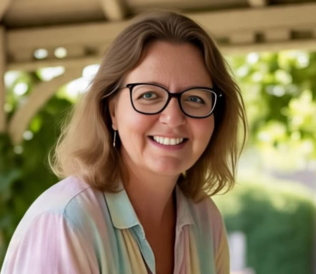
Photo supplied, Weber State Univesity
Nicola CorbinI grabbed my cellphone as I pushed my sluggish body through the door to head into campus. Through force of habit, I swiped up to glance at my text messages. I stopped. My phone’s entire screen was filled with new texts. Something had to be wrong because 1) I’m not that popular, and 2) I’m not that popular.
“Did you see the email from Brad? Omg!”
“Read your email from the president.”
The third text included a screenshot of the email from Brad Mortensen, Weber State University’s president, with the subject line “Farewell and Thank You to VP Andrews.”
“OMG!!!”
I drove to work stunned. I sat in my office stunned. And the text messages kept coming. More than a few tears leaked. My brain struggled to process.
Have you ever worked in a place in which a single person becomes part of your definition of what that place is? In the best possible ways, Adrienne Andrews — our vice president of equity, diversity and inclusion — had become part of my story at Weber State. And until this October day, I hadn’t even realized it.
It felt like a piece of the fabric of this university that l love had been ripped away, and I was grieving. You see, Adrienne is not only one of the reasons I accepted the position at Weber State, but also one of the reasons why I am still here.
About 10 years ago, the communication department invited me to campus to interview for a position. I was grateful for the invitation, but I still Googled the census to look up the demographics: What is this Utah place? How many Black people live there? Will it be safe for me and mine?
I was flown in, and some wonderful folks from the department met me at the airport and took me to breakfast. They were lovely and warm, and the Utah scenery blew me away. The many conversations with the dean, search committee, department colleagues and students were intimidating, wearing, but also encouraging.
But still I wondered if I would be a “lonely only.” If my daughter would be a lonely only too. One simple action helped me: The chair of the search committee invited Adrienne to one of the meals during this visit. When she walked into the room, part of me relaxed. Then she hugged me — one of those great, big, tight Adrienne hugs. Her voice was warm and soft, and her smile bright. “Yes, there are Black people in Utah,” she said. “There are more than you think.”
And the rest is history. From the quick check-in with me after a non-Black stranger thought that he might bond with me as a Black woman by calling me “girlfriend” in exactly the tone of voice you’re imagining right now (by the way, I have never been called “girlfriend” even by my own girlfriends) to conversations about how my daughter is navigating school and how I can best support her, Adrienne was the icing on the cake. Her gentle and kind presence on campus permeated my experience and built my sense of psychological safety at Weber State.
Days before the 2016 election, my daughter and I were menaced by white teenagers in a car at a stoplight. Utah was feeling decidedly different. I considered moving to be closer to family on the East Coast. I had another job offer but was woefully disappointed by the obliviousness of this other university — which sat in the middle of diverse communities — to intentionally welcome folks who had been historically marginalized in academic spaces.
This disappointment came because I had a comparison. Weber State was acknowledging its issues and was trying to work on them. And those efforts, in my head, were largely associated with the work Adrienne spearheaded. Again, not perfect, but working on it. I stayed because of these efforts as I grew to realize that mere geography isn’t enough; it is the acknowledgement and intentionality to change things that matter.
We speak frequently now about inclusion and belonging. But sometimes I think that we get so caught up in the words themselves that we lose sight of the real feelings of dignity, humanity and authentic engagement that these words in action can invoke in people.
Belonging feels like the concrete actions, big and small, of my department colleagues. It is also the warm hug that enveloped me and many others at this university because of Adrienne Andrews. A speaker at a recent presentation on campus said that belonging must be offered, extended, given — it isn’t something that any one person can take for themselves.
While my social and emotional connections have grown over the years at Weber State, I will be forever grateful for the embrace from my communication department colleagues and Adrienne. My colleagues are still here; Adrienne is not. And my heart is broken.
Nicola A. Corbin is an associate professor of communication at Weber State University, where she teaches public relations and mass media courses and directs the university’s Center for Excellence in Teaching and Learning.
Guest Commentary
Guest opinion: A moment of silence
Guest opinion: Dangerous highways in Utah if congressional effort prevails
Utah highways will get a lot more dangerous if shipping companies are successful in persuading Congress to raise ...
