WSU guest opinion: Enjoying spring while preparing for winter

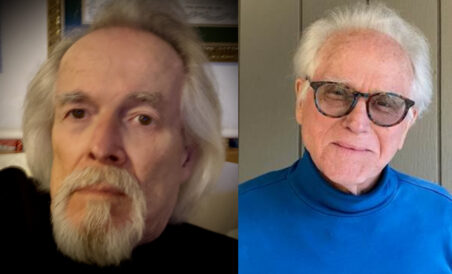
Photo supplied, Weber State University
Hal CrimmelSpring is usually a tug-of-war between winter and summer. This year, summer effortlessly dragged Old Man Winter over the line. The hum of bees amidst fragrant flowering trees is magic to the senses. Birds sing for mates. Days lengthen and temperatures are perfect. There’s almost too much excitement to absorb, like the experience of youth itself, all about the moment. Only when those petals start dropping off the tulips and the fruit trees, though, does it become clear spring is only one season of the year, and metaphorically, a reminder that youth is only one season of our lives.
Soon I will be skating into the third period of life. This isn’t the NHL — there’s no overtime period — just youth, middle age and, well, older age! This became clear in a humorous way when I recently met with a financial advisor to discuss my retirement plan.
In a process known as a Monte Carlo simulation, retirement providers run hundreds of market scenarios to determine the probability of an individual outliving their savings, given a set life expectancy. The ensuing report shows two financial milestones: “Retirement” and “Post-Retirement.” I laughed when I saw this latter expression, a hilarious euphemism for death. Wouldn’t, say, “reincarnation,” be a little less workaday of a term? Something more spring-like and hopeful might be welcome, even if the odds are against me coming back as a fragrant tree.
Interestingly, the Monte Carlo method was developed in the 1940s at what is now the Los Alamos National Laboratory by a group of brilliant mathematicians who first used it to calculate neutron diffusion paths for the hydrogen bomb. Talk about death! One of the mathematicians, Stanislaw Ulam, had a life-threatening health emergency. While recovering, he found himself frequently playing solitaire and thinking about probability. With others, he began applying probability concepts to nuclear physics.
They needed a name for this emerging method. Ulam had a Polish uncle with a habit of borrowing money from relatives to gamble in Monte Carlo casinos on the French Riviera. The parallels between probability in gambling and the very serious calculations required by nuclear weapon design led to this somewhat tongue-in-cheek name. Today the Monte Carlo method is used in finance, science, and in virtually every profession that must measure risks. Insurance companies, for example, generally make a profit from favorably pricing risk.
Managing risk is innate to all life forms. In spring, migratory birds have to balance arriving too early and not finding food versus arriving too late to nest and mate. In human lives, considering genetics, lifestyle, employment conditions, and environmental factors can offer insight into how many good years one has left.
There’s a difference between years and “good years.” Retirement providers or the Social Security Administration can deliver a rough estimate of the time to “Post-Retirement.” But that’s not always an indication of quality.
My father hadn’t planned on getting Alzheimer’s. Before falling ill, he moved to Oregon, thinking their assisted death law would give him options later in life. But patients in early and mid-stage phases of the disease are not eligible. Determining the right approach for care was difficult. Some days he clearly needed significant care. Other days he seemed fine. But most days brought incidents that would have been hilarious if they were not so sadly serious.
Perhaps you are caring for or have cared for a family member with a chronic illness. Those who do so often become ill themselves due to the physical, psychological or financial burdens of caregiving. A 2022 article in “Health Psychology,” for example, notes that family caregivers of Alzheimer’s patients “are likely to experience increased anxiety and depression and a decreased quality of life.” What seems the right thing to do can be costly in terms of physical and mental health. Maybe you’re facing the “midlife squeeze”: still raising children while caring for aging parents. I know my father was adamant that such a fate not befall his family, though it did.
My own homemade Monte Carlo simulations have to include less favorable health scenarios. These point me toward the winter woods near my hometown. There, outside in the snow on a subzero night, the cold could do its work easily and painlessly.
Many Americans frown on such thoughts, preferring to prop up the dying with repeated interventions, as a physician friend put it. Others of my generation, having experienced the cost and efficacy of modern medicine’s ability to prolong life when perhaps it shouldn’t be, have their own “winter woods” plan in place.
Personally, I still find spring full of hope. Nature’s wild enthusiasm for new growth is inspiration to cherish the remaining years. I hope you feel the same. Even with probability against us, humans want to keep pushing out new leaves until they can’t.
Just don’t forget to plan for the eventuality of “Post-Retirement.” Maybe that’s in the shape of an advanced medical directive that spells out parameters for end-of-life care. Or maybe it’s thinking about a final resting place on a winter’s night.
Even if that seems a long way off on a sunny, tulip-filled April afternoon.
Hal Crimmel is a Brady Presidential Distinguished Professor of English who served for nine years as chair of the English department at Weber State University. This commentary is provided through a partnership with Weber State. The views expressed by the author do not necessarily represent the institutional values or positions of the university.
Guest Commentary
Guest opinion: Utah’s 0.05 law is saving lives — Now let’s prevent more drunk drivers
WSU guest opinion: Welcoming a new era of university presidents: Don’t dismiss them
As I’ve worked in and studied higher education, one lesson stands out above others: Leading a university is among ...