WSU guest opinion: Science expertise among us

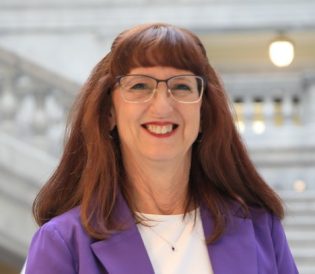
Photo supplied
Adam JohnstonI received an email last week from upstairs seeking information about expertise in our College of Science at Weber State. The premise is that people here want to help policymakers and the public, and we should better represent what goes on within the walls of the Tracy Hall Science Center and how that helps our community. I immediately had ideas, but then stopped short when I read some of the requested details: There could be five of these expertise areas that we could promote.
Five? Really?
First, a quick primer on the organization of a university. Weber State, like lots of institutions of higher education, is organized into multiple “colleges,” such as the College of Science (in which I work), and these have smaller divisions such as the Department of Physics and Astronomy (where I live in the hierarchy), and these are largely responsible for the organization of faculty and the programs and courses offered.
Then there are a few outliers such as the Center for Science and Mathematics Education (where I direct a large chunk of my efforts), as well as programs that pull from multiple entities (such as the science teaching programs I advise).
Five seems like a really limiting number. In our college alone, there are seven different specialized departments, and each of these has a collection of diverse faculty doing research with specific concentrations.
I can’t begin to categorize these, especially because the very first collective of expertise I offered is in science and math education, which sits outside of any department but has scholars who present work internationally, write federal grants and advise both students and local leaders about the nature of learning in STEM fields. I’m really privileged to work with such a group, and our students and local teachers benefit directly from the expertise of these faculty.
But this is only one realm. I hope we also emphasize the expertise on Great Salt Lake, the organisms living within it and the migratory paths it provides. And, of course, its water levels and the aquifer beneath it, all provided by runoff from the faulted end of the basin that is our Wasatch Range. Surely we should represent that, and surely you should know that there’s active work here. And that’s just one example.
Even though it doesn’t fit into a neat box, you should know that when I find a beautiful spider that I suspect is poisonous I know exactly who to ask about it. When a student suggests that some poison ivy might actually be a box elder sapling, I know which office door to knock on. Years ago, when there was a rattlesnake infestation in a building on the fringes of campus, our local herpetologist researcher was called into action. Scientists save the day.
And they also change our world. A mathematician is working on how to represent the interactions of subatomic particles, while a particle physicist is working to understand how those can be understood in a unified model, while the black hole researcher is wrapping this together to make sense of gargantuan astronomical objects.
More locally, scientists here study the nature of lead leaching into bones and how to detect it, how emissions contribute to harmful pollution during temperature inversions, what city lights do to bird migration, or what the difference is between the microbes that make edible blocks of cheese instead of toxic layers of mold. We have researchers who have been to the ocean’s bottom and others who have probed the edges of space, all trying to figure out the nature of what we are.
I could go on. You can look this up in our college webpages and press releases, but I have a bigger point to make: You probably don’t know about any of this stuff if you aren’t in our classes. That’s our focus and our priority.
Weber State often promotes itself as the inexpensive, local option for students, and some will dismiss it. Some are lured by a larger institution where there will undoubtedly be expert faculty, but focusing mostly on research and graduate students.
At Weber State we’ve hired experts, those described above and many others, who are also devoted to teaching. Our faculty work directly and devotedly with undergraduate students. You’ll see them together wading into briny water, swabbing agar plates, accessing a fault scarp and so much more, side-by-side.
I’ll put Weber’s expert science education and research up against any other, anywhere in the country.
Adam Johnston is a professor of physics and director of the Center for Science and Mathematics Education at Weber State University, where he helps prepare future teachers and supports educators throughout Utah. This commentary is provided through a partnership with Weber State. The views expressed by the author do not necessarily represent the institutional values or positions of the university.
Guest Commentary
Guest opinion: A mother’s plea for compassion and an end to mandatory minimums
Recently, my son was sentenced to 20 years in federal prison for a fentanyl-related overdose death. That day, I ...
Guest opinion: Bending over and other dangerous stunts