WSU guest opinion: Legislation by vibe

Photo supplied, Weber State University
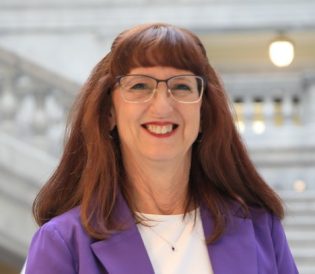
Gavin RobertsThe Stratos data center fight in Box Elder County shows how quickly political momentum can reverse. A project once wrapped in economic development language helped defeat Senate President Stuart Adams. Stephanie Hollist, Weber State University’s former general counsel, won in that reversal.
During Weber State’s implementation of HB 261, Utah’s 2024 law restricting DEI offices and practices while requiring viewpoint diversity, I saw a distinction that lawmakers and administrators should both take seriously. I agreed with the law’s core principles. Public institutions should not discriminate by race or sex, even for causes faculty and administrators believe are noble. They should not require ideological loyalty tests. They should promote true diversity: viewpoint diversity and open inquiry. The problem came when Weber State administrators treated the political signal around the law as stronger than the law itself.
Legal scholar Cass Sunstein and economist Robert Cooter have written that laws do more than punish or permit. They signal values and change what people expect society to reward or condemn. People respond to incentives. If underreacting risks legislative anger, budget pain, or the next headline, while overreacting has diffuse costs, overcompliance becomes rational.
The text of HB 261 restricted certain DEI practices, but it also required institutions to promote viewpoint diversity and protect classroom teaching and research. Yet the political signal surrounding DEI was broader and harsher than the bill. Before passage, Gov. Spencer Cox described mandatory diversity statements as “awful” and “bordering on evil.” DEI was discussed as political, divisive, ideological, and contrary to the search for truth. Administrators heard that signal and sometimes amplified it.
I served on Weber State’s HB 261 task force. In meetings, it often felt like we were interpreting political signals more than legal text. When I pointed out that the law did not prohibit particular words, the discussion moved quickly toward institutional risk. The question became less, “What does the law say?” and more, “What is the safest posture?”
By spring 2026, the incentives had ratcheted up. HB 261 had made many faculty cautious about speech, while HB 265 — the 2025 strategic reinvestment law putting programs, departments, faculty lines, and budgets under review — raised the stakes. After I published an editorial critical of the legislature, I attended a university legislative update. The message was clear: Criticizing lawmakers during the session was politically risky. No law prohibited criticism. No policy banned editorials. But political displeasure could become institutional risk. The law does not need to prohibit speech. It only needs to put it on ice.
The same dynamic reached small places. Around that time, we were revising the mission statement for Weber State’s Crossroads Economics Center. One draft said the center would encourage “diverse perspectives.” A university staff member warned us that we could not use “diverse” because of HB 261. We pointed out that the law itself promoted viewpoint diversity. The phrase disappeared anyway. The law required viewpoint diversity. The vibe made “diverse perspectives” feel forbidden.
The Signpost later documented the same phenomenon. Faculty described a chilling effect. One professor said, “We’re all employees. We have jobs we need to keep.” Some faculty declined to comment or did not respond, citing fear of repercussions. Speech does not have to be prohibited. It only has to become costly.
Then the signal shifted again. Weber’s “prohibited words” guidance became a statewide controversy. Utah System of Higher Education Commissioner Geoff Landward called Weber’s approach “misguided.” Rep. Katy Hall said HB 261 was never intended to prohibit speech. Sen. John Johnson added, “There is nothing in that bill that says you can’t use these words.” The statute did not create a forbidden words list. Implementation did. Before implementation, the political signal made DEI-adjacent language seem dangerous. After overcompliance became embarrassing, the signal shifted back toward the text.
Universities cannot build healthy academic cultures around shifting political signals. Faculty hiring, research agendas, programs, and student organizations operate on long time horizons. Legislators operate on shorter political cycles. But administrators are not helpless. They are responsible for whether political uncertainty becomes prudent compliance or institutional panic.
That is why I hope Hollist’s experience matters. She has seen how broad political signals become campus policy, and I hope she carries that experience to the legislature if her candidacy is successful. Weber State’s current leaders should draw the same lesson from the other side: Read laws carefully, implement them faithfully, and resist turning political anxiety into campus policy.
Public universities should follow the law. Lawmakers should write laws clear enough that universities do not have to guess the mood of the room. Administrators should read those laws as written, not as rumors of what might anger powerful people. If Utah wants viewpoint diversity, it should not govern through ambiguity and shifting political signals.
The rule of law is not legislation by vibe.
Gavin Roberts is an associate professor of economics and chair of the economics department at Weber State University. He is a recipient of the Gordon Tullock Prize from the Public Choice Society and regularly shares his research locally, nationally and internationally. This commentary is provided through a partnership with Weber State. The views expressed by the author do not necessarily represent the institutional values or positions of the university.