Guest opinion: Utah can win this race — if it earns the trust
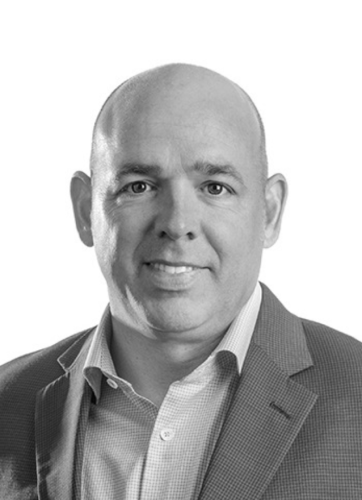
Photo supplied
Russ Walker is the Executive Director of the Rainey Freedom Project and Vice President of The Rainey Center for Public Policy.China built 400 gigawatts of new power in the last two years. Most of it is feeding AI data centers. And while Washington debates permitting reform, Kevin O’Leary just proposed putting the world’s largest data center, 40,000 acres of hyperscale AI infrastructure, in Box Elder County, Utah. That’s the right idea in the right state. The rollout was a mess. But the project itself deserves serious support.
The Stratos Project is exactly the kind of bold infrastructure America needs to win the AI race and compete economically in the future economy. At full buildout it would generate 9 gigawatts of power, more than double what the entire state of Utah currently consumes, entirely off-grid, fueled by a direct connection to the Ruby interstate natural gas pipeline. It will not raise a single Utahn’s electricity bill. It will create 4,000 construction jobs and 2,000 permanent positions in one of the most rural counties in the American West. And even at a drastically reduced tax rate, Phase 1 alone is projected to generate $30 million annually for Box Elder County.
The national security case is just as compelling. A top U.S. Air Force official approached MIDA directly, citing a presidential executive order calling for hyperscale data centers as a national security imperative. MIDA’s executive director confirmed the project will support the Pentagon, the Department of Defense, the Air Force, and the Utah National Guard. This isn’t a real estate deal. It’s a strategic asset. Box Elder County, the same ground where the Golden Spike connected America coast to coast in 1869, is being asked to anchor America’s AI infrastructure for the next century.
So what went wrong?
The project was real. The process was not. Box Elder County commissioners found out the details of a 40,000-acre, billion-dollar project at the last hour and were expected to vote within days. The predictable result: 1,100 people at the fairgrounds, more than 1,800 formal water rights protests filed with the state, and images of commissioners fleeing to a back room that will follow this project for years. That is not how you build the infrastructure of American dominance. That is how you hand your opponents a weapon.
The fix was simple and it’s still available. Commissioner Lee Perry said it after the vote: “This is not the end of the process. It’s the beginning.” O’Leary Digital has committed to town halls at each stage of development. Hold them. Make them real. Bring the jobs numbers, the water data, the environmental specs, and the national security briefing. Let Box Elder County residents see what their county is being asked to help build, and why it matters.
Utah is the right place. Now earn it.
Box Elder County has a population of 64,120 people. They are not anti-progress. They are pro-transparency. They deserve to understand that this project is not just an investment in Utah, it is an investment in American strength at a moment when that strength is being directly challenged. The United States is in a race with China for AI supremacy. Data centers are the arsenal. Utah has the land, the pipeline access, the military infrastructure, and the political will to be the place where America pulls ahead.
The Stratos Project should be built. The process that got it this far should never be repeated. Involve the public from day one. Make the case openly. Trust the people of Box Elder County with the truth about what’s at stake, and they will rise to meet it. Utah always has.
Russ Walker is the Executive Director of the Rainey Freedom Project and Vice President of The Rainey Center for Public Policy, and he has spent nearly three decades advising policymakers and policy organizations.
Guest Commentary
Guest opinion: A mother’s plea for compassion and an end to mandatory minimums
Recently, my son was sentenced to 20 years in federal prison for a fentanyl-related overdose death. That day, I ...
Guest opinion: Bending over and other dangerous stunts