Guest opinion: Putting parents back in control: The sensible path forward for kids’ online safety
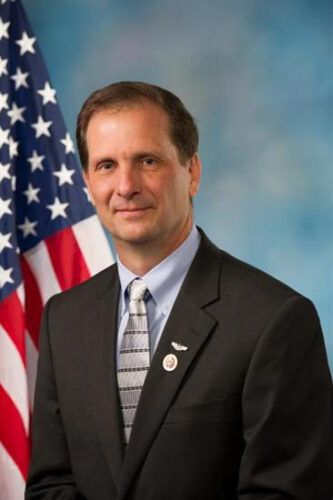
Photo supplied
Republican 2nd District U.S. Rep. Chris Stewart.
Throughout my time representing Utah’s 2nd District in Congress, I consistently sounded the alarm on the devastating effects that social media has had on our nation’s youth. The data speaks for itself: the unchecked spread of addictive algorithms and predatory platforms correlates directly with skyrocketing rates of anxiety, depression, and self-harm among minors. For too long, parents have been completely outgunned by Big Tech, left to fight a multi-billion-dollar industry on their own.
We urgently need decisive federal action to protect children. Fortunately, a structural, bipartisan solution has emerged. The Parents Over Platforms Act, introduced by Senators Jerry Moran and Jacky Rosen, establishes a robust, device-level mechanism to manage youth access to digital products. It offers an objective, effective alternative to more invasive regulatory models and puts power exactly where it belongs: in the hands of parents.
The core of POPA relies on a centralized age-designation system built directly into the operating system. When setting up a device, parents simply input the user’s age status. Rather than broadcasting this sensitive data universally across the internet, the device selectively transmits a minor-status signal exclusively to high-risk applications, such as those featuring social networking. Standard tools, like educational apps, are completely excluded from this exchange.
By directing these age signals only to specific apps, POPA rightly places the burden of child safety onto the platforms themselves. Holding app stores accountable for the granular operations of the millions of third-party programs they host is an operational impossibility. The apps must be held accountable to ensure their platforms remain safe for all users.
POPA addresses this operational reality by making the app developers legally responsible for enforcing safety protocols. Once a platform receives the minor-status signal, it is legally bound to act – deactivate addictive feeds, halt invasive data harvesting, and block inappropriate content.
Importantly, by limiting these age-signal transmissions only to relevant platforms, POPA ensures that independent developers and small businesses creating low-risk applications are not saddled with disproportionate compliance overhead. By avoiding blanket identity verification requirements for general internet access, the framework successfully navigates the First Amendment hurdles that have historically derailed digital safety legislation.
Contrast this with alternatives like the App Store Accountability Act (ASAA), which imposes severe operational burdens on families and fails to adequately protect children. The ASAA mandates age verification for all users, requiring government IDs or biometric scans just to download an app. Forced identification also threatens online anonymity, preventing adults from safely exercising their constitutional right to free speech. At the same time, this model forces app stores to build massive repositories of identity information, creating prime targets for cybercriminals.
Meanwhile, ASAA does nothing to address the ways in which platforms like Facebook and Instagram harm kids. That’s why the bill is heavily backed by Meta and why they push ASAA in states across the country. It completely lets them off the hook.
POPA, on the other hand, tackles the problem without jeopardizing personal sensitive information or giving platforms a free pass. It resolves these inefficiencies through its streamlined design. By allowing parents to define preferences once at the device level and restricting data sharing to only the applications that absolutely need it, the legislation creates a sustainable, low-friction environment for families.
Formulating effective technology policy requires balancing the urgent need for youth protection with the preservation of digital privacy. We cannot afford to wait any longer to protect our children from the very real dangers lurking on their screens.
As Congress evaluates its options, the Parents Over Platforms Act provides a secure, legally durable framework. By placing control directly in the hands of parents rather than relying on widespread data surveillance or unworkable consent models, POPA represents a sensible, urgently needed path forward for the entire country. It is time for Congress to pass it.
Chris Stewart represented Utah’s 2nd congressional district from 2013 to 2023.
Guest Commentary
Guest opinion: A mother’s plea for compassion and an end to mandatory minimums
Recently, my son was sentenced to 20 years in federal prison for a fentanyl-related overdose death. That day, I ...

Guest opinion: Bending over and other dangerous stunts