WSU guest opinion: For the birds

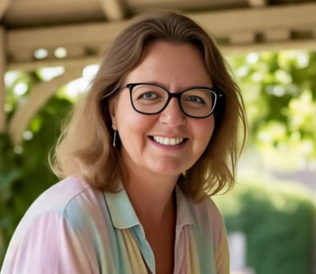
Photo supplied
Adam JohnstonIt started with chickadees.
Maybe you associate the namesake “chick-a-dee-dee-dee” call of the little black-capped bird, but what resonates with me is a two-note measure, high then low, bringing to mind the first two chords from the piano opening of the jazz album “Kind of Blue.” When I hear the chickadee, I half expect Miles Davis to follow with his iconic trumpet. Instead, I’ll whistle back the two notes in response, high to low, and a bird empathetically replies.
I know the memes and stereotypes: Bird watching is something I associate with advancing age, gray-haired folks with wide-brimmed hats staring up into branches and looking down at notes through bifocals. It’s as though there’s some cellular switch flipped when we reach the age where dance clubs are out of the question but some internal clock has us awake at 5 a.m. And I’m listening to robins waking up at this same hour. For my birthday last month, one that put me on the doorstep of an AARP membership, my wife got me a pair of binoculars. I already have the hat and the bifocals.
So now, quite unexpectedly, I’m happy to identify the call of a spotted towhee before I’ve seen its bright red eyes, a pair or triplet of chirps like a quick windup before releasing some internal spring that unleashes a rapid-fire trill. The lazuli bunting’s bright blue upon a bare branch sings a scattered aria, a loose assembly of audacious tweets. I can pick out the steady chirps of a chipping sparrow with the best of them, while I’m still working on distinguishing the calls of the lesser goldfinch and a house finch. I have a favorite song which comes from a canyon wren’s soprano sequence of descending notes reverberating along rock walls.
The thing is, while I like birds well enough and admire them for their tenacity, beauty and astounding physics, this isn’t what captivates me. I think it’s some deeper connection with the natural world that just happens to manifest itself in feathered creatures. This new opportunity to pay attention to something just beyond my own being has drawn me in.
Last month, a downy woodpecker not only made a hole in the upper extensions of the old maple tree in our backyard, but established a new family. We’re mourning the slow demise of this tree, yet here, in some of the deadwood extending from the canopy, there’s provision for life. Streams of chatter came from the opening 40 feet above while a parent made rounds to and fro, inserting lunch into the portal. Incessant peeping modulated for a moment and then resumed. Parenting is rough all across the animal kingdom.
A few days into this I spotted a jay lurking about the branches, the hole and the noises within. Immediately on its tail, though, was the downy parent, smaller but determined to defend its home. I imagined David Attenborough narrating the scene as I witnessed the jay being driven away by this guardian.
As a scientist, I don’t lean into the possibility of miracles. There are astonishments, surprises, great audacious acts of defense or survival or even love. But there’s also heartbreak; everything is fleeting. Our aged maple tree has fewer leaves each season.
A few days later, everything in the tree was silent. No continual calls and no woodpecker parent was around. It’s been two weeks and still no sign. It can make me wonder why I bothered investing so much attention in the first place. What’s the point when it’s all so difficult, all so unlikely, all so torturously sad?
I felt this way for a minute and then realized that it’s quite the opposite: We recognize the beauty in what’s impermanent. Even stars burn out. We are witnesses to what is precious not because it lasts but because it can’t possibly go on forever. And I was there one day looking up at that hole to see the bright red head of the juvenile peering down looking at the ridiculousness of this world it had been born into and all that it was facing. I could relate.
And, maybe when I wasn’t looking, maybe in the predawn quiet of some morning, maybe that miracle I don’t believe in actually took place, and somewhere in some other maple tree there’s a downy woodpecker inspecting the bark. I’ll be listening for it.
Adam Johnston is a professor of physics and director of the Center for Science and Mathematics Education at Weber State University, where he helps prepare future teachers and supports educators throughout Utah. This commentary is provided through a partnership with Weber State. The views expressed by the author do not necessarily represent the institutional values or positions of the university.
Guest Commentary
Guest opinion: A mother’s plea for compassion and an end to mandatory minimums
Recently, my son was sentenced to 20 years in federal prison for a fentanyl-related overdose death. That day, I ...
Guest opinion: Bending over and other dangerous stunts