WSU guest opinion: Finding the right place for the mother of dirty words. (Hint: It’s not politics)
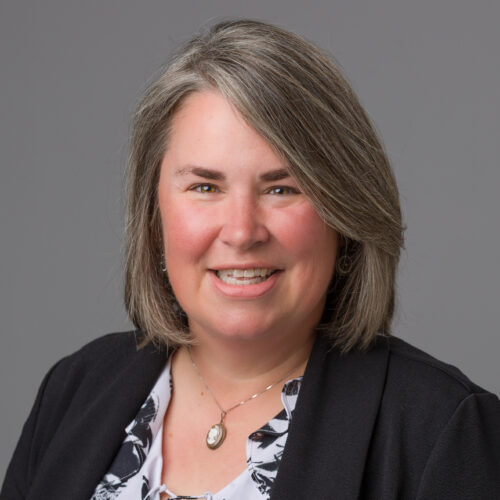
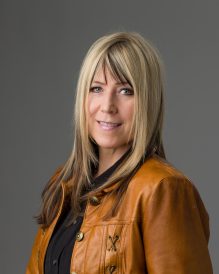
Photo supplied, Weber State University
Leah MurrayLast month, The New York Times published an analysis of the number of F-words used by politicians on social media. The F-word is referred to as “THE word, the big one, the queen mother of dirty words” by Ralphie in “A Christmas Story.”
Even though people say President Donald Trump is the most crude, as it turns out, Democrats far surpass Republicans when using the word. And when they use it, they mostly launch it at the president. They also used the word at Republican politicians and U.S. Immigration and Customs Enforcement.
That is not to say Republicans are not also using the F-word. They hurl it at Democrats, but at lower rates. The New York Times also found that since 2020, Democrats used the F-word regularly, and even though Republicans did not use it at the same rate, they had the highest use of the word at a single point in time: in the wake of Charlie Kirk’s murder. Of the top eight F-word users on the social platform X during that time, seven of them were Democratic elected officials.
Reading this analysis made me think about the political scandal on June 22, 2004 when Vice President Dick Cheney told Sen. Patrick Leahy to “go f— yourself” on the floor of the United States Senate. At that point in my life, I was still in my 20s, and I really did not think the vice president using that language was a major problem. My grandmother, on the other hand, was very offended. That led to a lengthy discussion at the dinner table about the behavior of the vice president specifically, and using that word generally.
To be frank, I use the word, and like Ralphie says about his father, I also work “in profanity the way other artists might work in oils or clay.” I have not, however, used that word at someone. When I use it, I tend to use it as an adjective or a noun, not a verb. I do not hurl profanities at people, and I definitely have never spewed it at someone in person. My grandmother had never used the word; she was British and the worst I ever heard her say was “bloody bastard” at the time I accused her of searching for a reason to say something mean about former Vice President Cheney, whom she despised.
The frame of the Times analysis was to show that, while people accuse President Trump of using crude language, it is the case that Democrats are far more likely to use the word in the manner that my grandmother thought was unseemly. In 2004, she argued that the vice president should be punished in some way for his crude language.
I am sure I defended freedom of speech because I did not understand that maybe we should hold ourselves to a higher standard when discussing issues that have an effect on our republic. Now, given the decline we see in our political discourse, I think maybe she was right: We should hold our elected officials accountable for their crude language.
Words have meaning in context. My children are the only people on the planet who get to call me “mama,” and my husband is the only one who gets to call me “babe.” These words have meaning in the relationships they are in.
If we are going to keep the republic that is worthy of our ideals, we need to use the words to build those expectations of our civic relationships. James Madison engaged the state of New York in a conversation about ratifying the United States Constitution without ever once using a swear word. He elegantly explained why we needed a large republic, arguing with Robert Yates about the importance of managing the effects of factions, and never once called Yates a name, even though they disagreed strongly on the most important political issue of the time.
We should elevate our political discourse to the context in which we expect our best behavior. We should say we will only discuss immigration with elegance and grace. We should expect that any politician who uses crude words will be deemed unacceptable. No more swearing at people on social media. We should expect our language to be better.
This is not to say we can’t ever swear. In fact, if you did an analysis of my social media you would find me using the word. But I never use swear words at church. And I do not swear when I discuss politics in public settings. The appropriate context to swear in public settings is at Mammoth games, especially when they lose to Vegas. And if you have to swear at someone, swear at those f—ing Golden Knights.
Leah Murray is a Brady Presidential Distinguished Professor of Political Science and the director of the Olene S. Walker Institute of Politics & Public Service at Weber State University. This commentary is provided through a partnership with Weber State. The views expressed by the author do not necessarily represent the institutional values or positions of the university.
Guest Commentary
Guest opinion: We Keep Reporting the Deaths. We Keep Missing the Story.
This past weekend, two families got the call no family should ever get. On Saturday, Jennifer Eckhart, a former Fox ...

Guest opinion: Washington’s and Hamilton’s ideals are abandoned