Guest opinion: How golf helps in times of mental decline
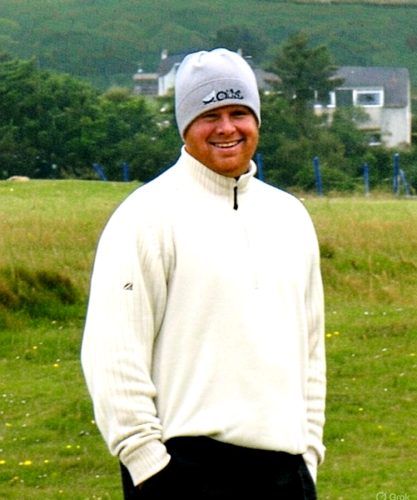
Photo supplied
Sean PetersenLooking back, what first drew me toward organizing golf experiences was the wish to show people a different side of the game. Too often, golf is associated only with tournaments, money, branding, or spectacle, while the things that actually make people return to it are rarely talked about. I wanted others to discover that side first — the movement, the focus, the time spent outdoors, the balance it can create for both mind and body.
Over time, the course also brought me face-to-face with very different people, each arriving there for their own reasons. And without realizing it at first, that became a way for me to understand the game in a deeper way, too. Because beyond relaxation or competition, golf can take on another role entirely.
I began to see this differently after meeting families who came to the course alongside a parent or grandparent living with dementia. In those moments, nobody really cared about performance. What mattered was the fact that they still came there together, still followed the same routine, still had something familiar to return to while other things were becoming harder to recognize.
Living with Dementia Through Support and Optimism
People today have far more access to information than before, and that has also changed the way dementia is viewed. It is no longer seen as something that has to be hidden or lived through in silence. More and more families are being encouraged not to separate life completely from the diagnosis. Medication matters, but so do the small things people continue to do every day — staying active, being around others, keeping some kind of routine going.
The idea is not to force the brain, but to keep it working through routine, movement, and interaction with others. Just as important is the feeling of still belonging somewhere and continuing to take part in ordinary life. This is where golf begins to make sense. Walking an 18-hole course already means moderate aerobic exercise, a light activity that studies have linked to reducing dementia risk by up to 35% and even a slower progression of the disease.
But it is not only about movement. During the game, attention is constantly involved in small things — choosing the club, judging distance, adjusting the shot, staying focused from one hole to the next. None of it feels forced, yet the mind continues to work naturally throughout the round. And beyond all the research, there is also the human side of it. Most families are not looking for spectacular solutions. They simply want something that helps a parent or grandparent stay engaged, present, and connected for a little longer.
Why Golf Deserves to Be Considered
Sccording to recent studies, Alzheimer’s affects more than 6 million Americans, and specialists expect that number to double by 2060. That means that today, one in nine people over 65 is living with the disease, while in the coming decades it could affect nearly a fifth of that age group. Numbers like these force a different kind of conversation — one built less around isolation and more around inclusion, adaptation, and keeping people connected to everyday life. That is probably why I chose to contribute in the way I knew best — through golf.
After spending so many years on the course, I started noticing that people don’t always come here for competition or escape. Some arrive more cautiously, unsure of themselves, especially when certain limitations begin to appear. But once they are there, the performance stops being the most important part. What matters more is the feeling that they are still included, still comfortable being around others, still able to take part in something.
That is why places around St. George, in southern Utah, matter beyond the game itself. Surrounded by red rock landscapes and located close to Zion National Park, Snow Canyon State Park, and the Arizona border, the area already carries a slower rhythm that naturally changes the pace of the day. Courses such as Black Desert or The Ledges are close enough to one another that everything can remain centered in the same area, without constant movement or planning.
A few hours on the course in the morning, some time outside afterward, a quiet drive back through the desert landscape. Nothing feels rushed or overly complicated. That kind of environment can make participation feel less intimidating. And sometimes, for families adapting to dementia, that is already an important step — not feeling separated from life, but still able to take part in it.
Golf can’t change the diagnosis, and it is not meant to replace treatment. But it can offer something just as important — moments of routine, connection, and the feeling of still being part of life. Sometimes, these small and irreplaceable details become exactly what helps those affected keep moving forward with a little more confidence and stability.
Through Golf Trip Junkie, founder Sean Petersen helps golfers experience the game beyond the course itself, drawing on years spent around the sport.
Guest Commentary

Guest opinion: Protecting home and family starts with understanding domestic violence
Guest opinion: Open letter to the Utah Debate Commission
The mission statement of the Utah Debate Commission begins with “The Mission of the non-profit Commission is to ...