Inside the Lines: What’s actually inside those lines sometimes ends up in your shoes
-
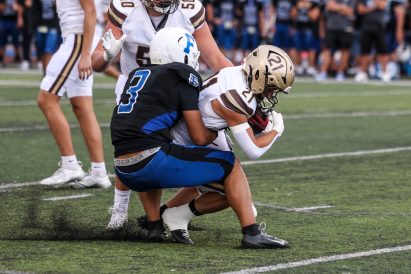
- Fremont defender RJ Fonoti (3) brings down Davis running back Briggs Taylor (21) during a football game Friday Aug. 21, 2026, in Plain City. (TRE ASAY, Special to the Standard-Examiner)
-
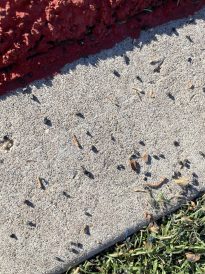
- Tiny pellets from the rubber infill of Bonneville High’s football field are seen on the concrete border between the turf and the track at BHS in Washington Terrace. (Bob Judson, Special to the Standard-Examiner)
-
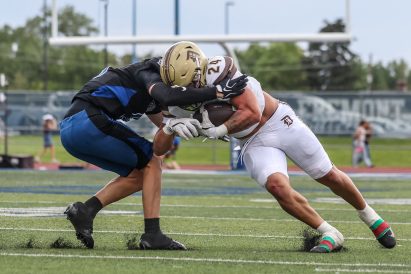
- Davis High’s running back Kysen Gallegos (24) breaks a tackle from a Fremont defender during a football game Friday Aug. 21, 2026, in Plain City. (TRE ASAY, Special to the Standard-Examiner)
-

- Bob Judson, Inside the Lines
-
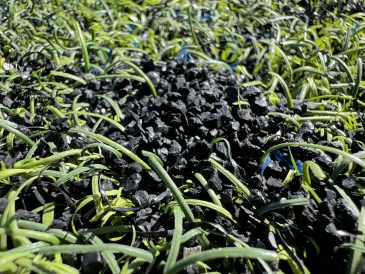
- A pile of rubber pellets that make infill for sports turf surfaces sits in artificial blades of grass. (Lane Findlay, Weber School District)
TRE ASAY, Special to the Standard Examiner
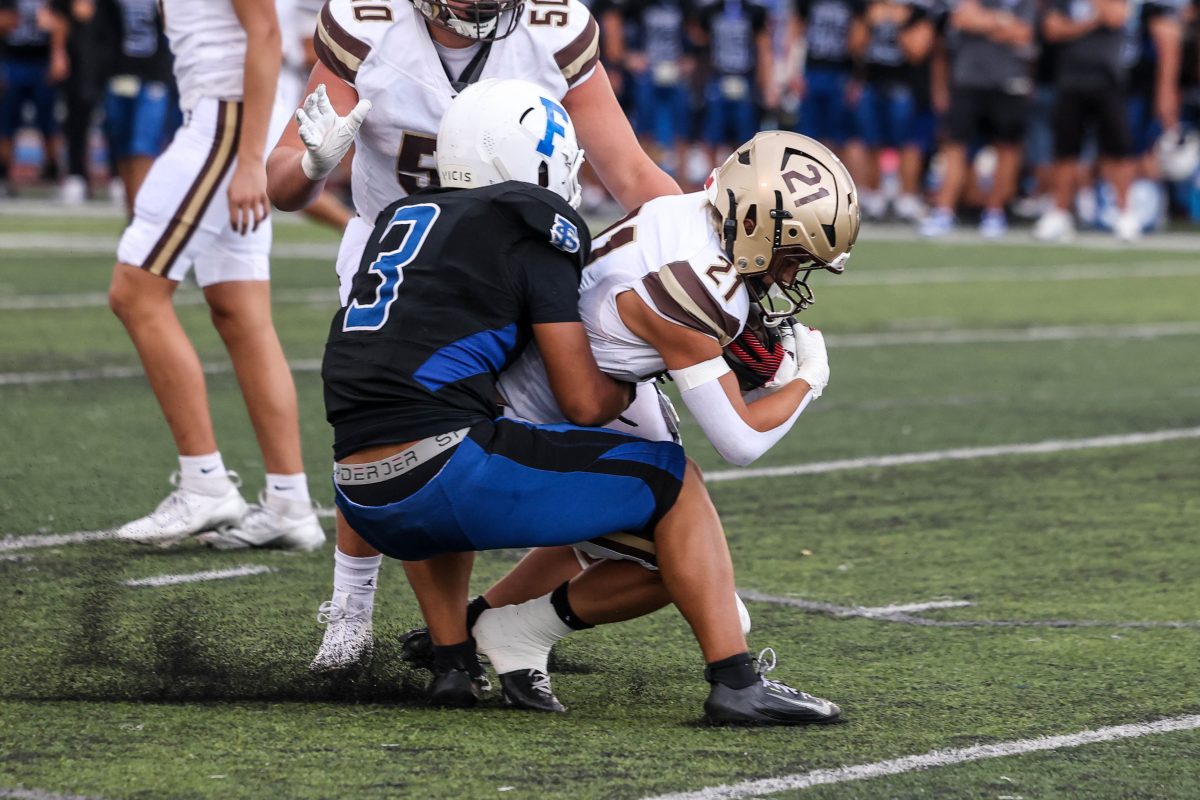
Fremont defender RJ Fonoti (3) brings down Davis running back Briggs Taylor (21) during a football game Friday Aug. 21, 2026, in Plain City. (TRE ASAY, Special to the Standard-Examiner)
There was a pebble in my shoe.
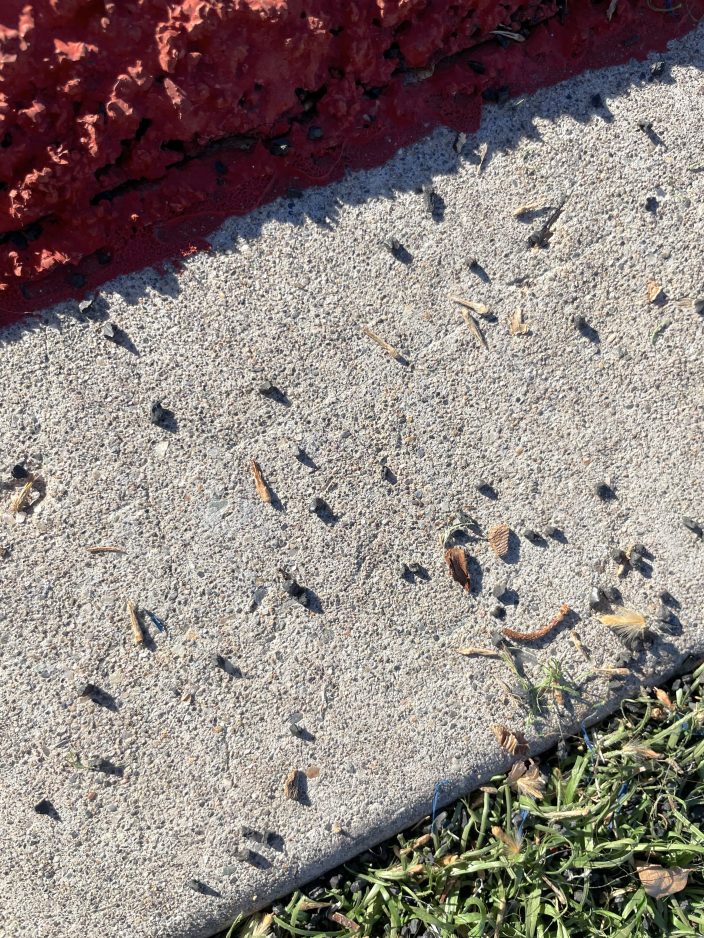
I had just returned home from covering a high school football game, where I had conducted player interviews on the artificial turf surface at West Field High School. When I took off my New Balance sneakers, several black rubber pellets fell out.
Across Northern Utah and many places elsewhere, rubber in the shoe has replaced the green of grass stains or the cake of dried mud after a rainstorm. Clean, synthetic surfaces now cover most fields.
Most of you have seen evidence of these pellets when you have watched a game and maybe never given it much thought.
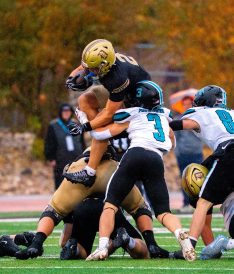
These rubber pellets are the spray you see come to the surface when a safety slides over to tackle a receiver.
Bob Judson, Special to the Standard-Examiner
Tiny pellets from the rubber infill of Bonneville High's football field are seen on the concrete border between the turf and the track at BHS in Washington Terrace. (Bob Judson, Special to the Standard-Examiner)
They’re the mist that makes its way from the ground when a runner is dragged down from behind.
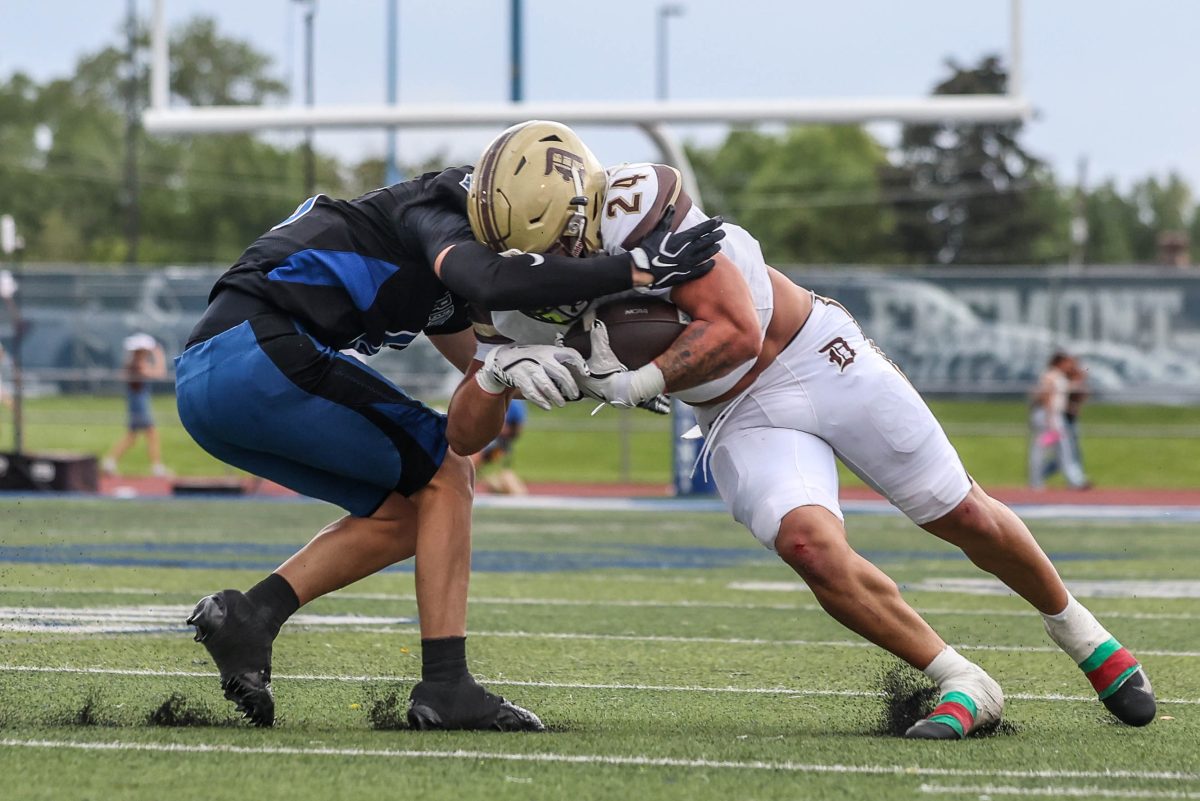
It’s the aerosol-looking splash that springs from the landing of a punt that isn’t caught by a returner.
Or the rooster tail that trails a soccer ball as it skids along the pitch.
In technical terms, the black particles on a football field look like a spray but are actually crumbs of rubber infill. They are tiny granules made from recycled vehicle tires.
Infill is spread between the artificial turf fibers of modern synthetic fields. It provides cushioning, improves shock absorption, helps prevent player injuries and keeps the artificial grass blades standing upright.
TRE ASAY, Special to the Standard Examiner
Davis High's running back Kysen Gallegos (24) breaks a tackle from a Fremont defender during a football game Friday Aug. 21, 2026, in Plain City. (TRE ASAY, Special to the Standard-Examiner)
In simple terms, it’s what kicks up during play.
Weber School District serviced the football fields at Bonneville, Weber, Fremont, West Field and Roy at the beginning of August before the first games were played.
“We had a company come in for a thorough maintenance job where they do a deep cleansing of the turf. They brush it, fix seams and do what we call a decompaction of the infill,” said Rob Lake, WSD supervisor of secondary education. “That allows the fibers to stand up straighter. Then the sun hits the top of the fibers and breaks down things a little quicker.”
Schools have some machinery that they can use to broom or brush the field as needed during the season.
There is also an attachment for that machinery that uses a magnet to collect any metal pieces that shouldn’t be on the field.

Bob Judson, Inside the Lines
Lake meets with AstroTurf officials, who installed the turf and supplies the infill, once a year and walks the fields to get an idea what they look like and get feedback on what might be needed.
Bonneville, Weber and Fremont had their grass fields replaced seven years ago, Roy followed six years ago, and then West Field had its initial install when the school was built three years ago.
Roy waited a year later than the other schools, as former athletic director Mike Puzey wanted to see how things panned out before making a decision that diverted from the norm for a grass field that seemed to hold more meaning there than other places.
One of the downsides of rubber infill is the heat generated on an artificial surface, especially in early games in August, so Roy went with a “brock” fill, which is pine wood.
It is supposed to keep the fields some 30 to 40 degrees cooler, according to Lake.
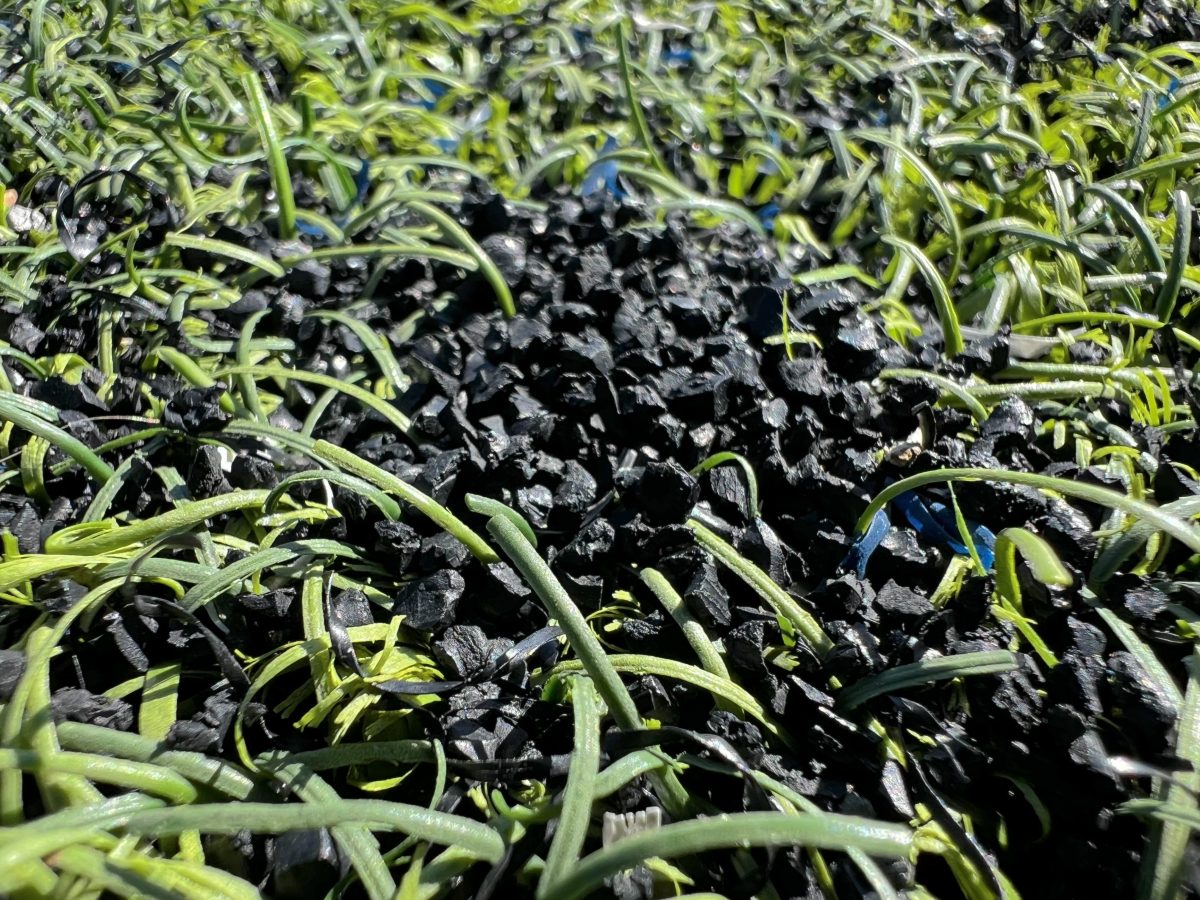
Lane Findlay, Weber School District
A pile of rubber pellets that make infill for sports turf surfaces sits in artificial blades of grass. (Lane Findlay, Weber School District)
Another advantage to the wood chips is that they absorb water, compared to the rubber that makes things muggy and humid during the hotter months.
That’s an interesting observation, as I was at an Ogden soccer game at the Spence Eccles complex a couple of years ago on a hot afternoon and they were watering the field, ostensibly to mitigate the heat.
Lake gave them the benefit of the doubt, saying “watering the rubber pellets doesn’t cool it down; maybe it can clean off the turf or they had some other reason.”
There is kind of a three-layer process to laying down a new field:
First, there is a “brock” pad, which is an absorption pad helpful for reducing concussions and other injuries, then the infill is brushed and broomed into the turf.
There is a drainage system to disperse water. The aforementioned artificial surface doesn’t get torn up with cleats and doesn’t get muddy. Traction is also better.
The infill obviously migrates to the surface, resulting in the spray effect seen during games.
There is an expected 10-year lifespan on the turf and an estimated 20 years on the pad.
“When you look at long-term maintenance, those were some of the key time frames we were looking at,” said Lane Findlay, community relations spokesman for WSD.
Weber School District decided to switch to artificial surfaces from grass for several reasons.
“With the usage our fields are getting, we couldn’t do that if they were grass. We have football, soccer and now lacrosse, so it gets used a lot more,” Lake said. “There is the cost of mowing them … painting them for the different events. That took a ton of time for our athletic directors, that now they can work with coaches, those kinds of things.”
Another advantage is an estimated 800,000 to 1.5 million gallons of water per year that is saved by having the artificial turf.
The water savings have been notable in recent years with the drought conditions Utah has experienced.
“We’ve had a couple of years where we’ve had extreme droughts, with very serious restrictions to put water on our different athletic fields. A couple of years ago, we could only water once a week,” Findlay said. “We were very fortunate to have the turf, because watering wasn’t an issue.”
Lacrosse is particularly tough on the turf, where the goalie stands on one section the whole game and the surface breaks down.
All schools except West Field replaced those sections of turf this season with leftovers from the earlier install.
Lake and Findlay say that is one of the few times when the schools have actually had to add infill after the initial application.
“The nice thing about turf is we have a real stable surface,” Findlay said. “Beyond just the savings of water, there are so many advantages to the field being playable.”
So, the next time you see an eruption of black dust from the field during a game, you know the story — from the ground up.
Inside the Lines covers Northern Utah high school sports through the eyes of 51-year sportswriting veteran Bob Judson, who is a resident of Layton.
High School Sports
Inside the Lines: What’s actually inside those lines sometimes ends up in your shoes

Prep football roundup: Syracuse wins in upset, Box Elder stunned at home