Opinion: Final 2 weeks bring crescendo to Big Sky football; CFP could learn, but didn’t
-
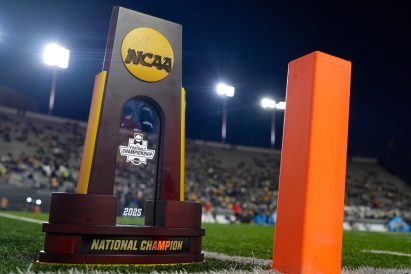
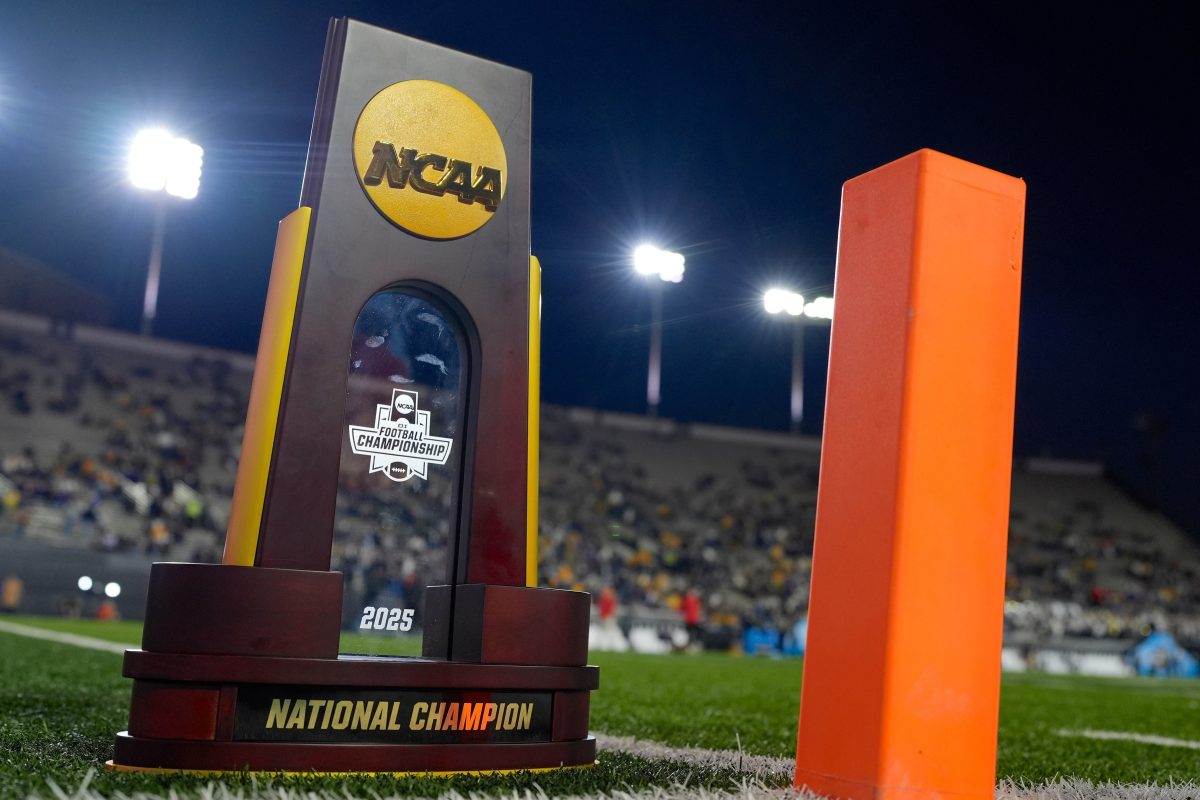
- The NCAA’s FCS national championship football trophy rests on the field during the title game between Montana State and Illinois State on Jan. 5, 2026, in Nashville, Tenn. (George Walker IV, Associated Press)
-
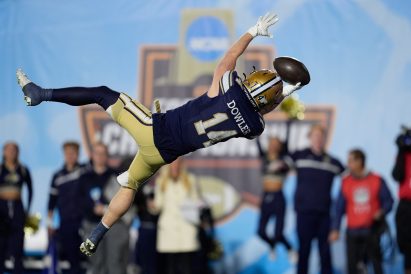
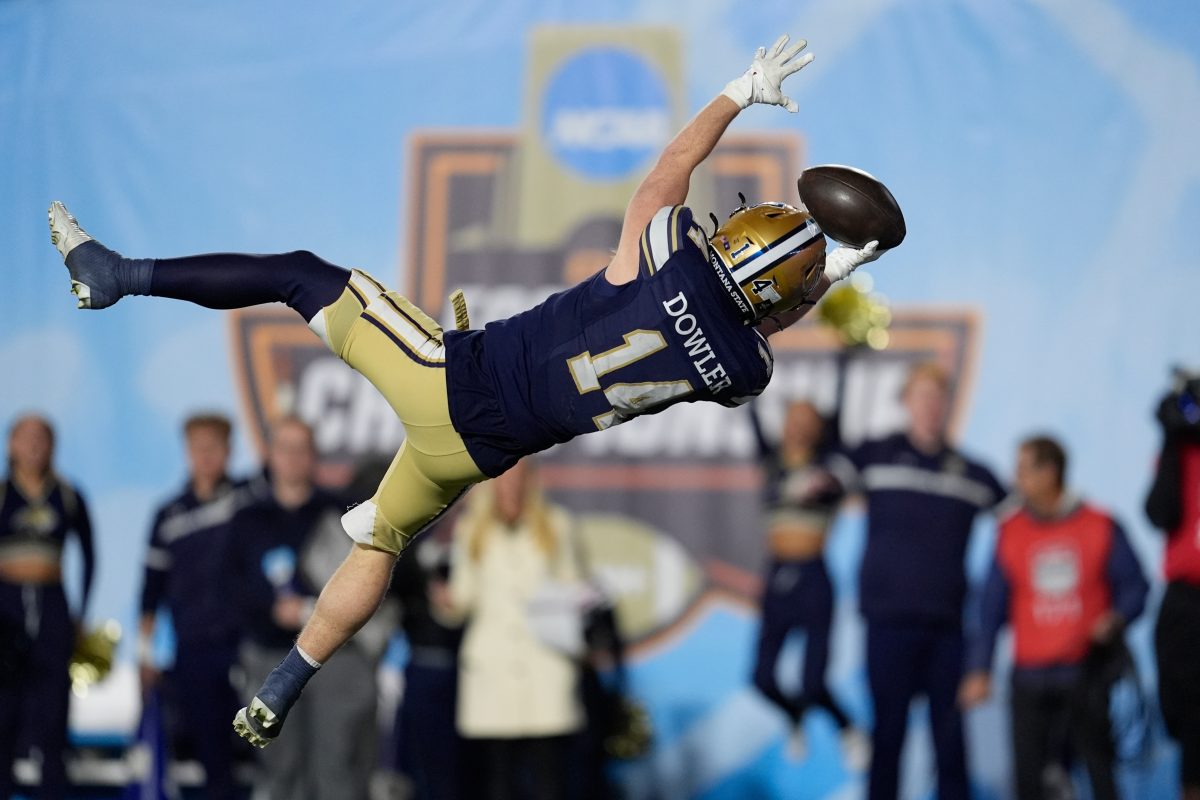
- Montana State receiver Taco Dowler (14) dives into the end zone for a touchdown during the FCS national championship game against Illinois State on Jan. 5, 2026, in Nashville, Tenn. (George Walker IV, Associated Press)
-

- Brett Hein, Sports Editor
George Walker IV, Associated Press
The NCAA's FCS national championship football trophy rests on the field during the title game between Montana State and Illinois State on Jan. 5, 2026, in Nashville, Tenn. (George Walker IV, Associated Press)
Arguments against a 24-team college football playoff have always fallen flat to me, and many like me who have spent considerable time covering or following Division I’s lower subdivision, the FCS.
The FCS has staged a true playoff for decades, complete with conference champion autobids, seeding, home-hosted games and titles decided on the field.
The final two weeks of the regular season, especially in the Big Sky Conference, show just how much importance a 24-team playoff adds to regular-season games. Weber State is in a group of about seven teams vying for four, possibly five, playoff bids out of the Big Sky and every game in the next two Saturdays has gargantuan importance.
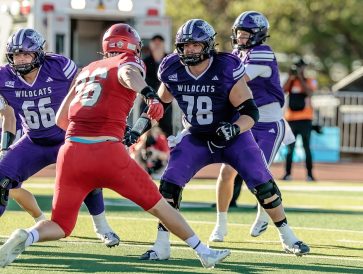
No. 18 Weber State (6-4, 5-2 Big Sky) is at No. 5 Northern Arizona (8-2, 6-1) this week. A win for NAU would keep the Lumberjacks in contention for a conference championship, while a WSU upset would put the Wildcats strongly on the “likely” side of the playoff bubble.
While first-place Montana State (9-1, 6-1) has an apparent easier matchup at Northern Colorado (3-7, 2-5), the Bobcats only remain in first after squeaking out a three-overtime win at No. 22 Idaho State (6-4, 3-4) last week.
George Walker IV, Associated Press
Montana State receiver Taco Dowler (14) dives into the end zone for a touchdown during the FCS national championship game against Illinois State on Jan. 5, 2026, in Nashville, Tenn. (George Walker IV, Associated Press)
The Bengals are in a three-week playoff itself down the stretch. After the MSU loss, Idaho State is in must-win mode even despite having an FBS win under its belt (winning at Utah State in September).
Who does ISU close with? How about an ESPN2 night game at No. 12 Montana (7-3, 5-2), followed by hosting a battle of the domes against in-state rival Idaho (5-5, 5-2).
Montana’s looking to cement a top-eight seed and a first-round playoff bye, while Idaho has its own resume building to do.
The Vandals are on a hot streak, suddenly 5-2 in the Big Sky with Weber State the only team to douse any kind of water on the close to Idaho’s season. But before the Vandals take on the rival Bengals, they’ve got yet another moving-day matchup: hosting UC Davis (6-4, 4-3).
Davis is still firmly in the playoff mix, but Idaho is the Aggies’ last chance at a solid, quality win; so far, UCD has lost to Montana, Weber State and Southern Utah in league, while tallying wins over San Diego and Stetson outside of the Big Sky.

Brett Hein, Sports Editor
Should Weber State get an upset at NAU, they’d still have to play well to etch a playoff berth in stone. Utah Tech comes to Ogden as the closer, and the one-win Trailblazers required Idaho State to cash in a miracle and made UC Davis sweat in consecutive weeks.
And after all those scenarios, it’s possible Montana at Montana State in the final week decides the Big Sky title and what kind of seeding the Big Sky gets in the playoff bracket.
Pretty fun, right?
The playoff system works, even as big as it is. There are two tiers of seeds to vie for, with byes and home games up for grabs.
The autobids are key. Even the non-scholarship Pioneer Football League gets one and sure, the deck is stacked against the likes of San Diego (usually) because the PFL representative is always playing on the road. But they’ll win (like in 2017 at Northern Arizona) and make every part of the bracket be competitive.
Even the Ivy League is in on the action now.
As longtime exclusionists, Ivy presidents recently voted to allow the conference champion to participate in the FCS Playoffs. It looked like a mistake by the FCS to allow it, until Yale engineered a four-touchdown comeback at No. 15 Youngstown State and won a game the very first time the Ivy League participated.
Between autobids and a mostly good selection committee process (there’s always room for complaints), the FCS Playoffs are a near-perfect, chaotic meritocracy.
And that’s where the FBS subdivision falls flat.
The powers that be announced this week that the College Football Playoff — unlike the FCS, in which the NCAA controls the national playoff, the FBS playoff is a third-party affair — will expand to 24 teams in 2027.
Critics who point to the devaluation of the regular season are missing the point. A larger playoff means more games mean more, deeper into the season.
Despite doubling the size of the bracket, rules for the inclusion of the non-power conferences remain the same. Apparently, the CFP will only award one autobid to the highest-rated conference champion of all the non-power leagues combined.
So instead of the meritocracy and excitement of the FCS Playoffs, as well as that of the NCAA basketball tournaments, all signs point to the CFP basically setting up a Big Ten-versus-SEC postseason, with token inclusion of the Big 12 just enough to throw off the scent.
As someone who was old enough to understand what was happening, and could not fathom how a 13-1 BYU team ranked No. 5 could possibly get left out of the biggest bowl games in 1996, the FBS championship process has slowly improved — from the BCS, to a four-team playoff — until now, suddenly kneecapping itself at what should be the pinnacle of competitive spectacle and fairness.
They’re so close to getting it right, yet so far away.
It happened when ridiculous conference realignment put Oregon in the same conference as Rutgers and annihilated the historic Pac-12 Conference, putting a massive strain on budgets and non-football sports.
It’s happened with arms races that see less-than-one-season coordinators get $10 million buyouts upon their firing.
It’s happened with universities outsourcing half their athletic department to private equity firms just trying to keep up.
The adults in charge at the top of college athletics are chasing money, and it’s making them get the details wrong every time.