Jazz Baseline: Newly competitive Utah Jazz need some more time in the oven
-
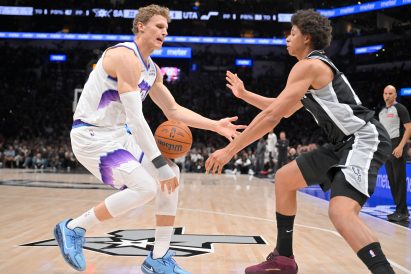
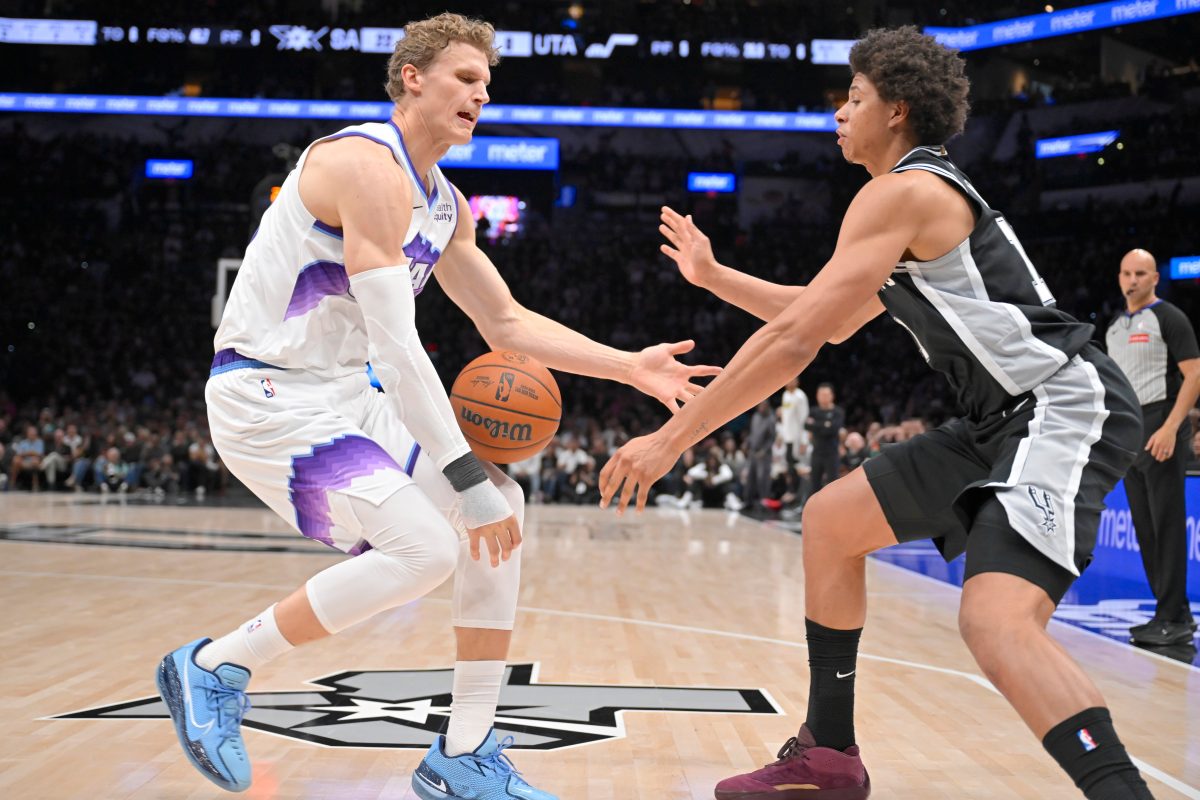
- Utah Jazz forward Lauri Markkanen, left, fights for the ball with San Antonio Spurs forward Carter Bryant during an NBA game on Monday, Nov. 2, 2026, in San Antonio. (Darren Abate, Associated Press)
-
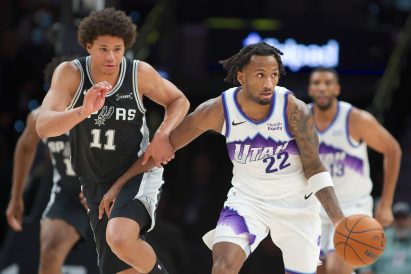
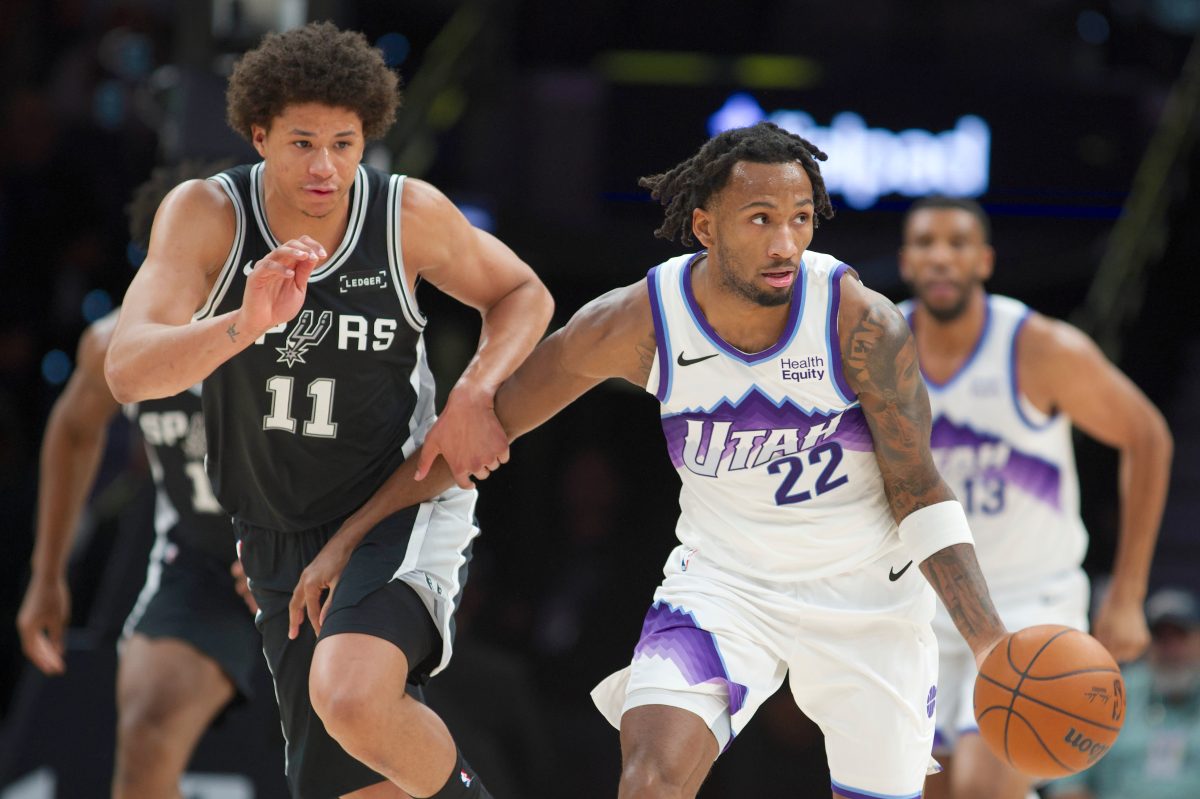
- Utah Jazz forward Darryn Peterson (22) holds off San Antonio Spurs forward Carter Bryant (11) during an NBA game Monday, Nov. 2, 2026, in San Antonio. (Darren Abate, Associated Press)
Darren Abate, Associated Press
Utah Jazz forward Lauri Markkanen, left, fights for the ball with San Antonio Spurs forward Carter Bryant during an NBA game on Monday, Nov. 2, 2026, in San Antonio. (Darren Abate, Associated Press)
Starting the season with a 1-6 record isn’t exactly out of character for the Utah Jazz in recent years, but it’s a frustrating and tragic opening to what was supposed to be this franchise’s “coming of age” declaration.
The only win to Utah’s name is a one-point home victory over a New Orleans team with a losing record. Their last two results? A pair of 22-point blowouts courtesy of Portland and San Antonio.
The Jazz spent the last four years scraping against the basement of the Western Conference standings. Discarding veterans and stockpiling draft capital, patiently awaiting the arrival of a franchise savior through the lottery a la Cooper Flagg or Victor Wembanyama.
Such a player took all four of those seasons to arrive, partially due to some poor luck finally turning good and delivering the franchise its first positive draft jump in more than 40 years of the draft lottery era. Said savior materialized in the form of Kansas guard Darryn Peterson.
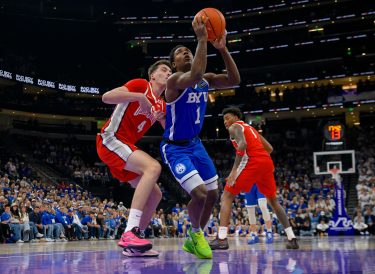
The highest-scoring freshman in the Jayhawks’ blue-blooded history, Peterson was rivaled only by BYU’s AJ Dybantsa as a candidate for the first overall pick in the 2026 draft. When Washington sided with AJ, Utah gleefully snatched Darryn off the board.
Darren Abate, Associated Press
Utah Jazz forward Darryn Peterson (22) holds off San Antonio Spurs forward Carter Bryant (11) during an NBA game Monday, Nov. 2, 2026, in San Antonio. (Darren Abate, Associated Press)
Peterson still has some distance between his current self and an All-NBA future. His team is likewise a long way from where they want to be.
Struggling with self-admitted indecision in his first NBA appearances, Peterson’s shooting percentages have been frustratingly poor, but much of that can be attributed to shot selection. Lacking the quick first step or athletic burst to fly past his defender and get high-percentage looks at the rim, he’s been forced to settle for floaters and off-balance mid-range jumpers.
Peterson has been more intentional lately about firing from beyond the arc when opportunity arises, but his scoring package and decision-making tendencies will need more time to mature.
This was Will Hardy’s explanation for keeping Peterson glued to the bench in overtime against San Antonio. Until Peterson’s offensive execution tidies up, Hardy will opt to lean on his established contributors.
But Peterson is still a rookie, and as such, should be analyzed methodically. Development is never linear, but it can still be easy to get wandering eyes when your first-year star is consistently overshadowed by the early success of his draft class peers: Dybantsa, Memphis’ Cameron Boozer, and Chicago’s Caleb Wilson, among them.
And even Yaxel Lendeborg in Golden State, whose early performance makes him look like a five-year NBA veteran; I suppose that’s appropriate, given how he’s practically geriatric for a rookie at 24 years old.
No reasonable evaluator would place the blame for Utah’s slow start squarely on a rookie’s shoulders, anyway. Instead, focus should shift in the direction of the leaders in the locker room: Utah’s veterans, who have likewise struggled to get this team off the runway.
These are wise sages who, equipped with years of relentless devotion to their craft and multi-million-dollar salaries, are tasked with showing young Peterson the path that leads toward prosperity. Namely, Lauri Markkanen, Jaren Jackson Jr., Jusuf Nurkic, and, to a certain extent, Keyonte George, who just signed a massive contract extension over the offseason.
Injury trouble aside, the pillars of this offense haven’t executed to their standard.
We knew that Utah would struggle to push their defense to a competitive level after being the 29th-worst defending team in basketball last season, but the team’s offensive capabilities had never been in doubt. Last year’s Jazz were the ninth-best offense in the NBA, even without a competitive roster. Through seven games, Utah currently hovers around the 27th in offensive rating and 24th in defensive rating.
Small sample size aside, that is not a recipe for winning.
Aside from Ace Bailey, who has been a much-needed bright spot in Utah’s young corps, the Jazz youngsters have been off to a particularly suspect start.
Kyle Filipowski and Brice Sensabaugh have hardly seen the court at all, each averaging career lows in minutes off the bench despite the crowded injury report. Isaiah Collier’s fate appears even more dire, with Hoops Hype’s Michael Scotto reporting on Monday that the Jazz have declined their team option on the point guard, making the former 29th overall pick an unrestricted free agent after this season.
Meanwhile, Utah will exercise the team option for Ace Bailey, who has shown steady growth since his rookie debut a year ago.
It’s an indigestible opening to the season for a Jazz team that hopes to compete in the playoff race. We might be whistling a different tune if Nurkic and Jackson Jr. can return from injury and rally off a few wins, but this version of the Utah Jazz clearly needs more time in the incubator.
Jazz Baseline gives a weekly look at the Utah Jazz from Calvin Barrett, a marketing professional and UVU graduate from Springville who currently follows the Jazz from Japan.