Jazz Baseline: Two Jazz youngsters transform games, expand Utah’s horizon
-
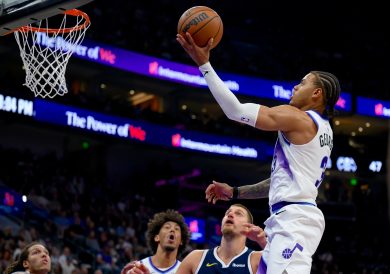
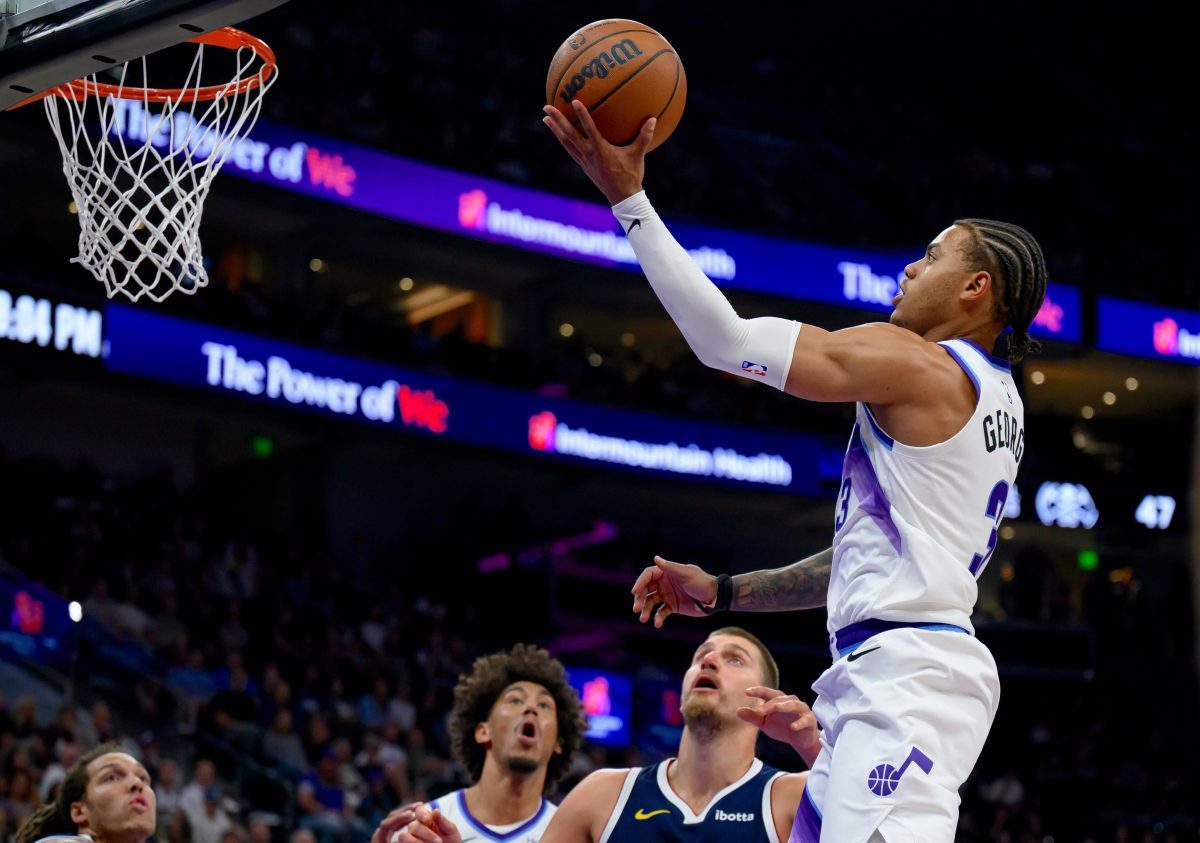
- Utah Jazz guard Keyonte George, right, rises for a layup during an NBA preseason game against Denver on Oct. 6, 2026, in Salt Lake City. (Tyler Tate, Associated Press)
-
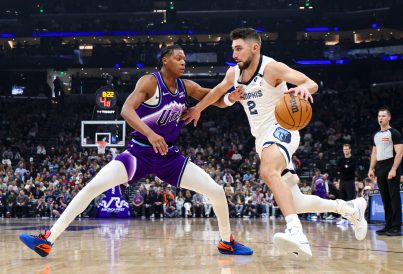
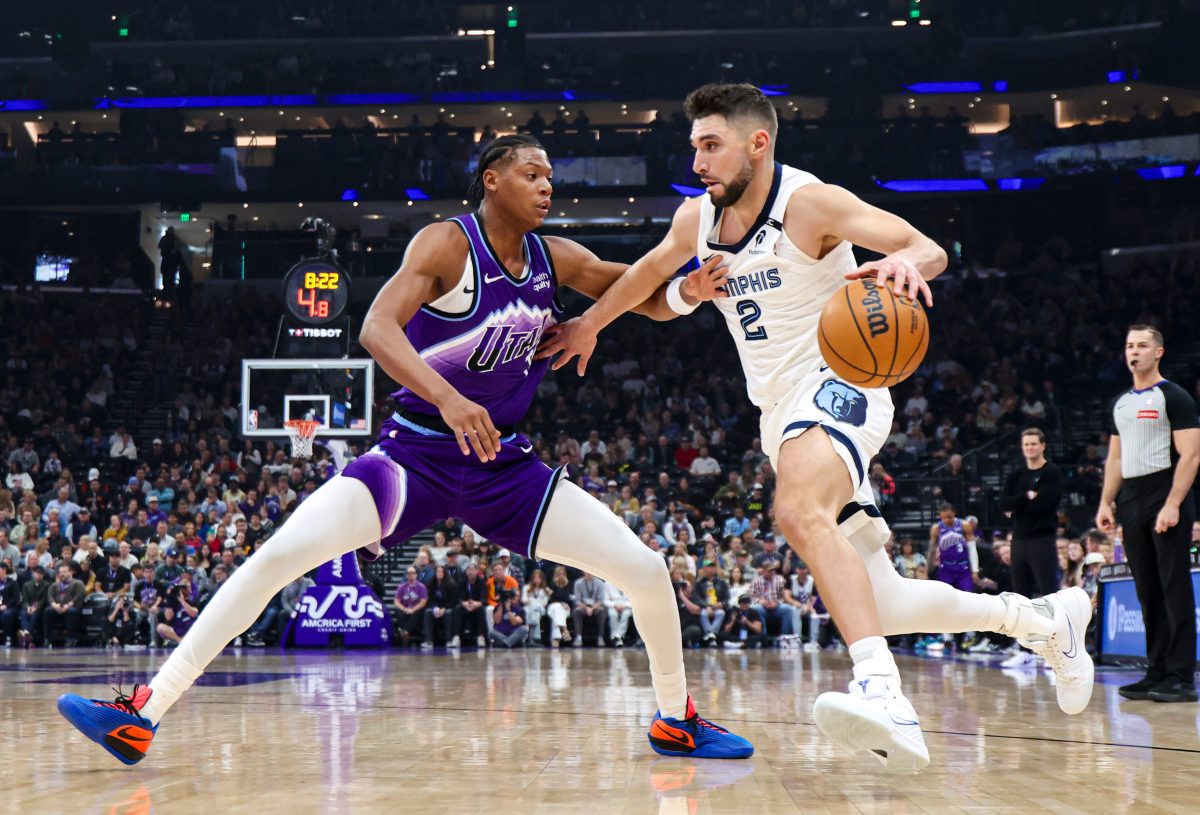
- Utah Jazz guard Ace Bailey, left, defends Memphis guard Ty Jerome (2) during an NBA game, Monday, Oct. 26, 2026, in Salt Lake City. (Rob Gray, Associated Press)
Tyler Tate, Associated Press
Utah Jazz guard Keyonte George, right, rises for a layup during an NBA preseason game against Denver on Oct. 6, 2026, in Salt Lake City. (Tyler Tate, Associated Press)
Keyonte George knew that his freshly inked five-year, $157.5 million contract extension came with increased expectations. No longer a newcomer in the NBA ranks, the fourth-year Jazzman has improved across the box score every year since his rookie campaign.
As a scorer, he’s evolved both in output and efficiency — the latter of which was a massive red flag during his pre-draft evaluation. He put up plenty of points during his freshman year at Baylor under Scott Drew, but he was labeled “high-volume, low efficiency.”
Essentially, a black hole with the ball in his hands, no possession was safe from being lost within his gravity. In his rookie season, he didn’t do much to dispel those worries, scoring 13 points per game on 39.1% from the field.
He climbed steadily in the following two seasons, finishing the 2025-26 year at an average of 23.6 points per game while knocking through 45.6% of his field goal attempts. That’s a night-and-day difference that put George in the conversation as a dark horse for the Western Conference All-Star team — a bit of a fantasy, but one that has sparked serious conversation.
He earned his payday, but can he make good on the financial faith Utah’s front office has invested in his future?
Rob Gray, Associated Press
Utah Jazz guard Ace Bailey, left, defends Memphis guard Ty Jerome (2) during an NBA game, Monday, Oct. 26, 2026, in Salt Lake City. (Rob Gray, Associated Press)
Thus arrives the 2026-27 season, the first year in which the Jazz will make a playoff push since Donovan Mitchell and Rudy Gobert last shared the court in Salt Lake City.
Keyonte George serves as the starting point guard for a young, hungry squad. George has proven himself to be a professional-quality scorer, but Utah’s success this year will be largely predicated on his in-between skills.
Namely, his playmaking and defending. When it’s time to stop being one-on-one and start playing as one of five, can Keyonte remain an effective scoring threat while getting his teammates involved?
Knowing what we know today, it would be silly to question his ability as a distributor. Center-stage under the spotlight, George has orchestrated Utah’s offense with the poise and precision of a maestro. He’s already posted double-digit assists twice this season; that’s a mark he reached only four times last year, and this season is still in its infancy at four games old.
George showed flashes of strong playmaking to this point. His 8.3 assists per game (with an admittedly small sample size) is a natural step in his progression.
But the biggest threat to George’s future has always been his abysmal defensive record.
He posted the worst defensive rating of any Jazzman last season, making him the worst defender on one of the NBA’s worst defenses. Not a great look. Nobody was more aware of this than Keyonte, and he addressed his need to improve on media day in late September.
“Whether it’s learning personnel, being a good help-side defender, being a good one-on-one defender, being one of the guys that you don’t really want to hunt towards the end of the game,” George said about defensive facets to improve.
And then there’s Ace Bailey, a second-year wing who tumbled down the draft order and fell to Utah with the fifth overall pick.
Another player who raised red flags from NBA scouts based on his shot diet, frequently opting for high-difficulty jump shots as a freshman at Rutgers, and was commonly slammed for being immature and selfish.
Those labels couldn’t have been further from the truth, as the man named Airious quickly proved in his rookie season. A perfect fit in Utah, Bailey filled and magnified his role in Utah’s rotation. He was a mainstay in the starting lineup as a rookie.
But then the Jazz drafted Darryn Peterson, a point guard whose arrival has been heralded as the dawn of a glorious tomorrow and subsequently bumped Bailey from the starting five on opening night.
Bailey’s sixth-man status lasted all of one game; he’s started every game since.
Will Hardy hasn’t been able to keep Bailey off the court, and his defensive impact is the primary reason why, as Utah’s defensive issues continue to haunt their hopes of escaping the depths of the NBA Draft Lottery.
He’s averaging over a block per game and posted a monstrous effort against Los Angeles, reflected in his stat line of 17 points and 12 rebounds (six on the offensive glass). The following night, he cleaned the glass for 10 more rebounds (four offensive) and three rejections.
I haven’t even mentioned Bailey’s 11.7 points per game.
Recently losing Lauri Markkanen and Jaren Jackson Jr. to injury on the same night sinks Utah’s expectations drastically, at least until word comes back on their timeline for return. Early word isn’t good; The Athletic reported Tuesday that Jackson is out at least six weeks with a partially torn MCL.
But even without veterans, growth from George and Bailey was on full display during Utah’s narrow loss to the unbeaten Grizzlies.
The season is young, and the identity of Utah’s roster is still taking shape, but the Jazz’s ceiling may only be as high as their budding stars can lift it.
Our first impressions suggest a clear pattern of improvement; there is great reason for optimism in Utah.
Jazz Baseline gives a weekly look at the Utah Jazz from Calvin Barrett, a marketing professional and UVU graduate from Springville who currently follows the Jazz from Japan.