Coming together: President Oaks calls for peacemaking at G20 Interfaith Forum
-
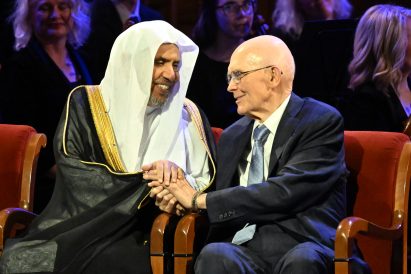
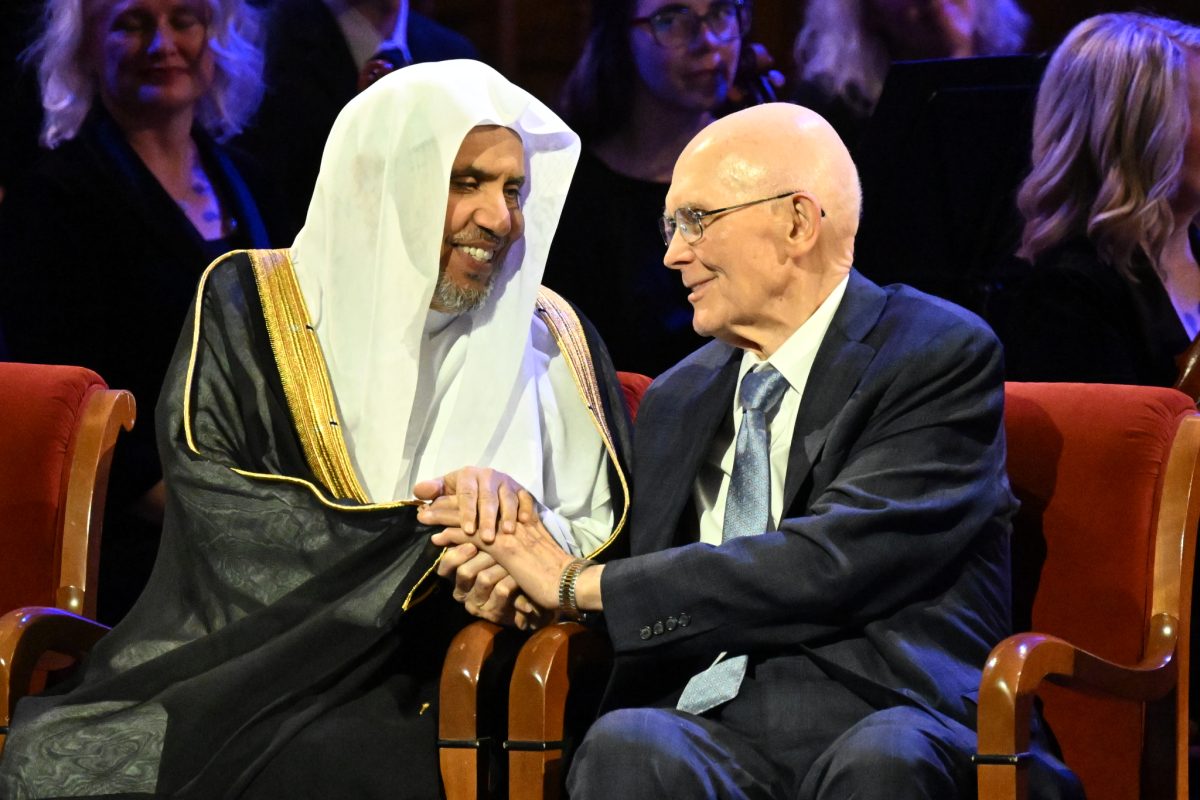
- President Dallin H. Oaks (right) greets His Excellency Dr. Mohammad Abdulkarim Al-Issa (left), secretary-general of the Muslim World League, during the opening ceremony of the 2026 G20 Interfaith Forum in the Tabernacle in Salt Lake City on Thursday, October 15, 2026.
-
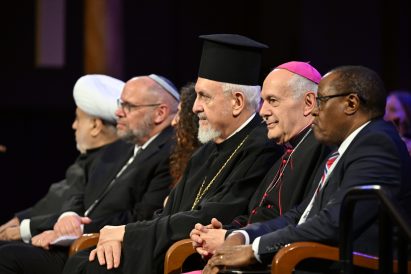
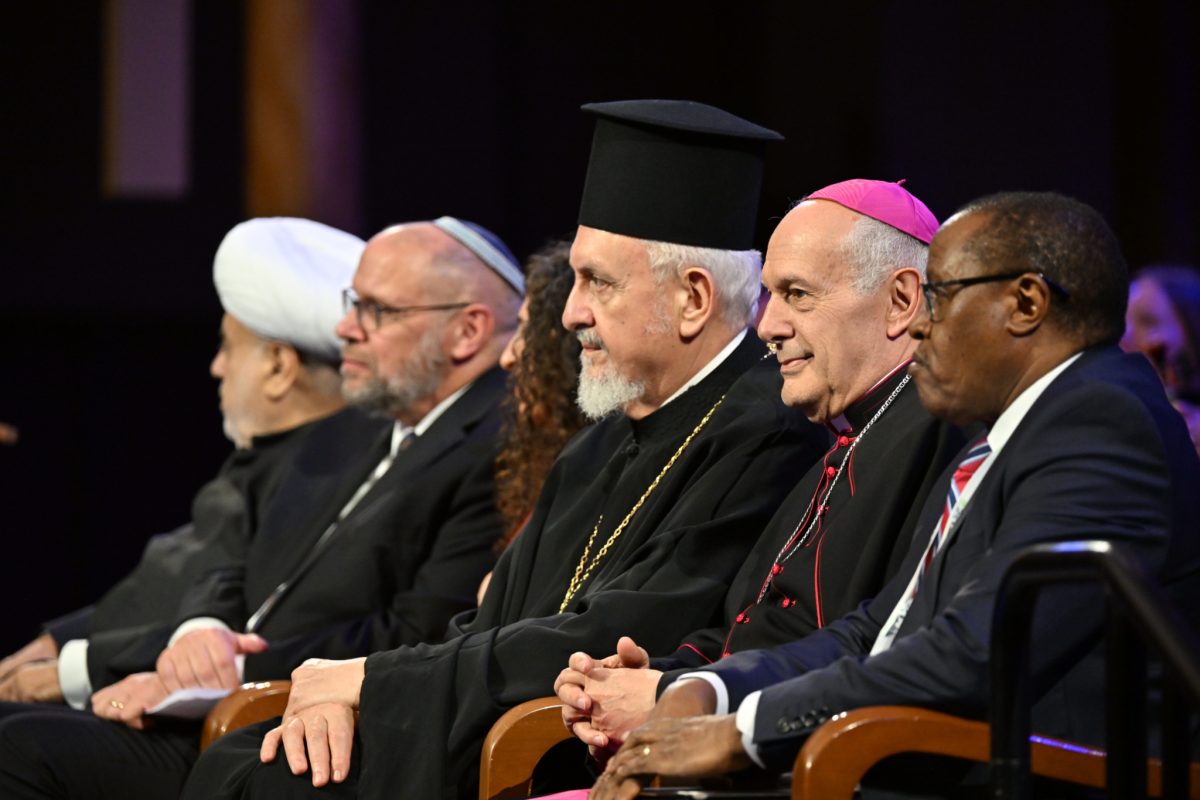
- Faith leaders from around the world gather at the opening session of the 2026 G20 Interfaith Forum in the Tabernacle in Salt Lake City on Thursday, October 15, 2026.
-
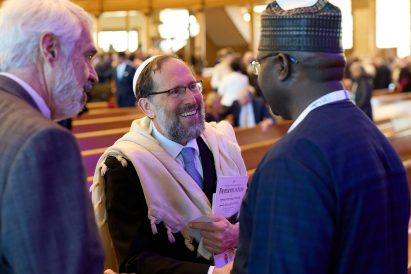
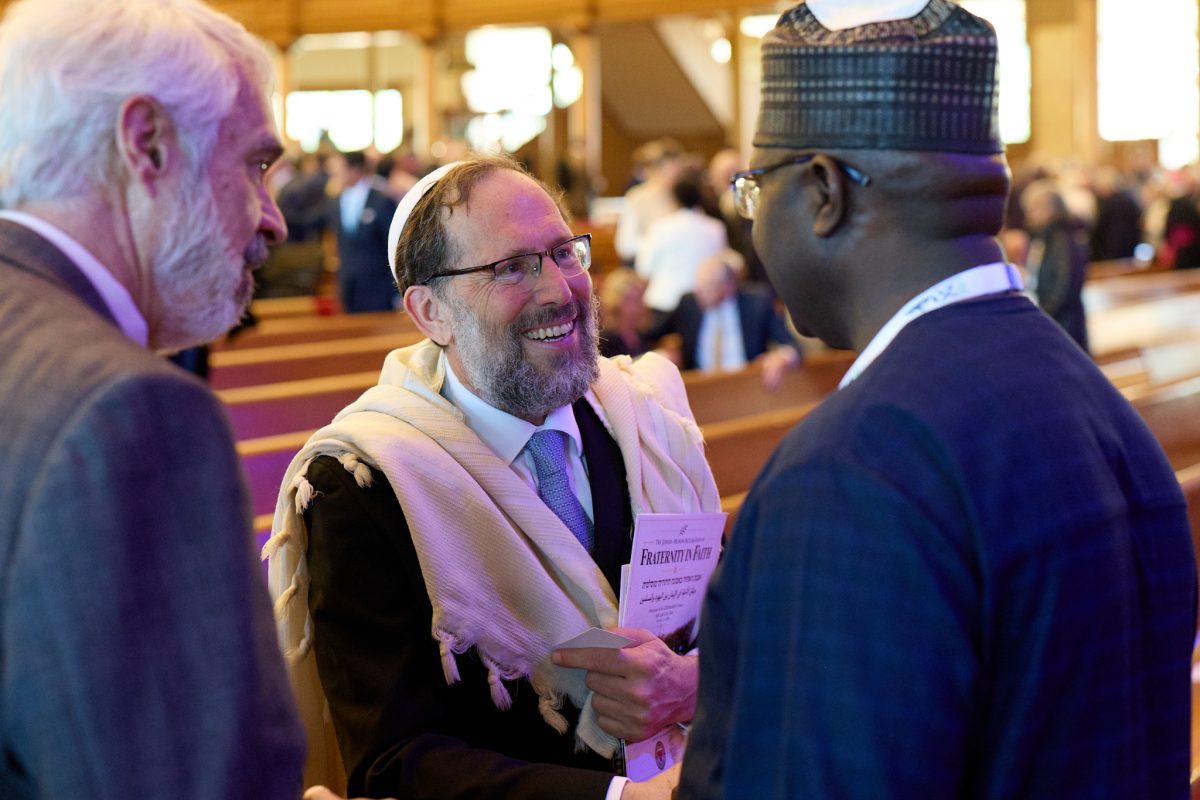
- Faith leaders arrive at the 2026 G20 Interfaith Forum in the Tabernacle in Salt Lake City on Thursday, October 15, 2026.
-
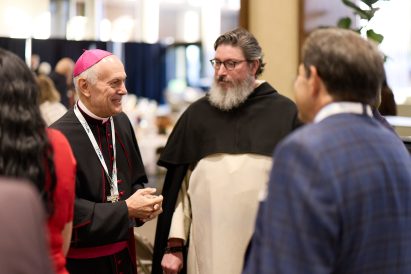
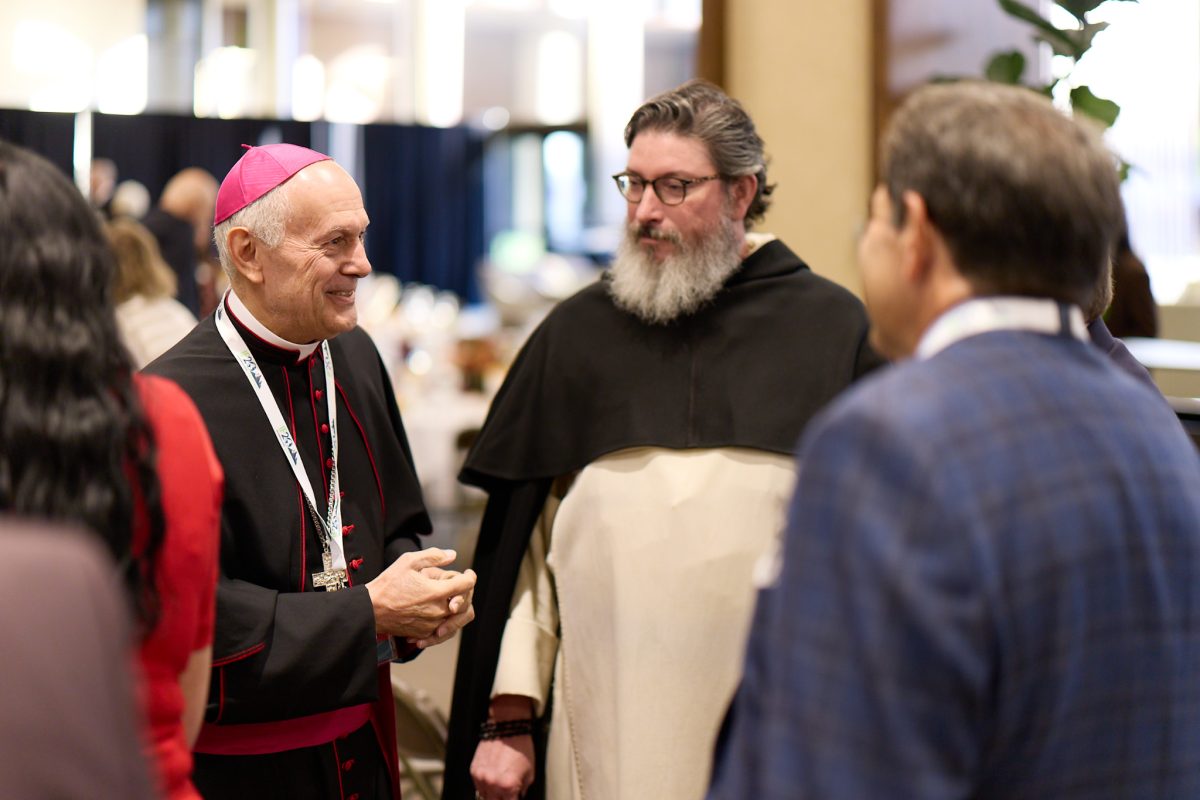
- Guests arrive at the Church Office Building for a dinner prior to the opening ceremony of the 2026 G20 Interfaith Forum in Salt Lake City on Thursday, October 15, 2026.
President Dallin H. Oaks of The Church of Jesus Christ of Latter-day Saints welcomed religious leaders from around the world to Salt Lake City on Thursday, praising efforts to build peace and understanding while respecting differences in belief.
“People of goodwill, compassion, and a desire to understand and help one another — without demanding a compromise of distinctive commitments — are at the core of peacemaking,” he said during the opening ceremony of the G20 Interfaith Forum in the Salt Lake Tabernacle.
President Oaks commended participants for their efforts to be “peacemakers in today’s world” and said, “We want to be part of your efforts and invoke the Lord’s blessings on all of us as we go forward.”
He called the forum “the most prominent constellation of leaders on the subject that brings us together that has ever gathered in Salt Lake City.”
The G20 Interfaith Forum, being held in the United States for the first time, brings together religious leaders, scholars, humanitarian practitioners and public officials from around the world. Founded in 2014, the gathering meets annually in the country holding the G20 presidency and seeks to contribute religious perspectives to discussions on issues ranging from peacebuilding and religious freedom to poverty, technology and economic development.
The broader G20 process is a forum for international economic cooperation among the world’s largest economies. Organizers of the interfaith forum say faith communities can help inform those conversations through their experience operating schools, hospitals, humanitarian programs and relief networks around the world.
The forum will close on Saturday at the Catholic Cathedral of the Madeleine, a half mile (0.8 kilometers) east of the Salt Lake Temple.
“Resilient Hope, Shared Future”
This year’s forum is centered on the theme, “Resilient Hope, Shared Future.”
Alongside President Oaks, the opening ceremony featured remarks and prayers from leaders representing Muslim, Catholic, Orthodox Christian, Hindu, Jewish and other faith traditions.
The evening’s guest of honor was His Excellency Dr. Mohammad Abdulkarim Al-Issa, secretary-general of the Muslim World League. He delivered the opening keynote address. Dr. Al-Issa emphasized hope, calling on faith communities to work together in promoting peace, mutual understanding and human dignity.
“Dear friends, our natural difference should not be a threat, nor an incitement to clash and conflict,” said Dr. Al-Issa, who first visited Church leaders on Temple Square in 2019. “Rather, it’s a part of the diversities that God intended for humanity through His universal predestined wisdom.”
Reading a message sent on behalf of Pope Leo XIV by Cardinal Pietro Parolin, Archbishop Gabriele Caccia, Apostolic Nuncio to the United States, said the gathering serves as “a shining example of the solidarity of the human family” and highlighted the importance of human dignity, religious freedom and the common good.
“Pope Leo XIV prays that your deliberations, conducted with gentleness and respect, may inspire believers to find ever more compelling answers to those who ask the reason for our hope and so help more people draw closer with confidence to the Creator,” Archbishop Caccia said.
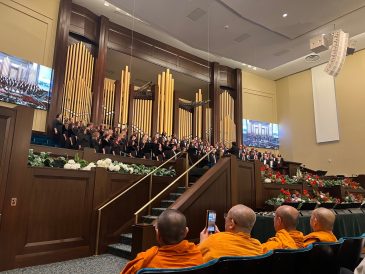
Music also played a prominent role in the evening. The Tabernacle Choir at Temple Square performed six selections, including “Peace Like a River” and “Look Up,” complementing speakers’ calls for hope, peacemaking and cooperation.
Referencing The Choir’s performance, Metropolitan Emmanuel of Chalcedon, second-ranking hierarch of the Ecumenical Patriarchate, compared interfaith cooperation to choral harmony.
“Hundreds of voices, basses, tenors, altos, sopranos, and not one bass asked the sopranos to come down into his own range,” he said. “Harmony was what we heard precisely because the voices remained different, each on its own line, all in the same rhythm.”
He said people of different faith traditions can work together without abandoning their distinct beliefs. He noted that “faith in one Creator and in one creation” can “bring together people of very different traditions without first asking them to become alike.”
Echoing themes of cooperation and peacemaking, Sadhvi Bhagawati Saraswati, a Hindu spiritual leader and author, encouraged participants to view hope as a catalyst for action.
“Hope is not a mood we wait for. It is a capacity we build,” she said, urging those gathered to strengthen resilience and work together to address shared challenges.
“Our faith gives us an inner, resounding yes — yes to life, yes to love, yes to peace, yes to human dignity, yes to hope,” Sadhvi Bhagawati said. “But faith must also give us an equally resounding inner no — no to environmental destruction, no to poverty, no to oppression and exploitation — and mostly no to violence in the name of God.”
Rabbi Mark Dratch, executive vice president of the World Jewish Congress, spoke of being “prisoners of hope,” a phrase from the Hebrew Bible (Zechariah 9:12). He said it reflects the conviction that people of faith must refuse despair even amid conflict and uncertainty. He encouraged participants to translate hope into action on behalf of others.
“When the world says our hope is lost, let us, people of faith, answer together: We are not without hope. We hold fast to God, to one another, and to a future we cannot yet see but are willing to work for today,” Rabbi Dratch said. “We are, each and every one of us, prisoners of hope.”
A Message of Peacemaking from Elder Stevenson
Prior to the forum’s opening ceremony, Elder Gary E. Stevenson of the Quorum of the Twelve Apostles welcomed participants at a dinner in the Church Office Building lobby and spoke of the role people of faith can play in building peace and strengthening communities. Referring to the Savior’s teaching, “Blessed are the peacemakers,” he encouraged religious leaders to work together to address challenges affecting the human family.
As the group prepared to walk to the Tabernacle together, the Apostle invited them to remember Christ’s two great commandments to love God and our neighbor.
“Around these tables tonight, people of many faiths have already begun to live them together. May we continue to do so, as peacemakers and as children of God,” Elder Stevenson said. “I add my witness of the name of Jesus Christ, the Prince of Peace. I pray that God will bless you in your work this week, bless the people you serve, and bless the friendships formed in this room tonight, that we may bring hope to a world that so needs it.”
That spirit of cooperation took concrete form elsewhere during the day’s events. The forum’s opening session featured remarks from Utah Governor Spencer Cox, former South Carolina Governor David Beasley and Martin Luther King III on the theme of how to disagree better.
Governor Cox said communities can address division “one conversation, one disagreement, one neighbor, one act of service at a time.” Governor Beasley emphasized the power of personal relationships, saying, “When you break bread with someone, it’s hard to hate them.” King echoed the theme, recalling that his parents “understood that we could disagree without being disagreeable.”
The messages throughout Thursday’s gathering echoed the theme that peace begins with understanding, respect and a willingness to work together despite differences.
Faith
Coming together: President Oaks calls for peacemaking at G20 Interfaith Forum
COMER: Christofferson’s lesson – and a personal one – on gambling