Ogden officials reject plans to add town homes to Bingham Fort area
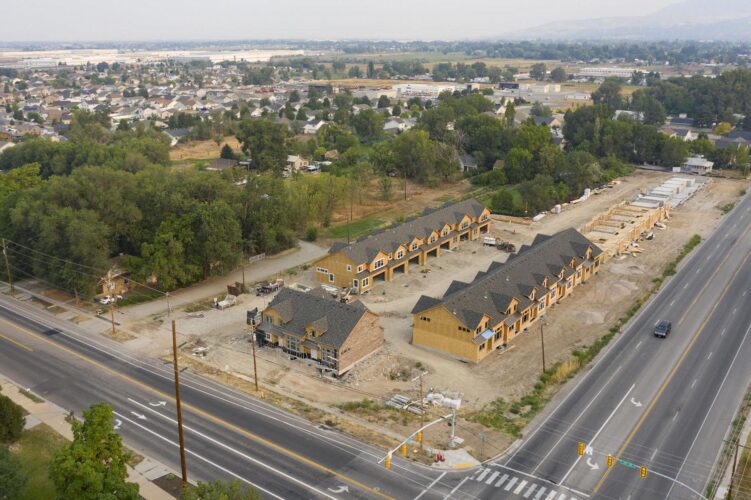
OGDEN — A controversial proposal to build more town homes west of an existing town home cluster taking shape off the northwest corner of Second Street and Wall Boulevard is headed to the dustbin.
Many residents in the old Bingham Fort area had opposed the plans, worried the additional development would tarnish what they say is the historic nature of the area, and one of their leaders reacted with joy after the Ogden City Council decision.
“We’re just so thankful that the neighbors, community and City Council are coming together to recognize the value of Second Street beyond multi-family development,” Tammy Creeger, who lives near the proposed development site and had lobbied against the plans, said Wednesday.
Developer Shawn Strong, who’s been trying to push the plans forward for around two years, said he plans to abandon the plans in the wake of Tuesday’s 5-2 vote against his efforts. “I’m walking away, so it’s pretty much dead,” he told the Standard-Examiner.
Strong is in the process of completing a 30-town home development on the corner of Second Street and Wall Boulevard. That work will continue and the new homes should be done by year’s end.
But he had been seeking a rezone of 3.8 acres of land immediately west of that, much of it vacant, so he could add 43 more town homes, also incorporating a historic home in the area into the proposal to make for 44 units in all. He first needed support from the City Council to change the city planning document governing the area to allow for the higher-density development he proposed, though, and officials turned back the request 5-2. Then they rejected the rezone request, also needed, in a 7-0 vote.
Councilperson Richard Hyer, who opposed Strong’s plans, expressed concern that allowing denser housing, the town homes, would change the character of the neighborhood. The sector is characterized largely by single-family homes, many dating to the arrival of the initial members of The Church of Jesus Christ of Latter-day Saints who settled the area starting in the mid- to late-1800s.
“I really believe continuing to increase the density in the area is detrimental to that quality of life. It doesn’t stabilize the neighborhood,” said Hyer.
Deanna Peterson, one of several speakers to address the City Council, expressed concern, like Creeger, that Strong’s development would change the nature of the area for the worse. Peterson lives in a home on property Strong had planned to incorporate into his development plans, but the woman revealed at Tuesday’s meeting that she longer favored selling the land to him.
Town homes, she said, are “a dime a dozen, but historical sites like this are not.”
City Councilperson Angela Choberka, by contrast, noted the need for more housing. She and Councilperson Marcia White voted against the motion to deny Strong’s request to change the city’s planning documents to allow for his proposal.
“I know that we’re under this serious crunch in finding just additional housing for anybody,” Choberka said.
Julie Van Orden, another resident of the area, expressed support for Strong’s plans, noting that not all corners of the neighborhood fall into the historic category. Some homes date to the 1800s, yes, but there are other more modern homes as well as businesses. “It’s a complete hodgepodge,” she said.
Likewise, Dustin Peterson, a real estate agent who’s been working with Strong, offered a more critical take of the neighborhood. “Something needs to happen with this area because it is blighted,” he said.
Strong said he had been under contract to acquire the land needed for his plans. But completion of the deals were contingent on getting the rezone he needed.
In the wake of the City Council action, he foresees little change to upgrade what he sees as the blighted quality of some of the housing stock in the area. “I envision those homes to be in the same state they are for the next 10 years,” he said.