Ground broken on Northrop Grumman’s Legacy Building to support Sentinel ICBM Program
-
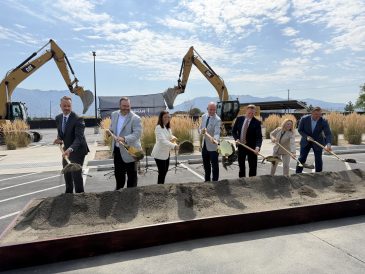
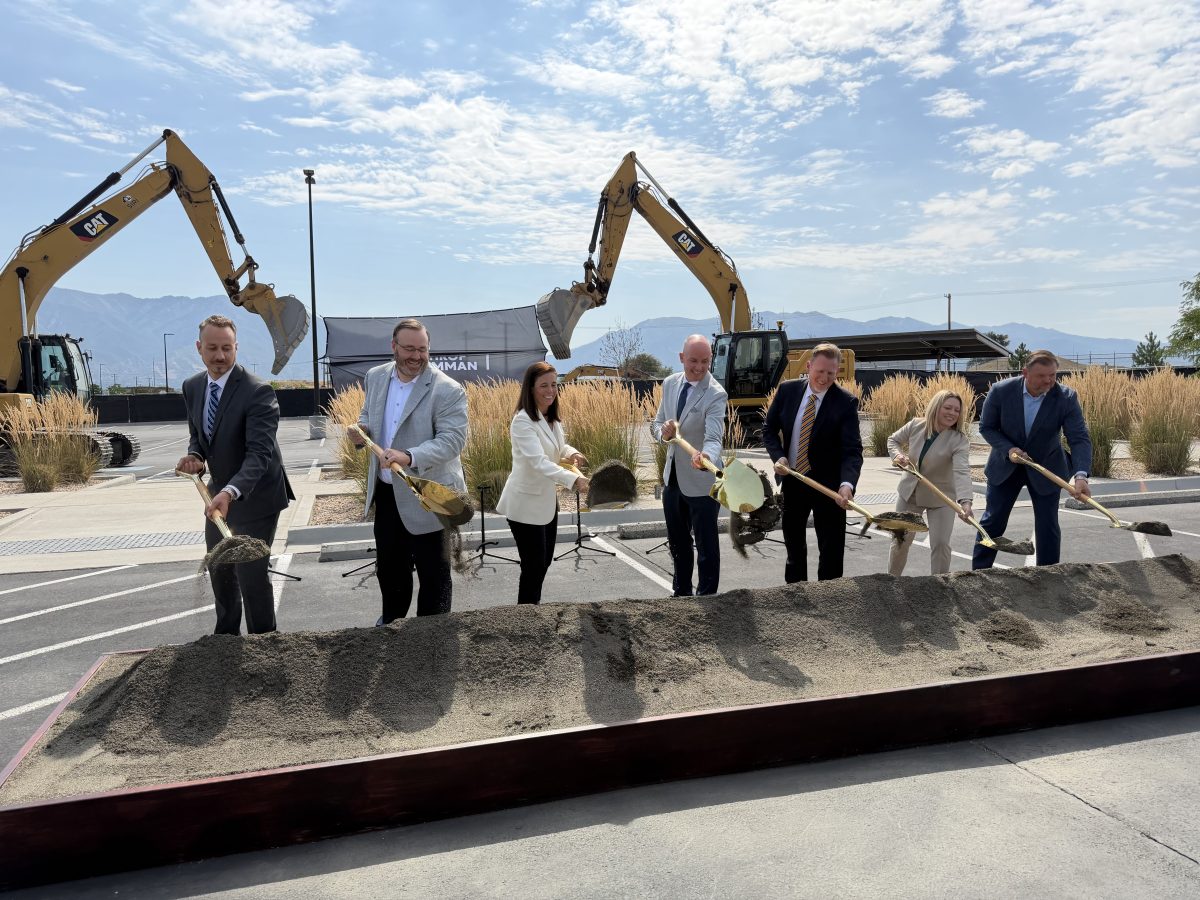
- Utah Gov. Spencer Cox and Northrop Grumman officials break ground on the Northrop Grumman Legacy Building at the Roy Innovation Center on Tuesday, July 14, 2026.
-
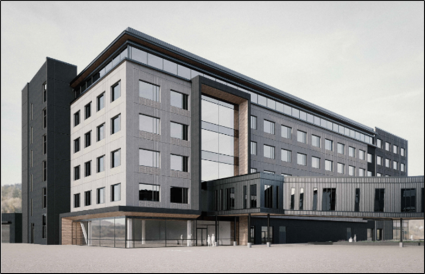
- The Northrop Grumman Legacy Building at Roy Innovation Center is set to be completed in 2028.
Rob Nielsen, Standard-Examiner
Utah Gov. Spencer Cox and Northrop Grumman officials break ground on the Northrop Grumman Legacy Building at the Roy Innovation Center on Tuesday, July 14, 2026.
ROY — The Roy Innovation Center is growing not only to give a boost to the local workforce but also to America’s national security.
On Tuesday, Gov. Spencer Cox and officials from Northrop Grumman participated in a groundbreaking ceremony for what will become the Northrop Grumman’s Legacy Building, meant to help facilitate the development and implementation of the Sentinel ICBM program.
Sarah Willoughby, vice president and general manager of Strategic Deterrent Systems at Northrop Grumman, opened the ceremony Tuesday morning.
“Today we are gathered to break ground on what will become the Legacy Building, the sixth major facility at the Roy Innovation Center Campus,” she said. “While this marks the beginning of a new building, it also represents something much bigger. It reflects our continued investment in our people, our partnerships, and the capabilities that are critical to defending our nation for generations to come.”
She explained that Sentinel is the next major ICBM system to come online for the United States.
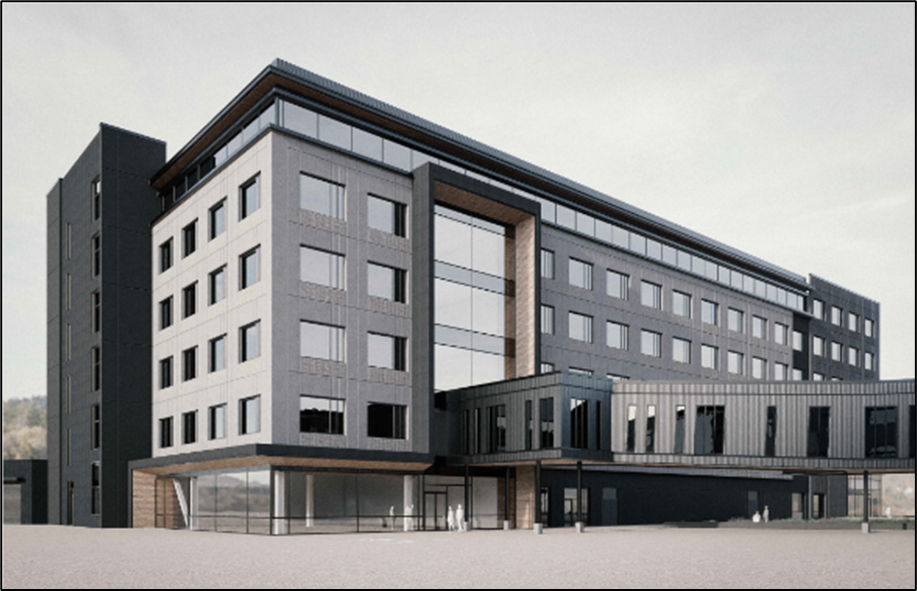
Image supplied, Northrop Grumman
The Northrop Grumman Legacy Building at Roy Innovation Center is set to be completed in 2028.
“Sentinel is critical modernization of the ground leg of the strategic nuclear triad, the bedrock of our national security,” she said. “Sentinel replaces every aspect of the Minuteman III intercontinental ballistic missile system, which has been in service for over 50 years. Alongside our expansion efforts, we are making substantial progress on the Sentinel development, testing, and production. From designing the system to rapid prototyping launch silos and ground testing, our solid rocket motors at promontory, we are rapidly moving towards the program’s flight test next year and enabling the Air Force to have Sentinel protecting our nation in the early 2030s. To support that momentum, the Roy Innovation Center is growing.”
According to the press, the Legacy Building will bring the number of Roy Innovation Center buildings to six with 1.1 million square feet of office space in total throughout the campus, supporting upwards of 5,200 employees.
“Construction of the new Legacy Building will begin this summer and will be completed by 2028,” the release said. “It will include 32 new unique containers for Sensitive Compartmented Information Facilities (SCIFs) as well as secure meeting spaces, high-end laboratories, large pedestrian plaza and extended skybridge walkway connecting to the main campus.”
Ben Davies, Corporate Vice President and President of Northrop Grumman Defense Systems, said Utah has done a lot to help carry Northrop Grumman’s mission forward.
“Northrop Grumman’s story in Utah is built on decades of innovation, partnership and a steadfast commitment to national security,” he said. “For over 20 years, I’ve witnessed firsthand how our teams here in Utah have powered missions that matter. From space exploration and strategic deterrence to air and missile defense, munitions, and the B-21 Raider.”
He said that the Legacy Building will only add to this.
“We are forging new chapters that build upon our longstanding foundation here in Utah,” he said. “When people hear the word legacy, they often think about history, about accomplishments from the past. And while Northrop Grumman has a remarkable history here in Utah and in strategic deterrence, legacy is about much more than what has already been done. Legacy is about people. It’s about the generations of employees who came before us and laid the foundation for the work we do here today. It’s about the teams who built the capabilities that have helped preserve peace through strength for decades. But legacy is not something we inherit and place on a shelf. Legacy is something we are entrusted to carry forward. Every employee who walks through our doors becomes part of that story. Every challenge solved, every innovation developed, every milestone achieved adds another page or another chapter, and that’s why this building matters.”
Utah Gov. Spencer Cox said that projects like this don’t happen overnight.
“This doesn’t happen without vision and insight from a whole bunch of people,” he said. “The local leaders from Roy, our Weber County officials, the legislature who realized that creating Falcon Hill a place just outside of Hill Air Force Base would help us to attract this type of talent, this type of investment into our state and help secure the future of Hill Air Force Base, maybe the most important economic engine in Utah — certainly in northern Utah.”
He said that the Legacy Building and defense-supporting installations like it ultimately help to do a major service for the world.
“The world is an ever-growing, more dangerous place,” he said. “And buildings like this make the world a safer place. They make America a safer place.”