Brian McKenzie hopes to continue improvements in Davis County clerk reelection bid
-
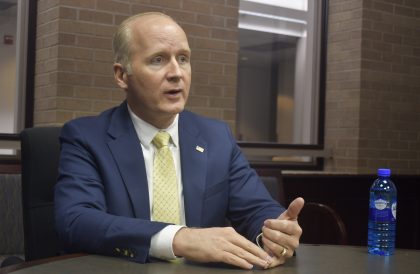
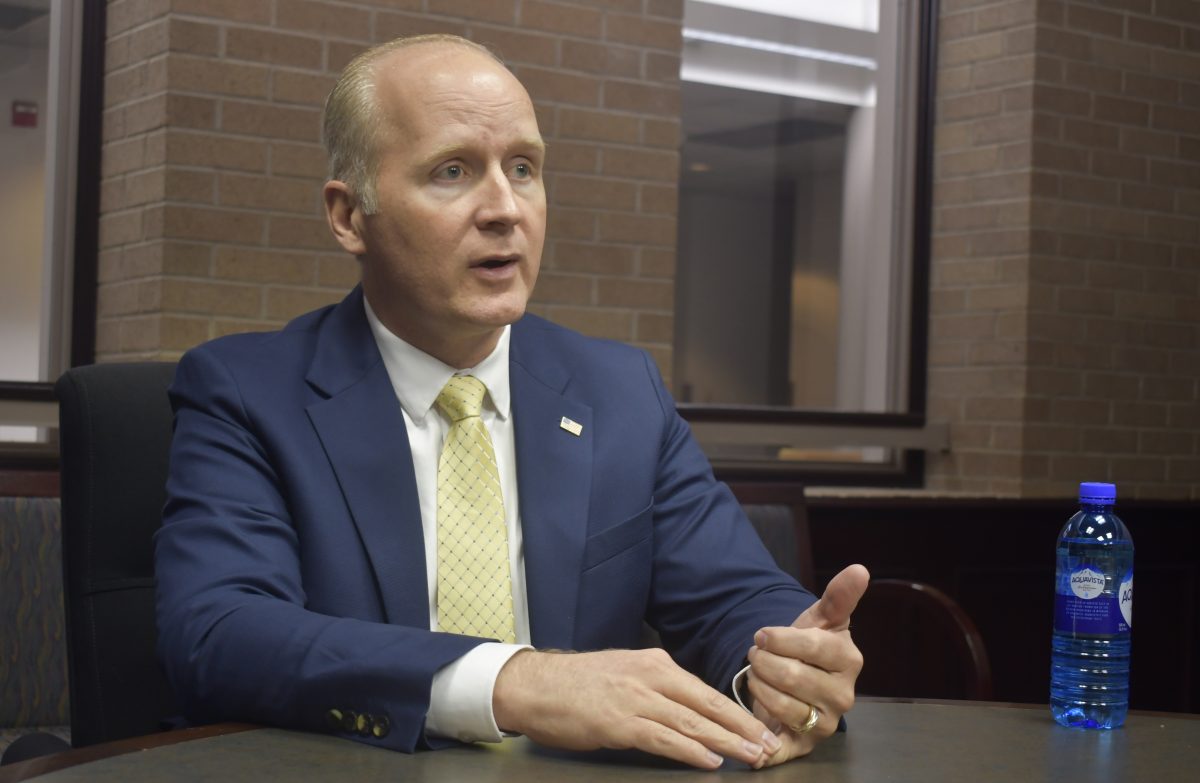
- Brian McKenzie, competing in the Republican primary for the Davis County clerk position in Utah, participates in a candidate interview at the Standard-Examiner office on Monday, April 27, 2026. (Jared Lloyd, Standard-Examiner)
-
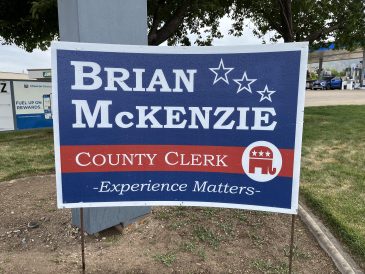
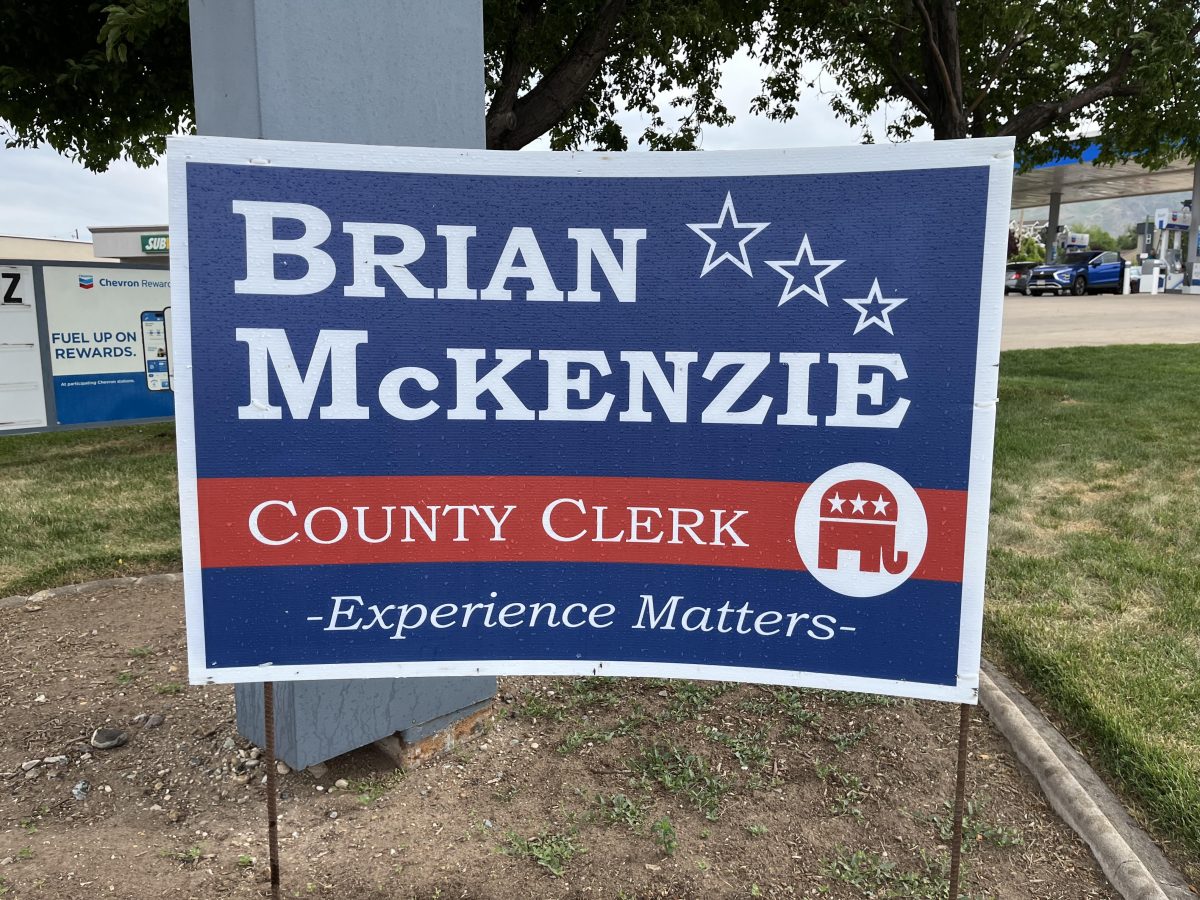
- A campaign sign for Brian McKenzie, competing in the Republican primary for the Davis County clerk position in Utah, on Wednesday, May 13, 2026. (Ryan Comer, Standard-Examiner)
Jared Lloyd, Standard-Examiner
Brian McKenzie, competing in the Republican primary for the Davis County clerk position in Utah, participates in a candidate interview at the Standard-Examiner office on Monday, April 27, 2026. (Jared Lloyd, Standard-Examiner)
The thing Brian McKenzie enjoys the most about being the Davis County clerk is election day.
“I love election day,” he said. “The way that my brain works is I love to see the big picture and bring it all together, and election day is months in the making of planning and logistics and putting all of the pieces together, and then it all comes together on that one single day.
“And when you have a successful election day – and successful for election officers is that the numbers all balance out. And we don’t care who the winners are, but when you have an election day all come together, it’s just a beautiful thing. And that sounds kind of weird. I know that. But that’s what I love the most.”
McKenzie is currently involved in his own election race. He’s being challenged in the Republican primary.
He’s running for reelection for the same reason he ran the first time in 2022.
Ryan Comer, Standard-Examiner
A campaign sign for Brian McKenzie, competing in the Republican primary for the Davis County clerk position in Utah, on Wednesday, May 13, 2026. (Ryan Comer, Standard-Examiner)
“Number one, I love my job,” he said. “It’s an exciting field and it’s exciting to be involved in the work. That’s a fun part of it. But, also, it’s a fun process to be involved, recognizing that it matters and it means something important to our community and to just kind of the general form of government and democracy.
“I’ve always had an interest in democracy and patriotism and those kind of things, so there’s some personal feelings and motivations that help me find my job rewarding.”
Election security
McKenzie said there are a number of things his staff has done to help with election security. He said election security has always been a big issue for those in the election field.
“Everything that we do, whether it’s regular testing of our equipment, the chain of custody, physical security, learning things of my own,” he said. “I’m a certified technician on our voting system, so I have a better in-depth knowledge and understanding of the equipment to make sure that if something’s not working right, we can identify that quickly.”
One specific area of focus, McKenzie said, addressed perceptions.
“One of the things that we implemented was bringing citizens in to conduct our post-election audits,” he said. “We have citizen auditors participating with us. Additionally, bringing in another elected official. We have a member of our board of County Commission or our board of canvass comes in and participates with those post-election audits as well.”
Accomplishments and transparency
Heading into the 2026 election, McKenzie hopes that people will look at what he has done.
“I recognize that oftentimes people will look and say, ‘Well, it’s time to get fresh eyes, fresh blood, new perspectives, new ideas,'” he said. “I’ve always taken an approach the status quo is never good enough. But I also don’t think that we need to go in and change everything. What we should do is we should continually evaluate our processes and find ways to improve them. And they’re small incremental changes.
“I’ve shown that in a record of what I do, whether it’s in the world of transparency as we’ve worked to put our public meeting agendas and contracts out on the web in a searchable format, improving and enhancing people’s access to records or on the election front. We talked about our citizen auditors that we brought in. We’ve also taken our historical election records, posted those out there back to the 1860s, I think we’re back to now. And not just stopped there, but then said, ‘OK, how can we make this information more meaningful?’ If you look at our election reports from just this last year, we didn’t just put the reports out there, but we compiled it in into a report with descriptions of what those reports contain. So if people really want more information, they can better understand it.”
Elaborating on items being available in searchable format, McKenzie said:
“So … one of the issues that comes up in Davis County is our animal care building. If you want to go and find all of the minutes related to animal care, you can just go in and type in animal care. It’ll bring up every contract, every agenda, every copy of the minutes. So you can search it and make it useful.”
He said transparency has gone beyond the County Commission to include the planning commission, the audit committee and the library board.
He said he’s currently working on getting the budget committee records out there and that there is also an election calendar that tells people when they’re doing their audits and when they’re doing their pre-election tests.
“We put it out on our social media pages,” he said. “We also implemented election town halls and tours prior to every election to invite people to come in. That’s an important part of transparency.”
Experience
McKenzie highlighted the importance of experience, saying the clerk’s office isn’t just a public figure office. He called the clerk “a professional working elected official.”
He noted that though he’s finishing his first term as clerk, he’s been in the office for 22 years.
“And if we were sitting down in an interview and you had a job description of what the clerk does, you’d want to be looking at what are the qualifications for a clerk?” he said. “It’s not just great ideas; it’s practical knowledge. In every position, there’s really three things that you should be focusing on: the types of training that the individual has, the knowledge that they’ve gained and the skills that they have. That is the key difference between myself and my opponent. Now, that is unique to my career that I’ve had in the clerk’s office, but because I have those things, I can take them and apply them into the job. I can see how an issue over here connects to an issue over there and prepare for that and plan for that.”
Criticisms of 2024
One criticism McKenzie spoke about that he acknowledged “is fair” but also involves “a lot of misinformation” is related to what happened in 2024.
Below is his explanation of it from his perspective.
“We renewed our contract, our agreement with the state. … SB54 back in 2012 was passed. Candidates could now gather signatures to get on to the ballot. Back at that time, I was the election manager. Went to my clerk auditor at the time and I said, ‘Hey, look, the state has this new law. The lieutenant governor’s office is talking about finding some sort of a temporary place to do all of these signatures. They’re going to have to have a temporary recruiting agency to bring people in and bring in all this stuff. What if we offer to do this for them?’ … So about 12 years we’ve been working with the state on this.
“Fast forward 2024 in preparation for that election cycle. It was time for us to renew our contract. We took it through 2023. It was approved by the Davis County Commission, sent it off to the state, and then we never received a signed copy back from them. We continued to work through email communication back and forth between my office and the lieutenant governor’s office. We were moving forward, but January, February, March, we start processing those petitions and then we realize, ‘Oh, we never got a signed copy back from the state.’ We didn’t. It was an oversight. It’s a fair criticism. We should have had it. We should have made sure it was there. But that wasn’t, so that’s a criticism that we’re facing.
“And then the laws and the rules that were in place there when a candidate met the threshold. We were required to stop verifying signatures. So moved through 2024, Phil Lyman’s campaign starts raising all of these concerns, filing records requests. The statute didn’t allow them to have access to those requests. Continued to have complaints or concerns raised there. We were contacted and they said, ‘Hey, we’re thinking of doing a legislative audit on this process.’ I said, ‘Absolutely. Sure, come in. We’re happy to help facilitate that.’ So that audit takes place. Two additional audits take place, one by auditor (John) Dougall, one by Auditor (Tina) Cannon later on. I think Auditor Cannon was actually in 2025.
“All three of those audits came out with a very high percentage of accuracy, anywhere from 95 point some odd percent to 98 point some odd percent. Very good numbers. But it is less than perfect, right? Was the nature of the environment that we found ourselves in. So that’s a criticism that’s really hard, because people are taking that and then saying, ‘Davis County verified x number of fraudulent signatures,’ which is not true. What it is is they’ve identified that there is a subjective nature to signature verification, which we always knew that there was, but they identified some error rates in that. And what we did is we took all of those audit reports, all of those recommendations, we’ve implemented all of those recommendations into the processes that we’ve done.
“So that’s hard because people have taken those things. There’s an individual who’s done, I think, a 16-part series on YouTube about the Spencer Cox signature cover-up and the conspirators in this fraud ring. As a result of it, there was a petition that was started to censure me with the Legislature. There was a lawsuit filed, a RICO case that was filed, Everything that, unfortunately, my opponent has been putting out there has been geared towards these things, this issue.
“But … that’s been probably the most challenging and unfair thing because within that, they’ve made claims that are false. Known fraudulent signatures were identified and turned over to the proper authority. That’s what actually happened. All staff did receive the training that was required at the time, contrary to what they’ve shared out there. There was no organized or concerted effort to cover up anything. In fact, we have been nothing but open and transparent with all three audits that were conducted. Fact is, all three audits confirmed that the process worked. We found some weaknesses that we need to improve, and we’re all on board with that. But those are the facts of what came out of that process. Unfortunately, that’s not what’s being shared. That’s challenging.”
Closing statement
In delivering his closing statement, McKenzie said he hopes people will understand “the critical role” that the county clerk has.
“(The) county clerk is responsible for administering our elections, making sure that they’re accessible and secure,” he said. “The county clerk’s responsible for records management, making sure that not just the records of the clerks are taken care of appropriately, but help facilitating that for all of the county offices. We serve as, in many ways, a protector of the integrity of the elections, of the records. This is not just a figurehead. The county clerk is a very direct and very specific professional elected official that has statutory duties and responsibilities.
“I share with everybody how important experience is. Experience is important in every position, and it’s no different than in the county clerk’s office. I hope that people will be able to look at that experience and see how I’ve been able to use that experience over my career to continue to improve the office. That’s what I continue to plan on doing.”
For more on McKenzie and his campaign, visit https://www.votebrianmckenzie.com/
Contact Standard-Examiner editor Ryan Comer at rcomer@standard.net.