Christina ‘CJ’ Hernandez prioritizes people over party in Senate District 5 bid
-
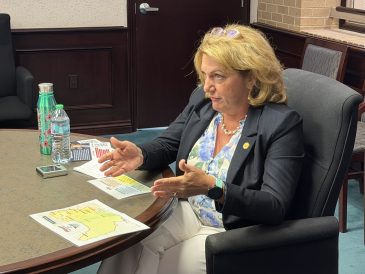
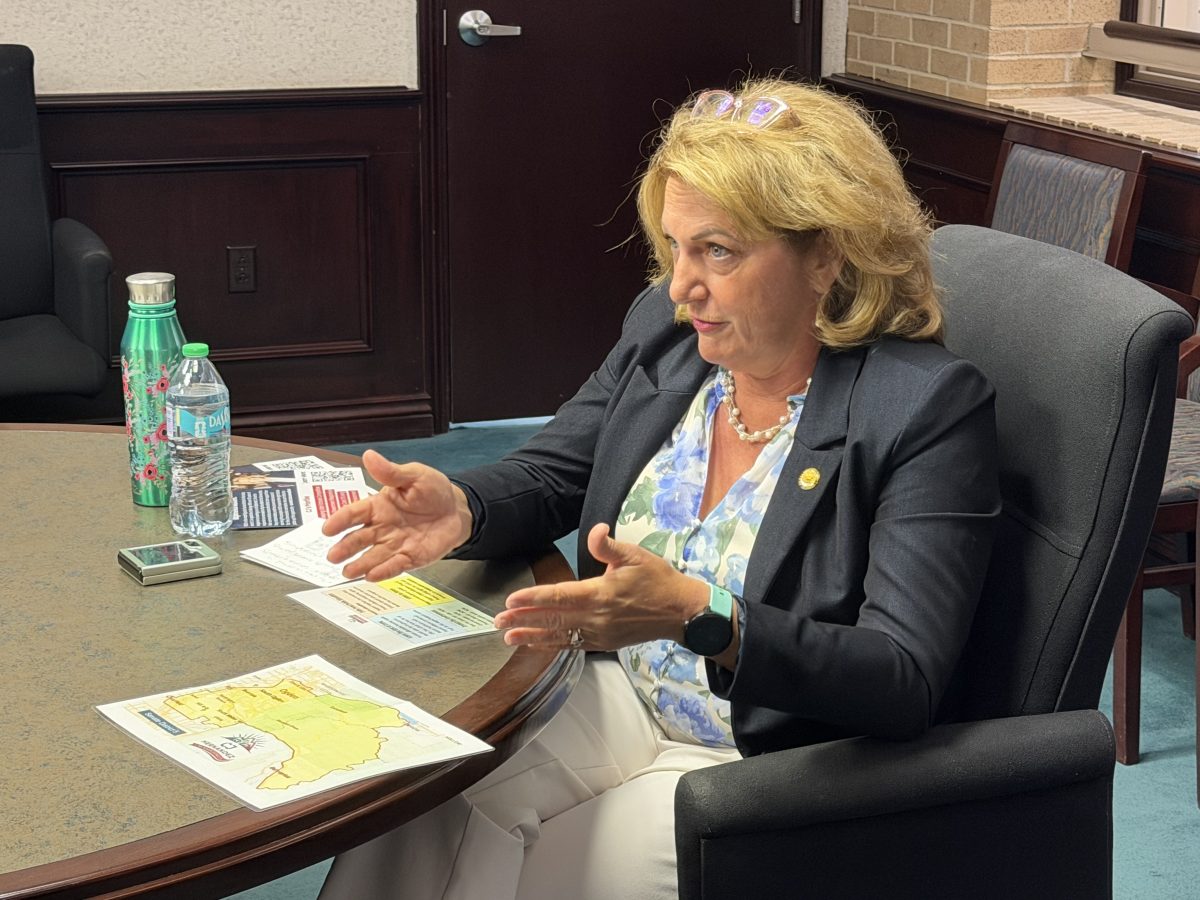
- Christina “CJ” Hernandez, competing in the Democratic primary for the Senate District 5 seat in Utah, participates in a candidate interview at the Standard-Examiner office on Monday, May 11, 2026. (Rob Nielsen, Standard-Examiner)
-

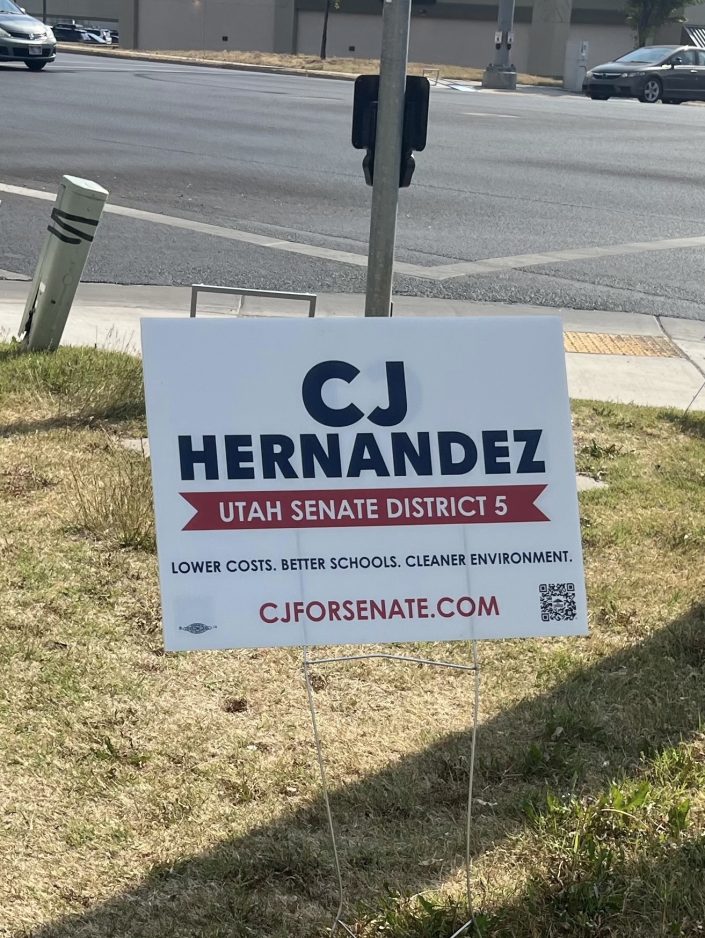
- A campaign sign for Christina “CJ” Hernandez, competing in the Democratic primary for the Senate District 5 seat in Utah, on Monday, May 25, 2026. (Grace Watters, Standard-Examiner)
Rob Nielsen, Standard-Examiner
Christina "CJ" Hernandez, competing in the Democratic primary for the Senate District 5 seat in Utah, participates in a candidate interview at the Standard-Examiner office on Monday, May 11, 2026. (Rob Nielsen, Standard-Examiner)
Christina “CJ” Hernandez is running in the Democratic primary for Utah’s Senate District 5 seat, but when talking about her ideas, the tone she strikes is moderate.
“I’m not here to represent a party; I’m here to represent people – and on the things that matter most, which is affordable housing, clean air, saving the Great Salt Lake and making sure that their voice is heard,” she said.
For Hernandez, the team dynamic just doesn’t resonate.
“I think people are tired of the visceral backbiting and the picking teams, the red and blue, and, you know, elephants and donkeys,” she said. “We’re not in sports here. We’re dealing with policy that affects people’s lives from even before they’re born, until, you know, they die. And that’s what matters.”
Experience
Grace Watters, Standard-Examiner
A campaign sign for Christina "CJ" Hernandez, competing in the Democratic primary for the Senate District 5 seat in Utah, on Monday, May 25, 2026. (Grace Watters, Standard-Examiner)
Hernandez said she was born at McKay-Dee Hospital and grew up in the area. She went to Central Middle School and Weber State University.
She worked at Hill Air Force Base through a scholarship program for 10 years and said she “brought in workload to” the base “through public-private partnership agreements.”
She said she also “helped to build like a higher education partnership program to help train youngsters that want to work on base at the technical colleges to get them right in the door with the training that they needed, and also to upscale” the civil service workforce there.
She then joined the foreign service and became a diplomat for 20 years, where she “worked with Americans overseas who needed to escape danger or were imprisoned.”
She said she did over 40,000 visa interviews.
“And with that, you have to be prepared, you know, to make national security decisions in a two-minute interview,” she said. “You know, is this person going to, you know, cause harm to my country? Is the story true? You know, with all the training that we get, and the security levels of intel that we manage, we’re able to make those decisions.”
She said she also did human rights reporting and was an election observer in Hungary when Viktor Orbán was elected for the first time. Additionally, she said she served in Mexico when the country was reforming its justice system.
“I did a lot of contracting work on that, to help judges understand how to transform their courtrooms and also provide them with the security and tools they needed to do that reform,” she said.
She said she was in Los Angeles where she and her team “were responsible for about 105 different nations that are posted to our country as diplomats,” training them on the country’s rules.
She said after that, she returned home and worked for Ogden City as the diversity affairs coordinator.
“And we tried to connect community resources with people and highlight the differences and the beautiful palette of diversity that we have in the city,” she said.
Her reason for running is that she thinks she has a lot to offer and that she’s learned to negotiate and collaborate.
Hernandez’s platform
To succinctly compress the issues, Hernandez said:
“So, you know, if you’re talking about platforms, I would say, if we don’t have air to breathe, yes, that’s a number one priority,” she said. “And number two, if we can’t afford to live, then that’s a huge priority as well. And then number three, if we don’t have a future through education, then we’re stuck, too.”
Great Salt Lake
Hernandez called the Great Salt Lake one of the top three priorities of her platform, if not the top.
“If we are breathing toxic dust, all the rest doesn’t matter too much,” she said.
She said she’s excited to work more with the Utah Rivers Council and Stewardship Utah on ways to fill up the lake without simply hoping it rains.
“We’ve been diverting water from the lake since the pioneers crossed the mountains,” she said. “And so we need to reassess where is that going? I understand we’re in drought. I understand that we had the lowest snowpack … this last year. But there are many other things that we can do not only to encourage more water flow but also to put a little bit more teeth in it so that we can secure the future of those who live here and our children that hope to stay here.”
Hernandez said she’s not an environmental expert, but what she does really well is collaborate and bring people together.
“They call it using your good offices, where you invite people in and you have these discussions with experts and you take probably more stringent approaches because we need to get there sooner than we think,” she said.
Affordability
Hernandez said affordability – related to housing, groceries, childcare and healthcare – is also a priority.
“There’s people out there really struggling,” she said. “I have a blended family of five children … and I see their struggle every day. Their ability to live the American dream just keeps getting further and further away. Meanwhile, they’re out on the healthcare marketplace, just to get enough insurance because employers aren’t offering what they used to, you know, in the olden days.”
On the topic of affordable housing, Hernandez said programs require “out-of-the-box” thinking.
She wondered about doing equity shares and how to earn equity while renting.
“How do we work with banks to help prepare buyers to get into the market?” she said. “How do we work with unions and employers to pay people more money?
“You know, our governor every year comes out and does a great report on Utah has the best economy in the nation. We have a young, educated workforce, but we also have very low wages. And so when you’re courting these businesses to come to Utah, in a sense, it’s kind of … domestic offshoring. It’s as if you were going to, you know, another country for lower wages. And we’re still one of the few states in the region that still uses the federal minimum wage, $7.25. And people say, ‘Well, folks don’t work for that,’ right? But it is an economic indicator that businesses can tie their business plans to.”
She said Utah is very pro-business, which is great because it brings investment, but it needs to be pro-worker as well.
Education
Hernandez called public education “a high priority” of hers.
“I was raised by a public school teacher,” she said. “I’m a public school educated person, and I think the ability for every child to get ahead in the future is an investment. It’s not an expense. And I think we’re treating it very lightly. I would like to revisit some of the voucher programs, because that is a diversion of taxpayer money into private schools, and that I have a big concern about.”
She said it’s disconcerting to see taxpayer dollars that are supposed to go for public goods being funneled into private education, which she said has much less oversight and accountability.
“I’m not against private education at all, and I’m not against homeschooling,” she said. “I think people should have those options. But again, public money should be for public schools, period.”
Hernandez said teachers need to be supported and lamented that they have to put together Amazon lists for parents and others in the community to help them.
“This is completely a government responsibility,” she said. “They’re charged with it, and whether they need to look at efficiencies or, you know, redirection, that’s fine. But having teachers basically pandering for supplies for their second-grade classroom is not a first-world idea.”
Listening to voters
Hernandez said a “fourth pillar” of her campaign was listening to voters.
She said, “number one, stop the overreach and power grabs that’s happening in our state, support citizen initiatives, protect our voting rights and demand an independent judiciary.”
She said those are “key points that we need to keep a functioning state government.”
Closing statement
For her closing statement, Hernandez said she’s running to tackle what matters, including affordable housing, strong public education, clean air and economic opportunity for everyone.
“And I believe my story of struggle, service and results connects across the district,” she said. “I also have that intergenerational experience of raising children, you know, being in the middle of my life and also supporting my aging mother. So I think there’s a lot to talk about, and I have a lot of personal experience to share and also receive that information from voters. I have been around the world and I see how things can be done differently. Those are examples and connections I think that many in this race and other races just don’t have. I’ve served side by side with veterans. In fact, I received their endorsement, the Democratic Veterans Caucus endorsement, because every step of my story has been side by side with the military. Diplomats and generals aren’t that different.”
For more on Hernandez and her campaign, visit https://www.cjforsenate.com/.
Contact Standard-Examiner editor Ryan Comer at rcomer@standard.net.
Local News

Antelope Island State Park celebrates expanded visitor center
Utah House speaker ‘extremely disappointed’ in how JCC handled Hagen investigation