Ranchers key to sage-grouse survival in northern Utah
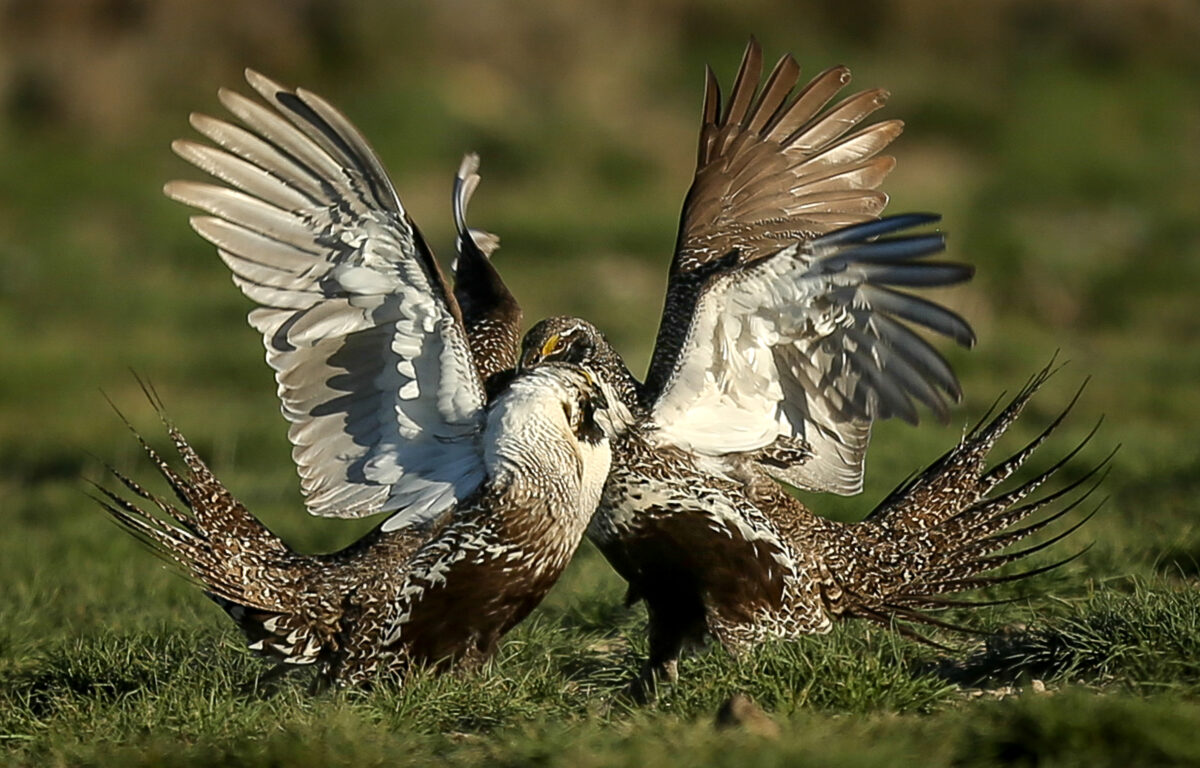
Two male sage-grouse fight for dominance in western Box Elder County on Thursday, April 7, 2016. Male sage-grouse gather in a specific location, called a lek, every morning to display and look for a mate. The lek near Park Valley has more birds than nearly anywhere else in Utah.
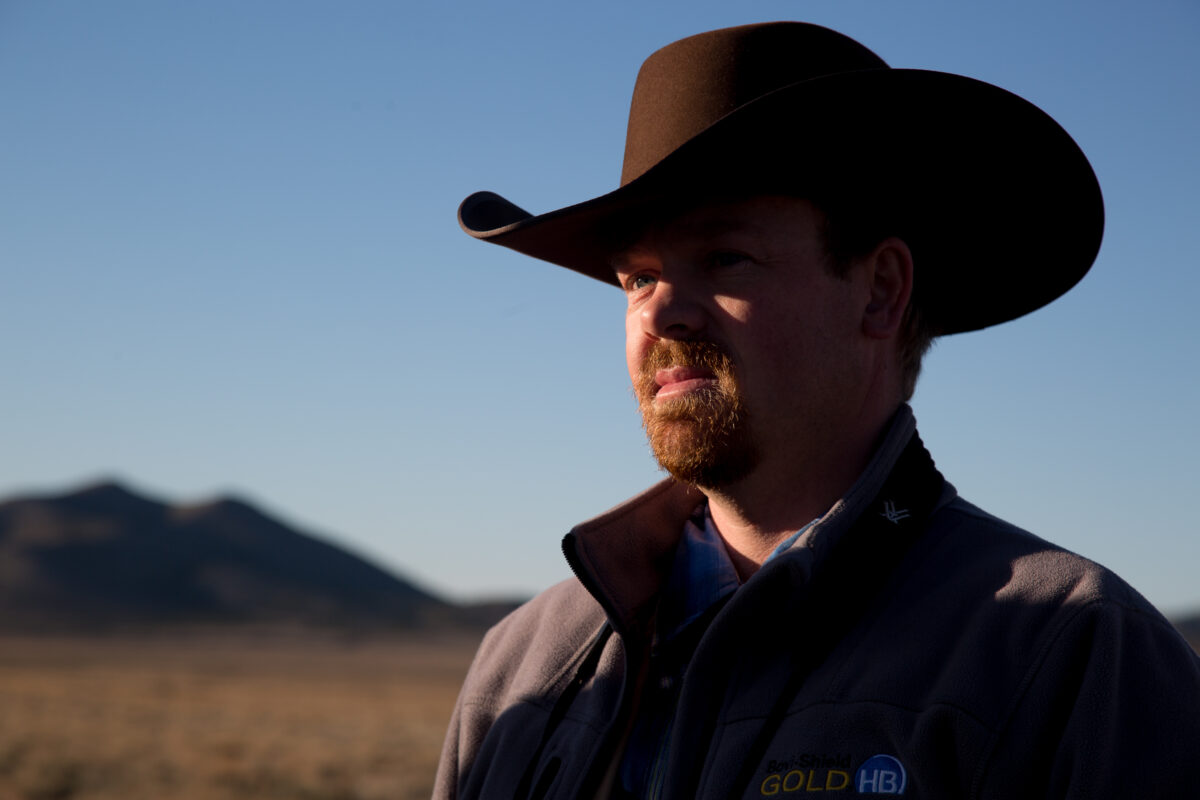
Clint Hill, a conservation planner with the Utah Department of Agriculture and Food, discusses work to balance sage-grouse habitat and private grazing in Northern Utah. Hill says that quality sage-grouse habitat and sustainable rangeland often have the same requirements.
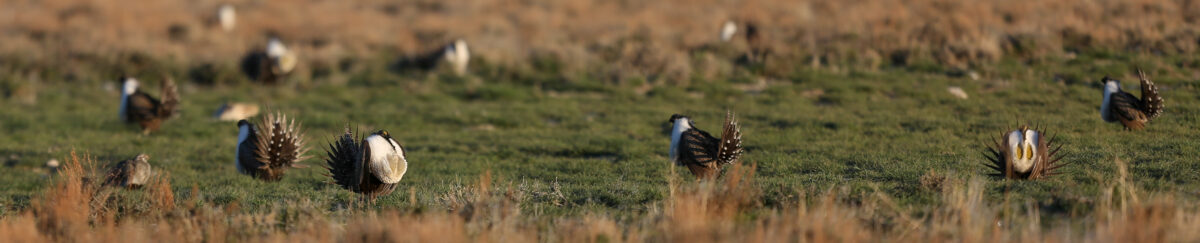
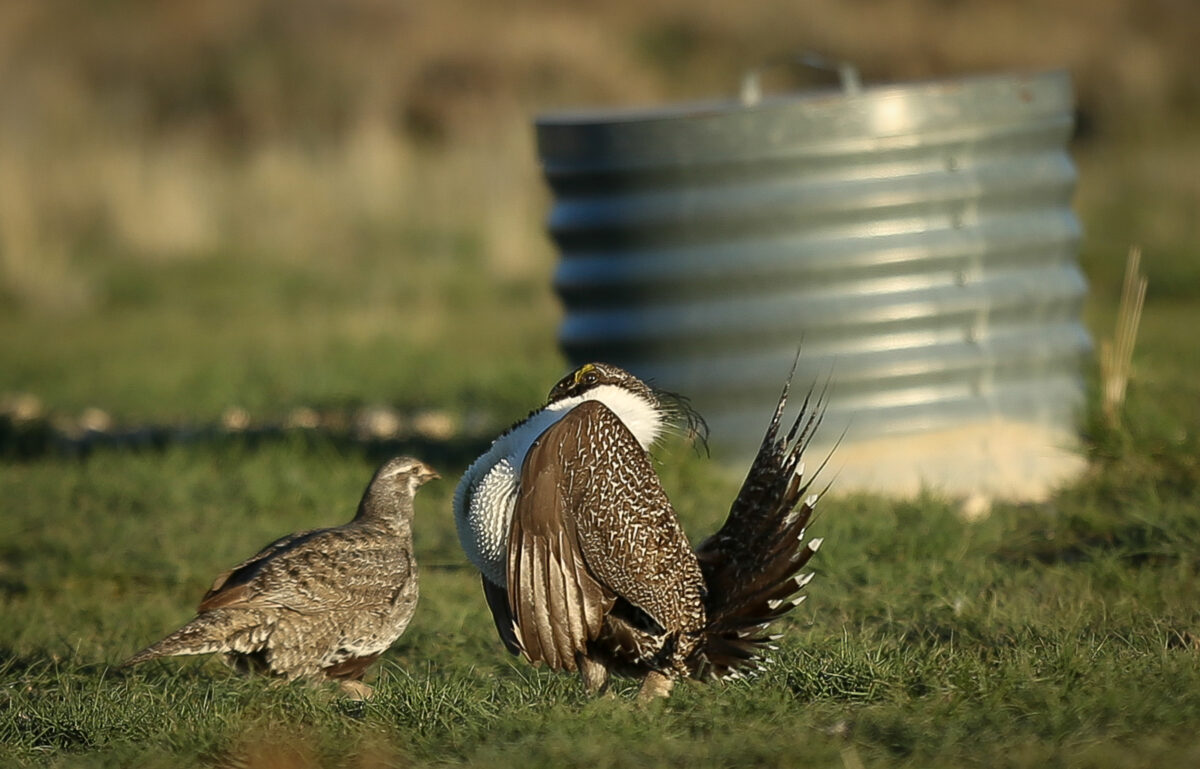
Male sage-grouse do mating displays as the sun rises in western Box Elder County on Thursday, April 7, 2016. The grouse gather and display in open areas, like this grassy patch around a creek and cattle watering area.
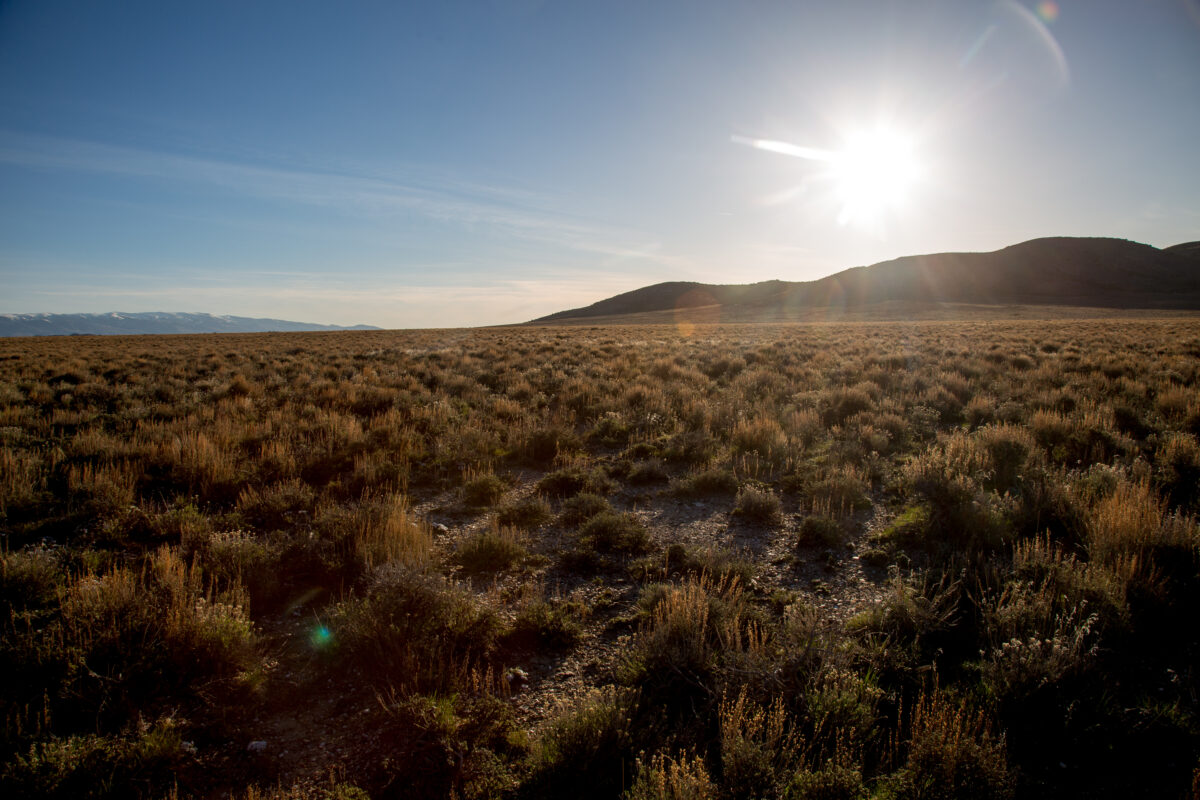
Sage brush fill Dry Basin in western Box Elder County. The largest threat to the sage-grouse is the breaking-up or destruction of sage brush ecosystems.
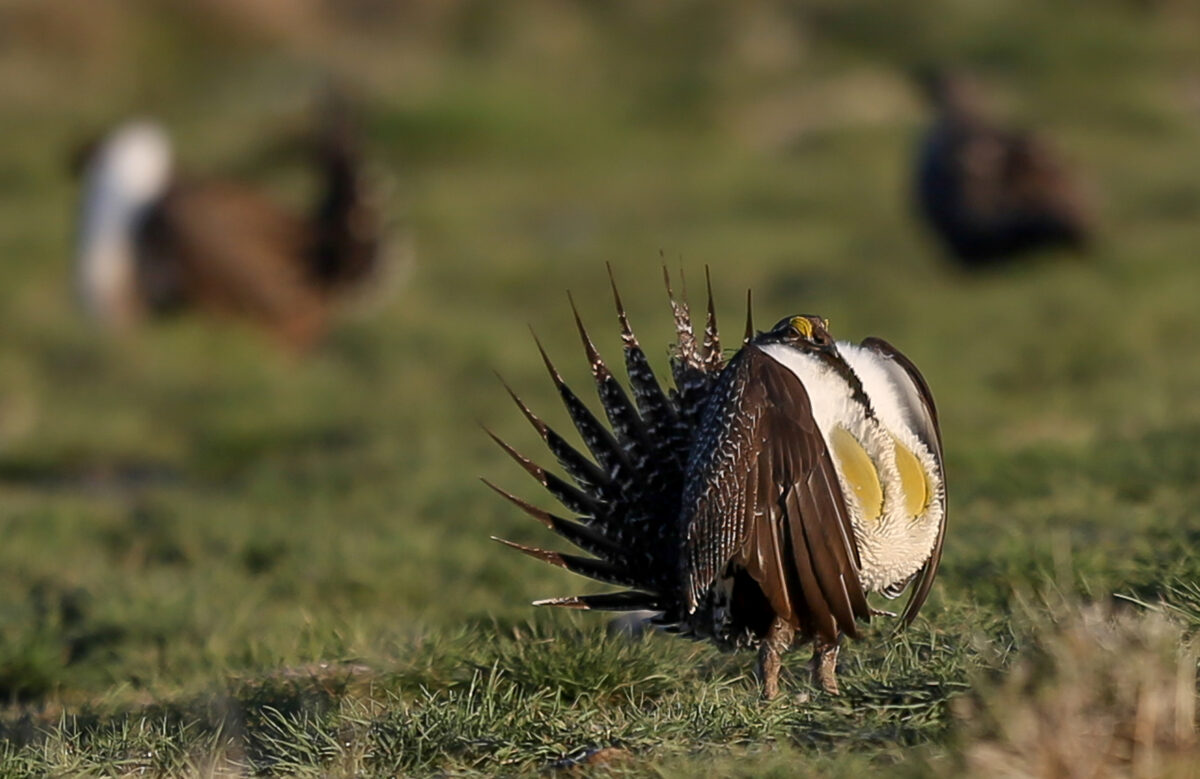
Male sage-grouse do mating displays as the sun rises in western Box Elder County on Thursday, April 7, 2016. Male sage-grouse inflate large yellow air-sacks on their chest and laps them to create a bubbling call that can be heard for miles.
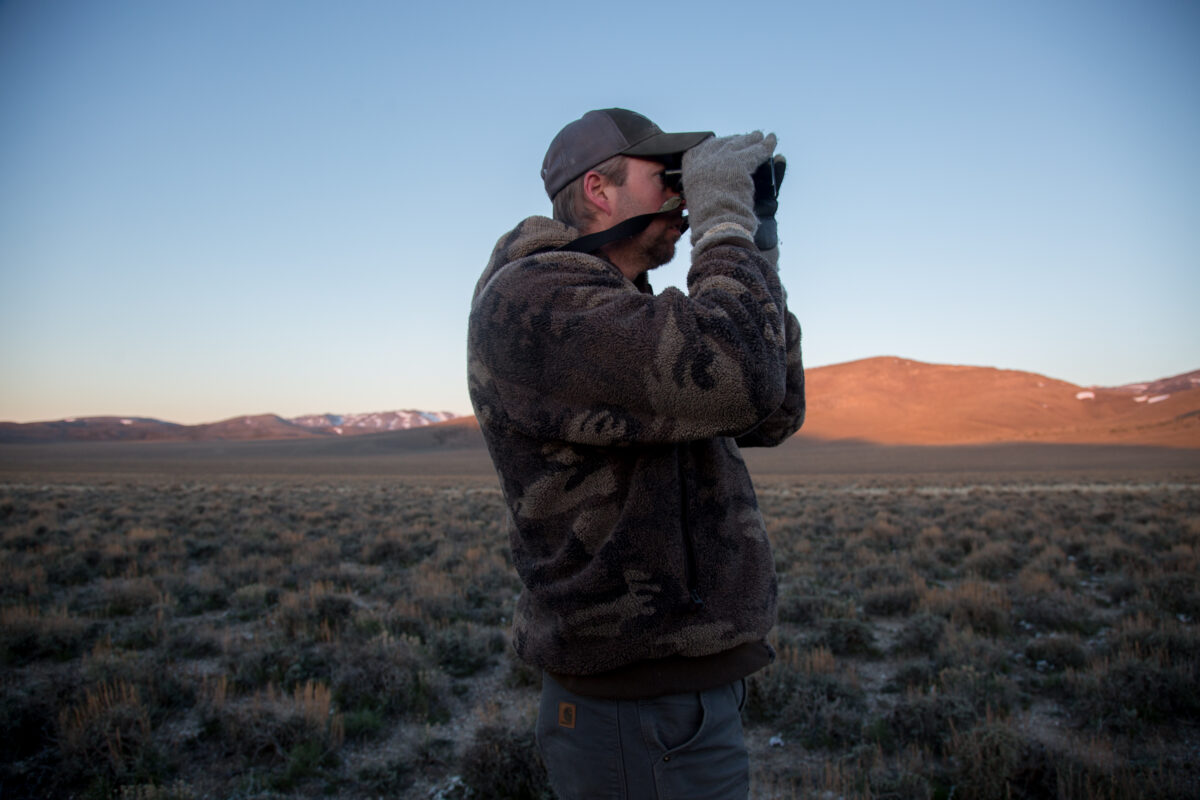
Justin Small counts sage-grouse in Dry Basin in western Box Elder County on Thursday, April 7, 2016. Small and other biologists counted 157 sage-grouse at the lek, or mating grounds, and estimate that around 150 additional female birds were hidden in the brush.
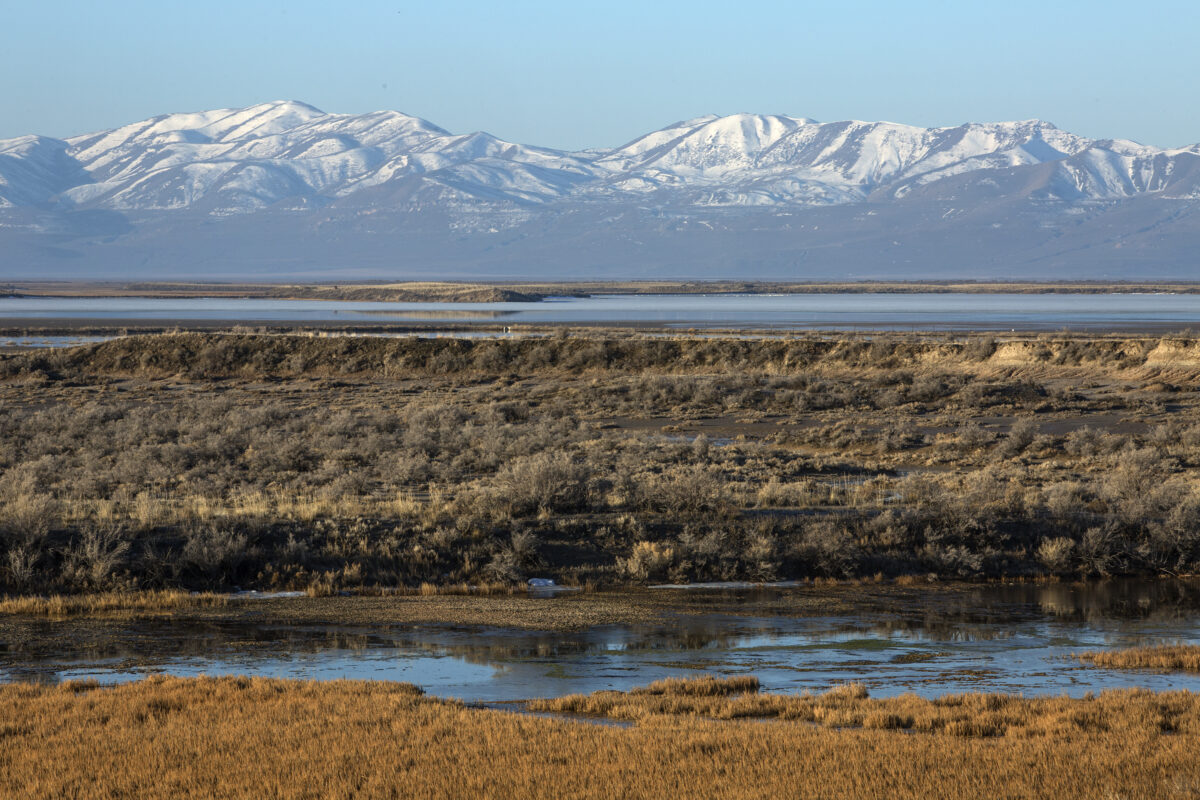
Cattle ranching once devastated the great sagebrush ecosystems of northwest Utah, but now it might be the only thing the can save them.
Early spring is the lekking season, when males seek female attention through elaborate rituals. Dawn is the lekking hour, when the land-dwelling birds avoid predation by owls at night and eagles by day.
Beyond being eaten, a lot of odds seem stacked against sage-grouse, which have become the charismatic symbol of a distressed landscape. But in this dry valley in western Box Elder County, the biologists count over 150 males. There are probably just as many females, but their muddled brown camouflage makes them hard to see.
“This is one of the biggest (leks) in the state,” said Adam Brewerton, with the Utah Division of Wildlife Resources. “Depending on the time of year, it’s the biggest one in the northern region.”
CHECKERBOARD OF LAND OWNERSHIP
Female sage-grouse will nest up to three miles from the lekking grounds, strewn across the cattle watering hole, and up a nearby hillside; No one’s quite sure if the birds are strutting across public or private land.
In western Box Elder County, the land is largely divvied up into a checkerboard of parcels either managed by the Bureau of Land Management, owned by the state of Utah or privately held.
“There aren’t fence lines between all those checkerboards, either,” Brewerton said. “You’ll have a single pasture or allotment that has private ground and BLM ground in it. So it’s a lot of coordinating between federal land managers and private land managers.”
Those parties are coordinating because the greater sage-grouse barely missed a designation on a federal endangered species list. Restrictions imposed by such a designation would’ve devastated industries such as mining, ranching and fossil fuel exploration.
READ MORE:
• Utah politicos, conservationists react to sage grouse decision
• Environmentalists sue for more rules to protect sage grouse
• Utah suing federal government over rules meant to protect the sage grouse
BENJAMIN ZACK/Standard-Examiner
A male sage-grouse, right, tries to impress a hen by puffing up his chest and fanning his tail in western Box Elder County on Thursday, April 7, 2016.
Those same industries were also largely responsible for wrecking the grouse’s habitat in the first place. Over-grazing and human meddling introduced invasive cheat grass, which grows densely, dries out early and creates an immense fire risk throughout the Great Basin and 165 million acres worth of sagebrush ecosystem strewn across 11 states. Climate change and warmer temperatures mean juniper forests are starting to encroach on the range, which also fragment sagebrush habitat and pose their own fire danger.
In an era of the Bundy family-style protest and a resurgence of the Sagebrush Rebellion, the sage grouse might seem like an enemy to an industry like ranching. But in addition to partnerships between ranchers and public land managers being the birds’ best chance for survival in Intermountain portion of the West, the management of the birds’ habitat is the key is keeping ranching alive.
’GOOD FOR THE BIRD, GOOD FOR THE HERD'

Male sage-grouse do mating displays as the sun rises in western Box Elder County on Thursday, April 7, 2016. The grouse gather and display in open areas, like this grassy patch around a creek and cattle watering area. (BENJAMIN ZACK/Standard-Examiner)
In 2003, the Utah Department of Agriculture and Food and the Utah State University Extension reached out to the landowners, state agencies and federal managers working on the Box Elder range to make a big plan for the area.
That medley of land-owners, called a “coordinated resources management group,” developed a series of incentive-based solutions for livestock managers to help protect the ecosystem.
Government agencies kicked in funds for ranchers to reseed land with native grasses and pull up the juniper trees. They encouraged ranchers to graze cattle on cheat grass early to lower fire danger. They also devised plans to rotate cattle across public and private ranges to give the lands and plants a chance to recover.
Jay Tanner is a fifth-generation rancher at Della Ranches near Grouse Creek. He runs cattle on 17,000 acres of private land and 175,000 acres of public land, mostly managed by BLM. He said a lot of the solutions the group devised to protect the sage-grouse made sense from a business standpoint, too.
“The mantra is, ‘what’s good for the bird is good for the herd,'” he said. “Sage grouse need, pretty much, what my cattle need.”
No doubt, ranchers face a lot of pressure. Tanner listed drought and competing in a global economy as a couple examples. The fear of more government regulation also looms large.
“One of the challenges that we didn’t have a generation ago is endangered species listings, and the sage-grouse would be a prime example of that,” he said. “The federal government could come in and regulate both private and public lands, which would have a significant impact on our ability to ranch.”
Tanner said he appreciated the incentive-based approach instead of the “heavy regulatory hand.” He used funds to remove a lot of juniper from his land.
“It’s had a significant impact, both for the wildlife, but it’s also helped my grazing operation significantly,” he said. “There’s no way I could’ve afforded to do it privately, so it was a benefit for me to work with state to get it done.”
CHECKERBOARD MANAGEMENT
BENJAMIN ZACK/Standard-Examiner
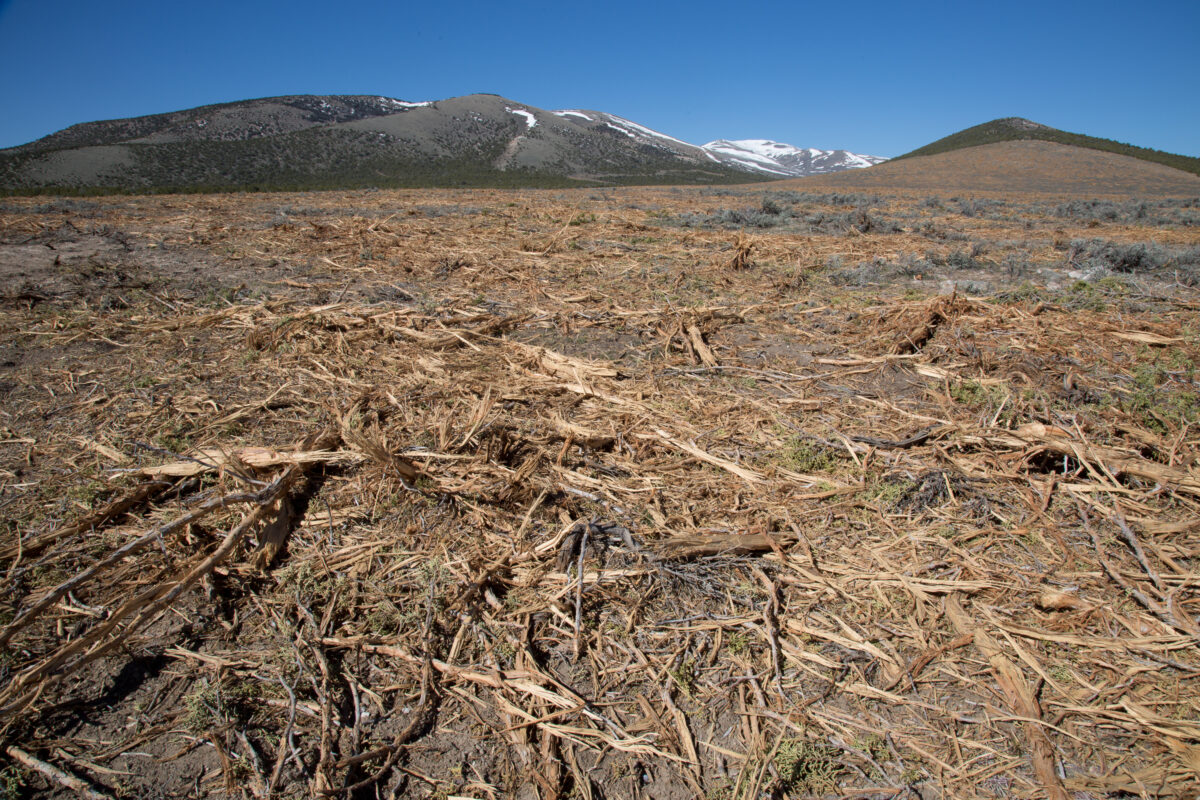
Acres of juniper have been torn out and mulched through a partnership between state federal agencies near Park Valley on Thursday, April 7, 2016. The trees are removed as part of a plan to limit large scale fires and improve sage-grouse habitat while also improving commercial grazing options.
Tanner credits that checkerboard of landownership as the reason the public/private cooperation was so effective in west Box Elder.
It’s also the reason things didn’t reach the volatility seen recently in Nevada and Oregon, he said. Around half of the Box Elder range is private and half is managed by government agencies. Land owners are used to leading compromise, and used to working with their government agency neighbors.
“You know, while I recognize there are significant issues people have (with federal management), as a private land owner, I recognize that if I’m going to fight the federal government, I’m going to lose,” Tanner said. “They have significant more resources and time on their side than I have.”
• RELATED: Stakes higher for managing wildfires in sagebrush country
But it’s also a characteristic that could cause the whole system to collapse. Sage-grouse need vast swaths of uninterrupted land to thrive. As more ranches fail and their land is sold off and subdivided, large landscape management becomes virtually impossible.
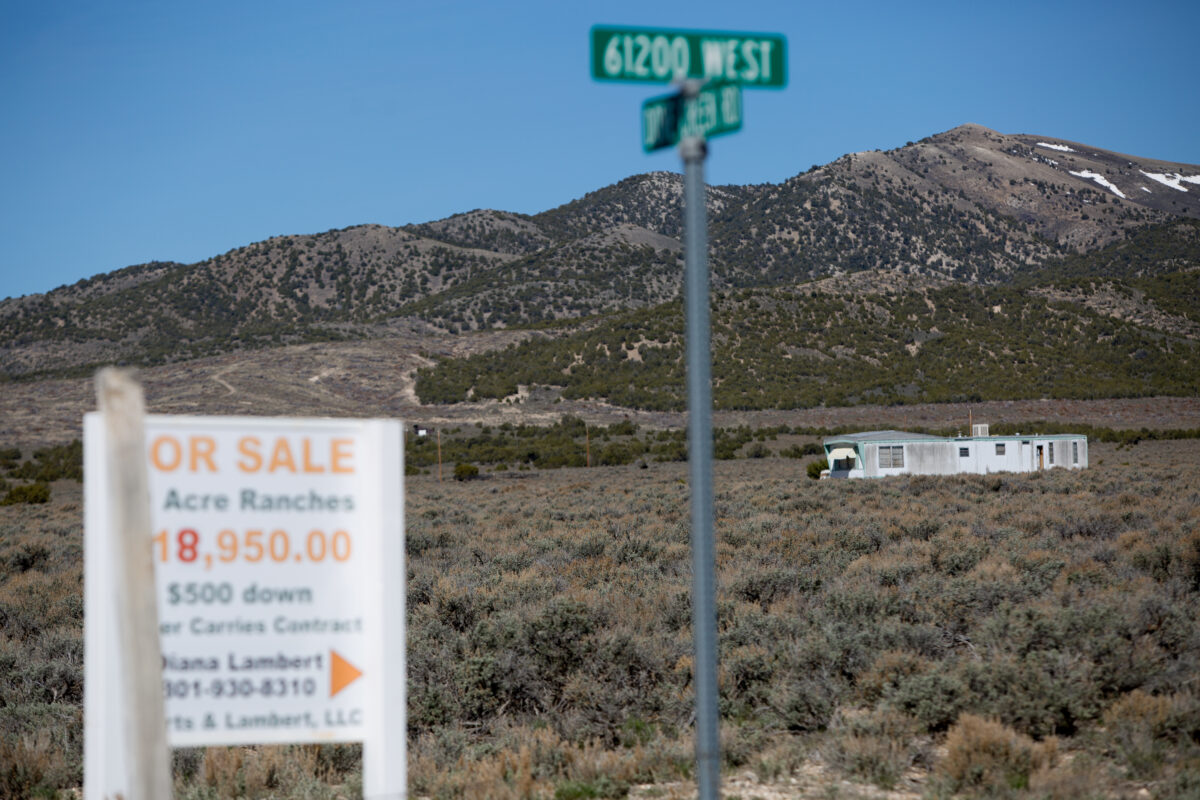
Clint Hill, Tremonton-based conservation planner with the Utah Department of Agriculture and Food, has already seen it happen in west Box Elder, at a new subdivision called “Dove Creek Estates.” It doesn’t look like much — a few large parcels dotted with the occasional small house or trailer.
BENJAMIN ZACK/Standard-Examiner
Old ranch land near Park Valley, Utah is divided into smaller residential lots in the Dove Creek development. While the development only features little more than single trailers and gravel roads on ten-acre plots, that disruption is enough to push out the sage-grouse that had been living there.
But, “that’s pretty much an area that looked just like this,” Hill said, indicating the large dry valley lek, as its birds began to disperse, taking cover.
“That habitat’s gone and it’s never coming back. And that ranch is gone and never coming back.”
Brewerton, who assists with yearly sage-grouse population surveys, confirmed there weren’t any birds spotted on past leks within Dove Creek Estate’s boundaries, but several birds still exist around the subdivision’s perimeter.
“I think some people think out here — way out west beyond the Great Salt Lake– ‘it’s a desert out here, who would really want to split up a ranch and build a bunch of houses?” Brewerton said. “But it happens. And this landscape does have a certain beauty to it.”
Sage-grouse populations rise and wane on decadal cycles, but Brewerton said their numbers are up around 4,000 statewide, which is DWR’s management goal.
BENJAMIN ZACK/Standard-Examiner
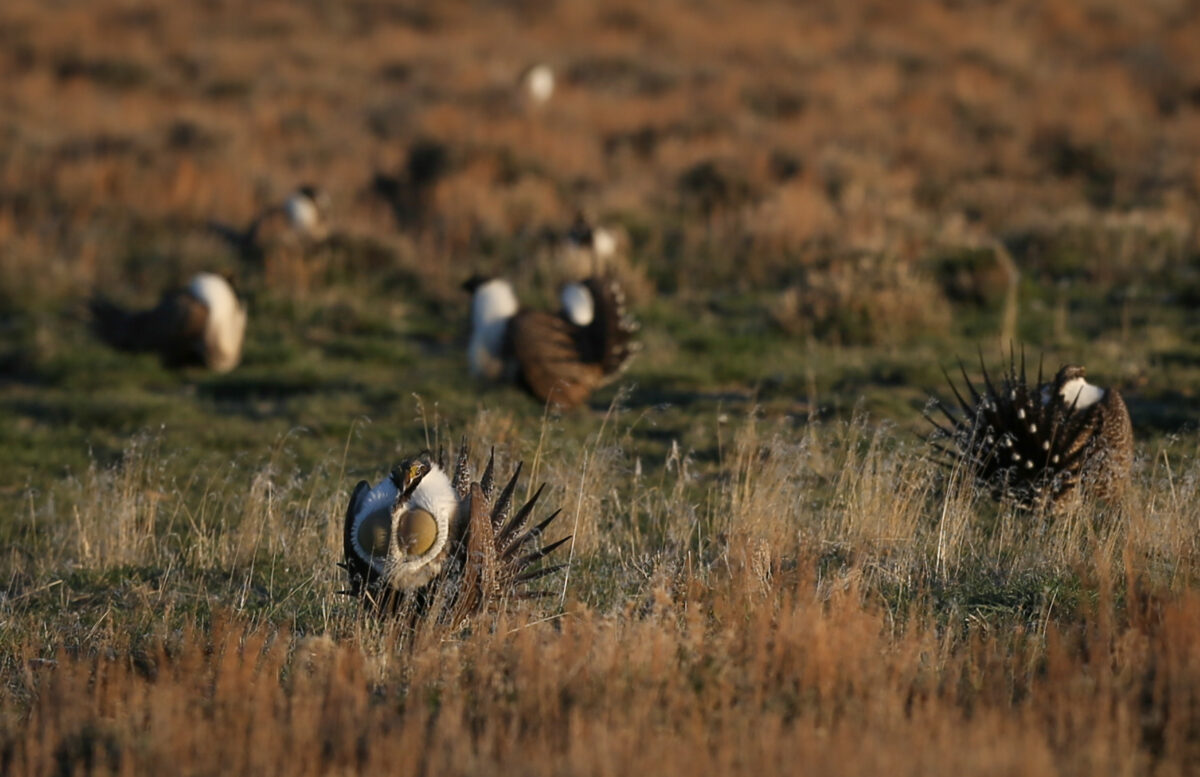
Male sage-grouse do mating displays as the sun rises in western Box Elder County on Thursday, April 7, 2016. Male sage-grouse inflate large yellow air-sacks on their chest and laps them to create a bubbling call that can be heard for miles.
“Five, 10, 20 years ago, we were working on a rolling average of 2,000 to 3,000 birds,” Brewerton said. “A little of that is birds are doing better, and a little of that, too, is we’ve upped our efforts to find leks and grouse in new areas.”
Finding new grouse in new areas partly comes from cooperation with landowners. In the early days of white settlement in the region, ranchers largely claimed land with water sources. That’s also where grouse like to gather.
There’s no doubt grazing has taken a major toll on the ecosystem, and it’s not an activity the ecosystem has evolved for. There’s not much evidence that even bison wandered much through the sagebrush steppes north of the Great Salt Lake.
“But I think areas like those here, in Box Elder County, are really showing that grazing and grouse management can coexist just fine,” Brewerton said.
CORRECTION: The original version of this story said that the coordinated resources management group first started meeting around five years ago. According to a professor at the USU Extension involved with the group, they started planning in 2003. We regret the error.
Contact Reporter Leia Larsen at 801-625-4289 or llarsen@standard.net. Follow her on Facebook.com/leiaoutside or on Twitter @LeiaLarsen.
Environment

Nuclear training and research campus pitched in Brigham City

Symposium keynote speaker, panel discuss getting students, workforce into the nuclear energy sphere