Stephanie Hollist says she can ‘truly represent’ Senate District 7
-
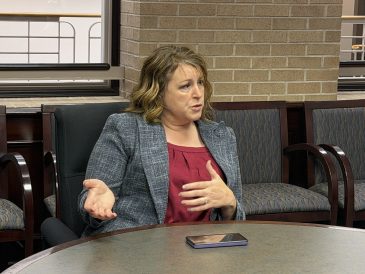
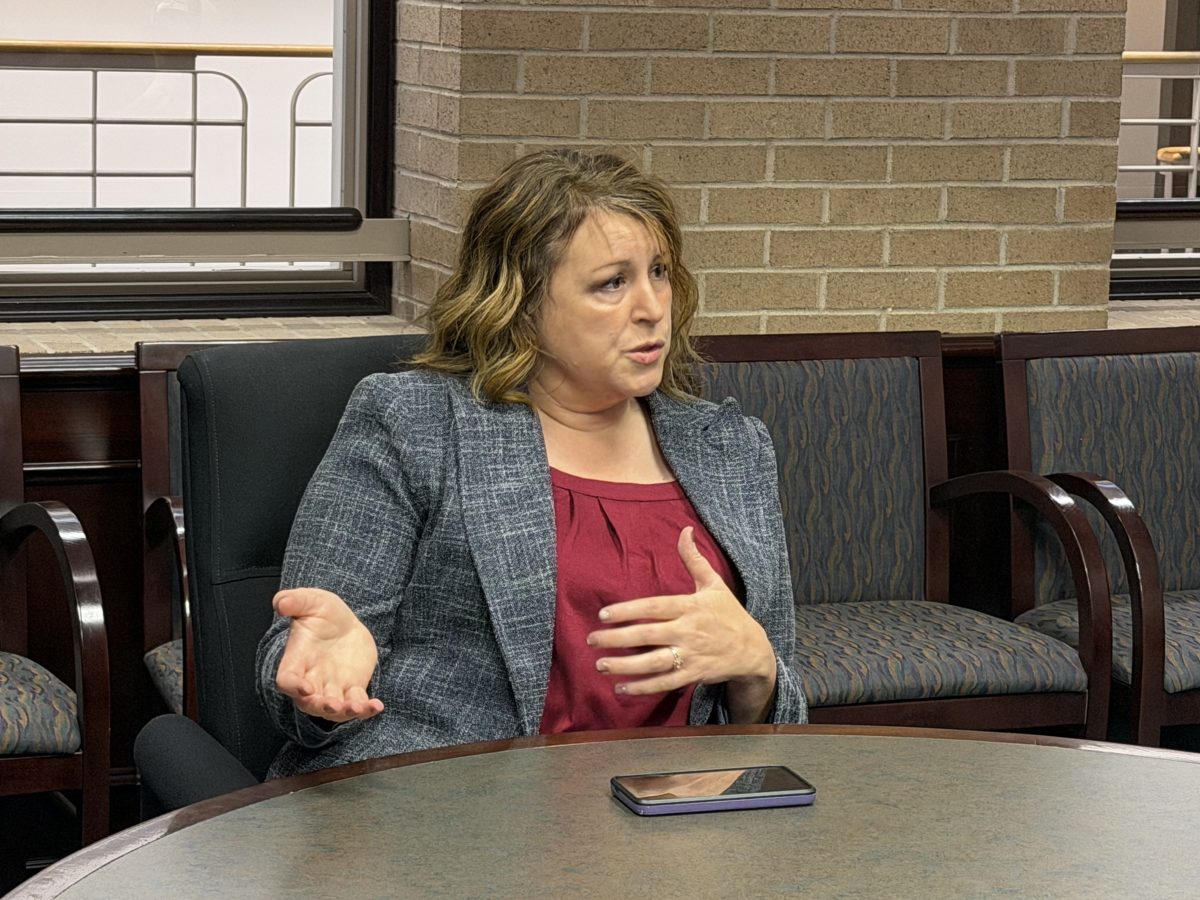
- Stephanie Hollist, competing in the Republican primary for the Senate District 7 seat in Utah, participates in a candidate interview at the Standard-Examiner office on Tuesday, May 12, 2026. (Rob Nielsen, Standard-Examiner)
-
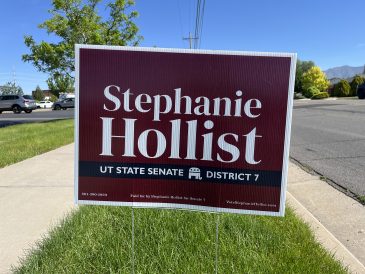
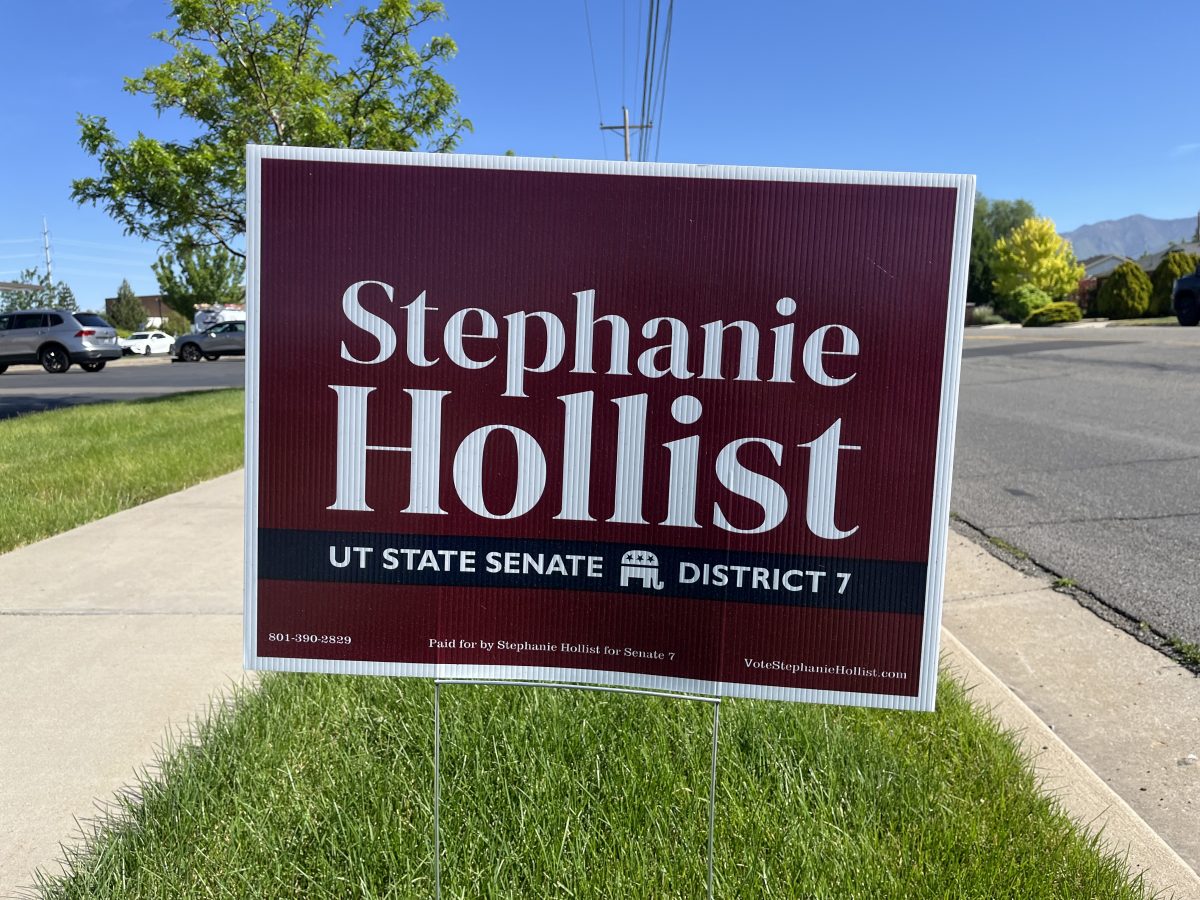
- A campaign sign for Stephanie Hollist, competing in the Republican primary for the Senate District 7 seat in Utah, on Thursday, May 28, 2026. (Ryan Comer, Standard-Examiner)
Rob Nielsen, Standard-Examiner
Stephanie Hollist, competing in the Republican primary for the Senate District 7 seat in Utah, participates in a candidate interview at the Standard-Examiner office on Tuesday, May 12, 2026. (Rob Nielsen, Standard-Examiner)
Stephanie Hollist said she’s always wanted to serve her community.
When she went to law school, she focused on state and local government. She was a political science major before that at Weber State University.
While she was in law school and after she got out, she worked for cities along the Wasatch front.
When she eventually got into politics, it wasn’t to be a legislator, but to help behind the scenes, “helping to work for good policy.”
At the end of last year, as she talked to her neighbors, she said she started thinking she wanted to do more. She was frustrated with the direction things were going.
Ryan Comer, Standard-Examiner
A campaign sign for Stephanie Hollist, competing in the Republican primary for the Senate District 7 seat in Utah, on Thursday, May 28, 2026. (Ryan Comer, Standard-Examiner)
She looked around and saw people that she wanted to push to run.
“But when I actually (thought) about it, I am really well-qualified and I have that drive and heart and the interest in my community, having been there for such a long time and my kids growing up in the community,” she said. “And I have family members and neighbors … and this (Senate District 7) race is the best option for me to be able to serve right now, because I have those connections at this level. I know what goes on at the state level. And the incumbent, he’s been in for such a long time and is so disconnected, and you see it in so many of the decisions that get made that I think my community deserves a change. My community deserves a new voice and I’m ready to stand up and be that voice.”
Hollist said she’s lived in Fruit Heights and Kaysville for 38 years. She move to Fruit Heights from Harrisville when she was 10. She worked for Weber State as its attorney for many years.
“I am really well positioned because of my experience working on law, working on policy, bringing people together to help find solutions,” she said. “And that’s what my community needs right now. It needs somebody who has a new voice, who is connected to the people, not insulated, and who’s willing to do the hard work to actually figure out ways to solve the things that are concerning to my community.”
Community as the top priority
Hollist said her community is looking for someone who represents them.
“My top priority truly is to be the voice piece for my community,” she said. “I have gone out and I’ve met so many people. They’re so frustrated. They don’t like the direction government is heading, and they go one way where they can be really frustrated or they can even just check out and not be involved or engaged because they don’t see a path for their voices to be heard. And I want to make sure we’re representing everybody and all of the things that they need. And then that is kind of overarching for all of the other things that are issues in my community.”
Great Salt Lake
In addressing the water issue, Hollist said The Netherlands and Singapore are “creating new technologies around” their water use. She said “different kinds of rights in water” are also being created.
“I don’t think we should be naive enough to think that we’re the only ones who struggle with water problems,” she said.
She said there needs to be collective thinking to find solutions and then find the ways to implement those solutions.
“The implementation is a lot where it matters, because what I think we’ve done not as well as we could in the past few years is the planning,” she said. “We know we’re growing. We know the lake is at risk. We know when we have these dry seasons that we’re going to be challenged when it comes to water resources. We need to be planning effectively ahead of time.”
The budget
Hollist said although Utah can tout itself “as being one of the better operating, functioning budget-wise states in the nation,” it can be better.
“I pay attention to the bills,” she said. “I see what gets approved. I see what gets funded. We need to do some better prioritization of our taxpayer funds and what it’s going to. Because I tell you, I think there’s a lot of projects that need to be held accountable. Are they accomplishing the things that (they were) set out to accomplish? Was it based on something that was a thing in the moment or a special interest and it hasn’t served its purpose?”
She said she believes there’s funding out there that could be taken back to better serve Utahns and put money back into people’s pockets.
“Talk about affordability,” she said. “I love the idea of saving people some money and some funding. It really just takes somebody who’s willing to go in and prioritize.”
Housing
Related to housing, Hollist said she could think of one bill she would like to do differently.
“I don’t have all of the resources at hand right now to know all of the potential unintended consequences, so there’s my caveat, but there was a bill that would give millions of dollars to new homebuyers, but only if they built a new house,” she said. “And this was run by the incumbent. And there is something to be said, obviously, for increased supply to solve our housing issues. At the same time, I looked at a report from January that said that less than 4% of people in my county, Davis County, or Morgan County, which is also part of my district, we’re able to take advantage of those funds. Those are things that, again, I get trying to find a solution to the supply part of the problem, but I want to see if there’s solutions that could help every community and all of the parts of the problem.”
Local control
Hollist mentioned the Box Elder County data center proposal as an issue related to local control she thought was important.
“I appreciate that people are wanting to shine the light on what is going on and are decisions being made by just a handful of insiders instead of the broad community having knowledge of what’s going on,” she said. “This is their future. This is their community. They should have a say in what’s going on, and to shut that kind of voice out, to make it not transparent, to have these governmental entities that don’t have the same kind of accountability as state and local or governmental entities, like the local government entities in particular who know their communities, that’s challenging. And those are the kinds of things that I want to get in and look at, too. Where have we put power in places where it’s been accumulated to be insulated? And how can we open that up again and make it work for people and for cities?
“Because state mandates, and especially when it’s like a board that’s not even elected and doesn’t have that same level of accountability to people, it’s just fostering the ability for decisions to be made in the dark and for there not to be accountability and transparency.”
Term limits
Hollist said she is for term limits.
She said there were a couple of resolutions going through the Legislature this last session, one through the House and one through the Senate.
“One was a resolution that would call on a constitutional convention for reviewing term limits for federal level,” she said. “One was calling on term limits at the state level. And the one that was the Constitutional convention for the federal level, it at least got to a committee and then it died. The one that was for state level didn’t even ever get assigned to a committee. Didn’t ever get out of rules. Which is shocking to me because we know that people in Utah overwhelmingly support term limits. It’s like at 85% levels the last report I saw.”
Concluding statement
For her concluding statement, Hollist said it was hard to summarize all that she wanted to express.
“If I had one thing to say to the voters, it would be, ‘We need and deserve somebody who will be looking out for our interests only and who has the skill, the ability and the drive to get this done in this race at this time. We need to have hope that we can change the future, and we need to be looking forward as a community to what that looks like.’ I am the candidate who can do that, who can truly represent the voice of my community, who will do it transparently, who will do it with integrity, who will do it with just the pragmatic problem-solving ability to make our community better.”
For more information on Hollist and her campaign, visit https://votestephaniehollist.com/
Contact Standard-Examiner editor Ryan Comer at rcomer@standard.net.
Local News

Competing for a cause: Annual American Red Cross Blood Battle between Utah State and Weber State returns to WSU for 23rd year

Weber County 4-H members assemble care kits for county correctional officers in observance of 9/11 Day of Service