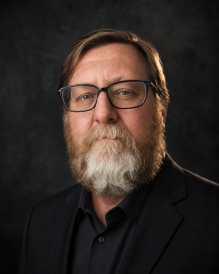
Tony De Mille says housing is where he has most to offer in House District 13 race
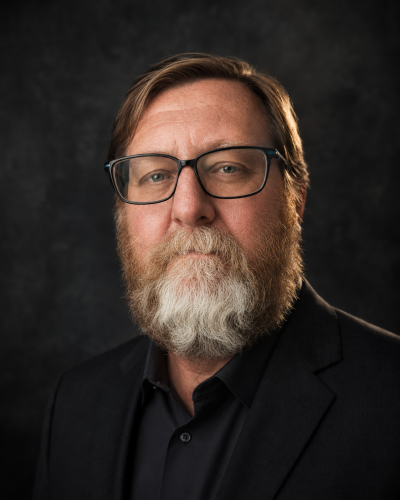
Photo supplied, Tony De Mille
Tony De MilleTony De Mille is a Forward candidate for the House District 13 seat. Below are his responses to a six-question survey sent to him by the Standard-Examiner. The Standard-Examiner made an attempt to contact each candidate involved in a competitive race in Weber and Davis counties.
1. Why is the position you are running for important?
The Utah House is where decisions get made about what it costs to live here: property taxes, housing, water, schools, growth. Those decisions land on real families in Clearfield, Clinton, Sunset, and West Point. A representative should be the person who carries those families’ concerns into the room and then explains, in plain English, what happened and why. Too often it works the other way around.
2. What unique qualities, attributes, skills, and experiences do you possess that make you the best candidate in this race?
I’m a Realtor, so I spend my days with people making the biggest financial decision of their lives. I’ve sat across from first-time buyers who felt hopeless and watched deals stall for reasons nobody planned for. I know what it takes to keep pushing when a process gets hard. I also tell people the truth, even when it isn’t what they hoped to hear, without making them feel talked down to. I’m not tied to a party machine, and I’m not interested in winning arguments. I’m interested in getting answers for the people who live here.
3. Please explain your priorities if elected, as well as why you believe you are uniquely capable of achieving those priorities.
My priorities are attainable housing, growth that is matched with infrastructure, water and the Great Salt Lake, public safety, education, and government transparency.
Housing is where I have the most to offer. I see every day how supply, zoning, and property taxes decide whether a working family can stay in the community where they work. Growth is not the enemy. Growth without roads, schools, water, and emergency services is. On education, I want good teachers paid fairly and schools built where the population actually requires them. On public safety, we can back our officers and still expect professionalism and accountability. And on everything, government should say what it’s doing, what it costs, who benefits, and how residents can weigh in.
4. Please describe how you view the importance of compromise in politics and provide an example from your own experiences that highlights your perspective.
Compromise is not weakness. It’s how anything gets built. In real estate, almost no deal closes with everyone getting exactly what they wanted. A buyer wants a lower price, a seller wants a higher one, and an inspection turns up something nobody expected. The good agents keep both sides at the table until each can live with the outcome. The ones who dig in just to feel right usually end up with a dead deal and two unhappy people.
Politics should work the same way, with one rule: you compromise on the how, not on the truth. I’ll negotiate on timelines, funding, and details. I won’t trade away honesty or the interests of the people I represent.
5. How will you balance the views of the vocal public, your political party, and your own understanding and knowledge as an elected representative?
First, the loudest voices are not always the most representative ones. I want to hear from the people who don’t have time to show up at a meeting or fight in a comment section, so I’ll ask them directly and often.
Second, my party doesn’t get a vote over my district. I’m running with the Utah Forward Party because I agree with its principles, but if a position doesn’t serve the people of HD13, I won’t pretend it does.
Third, I owe people my own homework. On something like a data center, I want to know the water use, power demand, tax incentives, infrastructure costs, noise, jobs, and how the approval process worked. Development isn’t automatically bad. But a rushed process that residents didn’t get to see is a problem no matter how good the project sounds. Then I’ll explain my vote, including when people disagree with it. If you can’t explain a vote to your neighbors at the grocery store, you probably shouldn’t cast it.
6. What is the best way for readers to contact you and/or get more information about your platform?
The best place to start is VoteForBigTony.com. You can read where I stand on housing, growth, water, public safety, education, and government transparency, and you can reach me through the site if you want to ask a question or tell me what’s on your mind. If you’d rather skip the website, email me at vote4bigtony@gmail.com or call or text 385-309-3311. And if you live in HD13 and there’s an issue you want me paying attention to, tell me. I’d rather hear it now than after the election.
Local News
Ryan Wilcox touts ability to move important legislation forward in House District 7 race
Anne Berbert emphasizes financial security, human dignity in House District 15 race