Guest opinion: Utah’s Pioneer story is a refugee story
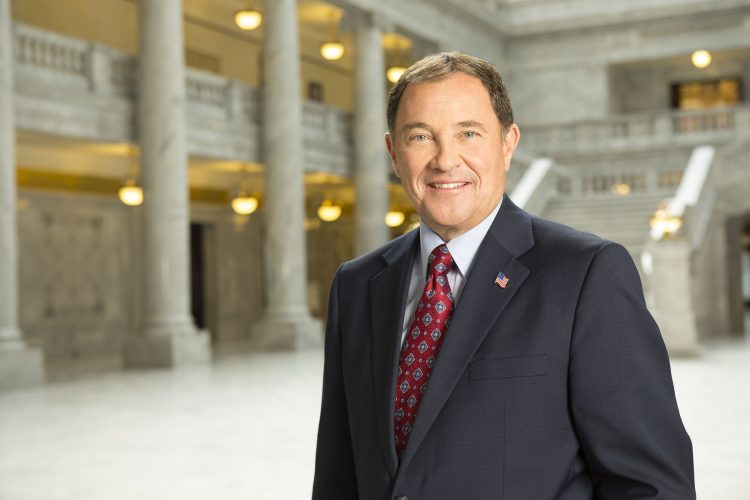
Photo supplied
Gary HerbertIn October 1838, the governor of Missouri signed an order declaring that members of the Church of Jesus Christ of Latter-day Saints must be driven from the state or destroyed. Three days later, militiamen descended on a settlement at Hawn’s Mill and opened fire, killing seventeen men and boys. What followed was an exodus: families stripped of home, livelihood, and safety, undertaking a long and dangerous journey west, searching for a place where they could live and worship without fear.
Every year on Pioneer Day, I think about that history. And I think about it every time someone asks me where I stand on refugees.
That history – the Extermination Order, the exodus, the long journey west – is what we honor every 24th of July. Pioneer Day has always been about more than commemoration. It is an occasion that asks us to reflect upon all our ancestors sacrificed, and what that history demands of us now.
Our pioneer ancestors left everything. They endured conflict, displacement, and persecution for no reason other than what they believed. They undertook a long, dangerous journey in search of what most people on earth want: safety, freedom, and the chance to rebuild. They found it in this valley. Through faith and an extraordinary amount of hard work, they made something lasting from it.
That is Utah’s story. It has always been a refugee story.
Today, families are making that same journey. They come fleeing armed conflict, forced displacement, and persecution on account of religion, race, nationality, or political belief, having survived hardships most of us can barely imagine. They arrive through one of the most rigorous vetting processes in the world: years of medical screenings, background investigations, and security clearances before they are individually invited to resettle here. They do not arrive by accident. They arrive with the same determination that brought our ancestors to this valley.
And they contribute in ways Utah should be proud of. A refugee farmer from Darfur now grows and sells kale, hot peppers, and hibiscus at a Salt Lake farmers market, one of dozens of resettled families cultivating crops through programs built by Utahns, for Utahns. Refugee entrepreneurs add to our labor force. They join our congregations and give back to the next families that arrive after them — a most beautiful cycle of charity. That capacity — programs, partnerships, a trained and dedicated network of people — has taken decades to build. This adds to the growth of our economy, which is No. 1 in the nation and is a win, win, win for Utah. Utah should be proud of this work it does so well.
There is a dimension to this moment that I think Utahns understand more uniquely than most. The Extermination Order of 1838 was an act of state power directed against people for their religious convictions. A significant share of today’s refugees are fleeing exactly that: governments that will not tolerate what their people believe. Christian minorities driven from Iraq, Syria, Nigeria and Yazidis. Members of religious communities whose faith put them in danger.
We know what that costs. We gained that knowledge firsthand, through our own history. It gives us not just empathy but responsibility, to stand for the principle that no person should be driven from home on account of their beliefs. That principle is not partisan. It is foundational to what America is, and it is deeply, historically Utah’s own.
Honoring that principle today means sustaining the work. Utah has long welcomed more than a thousand refugees a year, and the infrastructure built around that commitment — the resettlement offices, the job training networks, the ESL programs, the community liaisons – is a genuine asset to our entire community. When federal refugee admissions become unpredictable, that infrastructure frays. This year, Utah will likely welcome less than 100 refugees — a 90% decline. Restoring reliability to the program, including serious consideration of a minimum admissions baseline, would allow communities like ours to continue this work responsibly and well. This is the kind of steady, sensible policy that lets good people do good work.
Pioneer Day is our opportunity to say plainly what we know to be true: the men and women rebuilding their lives in our communities are modern-day pioneers. They carry the same determination, the same resilience, and the same hope that carried our ancestors to this valley.
Gary R. Herbert served as Utah’s 17th governor from 2009-2021. Upon leaving office, he launched the Herbert Public Policy Institute at Utah Valley University.
Guest Commentary
Guest opinion: A mother’s plea for compassion and an end to mandatory minimums
Recently, my son was sentenced to 20 years in federal prison for a fentanyl-related overdose death. That day, I ...

Guest opinion: Bending over and other dangerous stunts