Utah Cutthroat Slam sparks funding for conservation projects
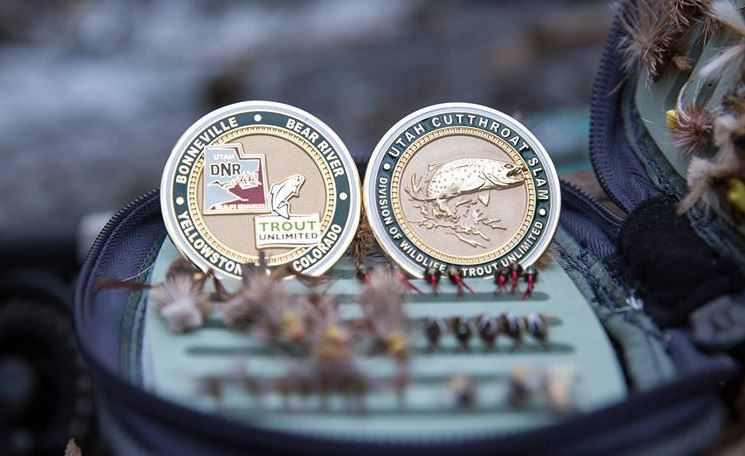
Cutthroat Slam coins
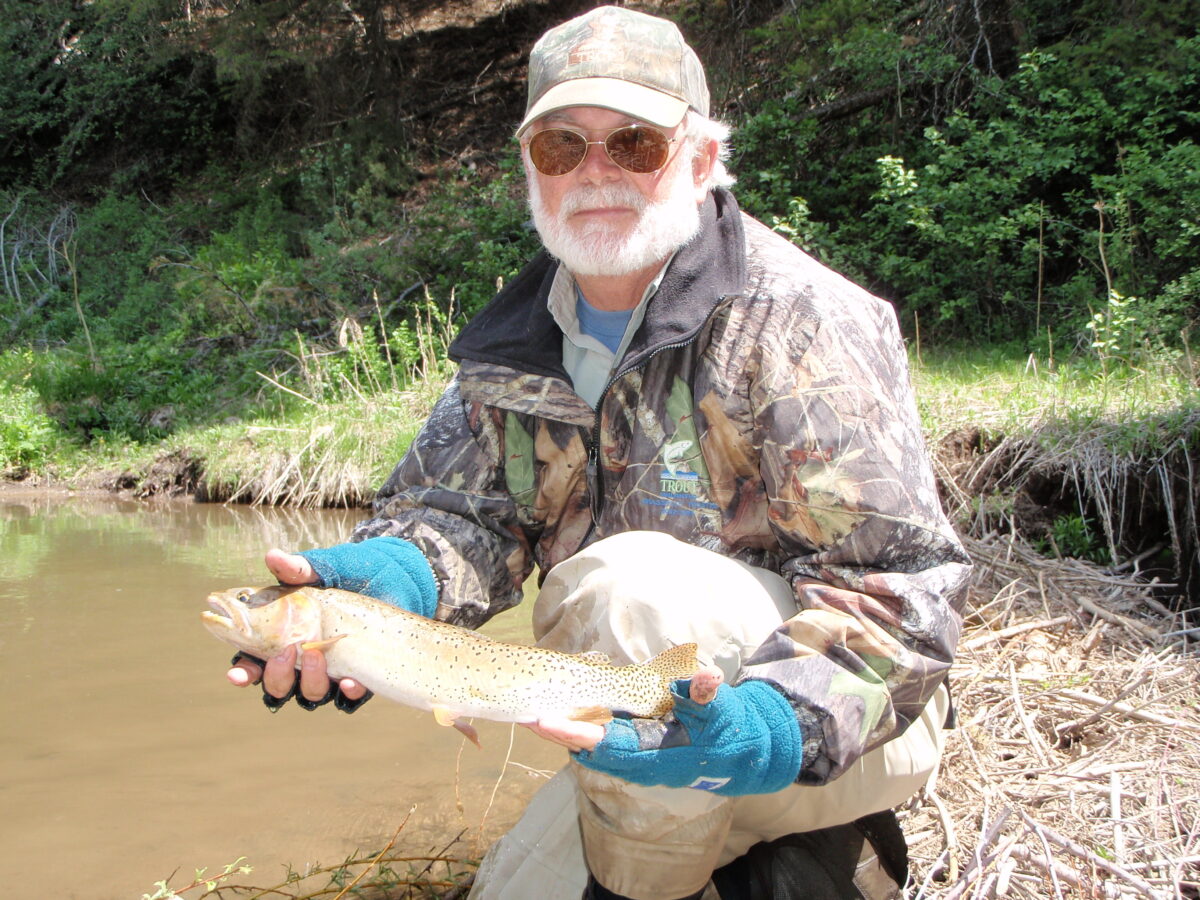
Wes Johnson with a Lost Creek Bonneville trout.
Utah anglers can now add a little competition to native fish conservation efforts.
The Utah Division of Wildlife Resources (DWR) and Trout Unlimited recently announced a partnership to create the Utah Cutthroat Slam, a fishing challenge with registration fees that go almost entirely to fund conservation projects for the four native cutthroat subspecies found in Utah.
The challenge was announced April 1 at the Wasatch Fly Tying and Fly Fishing Expo and is meant to entice anglers to support Utah’s native trout legacy.
Participation in the Cutthroat Slam requires registration with DWR. Each $20 ($10 if under age 18) registration will support the conservation efforts of the partnership. All but $1 of the registration fee will go to fund conservation and habitat improvement projects on waters where native cutthroats are found.
That means every person who registers for the Slam will see $19 put forward to benefit our native trout fisheries. You can register at any DWR office, any retail license agent or online at the DWR licensing webpage.
After registration, anglers compete in the challenge by catching, photographing and releasing one of each of the four cutthroat subspecies in their native waters. The catch is certified by submitting the photo with a description of each fish and where it was caught. Once a catch from each subspecies is certified, the participant receives a certificate, a custom medallion and online recognition.
Catching these native trout in their historical waters is enticement enough to complete a Slam. This challenge will lure many anglers to seek our native cutthroats and offer an outstanding opportunity to explore new waters throughout Utah. Bringing a native cutthroat to the net when in its spawning colors will enrich anyone’s appreciation for these trout.
The four cutthroats native to Utah are the Bonneville, Bear River, Colorado River and Yellowstone.
BONNEVILLE AND BEAR RIVER CUTTHROATS
The Bonneville, Utah’s state fish, can be found throughout the historic basin of what was once Lake Bonneville. While those cutthroats found south of Salt Lake City are true Bonneville cutthroats, those found in the Weber River drainage may be either of Bonneville or Bear River lineage, or a blend of the two subspecies. This is due to historical geography that allowed the Bonnevilles to migrate up the Weber, Logan and Bear River drainages.
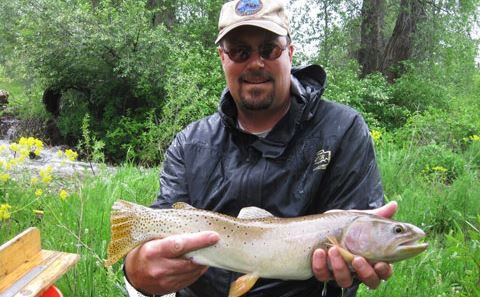
Wes Johnson
Paul Thompson with a Little Dell Bonneville
While both the Bear River and Bonneville cutthroats can be found in the Weber and Ogden rivers, you can catch both but only can claim one from this drainage for the Cutthroat Slam. For example, if you claim a Bear River cutthroat caught in the Weber River, then you will need to catch a Bonneville cutthroat from a drainage other than the Weber.
Many streams along the northern Wasatch Front are being restored specifically for native Bonneville cutthroats. Bonnevilles are also found in the Provo River and its tributaries, Mill Creek and Parley’s Canyon, among other places.
When Lake Bonneville shrank to what is now just the Great Salt Lake, the cutthroats in the Bear River drainage were cut off from the rest of the Bonneville populations and eventually evolved into a distinguishable subspecies, the Bear River cutthroat. These are specific to the Bear River, the Logan River and Blacksmiths Fork and their tributaries.
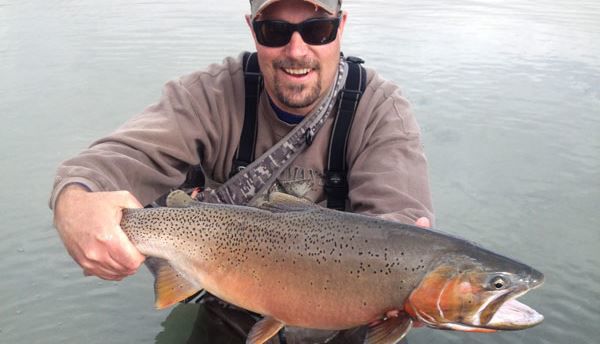
Wes Johnson
Paul Thompson with Bear River cutthroat trout from Bear Lake.
You will also find Bear River cutthroat trout on the western portion of the north slope of the Uinta Mountains. In Rich County, there is a strong population in Woodruff Creek Reservoir, Big and Otter Creeks and, of course, Bear Lake.
COLORADO RIVER CUTTHROAT
The Colorado River cutthroat is native within the drainages of the Colorado and Green rivers and their tributaries. This includes the eastern portion of the north slope of the Uinta Mountains, the south slope of the Uinta Mountains, North Tavaputs Plateau, southeastern Utah, and several lakes of the Boulder Mountains.
DWR has completed many projects within the Book Cliffs and Roan Cliffs to reestablish Colorado cutthroats to their historical range.
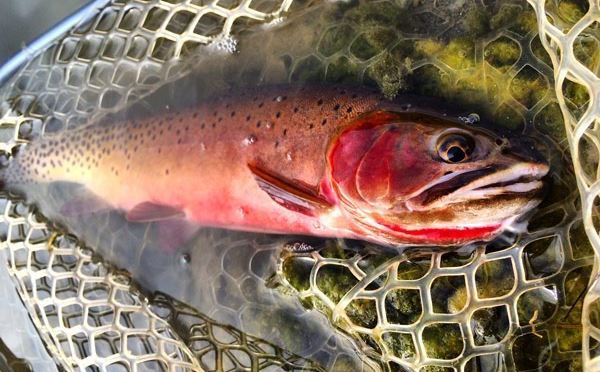
Wes Johnson
A Colorado River cutthroat in spawning colors.
YELLOWSTONE CUTTHROAT
The Yellowstone cutthroat will be the most challenging cutthroat to catch due to the remote nature of its native range. It is only found in the northwestern portion of Utah in the headwaters of the Raft River drainage, which is a tributary of the Snake River. The Yellowstone can be distinguished from other native cutthroats by the smaller spots on their backs.
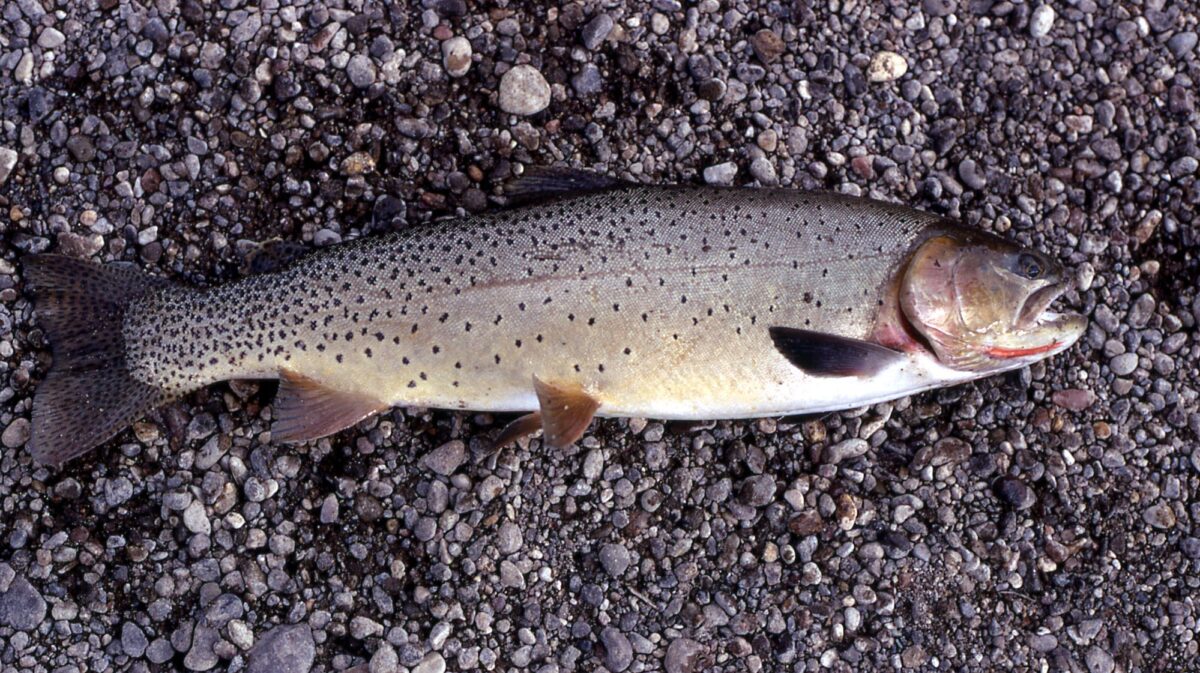
Wes Johnson
A Yellowstone cutthroat.
All of these native cutthroats can be found in streams on the public lands of the state of Utah, the U.S. Forest Service and the Bureau of Land Management. One does not need to look to bigger streams or rivers to catch these cutthroats.
At higher elevations, small streams which can be stepped across will offer some of the finest angling opportunities to pursue these native trout.
Visit the Utah Cutthroat Slam website for more information about the challenge, information about each subspecies and maps showing distribution of the trout and waters where they can be found.
For information on Trout Unlimited’s efforts in Utah to reestablish cutthroats and other native fish, visit the group’s website.
In the meantime, enjoy your pursuit of these Utah native trout.