Property taxes explained: Understanding rates and revenues
-
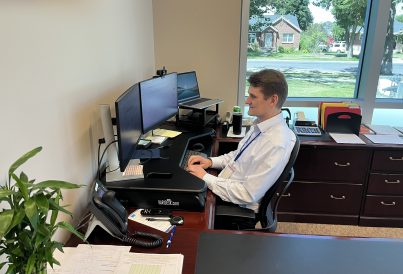
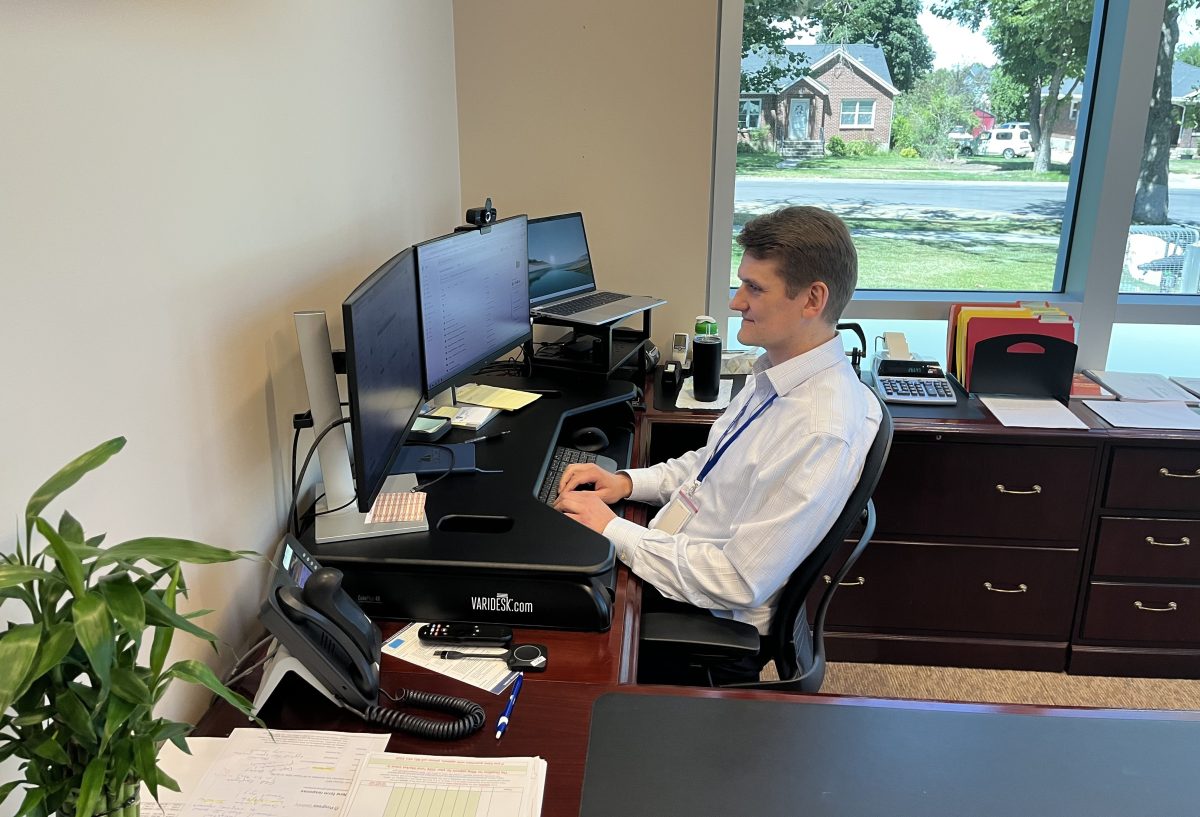
- Davis County Controller Scott Parke at his computer in his office at the Davis County Administrative Building in Farmington on Thursday, June 18, 2026.
-
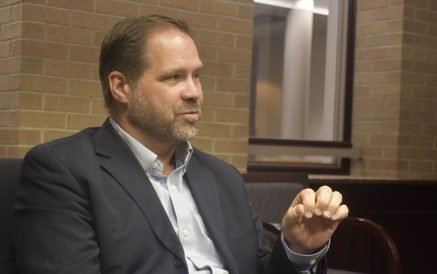
- Weber County Clerk/Auditor Ricky Hatch speaks with the Standard-Examiner editorial board at the Standard-Examiner in Ogden on Wednesday, June 3, 2026.
Ryan Comer, Standard-Examiner
Davis County Controller Scott Parke at his computer in his office at the Davis County Administrative Building in Farmington on Thursday, June 18, 2026.
The following is part one in a two-part explainer on property taxes.
Davis County Controller Scott Parke said he could talk for an entire day about budgets and tax rates if people want.
In separate wide-ranging interviews with the Standard-Examiner, Parke and Weber County Clerk/Auditor Ricky Hatch discussed property taxes. The conversations are part of a two-part series.
How property taxes are calculated
Simply put, Hatch said, cities don’t calculate property tax rates.

Jared Lloyd, Standard-Examiner
Weber County Clerk/Auditor Ricky Hatch speaks with the Standard-Examiner editorial board at the Standard-Examiner in Ogden on Wednesday, June 3, 2026.
“Cities determine their budget, and then once they’ve determined their budget, that budget is taken with a few other factors and put into this big complex black box that spits out a tax rate,” Hatch said. “That’s done by the state tax commission.”
Parke explained that property taxes are calculated in a different way from sales and income taxes.
He said unlike sales and income tax rates, which are set figures that are multiplied by the total cost of the taxable sales items or the total income to determine how much one pays in sales or income tax, property taxes involve a “backward” calculation.
“We know the value of all the properties out there, and we don’t know the tax rate, but we know how much money we want to get,” Parke explained. “And so we take the amount of money we want to get, we divide it by the value of all the properties, and that comes up with the tax rate. So it works backwards.”
Property tax rates and total tax revenue
Parke has a chart that shows what the Davis County property tax rates have been dating back to 2016. In 2016, the rate was 0.001779. It went up to 0.001993 in 2017, but then it dropped five consecutive years, reaching 0.001089 in 2022.
It climbed to 0.001152 in 2023, the result of the county taking on the animal welfare line, but then it dropped each of the next two years. It was 0.001016 in 2025.
But what Parke said is truly relevant, which his chart also shows, is the total property tax revenue the county collected each year. In 2016, it was $32.2 million. It rose to $39.8 million in 2017 and continued to rise each of the next three years, reaching $43.6 million in 2020, and has ranged from $40.8 million to $43.2 million in the years since. It was $42.3 million in 2025.
Parke said he didn’t know what the property tax rate was going to be for 2026, but he said the commissioners decided to raise the property tax revenue $6.3 million after a public hearing was held last December.
“The county is telling the state tax commission, ‘I want to collect an additional $6.3 million on top of what I collected in 2025.’ … And then the assessor is going to come back and say, ‘Well, I went out and valued everybody’s home and businesses, and here is the total value of everything.’ … To calculate the tax rate, we just divide those two numbers together and that is the rate,” he said. “But (the tax revenue number) is the number that people should be concerned about. This is the number people should be thinking about – the $49 million. That’s how much taxes we’re actually going to bill people for.”
In Weber County, according to the 2025 Approved Property Tax Rates and Budgets from the state tax commission, the approved budget for 2025 was $65.3 million, though that includes not just general operations, flood control and health, which is what Davis County includes, but also Interest and Sinking Fund/Bond, Library and Paramedic. Weber County’s approved budget for just general operations, flood control and health was a total of $44.0 million in 2025.
City property tax revenues
In Weber County, the approved city property tax revenue totals for 2025 were as follows:
- Farr West: $375,588
- Harrisville: $1,054,490
- Hooper: $268,904
- Huntsville: $117,096
- Marriott-Slaterville: $0
- North Ogden: $3,006,303
- Ogden: $21,535,594
- Plain City: $228,116
- Pleasant View: $1,160,445
- Riverdale: $1,740,993
- Roy: $5,063,729
- South Ogden: $4,583,958
- Uintah: $103,088
- Washington Terrace: $1,350,283
- West Haven: $0
In Davis County, the approved city property tax revenue totals for 2025 were as follows:
- Bountiful: $3,600,150
- Centerville: $2,330,249
- Clearfield: $3,410,095
- Clinton: $4,109,317
- Farmington: $5,132,638
- Fruit Heights: $1,409,685
- Kaysville: $5,655,949
- Layton: $9,610,033
- North Salt Lake: $3,016,022
- South Weber: $1,286,497
- Sunset: $390,188
- Syracuse: $6,351,095
- West Bountiful: $1,586,949
- West Point: $858,223
- Woods Cross: $2,098,967
The above figures for Bountiful and Farmington do not include the Interest and Sinking Fund/Bond, which required $473,910 and $411,000 in each city, respectively.
Tax revenue rules
Parke explained that the state tax commission allows the same amount of money to be collected from property taxes as was collected the year before, plus an additional amount if a new home was built or a new business was started. Parke referred to that as new growth.
“If you have a city and it’s growing really fast and it doubles in size, well, the state will allow you to collect the taxes from last year, plus it will apply that same tax to all the new homes, and the argument is because when a new home is built, or new business is built, there’s more demand for police service, there’s more demand for fire, there’s more demand for sidewalks and roads and stuff like that,” he said. “So the property tax grows when somebody builds something new — a new business, a new house.
“That’s the only time that the state tax commission lets us get more money. Otherwise, you have to go through this process known as Truth in Taxation.”
According to Davis County’s website, “Utah’s Truth in Taxation laws require taxing entities to provide public notice and hold hearings if they plan to increase property tax revenue beyond the previous year’s collections (excluding new growth).”
Furthermore, it says, “The new information on your notice provides a clear monetary figure for potential increases if they are approved.”
Hatch said it’s common for taxing entities to go high when it wants to raise property taxes.
“That’s usually what they do is they’ll go high, because, let’s face it, who likes a tax increase?” he said. “Everyone hates it. And so generally, your entities are going to give a higher estimate, and then the pitchforks come, understandable pitchforks. They come and they plead their case, and then it’s seen by the entity that, ‘OK, well, we’ll reduce it a little bit.’ Or they do it high because they’re not positive. … They might need the full amount … but it’s always better to come the other way.”
Property value impact on county coffers
Because the state will allow only the same amount of property tax revenue to be collected as the previous year – absent new growth and Truth in Taxation – a home value doubling, tripling or even quadrupling doesn’t mean the county gets more money, Parke explained. This is what is meant by Utah being a revenue-neutral state.
“Because what the state tax commission does is it says, ‘Well, if the value goes up, you have to lower your tax rate to offset for that, because you get to collect the exact same amount of money you collected last year in terms of dollars,'” Parke said.
Thus, a lower tax rate is generally an indication that property values increased.
A comparison of two tax and valuation notices from the same Davis County residence – one in 2021 and the other in 2025 – is instructive.
The market value of the home went from $250,000 in 2021 to $448,000 in 2025 – a 79.2% increase.
Yet the overall property tax bill went from $1,656.19 in 2021 to $2,347.45 in 2025 – a 41.7% increase.
“Think of that,” Parke said. “If taxes really went up with the market value, then you would have expected the taxes of this house to almost have doubled, right? Because the value’s almost doubled. But look at how much they paid. … It’s gone up, but it hasn’t doubled, because the value of your home doesn’t drive how much revenue the entities get. The entities saying this is how much money I want drives how much money the entities get.”
Comparing the total property taxes collected in 2021 and 2025, the county collected $41.4 million in 2021 and $42.3 million in 2025, an increase of just 2.2%.
Higher property values plus roughly the same amount of property tax revenue collected means a lower property tax rate. Indeed, the property tax rate fell from 0.001435 in 2021 to 0.001016 in 2025, a decrease of 29.2%.
An individual may contribute more to the total taxes collected by the county than in a previous year, but that doesn’t necessarily mean the county collected more money – it just means that individual contributed a greater share of the overall property tax revenue.
“I have this total tax bill pie,” Parke explained. “It’s $42 million. Based off of how much money your individual property is worth, I’m going to times it by that proportionate rate to see how much of that $42 million you have to pay.”
In explaining misconceptions people have about property tax mechanics, Hatch said the “biggest” one was that rising property values mean a taxing entity receives more money.
“That simply is not true. … And it’s so hard to understand, even if you’ve studied it,” he said.
Appealing property value assessments
Another misconception Hatch pointed out was that taxes will be determined based on assessed property values no matter what.
He said appeals are possible.
“They can say, ‘My home is not worth a million dollars; it’s worth $700,000, and I can prove it,'” he said. “And we welcome that. The county welcomes that. The county assessor has a tough job. He has to value over 100,000 parcels every year and get it within a certain percent accurate by state law. And so they do everything they can to get it right, but they’re not going to get them all right. And the property owners can appeal that.”
Hatch said the “vast majority of appeals are approved” and result in a reduction of some kind in value.
“I’d say it’s probably in the high 80% range where they do get some reduction,” he said. “And in my office, we’re kind of the broker between the assessor and the appellant, and so we bring them together. And the assessor doesn’t get dinged or doesn’t get (upset) if the independent hearing officer says, ‘Yeah, I don’t think you valued it quite right. Let’s change it.’ The county doesn’t get less money because that’s made up through this black box. … So it’s not like the county’s fighting tooth and nail, ‘No, we want your property value to be as high as possible.’ We just want it to be accurate.”
Contact Standard-Examiner editor Ryan Comer at rcomer@standard.net.