
Legislative rhetoric and the demise of the right to recreate on public waters

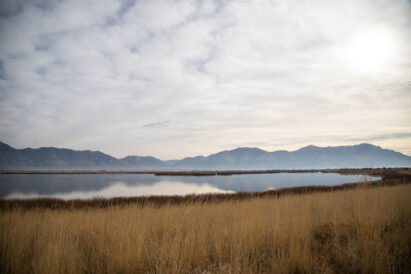
Since at least 1903, Utah law has held that the waters of streams and lakes in this state are publicly owned. Moreover, we the public pay to stock these waters with fish and to otherwise maintain them including infrastructure, erosion control, and flood mitigation. Therefore, it is not surprising that the law has long recognized that there is a public easement where those waters naturally occur, and the public has a right to recreate upon those streams and lakes. Recently, however, the Utah legislature passed a bill sponsored by Rep. Kay McIff, R-Richfield, that, for all practical purposes, eliminates the right of the public to recreate upon many of the waters which they own.

This controversial bill has been wildly unpopular among sportsmen and recreationists who make up a significant portion of the population of this state. It has been assailed by business owners for the negative impact it will have on tourism, and recreation business that, according to The Outdoor Industry Association, contributes $4 billion in annual sales and 65,000 jobs in Utah. In an attempt to justify this shortsighted measure, McIff recently wrote a guest commentary published in this newspaper.

In his April 21 guest column, "Legislating public access to private land," McIff takes issue with a 2008 Utah Supreme Court decision that reaffirmed the right of the public to recreate within the existing public easements. McIff dismissively characterizes the Supreme Court's decision as "an assault on private property," and "inviting widespread invasion of private property where it has not existed." McIff further accuses those members of the public who would exercise their right to recreate upon our public waters, indeed to act lawfully within the scope of the existing public easement, of an "expanded sense of entitlement." McIff also assures us that he personally would "not presume the right to disregard "No Trespassing" signs nor to trample the private property rights of others."

It would indeed be shameful to "trample the private property rights of others." However, we need not lose too much sleep over this type of hyperbole because the public does not trample the private property rights of others, nor does it trespass when it is lawfully within a public easement. A fisherman, for example, is no more trespassing in a river that crosses private property than a pedestrian who is walking down a sidewalk that crosses private property. Each is lawfully within a public easement.

In 1982, the Utah Supreme Court helped clarify the issue when it affirmed the right of the public to recreate upon streams and lakes in Utah, stating as follows: "Irrespective of the ownership of the bed ... the public, if it can obtain lawful access to a body of water, has the right to float leisure craft, hunt, fish, and participate in any lawful activity when utilizing that water." The public nature of the waters of the state has been established since at least 1903 and was set forth in state code in 1953: "All waters in this state, whether above or under the ground, are hereby declared to be the property of the public. . ."

In its 1982 decision, the court stated, "A corollary of the proposition that the public owns the water is the rule that there is a public easement over the water regardless of who owns the water beds beneath the water. Therefore, public waters do not trespass in areas where they naturally appear, and the public does not trespass when upon such waters." The court went on to recognize that "Private ownership of the land underlying natural lakes and streams does not defeat ... whatever right the public has to be on the water."

In 2008, the Utah Supreme Court reaffirmed the public's right to float, hunt, fish, and otherwise participate in any lawful activity when utilizing public waters. In addition, the court recognized what logically follows -- that touching the water's bed is reasonably necessary for the effective enjoyment of those activities, and that doing so does not exceed the scope of the public's easement.

To hear McIff tell it, you would think the court had granted the public carte blanche to private property surrounding the public's easement. However, it should be clear that the court's decision did not in any way purport to grant anyone any right whatsoever to trespass on private property. It did not remotely suggest that a person may cross private property in order to access the public easement, nor has such trespassing been proposed or encouraged by anyone in this debate. In fact, Utah has strict laws that rightfully prohibit any such trespassing outside the public easement.

If there truly is a widespread problem with trespassing on private property outside the public easement, then stricter enforcement of trespassing laws is warranted. However, Rep. McIff's attempt to characterize a significant portion of the public as self-entitled scofflaws is misguided and simply incorrect. The Legislature's arrogant disregard for the well-reasoned Utah Supreme Court analysis is disappointing, and their grab of the public easement was a gross overreaction to the perceived problem.

Allred is an attorney who lives in Ogden.

Advertisement
  +

Recent Comments

Latest Blogs

Blogging the Rambler
Wow! Common sense strikes Legislature!
By: Charles Trentelman

Thursday, February 9, 2012 - 12:58pm

The Political Surf
Judges are tailoring gay marriage opinion to appeal to...
By: Doug Gibson

Wednesday, February 8, 2012 - 2:36pm

Me, myself... as mommy
Death call
By: MeganSanders

Tuesday, January 31, 2012 - 2:53pm

Why Are You Crying?
No economic crisis in college football
By: Mark Shenefelt

Monday, December 12, 2011 - 11:36am

Standard-Examiner Sports Blogs
Jazz release statement from Sloan to Yahoo! Sports
By: Jim Burton

Saturday, February 4, 2012 - 12:49pm

Latest Tweets


Advertisement
Advertisement
Advertisement


Advertisement